
High hopes pay off
At 1 690 m above sea level, Mile High Vineyards in the Eastern Free State is proving that altitude, grit and a touch of stubbornness can make magic in a place no one believed vines could grow.

· 5 min read
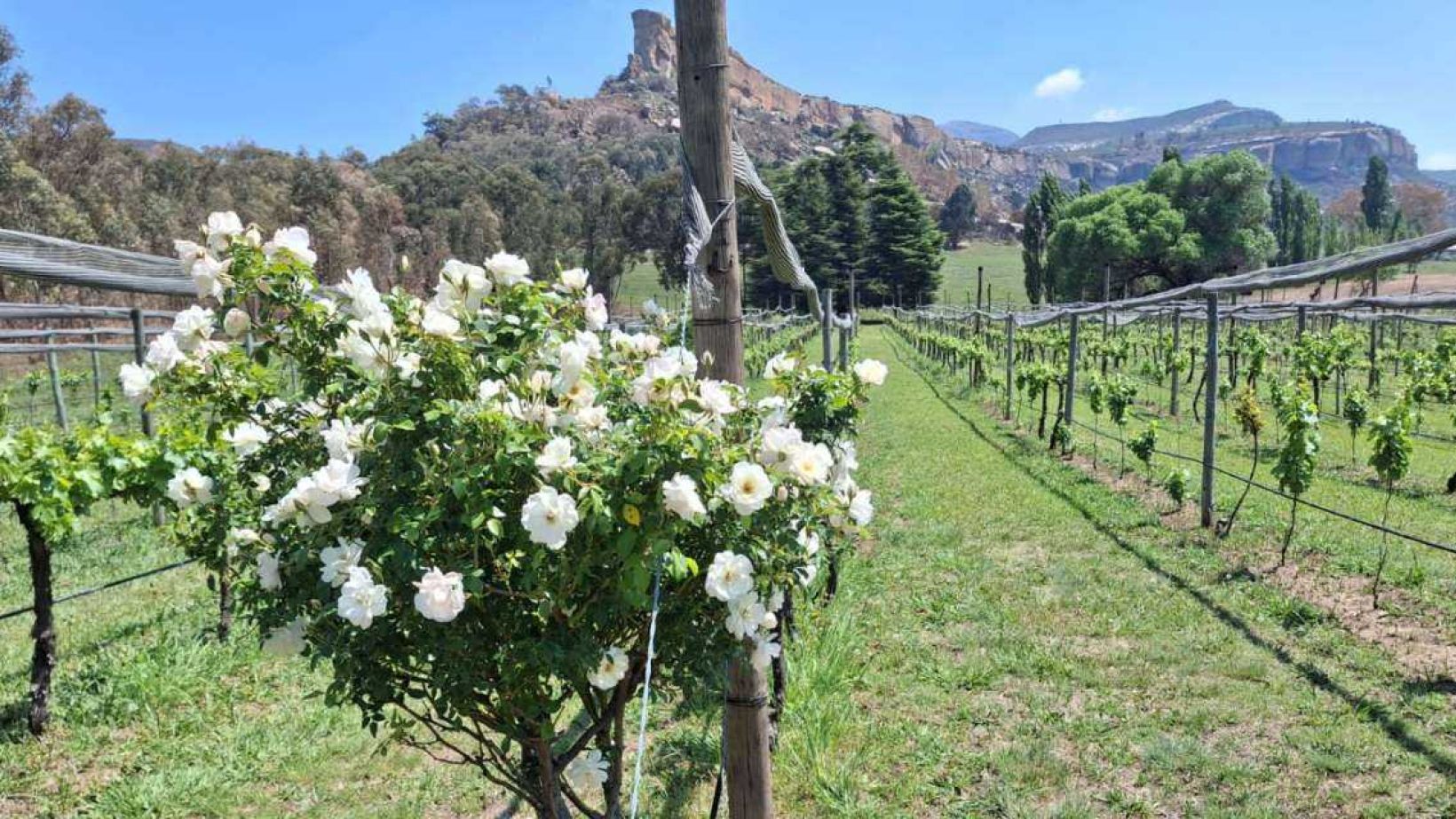
You can see the mountains of Lesotho from the farm gate. The air is thin, the light sharp, and the winters long and biting. It’s not where anyone would think to plant vines – except John and Trish Critchley.
In 2008, a friendly bet between John and Trish about who gets to plant what turned into a winemaking adventure. “I actually won the bet,” Trish says with a laugh. “So I was meant to plant lavender. But after I lost most of my trial plants, I handed the land over to John.”
John, never one to back down, announced he’d grow grapes instead. “You can Google anything,” he told Trish. He quickly learned that everyone thought he was mad. Too high, too cold, too far north, said the Cape growers. But one man, Johan Wiese of VoorGroenberg Nurseries in Paarl, believed in him. He sent John and Trish 2 000 Shiraz, Pinotage and Pinot Noir vines. It was the start of Mile High Vineyards.
The couple cleared the 2.5-ha plot by hand and with borrowed tractors. They limed the soil, planted in December and watched the fragile shoots take hold in the stony earth. A few months later, they went to Australia to visit their son and came back full of ideas from the Yarra Valley. “We added more varieties – Viognier, Tannat, Chambourcin, Tempranillo and Cabernet Sauvignon,” Trish says. “We didn’t really know what we were doing, but we were loving every minute.”
Then came the hail. A 15-minute storm in 2011 shredded the vines and their hearts. “It was devastating,” John says. But help came from neighbours and friends who donated rolls of hail netting. They hung the nets on old Telkom poles and saved what they could. “We still take them down every winter. The vines need the sunshine.”
In 2012, they picked their first harvest – with friends, laughter and a French-style breakfast. John weighed each crate on the bathroom scale. “It was primitive,” Trish recalls with a grin. “We stomped grapes barefoot and made 100 bottles of surprisingly drinkable Shiraz.”
Since then, they’ve grown, learned and built just about everything themselves – from 1 600-litre concrete vats to a system of trenches that drain the vineyards after floods. “It’s been one long science experiment,” John admits. “We lost 1 600 vines to pesticide drift and another 2 000 to black frost. But we always plant again.”
The vineyard, near Fouriesburg, is surrounded by sandstone cliffs and open veld. It’s a wild, untamed place, but the vines seem to like it. “The altitude gives us cool nights, which helps with acidity,” John says. “The summers are warm enough for reds such as Shiraz and Pinotage. Some years we make between 4 000 and 6 000 bottles.”
He does all the bottling himself. “About 600 a day,” Trish says. “I used to help until the day I went to the dentist and two ladies took over and finished the job faster. That was it for me. I was fired.”
They reuse bottles collected from a recycling project in Clarens. Each is scrubbed, stripped of labels and packed away in apple boxes until the bottling season. The labels are printed locally and stuck on by hand. Nothing fancy – just made with care and consistency.
Although Mile High Vineyards isn’t certified organic, their farming practices are gentle and thoughtful. “We compost with worm castings from our own vermiculture barn,” John says. “I started with a few worms and now there are millions. The soil’s pH has improved, the worms bring birds and everything feels alive.” His approach is simple. “No herbicides, no pesticides, only copper and sulphur for mildew. It’s the benefit of being small. You can prevent problems instead of reacting to them.”
The vineyard’s name came easily. “We’re 1 690 m above sea level – a mile high,” Trish says. “It made us smile.” The Mile High Vineyards logo, the bald ibis, is a nod to the rare bird which, like their wine, is endemic to this mountain region.
They’ve won their share of praise too. Their first Platter’s rating in 2014 earned three stars. A few years later, their Syrah Tannat scored four and a half stars. But the recognition seems almost beside the point. “We just love what we do,” Trish says. “And when someone drives all the way out here and takes a bottle home, that’s reward enough.”
They also run a small, laid-back restaurant on the farm where tastings and lunches are served from Tuesday to Saturday. Visitors often stay longer than planned, soaking in the views and the stories. “You can taste the place in the wine – the cool nights, the clean water, the stubbornness,” John says.
Before Covid, there were 16 vineyards in the area, and many started with cuttings from Mile High. Only five remain today, but the Critchleys believe the region still has promise. “We’ve heard about three new vineyards that are being planted this year,” Trish says. “There’s something special about this landscape. It gives back what you put in.”
What started as a bet and a patch of neglected veld has been turned into one of the highest and most unusual vineyards in South Africa. It’s proof that the best wine stories sometimes begin with a bit of defiance, a lot of patience and two people willing to learn as they go along.
“We’re not trying to be the Cape,” John says. “We’re just trying to be Fouriesburg. And that, for us, is more than enough.”
To explore more articles in our January issue, Future Now, purchase our digital or print magazine here.

More from
People, community and tourism
Hoe om herlewingslandbou te laat leef
'n Twee-dag sessie deur WIETA and Stronger Together South Africa op etiese leierskap vir kelders, plase en handelsmerke by Lourensford en Du Kloof Lodge het insigte oor herlewingsboerdery opgelewer.
Results of the Niche Varieties Challenge 2026
The Niche Varieties Challenge took place again in 2026 to give innovative niche wines a more visible platform and to highlight the diversity developing beyond South Africa's mainstream cultivars.
Are wine clubs in South Africa still relevant?
A bottle of wine is rarely just about what is in the glass. Sometimes it is about the people around the table, which may explain why wine clubs have managed to stick around. The Blaauwklippen Blending Competition offers a glimpse into why this old-school tradition still has a place in a changing…