
RDI Day honours the people behind South African wine research
South Africa Wine's first RDI Day, held on 7 October 2026 at Diamant Estate in Paarl, put the people who have spent more than 27 years building the industry's research, development and innovation capacity at the centre of the programme.

· 4 min read
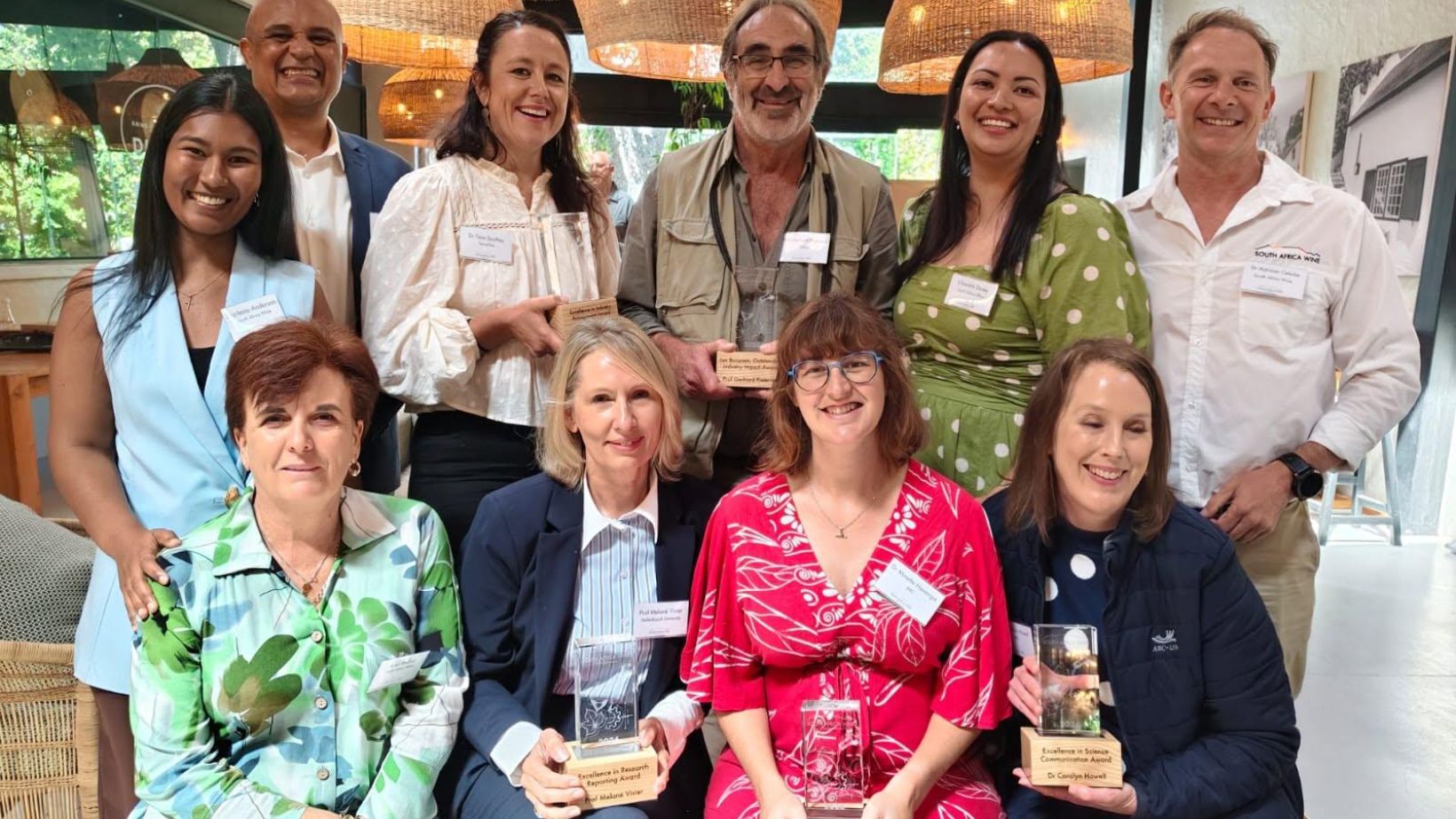
South Africa Wine’s first RDI Day celebrated the people behind more than 27 years of research, development and innovation in the industry. Speakers stressed that research must move from asking questions to practical impact, citing work in water management, climate readiness and plant breeding. Divan Venter won the Innovation Challenge, while awards recognised researchers for industry impact, science communication, engagement, emerging research and reporting.
Summary written by AI from this article. The full article is under “Deep dive”.
Listen to this article· 7 min
Passage 1 of 7
Read aloud by an AI voice. The words are the article’s own, nothing is summarised or translated.
Under the theme "Big ideas deserve a little celebration", the day recognised the work that has gone into building the industry's RDI community and the knowledge it continues to generate. Opening the programme, Gerard Martin, Executive Head: Research, Development and Innovation at South Africa Wine, described the event as a celebration of people. These are the people who have spent years asking difficult questions and finding ways to turn research into knowledge that can be used in the industry.
"Answers don't change the world, questions do. The point of research is not only to accumulate knowledge, but to ask better questions and find ways for that knowledge to be useful in the industry," he said.
The industry has built a substantial body of knowledge since 1999. Gerard pointed to decades of irrigation research as one example, with the resulting knowledge captured in a practical handbook that remains relevant as water becomes an even more important consideration for growers. He also credited Winetech with establishing a way for the industry to invest collectively in research that would have been difficult for individual producers to fund on their own.
Gerard spoke about research into climate readiness, plant breeding, water management, the circular economy, data intelligence, authenticity and no- and low-alcohol wine. He described the direction of the work as "from funding projects to building pathways to impact", with new technologies opening further possibilities for the industry. Stellenbosch University spin-out TerraClim was cited as an example of research moving beyond academia and becoming a business.
Keynote speaker Verity Price, an internationally recognised facilitator on creativity, innovation and leadership, returned to the question of what happens after a good question has been asked. Her message was that curiosity on its own is not enough. The answers need to lead to action if they are to change how people work.
That idea carried into the Innovation Challenge, presented by Dr Adriaan Oelofse. The challenge gave participants an opportunity to put new ideas forward, with the winning idea awarded to Divan Venter for asking: "Can we design an instrument to plug into a vine that can tell us what is wrong with the vine?"
The flagship panel looked back at the development of RDI in the industry. Led by Erhard Wolf, the panel included Casper Brink, Marko Roux, Prof Albert Strever, Dr Etienne Terblanche, Dr Eduard Hoffman, Dr Sandra Lamprecht and Dr Pierre van Rensburg, who chair South Africa Wine's RDI committees.
The discussion showed how much of the industry's progress has been built over time. Research rarely ends with one definitive answer. Knowledge develops as new questions are asked and findings are tested in practice. What begins as research can eventually become part of the way the industry works, often after years of work by different people.
Chandré Davey, the department's Knowledge Transfer Coordinator, said the event celebrated the research portfolio, researchers, committee members and the ideas that help develop the future of the South African wine industry.
"It also showed the importance of asking the right questions, being proactive rather than reactive, and driving research that addresses real industry needs. It was also clear that knowledge sharing and industry engagement are essential to turning research into practical solutions that support growth, encourage innovation and help create a sustainable future for the industry," she said.
The awards recognised researchers whose work has contributed to the industry and to the wider RDI community.
The Jan Booysen Outstanding Industry Impact Award went to Prof Gerhard Pietersen, a plant virologist specialising in leafroll disease. His work has contributed to a better understanding of the disease and to practical knowledge that continues to be used in the industry.
Dr Carolyn Howell, Senior Researcher at ARC Infruitec-Nietvoorbij, received the Excellence in Science Communication Award for her work communicating research around vineyard irrigation and helping growers make better use of available water.
Dr Tara Southey, founder and CEO of TerraClim, received the Excellence in Industry Engagement Award. TerraClim brings climate and terrain science into agricultural decision-making, providing information that can be applied at vineyard level.
The Emerging Researcher Award went to Dr Minette Havenga, Senior Researcher in Plant Protection at ARC Infruitec-Nietvoorbij. Her research focuses on fungal pathogens affecting grapevines, with particular attention to understanding the diseases and finding ways to manage them.
Prof Melané Viviers, who leads the Grapevine Molecular Biology and Biotechnology research group at the South African Grape and Wine Research Institute at Stellenbosch University, received the Excellence in Research Reporting Award for the group's work in integrative grapevine biology.
In his closing remarks, South Africa Wine Executive Director Rico Basson returned to the practical purpose of research and the importance of taking knowledge back into the industry. Research gives the industry a better understanding of its challenges, while the work that follows helps turn that knowledge into something people can use.

More from
People, community and tourism
Five questions with Liandra Kotzé
“Consumers haven’t stopped loving wine. They’ve changed how they choose it.” Wine marketers spend a great deal of time asking how to sell more wine. According to Vinimark Brand Portfolio Director Liandra Kotzé, the better question is whether we’re listening closely enough to the people we’re…
Fresh voices, fresh perspectives
What does the next generation of South African wine drinkers want? It is a question the industry keeps asking. This year’s New SA Wine Writer competition suggests that some of the answers might come from a new generation of storytellers.
The better half
Jeanine Craven is the other half of the Craven Wines partnership – the better half, if her husband, Mick, is to be believed.