
Making a name: Ónoma Private Cellar
Ónoma Private Cellar is a family-owned boutique winery nestled at the foot of the Stellenbosch Hills. Now this young brand is making a name for itself.
· 4 min read


Ónoma Private Cellar is a family-owned and operated boutique winery nestled at the foot of the Stellenbosch Hills on Felicia Farm. The farm was purchased by the Yiannakis family in 1999 and in the years that followed, Com Yiannakis began selling high quality grapes to larger estates in the area.
Com intended Felicia to be a retirement project, and converted two of its guest cottages into a home. “We always made wine just for family and friends every harvest,” says Blaise, his son. “The bulk was always sold out to the bigger farms. I’d started the project with my father in 2015, and we had some Syrah in bottle. We were busy maturing the Cabernet Sauvignon. Then my father passed away that year. So that’s also where the brand comes in.”
Ónoma (Greek Όνομα) stands for a good name, renown, character and reputation. The label, with its Greek wine amphora, reflects the fact that Blaise wanted to carry on his father’s name. As the only Greek wine farmer in the region, it also means making wine in the classic Greek tradition. “That’s why we try to go for just your noble harvests – classic, simple, unfussy. Just the way the Greeks would have made wines.”
The family has a tyre retreading business in Johannesburg, but Blaise is wrapping up its operations to focus solely on the farm and marketing the new brand. This year’s WINEX marked his first commercial release to the general public, and the response has been “phenomenal”.
Their mission statement, ‘your name is your honour’, informs everything from the viticulture to winemaking. This sense of pride and focus on quality produces award-winning Chardonnay, Merlot, Cabernet Sauvignon and Shiraz. “We’re not rushed or in the bulk game. It’s small quantities and only the best gets into the bottle.”
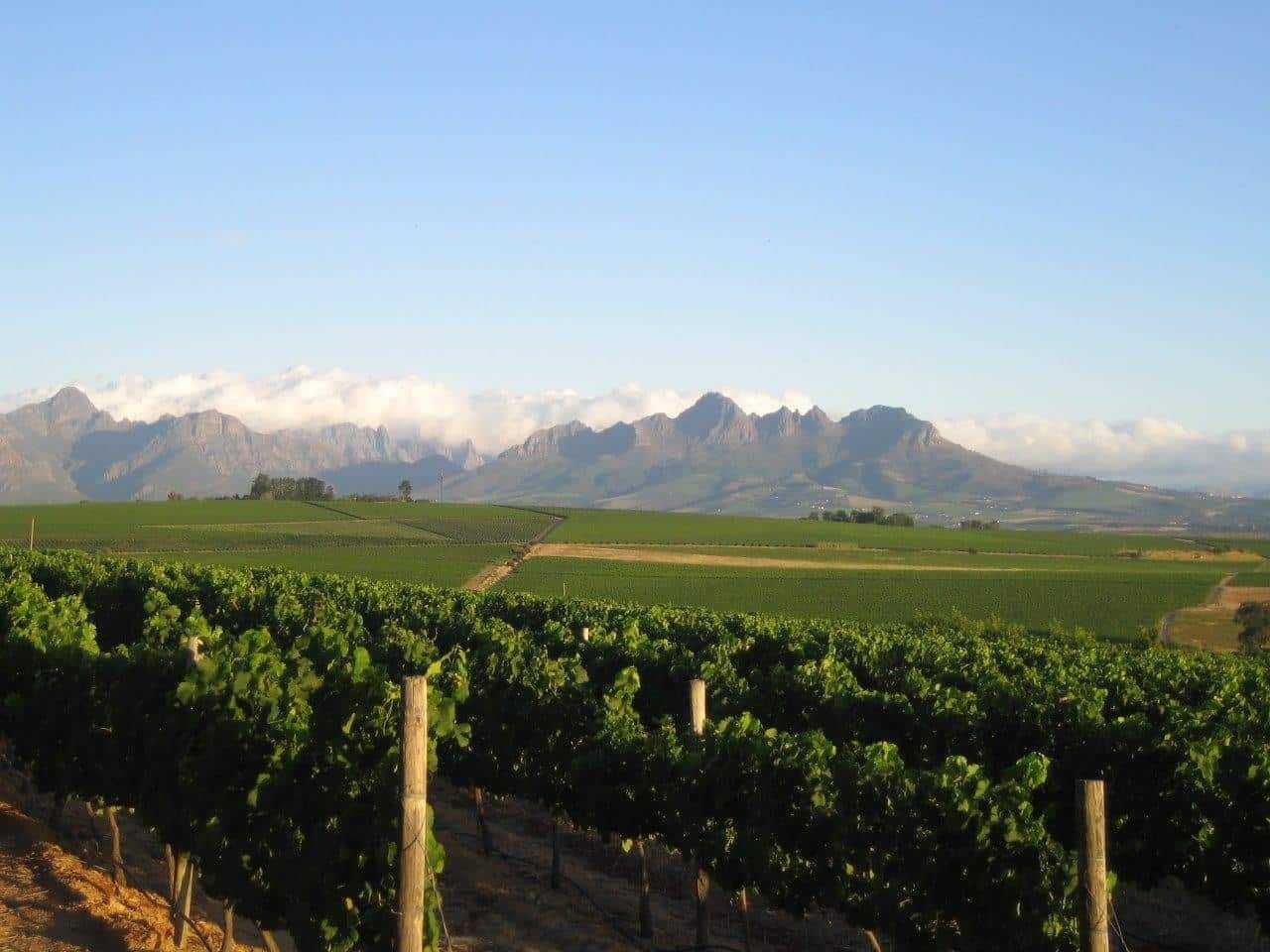
The grapes are highly sought-after, as the cool sea breeze on this side of the mountain keeps them cooler, delaying ripening. This helps both with the quality and planning, says Blaise. “When everybody’s ripening the first week of February, and we can hold out till the second or third week, it makes life a lot easier.”
The next step
Blaise has about 17.5 ha of vineyards. Currently he uses only a fraction of those grapes for his own brand, but that will soon change. “We’re on the process of constructing a small boutique winery next to the first block of vineyards near the farm’s entrance,” he says. “It will be a home where we can make our own wine on the premises.”
With a new cellar, he will be able to store the wine and won’t be under pressure to sell. It will also help give Ónoma a more tangible presence in the area, so that it won’t be necessary to refer to other well-known farms nearby when giving directions, such as De Toren across the Polkadraai road, or Raats Family Wines in Vlaeberg road on the far side.
Last, but not least, it will give winemaker Matthew van Heerden a permanent base where he can make Ónoma and his own personal brand.
Vineyards
Blaise has embarked on a replanting programme, renewing some of the underperforming Cabernet Sauvignon vineyards and adding a few others. “We’re looking at some of the Bordeaux blend varietals, like Cab Franc and some Petit Verdot, since there’s quite a demand.
“And ultimately, to keep the theme with the Greek heritage, I want to see if the soil is suitable for some of the Greek varietals like Assertiko. There’s also a varietal from our family island back in Greece I want to see if I can get my hands on – a 3000-year-old varietal called Limnio, which is indigenous to the island of Lemnos.”
The cellar won’t be big, but more than adequate to handle everything coming from the vineyards. “It should effectively handle everything the farm produces. Get it in, make the wine, get it into barrel, store the barrels, then the next batch coming through.”
Ónoma has already come a long way since its first harvest in 2015. When the cellar’s up and running, things will kick into a new gear. “It’s time now to give it a proper chance and see where it takes us,” says Blaise. “People want a hands-on, small boutique farm where there’s a bit of care and a different product. We’re not out of the way and it’s close to a few other farms, so people can make it part of their route.”

Ónoma Private Cellar wines can be purchased online or at select wine merchants in Johannesburg and Cape Town.
Click here to get the latest copy of WineLand Magazine, or subscribe to our monthly newsletter.

More from
Markets, business and trade

Does Government know what it’s costing you?
A decision made in Pretoria can change the way a wine business operates. But who makes sure the people making those decisions understand what happens on the ground? South Africa Wine’s Jordyn Goeieman takes us inside the often unseen work of influencing the policies that affect the industry.

All roads lead to Wine Paris
With professionals from more than 169 countries attending Wine Paris in 2026, the exhibition has become an increasingly important meeting point for the global wine trade. Nicolas Cuissard, Director of Wine Paris, speaks to WineLand about the exhibition’s growing international influence, opportunities for South African producers and what it takes to turn participation into business.
Before you bottle it, can you sell it?
A good wine and an attractive label are not enough to build a sustainable business. South Africa Wine’s Phil Bowes explains why finding customers, testing assumptions and understanding the numbers should come before committing to a new wine brand.