
Paving the way to a sustainable wine trade
On 2 November 2026, WWTG Governments endorsed principles that governments may take into account to avoid unjustified or unintended impacts on trade for the wine sector related to sustainability policies.
· 3 min read
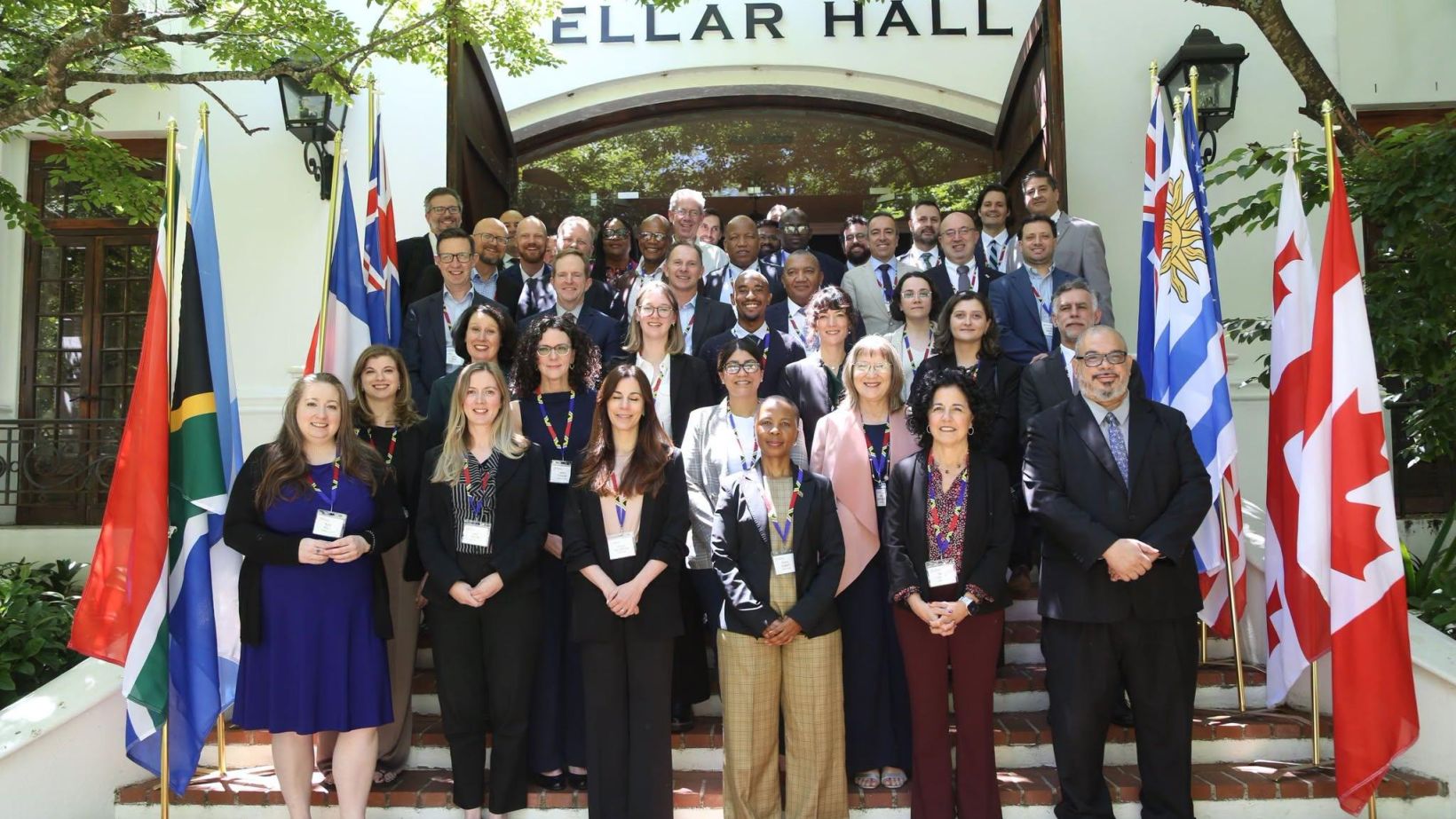
The WWTG is a group of government and industry representatives from the wine-producing countries of Argentina, Australia, Canada, Chile, Georgia, New Zealand, South Africa, the United States, and Uruguay. Founded in 1998, the Group aims to facilitate international trade in wine through information sharing, discussion of regulatory issues in wine markets, and joint actions for the removal of trade barriers.
South Africa hosted the World Wine Trade Group (WWTG) Annual Meeting in Stellenbosch from 1 to 4 November 2026.
On 2 November 2026, WWTG Governments endorsed the Stellenbosch Principles.
Stellenbosch Principles
The following provides a non-exhaustive list of principles for governments to take into account to avoid unjustified or unintended impacts on trade for the wine sector related to sustainability policies. Their purpose is to promote and ensure sustainable winegrowing practices, while avoiding the creation of trade barriers.
These principles would likely result in measures that encourage competition; promote consumer choice; deepen international capacity; support producer adaptation; reduce or eliminate trade barriers; promote trade flows; and support increased efficiency, resilience, and innovation.
To these ends, governments should consider the following principles related to wine trade, as appropriate. These principles are voluntary and non-binding:
Principle 1: Avoid unjustified restrictions and excessive compliance costs when implementing sustainability measures
- Avoid prescriptive, one-size-fits-all approaches;
- Recognise there are multiple approaches to achieve outcomes due to differing growing, production and environmental conditions, and therefore base compliance on performance, rather than requiring specific cultivation or production methods;
- Give positive consideration to accepting approaches of other countries, even if those approaches differ from their own, provided that such approaches adequately fulfill policy objectives of their own measures;
- Base measures on international standards, guides, and recommendations, or relevant parts of them, where they exist, except where such international standards would be an ineffective or inappropriate means to fulfill the objective pursued;
- Avoid the imposition of unnecessary costs or burdens on producers and importers;
- Consider the use of a supplier’s declaration of conformity to demonstrate compliance;
- Consider the acceptance of non-governmental, private sector certification schemes when third party certification is required;
- Provide options for non-governmental, third-party conformity assessment when conformity assessment is required;
- Ensure that any reporting and due diligence requirements, if imposed, are limited to the information necessary to assess compliance; and
- Consider the use of digital labels to provide sustainability-related information, including on packaging disposal, reuse, and recycling.
Principle 2: Use science- and risk-based decision-making
- Use the best available science and evidence;
- Take into account the risk of non-fulfillment of relevant measures, including through the use of risk assessments;
- Explore opportunities to accept the use of new and innovative technologies to facilitate trade and advance more sustainable agricultural practices; and
- Raise public awareness of scientific information regarding the role of new and innovative winegrowing technologies in reducing the environmental impact of wine production.
Principle 3: Promote stakeholder engagement and transparency throughout the development of measures to support more sustainable wine production
- Notify proposed measures in accordance with the procedures established under the World Trade Organization Agreement on Technical Barriers to Trade;
- Promote transparency and stakeholder participation in the regulatory development process;
- Engage with trading partners and relevant stakeholders in technical cooperation and exchange of information and lessons learned regarding evidence-based approaches and best practices; and
- Except in urgent circumstances, provide a reasonable interval, of no less than six months, between publication of a measure and its entry into force to allow grape growers and wine producers in exporting countries to adapt their practices or methods of production to the new requirements, taking into consideration:
- growing seasons based on the country of production; and
- transition timelines that protect stock that has already been produced.

More from
Markets, business and trade

Does Government know what it’s costing you?
A decision made in Pretoria can change the way a wine business operates. But who makes sure the people making those decisions understand what happens on the ground? South Africa Wine’s Jordyn Goeieman takes us inside the often unseen work of influencing the policies that affect the industry.

All roads lead to Wine Paris
With professionals from more than 169 countries attending Wine Paris in 2026, the exhibition has become an increasingly important meeting point for the global wine trade. Nicolas Cuissard, Director of Wine Paris, speaks to WineLand about the exhibition’s growing international influence, opportunities for South African producers and what it takes to turn participation into business.

Before you bottle it, can you sell it?
A good wine and an attractive label are not enough to build a sustainable business. South Africa Wine’s Phil Bowes explains why finding customers, testing assumptions and understanding the numbers should come before committing to a new wine brand.