
Precision Fermentation: Biotech to balance Flavours, Acid and Alcohol
As warmer vintages widen the gap between ripeness and freshness, a new generation of selected yeasts lets winemakers rebalance wine during fermentation, not after.
· 2 min read
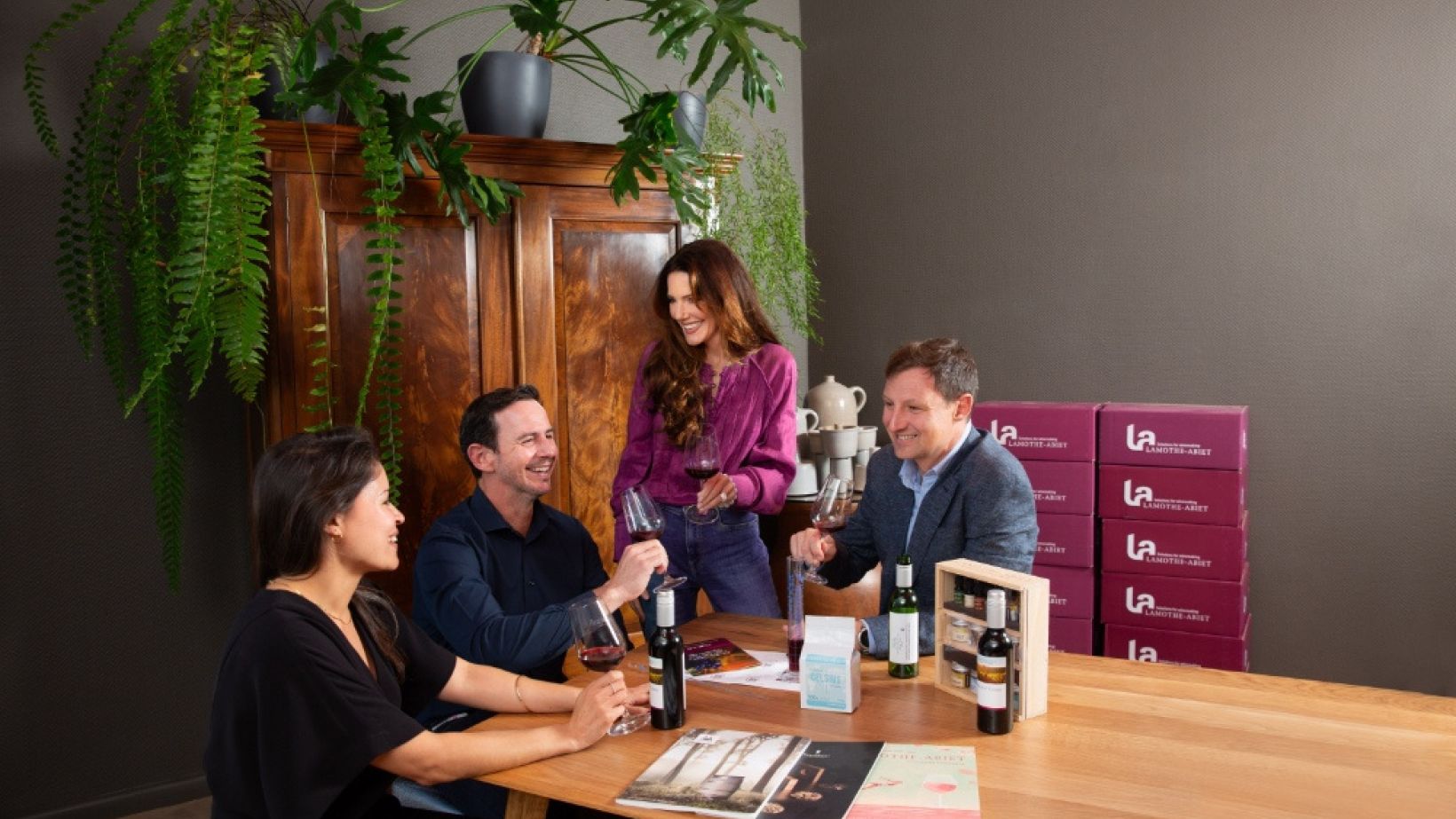
Warmer ripening can force winemakers to choose between aromatic and phenolic maturity and retaining acidity, with consequences for alcohol, pH and freshness. Excellence® Celsius redirects more sugar to glycerol, reducing alcohol by about 0.4–0.7% abv while producing malic acid; trials report higher acidity, lower pH and roundness. Excellence® X-Fresh enables stronger bioacidification, including through a dedicated ingredient tank for blending.
Summary written by AI from this article. The full article is under “Deep dive”.
Listen to this article· 4 min
Passage 1 of 5
Read aloud by an AI voice. The words are the article’s own, nothing is summarised or translated.
For winemakers, warmer ripening widens the gap between technological maturity and freshness. Waiting for full aromatic and phenolic maturity raises sugar and lowers acidity at harvest; picking earlier to protect acidity can compromise flavour or phenolic development. The result is a familiar cellar trade-off: capturing ripe-fruit expression while keeping alcohol, pH and freshness in balance.
Conventional acidification and ion exchange remain effective, but advances in wine microbiology now let winemakers influence part of that balance during fermentation itself: selected yeasts can redirect sugar metabolism, produce organic acids and modify fermentation yield.
Excellence® Celsius: gentle rebalancing in the tank
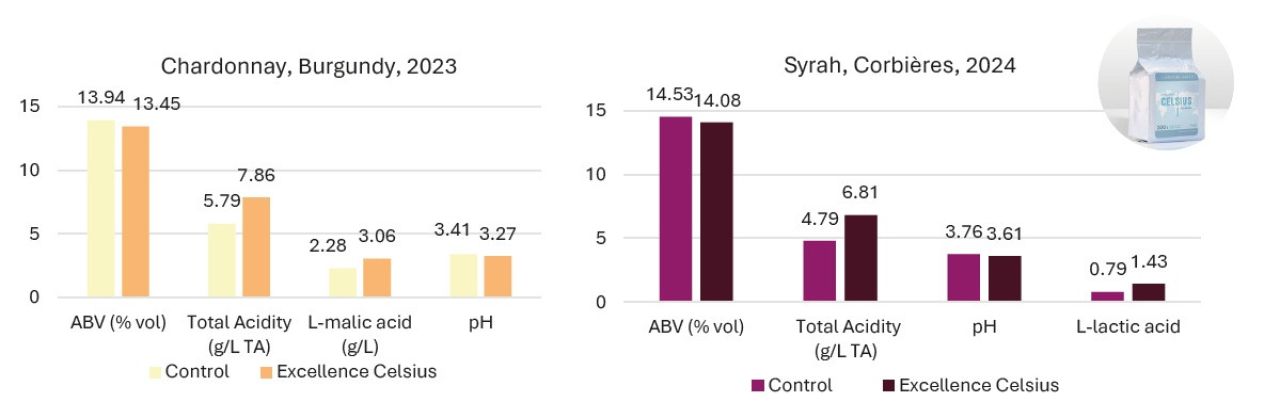
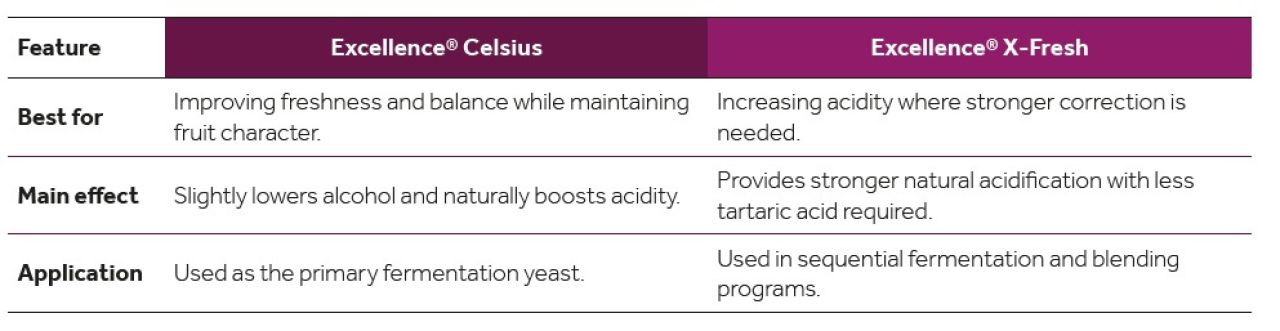
Excellence® Celsius has a lower sugar-to-alcohol conversion yield than conventional S. cerevisiae, diverting more fermentable sugar toward glycerol. In trials this reduces final alcohol by approx. 0.4–0.7% abv while producing L-malic acid during fermentation, raising total acidity and lowering pH. The aim isn’t a ‘low-alcohol wine’, but more room to reach ripeness while moderating its alcohol-and-acidity consequences.
The added acidity also supports microbial stability and creates more favourable conditions for malolactic fermentation. The strain ferments robustly, with very low volatile acidity and SO₂, and adapts across warm-climate reds, white and rosé press fractions and sparkling bases – reducing the need for later acidity correction and saving cost.
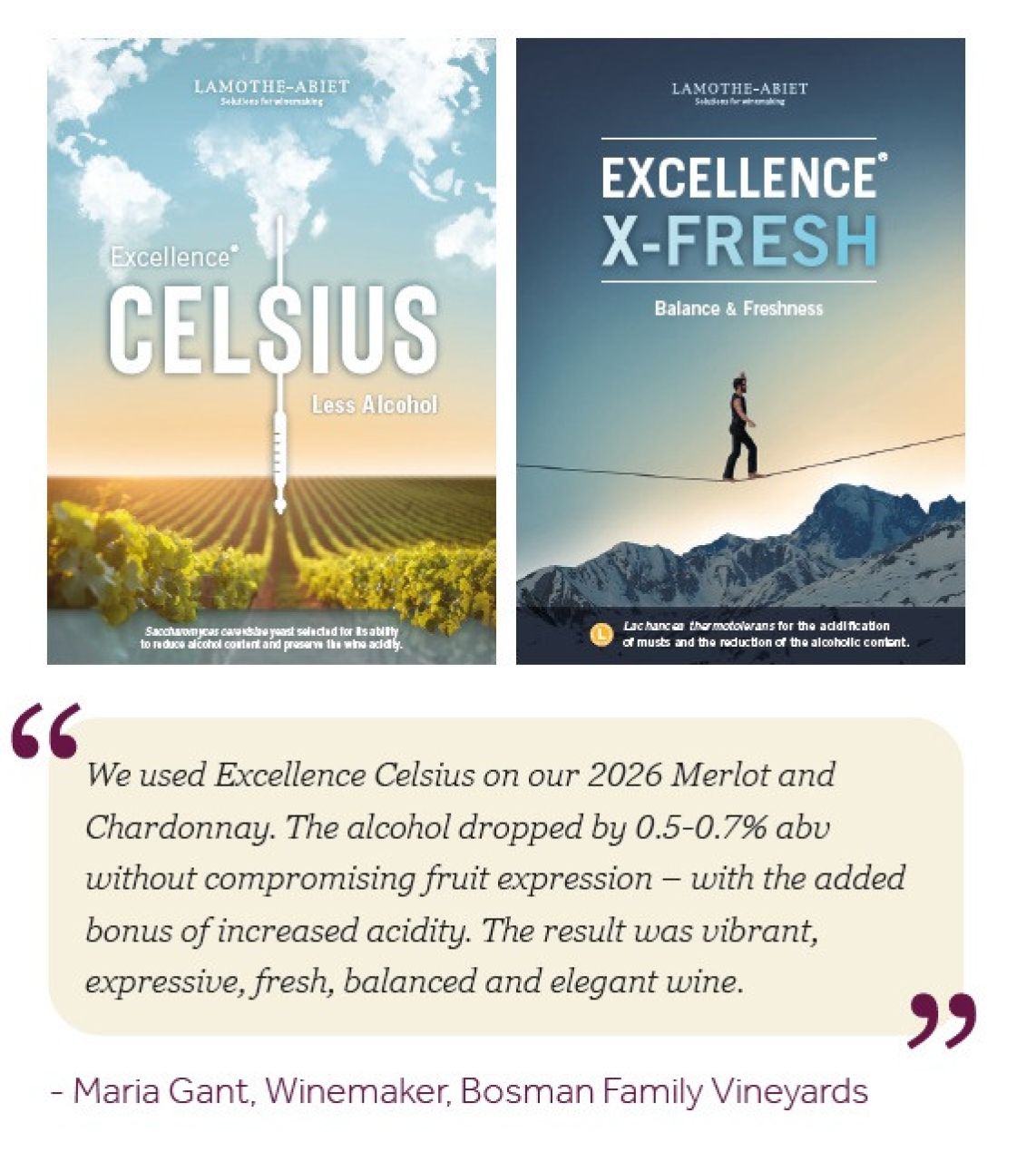
Proven in the cellar
International trials on Chardonnay and Syrah show the effect: higher total acidity, lower pH, more glycerol and roundness, and reduced final alcohol.
Excellence® X-Fresh: targeted bio acidification
Where Celsius rebalances gently, non-Saccharomyces yeasts offer a more targeted route to pronounced acidification. Excellence® X-Fresh was developed specifically for this. In a 2025 Cabernet Sauvignon trial it lifted total acidity from 6.03 to 11.31 g/L while lowering pH from 3.59 to 3.32, a substantial, biologically driven correction.
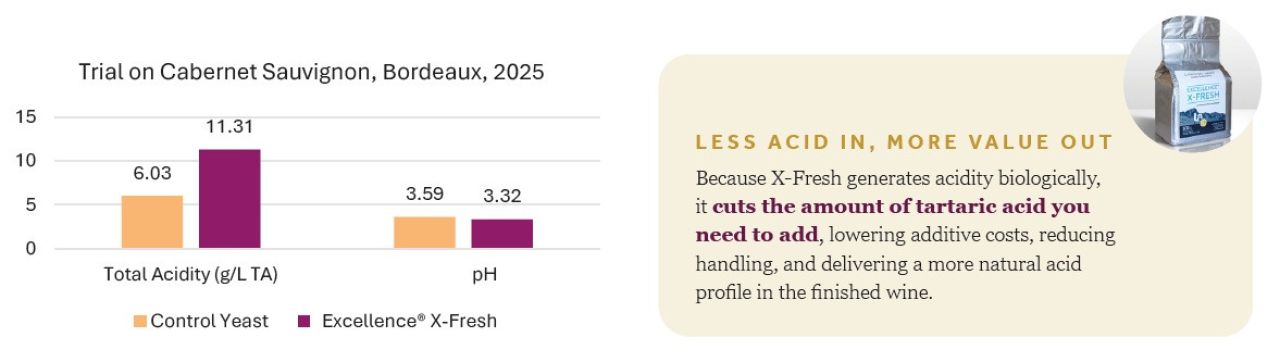
Best applied under controlled sequential inoculation with an alcohol fermentation yeast, X-Fresh is used to strongly bioacidify a dedicated ‘ingredient’ tank for blending, maximising its potential while simplifying correction of larger volumes.
Complementary tools, one philosophy
Bioacidification is a practical additional tool for managing the ripeness, alcohol and acidity relationship. It is less about acidification itself than the flexibility it gives when maturity, sugar and style don’t align. Which tool fits depends on the size of the adjustment required:
Choosing the right tool
BioCraft: Agents for Lamothe-Abiet, Tonnelerie Radoux, Gauthier Freres, Pronektar, EP Minerals and Lake International
+27 21 872 8125 | [email protected] | biocraft.co.za

More from
Markets, business and trade

Does Government know what it’s costing you?
A decision made in Pretoria can change the way a wine business operates. But who makes sure the people making those decisions understand what happens on the ground? South Africa Wine’s Jordyn Goeieman takes us inside the often unseen work of influencing the policies that affect the industry.

All roads lead to Wine Paris
With professionals from more than 169 countries attending Wine Paris in 2026, the exhibition has become an increasingly important meeting point for the global wine trade. Nicolas Cuissard, Director of Wine Paris, speaks to WineLand about the exhibition’s growing international influence, opportunities for South African producers and what it takes to turn participation into business.
Before you bottle it, can you sell it?
A good wine and an attractive label are not enough to build a sustainable business. South Africa Wine’s Phil Bowes explains why finding customers, testing assumptions and understanding the numbers should come before committing to a new wine brand.