
Second chances
A former creative director and ad agency owner gets a second chance at a successful career by launching a quirky wine brand aimed at women. The results speak for themselves.

· 5 min read
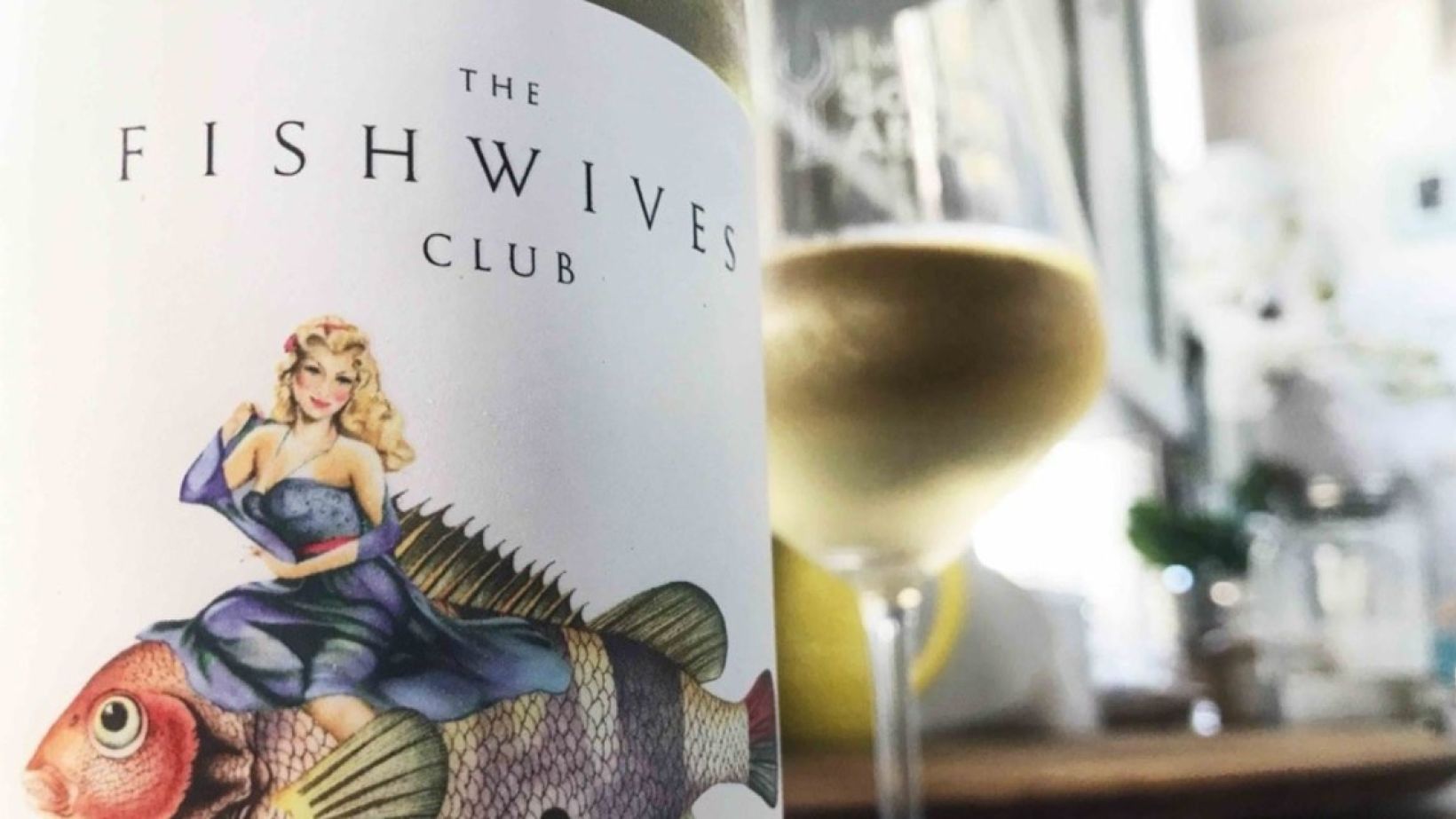
Patrick James Robertson, founder and CEO of The Fishwives Club, had his first introduction to wine as a 10-year-old boy on a school outing to the Swartland. “We were at a farm in the middle of nowhere,” he recalls. “While the other kids were all watching the farmer milk his cows, I wandered off to do my own thing. Suddenly, there was this powerful, astringent smell of fermenting grapes in the air. I found the cellar, stacked with barrel after barrel, impeccably clean and neat, with a polished red buchu-like floor. The cool temperature was a relief from the heat outside. I was spellbound. The scent of maturing wine still takes me back to that day.”
A long road
In 2012, when Patrick was 43, his ad agency and long-term relationship had both been swept away by unfortunate circumstances and tragedy. He left Johannesburg penniless and moved to Hout Bay, where he grew up, to consider his options and plan a new beginning. One day, he noticed a drawing and mock-up in the design portfolio of two talented young designers and sisters. “I couldn’t stop looking at the design – a young woman riding a fish – and asked them if they would sell me the artwork,” he says. “I knew it would tell a great story. A year later, I started The Fishwives Club wine brand and used the design as its official emblem.”
The idea behind The Fishwives Club was to create a wine brand that caters specifically to women. “Ed, my housemate at the time, initially started the brand with me before deciding to move on to other things. His mom loaned us R12 000 from her life’s savings, which we used to buy our first labels. We would then sell our hand-labelled bottles of wine at the Stellenbosch Slow Market.”
The proceeds were ploughed back into the business to bottle the next few cases. Patrick carried on like this for several years until he’d saved up enough to buy more stock. “The whole enterprise was self-funded from little sales here and there, and no financial assistance. It was a difficult road, to put it mildly!”
Secret recipe
The Fishwives Club wines are crafted by Theunis van Zijl at Imbuko to fit a specific taste profile that was developed with Hermann Kirschbaum, head winemaker at Buitenverwachting at the time. “The owner, Lars Maack, was instrumental in the beginning,” Patrick says. “He took a chance on me and believed in my vision when nobody else would. Lars asked Hermann to assist and guide me.”
The Fishwives Club currently produces a Sauvignon Blanc, Pinotage Rosé, Chardonnay, Merlot and Cabernet Sauvignon. For one of the wines, Patrick wanted Hermann to mature the grapes using a specific type of wood, which he initially was reluctant to do because it was so unconventional. Patrick persisted and, weeks later, the result surprised even the seasoned winemaker. “This special recipe was passed on to Theunis, an award-winning winemaker in his own right,” Patrick says. “He faithfully reproduced our style and has been doing so consistently for many years.”
The brand’s rapid growth necessitated a bigger cellar, which is why production moved to Imbuko. “I’ll forever be grateful to Lars and Herman, my first mentors,” Patrick says. “The long-term agreement with Theunis at Imbuko is working well for both of us. We now export to 16 countries and we’re still growing strong.”
A distinctive style
The label designs take their inspiration from the elegant pin-up style artwork, which was often seen on the sides of American bombers in the ’40s and ’50s. “My job in advertising was to create brands and develop advertising campaigns, so I still do all the advertising and marketing myself. With the AI tools available these days, it’s like having an entire creative studio at my fingertips,” he says.
The Fishwives Club’s distinctive look and feel make the brand instantly recognisable in markets around the world. Its visuals effectively cut through communication barriers to communicate in a universal language. “I always get amazing feedback from consumers about how much they love the brand with its fresh and innovative, unfussy approach to wine.”
The next wine label will be called Octavia’s Sinful Secret. The label depicts an octopus in the shape of a beautiful woman with long tentacles from the waist down. “We’ll use this brand to create experimental and daring Chenins and white blends, making it highly customisable,” Patrick says. “White wines predominate. They are preferred by our market, which is 87% female.”
The future
The Fishwives Club raked in two gold medals at the Michelangelo International Wine and Spirits Awards 2025. It was the first time it had entered an international wine competition. “We were so grateful and inspired by this news,” Patrick says. “Thanks to Theunis, we won a gold medal for our Chardonnay and another gold for our Cabernet Sauvignon. Our Sauvignon Blanc was awarded 94 points by Decanter a while ago, even though we never entered it for tasting. The judges wanted to try it for themselves and when they did, I think they were pleasantly surprised that The Fishwives Club’s not just a pretty face.”
The Fishwives Club Sauvignon Blanc is also one of the three biggest-selling South African Sauvignon Blancs at the Liquor Control Board of Ontario in Canada. “The nearest two South African competitors are several dollars cheaper than us, showing our quality and loyal following wins out.”
Taking care of all the marketing and day-to-day running of the brand keeps Patrick fully occupied. His wife, Gillian, is also becoming more involved. “My kids – age eight and 11 – often chip in their unique ideas,” he says. “So now The Fishwives Club is a real family business. We’re working hard and our family dream is to make it the most recognisable wine brand in the world.”
To explore more articles in our December issue, Vat die pad, purchase our digital or print magazine here.

More from
Markets, business and trade

How research is changing the wine we drink
Wine research starts long before the bottle reaches the shelf. It gives producers a better understanding of what happens in the vineyard and cellar, while providing evidence for decisions that can affect the wine consumers eventually drink.
Precision Fermentation: Biotech to balance Flavours, Acid and Alcohol
As warmer vintages widen the gap between ripeness and freshness, a new generation of selected yeasts lets winemakers rebalance wine during fermentation, not after.
WBWE – a global business barometer
If you want to understand where the global wine industry is heading, don’t look only at retail shelves or export statistics. Look at what is happening in the bulk wine market.