
Wine Paris calling
This year’s Wine Paris confirmed one thing: South Africa is in demand , but we need to show up sharper, stronger and more strategic than ever before.

· 8 min read
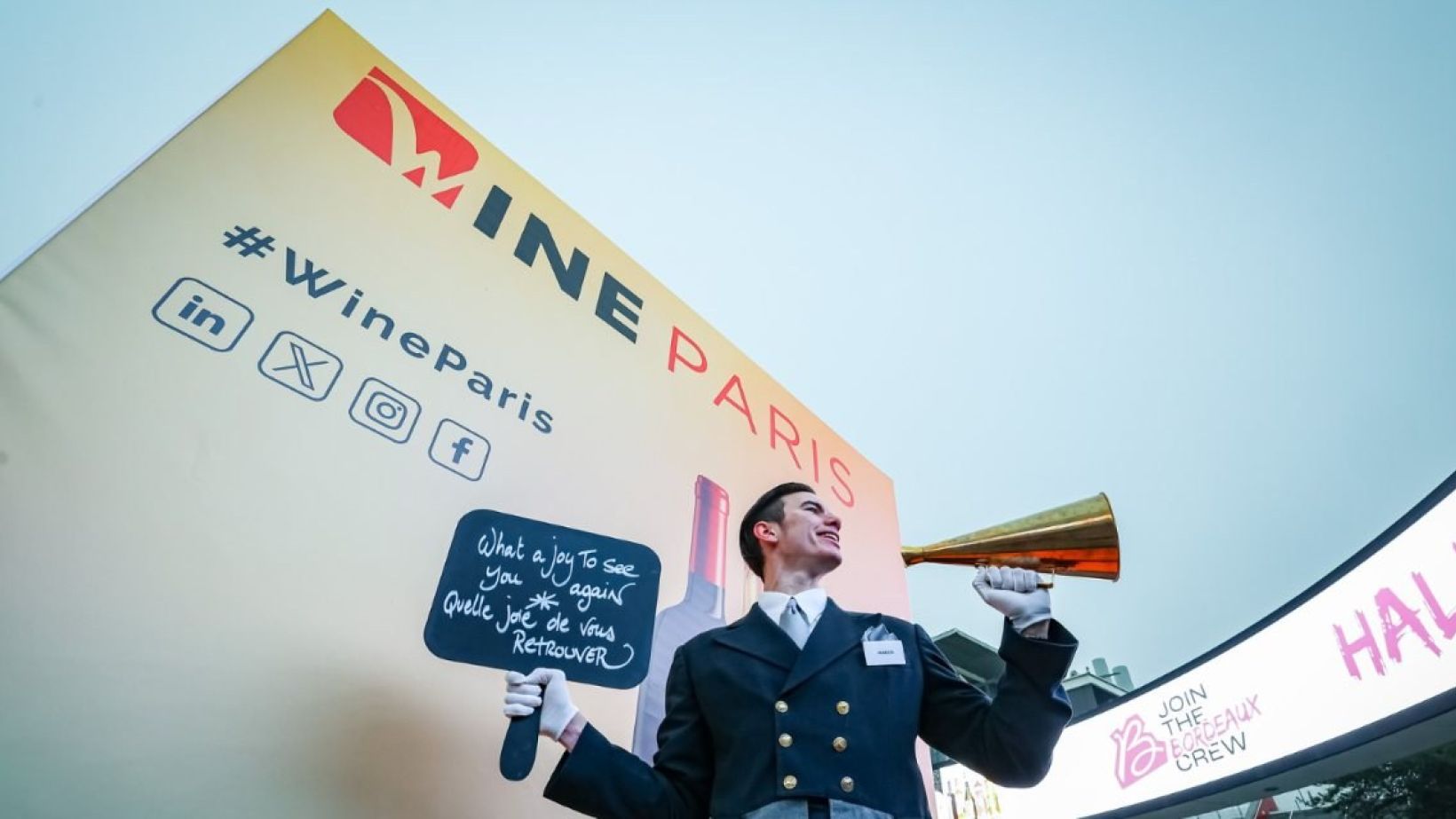
Paris in February has a particular energy. The city moves differently compared with other months of the year. Cafés spill onto pavements despite the cold. Animated conversations stretch long into the evening. And this year, inside the vast halls of Paris Expo Porte de Versailles, people from the global wine industry gathered with that same intensity – analysing, negotiating, tasting, recalibrating.
Wine Paris 2026 felt like a summit, think tank and pulse check rolled into one on where the wine world is heading. With more than 62 000 trade visitors from 154 countries, the scale alone makes it impossible to ignore.
“Wine Paris has now surpassed ProWein in visitor numbers,” Wines of South Africa CEO Siobhan Thompson says. “It’s fast becoming and could arguably already be considered the largest wine and spirit trade show in Europe with a truly global audience.”
For South Africa, that kind of scale matters. Visibility matters. Presence matters. But so does preparation.
A different rhythm
If ProWein feels like Düsseldorf – structured, methodical, appointment-driven – Wine Paris feels more like Paris itself: dynamic, layered, slightly unpredictable. There is, however, one similarity. Buyers arrived with full diaries. “Wine Paris remains a buyer-driven appointment show,” Bayede! Royal Signature Wines and Spirits CEO Ansie Truter says. “Cold outreach delivers minimal results. Confirmed meetings are everything and buyers prioritise structured tastings and confirmed diary slots.”
Siobhan observed another important difference. At ProWein, South Africa is traditionally a priority stop. In Paris, with its strong French and Old-World dominance, buyers often visit Hall 6 – where South Africa is located – later in their schedule. “At Wine Paris, South Africa is sometimes later on the agenda,” she says. “Which reinforces the importance of proactive appointment-setting and pre-show engagement.”
For DGB international director Greg Guy, objectives were clear from the outset. “Our primary goal was to meet with as many of our existing customers as possible and hopefully secure new importers in markets where we currently don’t have distribution,” he says. “It’s almost a requirement to be here if you consider yourself a global wine brand. It’s not cheap, but you can’t afford not to show up.”
A quality crowd
One consistent message from producers, remains: the buyers are serious.
“My main objective was to strengthen Zoetendal Vineyards’ presence in key export markets and connect with importers who focus on premium, small-batch South African wines,” Zoetendal sales and brand executive Denzel Swarts says. “I was also looking to open new opportunities in Europe and Scandinavia, and to build long-term relationships rather than chase short-term sales.”
Did the expo deliver?
“It definitely met my expectations and in some cases exceeded them, with a few meaningful commercial conversations and strong interest in the brand,” he says. “Germany, Scandinavia – especially Sweden and Norway – Finland and Canada showed strong interest. Nigeria and Kenya provided positive African engagement, while early-stage discussions linked to Japan and even China signalled broader reach.”
Koni Mahiele of Koni Wines experienced similar buyer quality. “Buyers were typically well informed, prepared with short briefings on South African categories and open to tasting new SKUs,” he says. “There was a strong presence from Europe, the UK, America and Canada, and a healthy mix of decision-makers who could authorise sample orders or smaller allocations.”
Greg’s assessment echoes that sentiment, with one caveat. “The profile of buyers was good,” he says. “They were serious, knowledgeable, engaged, but there simply weren’t enough new ones. “
Canada, however, stood out clearly. “By far the strongest interest came from Canada,” he says. “In terms of genuinely new enquiries of substance, there wasn’t much that surprised us.”
For Carolyn Martin of Creation Wines, the calibre of discussion stood out. “Wine Paris has become one vast think tank for wine, where the global trade comes together to analyse, dissect, problem-solve and collaborate,” she says. “The concentration of serious buyers and calibre of discussions made the trip absolutely worthwhile.”
And then there was the energy around South Africa’s collective stand. “I was very encouraged by South Africa’s position this year,” she says. “Being grouped together in the busy International Hall 6 created a strong sense of presence and made it easy for buyers to explore South African wine as a coherent, high-quality offering.”
An unavoidable conversation
Lurking beneath the overall optimism, was a recurring undercurrent. Price. “The biggest shift I noticed is increased price sensitivity,” Denzel says. “Buyers are more cautious and very focused on margins and value.”
Vinimark international sales director DeBruyn Steenkamp says he experienced the same reality. “Given the tough trading climate, and duties and tariffs, price and value at the price point remain key,” he says.
Greg is even more direct in his assessment. “There continues to be a shift toward cheaper wine,” he says. “Markets are under pressure and, with surpluses in many countries, there’s simply too much wine around. Global economic pressure was central to every single discussion we had.”
Yet the story does not end there. Denzel noticed that buyers still respond strongly to premium positioning. “Our cool-climate, terroir-driven wines in the premium segment attracted the most attention,” he says.
While volume at entry level is increasingly difficult, value remains achievable, Greg says. “We simply can no longer compete at entry level,” he says. “Volume is tough, but there seems to be interest in our more premium wines. Value exports also present opportunities.”
Stand-out styles
If buyers are scrutinising price, they’re also tasting with intent. “As always at these shows there’s strong interest in our unique varietals,” Greg says. “Chenin and Pinotage were tasted a lot.” He also noticed a growing focus on specificity. “There’s a strong interest in regional specialities. Generic WO Western Cape is less popular unless buyers are price shopping, in which case region is not really an issue.”
Carolyn says she noticed a growing appetite for authenticity and site expression. “Buyers are more open to distinctive, nuanced wines and exploring different regions and styles in South Africa,” she says.
Trends now requirements
If price was the hard-nosed business conversation at Wine Paris 2026, sustainability was the deeper strategic one. “Sustainability has moved from the periphery to the centre of buyer conversations,” Carolyn says. “People want to understand farming practices, environmental impact, community engagement and how producers are future-proofing their vineyards and business models.”
Koni also noticed the shift in demands. “Buyers asked for verifiable data and certifications,” he says. “There’s a growing emphasis on traceability and reduced environmental footprint.”
For Carolyn, sustainability is not a compliance box but a leadership opportunity. “South Africa has a real opportunity to position itself not just as a source of distinctive wines, but a leader in a broader, people-centred, regenerative approach,” she says.
Scale and substance
Beyond the individual stands, Wine Paris 2026 felt like a global barometer. Low- and no-alcohol wines were highly visible across the halls, reflecting broader category shifts. This segment appears to be moving beyond niche status, Siobhan says. There was also a noticeable Canadian presence, particularly in provincial monopolies, structured systems that reward long-term consistency and relationship-building.
Importantly, many producers spoke more about strategic positioning than about immediate orders. Denzel highlighted potential distribution pathways in Germany, tender opportunities in Scandinavia and strengthened networks in West Africa. “These kinds of relationships are what drive export growth over time,” he says.
For Carolyn, Wine Paris 2026 was also about longer view. “You’re not just collecting business cards,” she says. “You’re engaging meaningfully with people who are influencing the global wine agenda.”
Cautious confidence
The mood among producers was not euphoric, but steady. “I would say I’m cautiously optimistic,” Denzel says. “There’s genuine interest in premium South African wines. For producers who stay consistent, invest in relationships and remain clear about their positioning, I believe there are solid opportunities for growth.”
Greg’s outlook is similarly measured. “The next 12 to 24 months will continue to be tough,” he says. “But there’s interest in premium South African wine. We need to focus where we can compete and protect value rather than chase volume.”
Siobhan frames it strategically. “Wine Paris highlights both opportunity and competitive pressure,” she says. “Diversification into markets in Africa, Eastern Europe and Asia is strategically important, particularly given economic pressures in traditional core markets.”
Lessons from Paris
If Wine Paris 2026 delivered one unified message, it’s that buyers aren’t playing around. They really care about price, proof and sustainability. Being ready to engage is a must and building and nurturing relationships is the key to long-term growth. There’s genuine interest in and plenty of opportunities for South African wines. Now it’s all about being consistent, clear and making things happen.
“It’s all about being realistic,” Greg says. “You show up because you have to. You defend your space. You protect your value. And you focus on the markets where premium still resonates.”
To explore more articles in our May issue, Woeker met jou wingerd, purchase our digital or print magazine here.

More from
Markets, business and trade
Precision Fermentation: Biotech to balance Flavours, Acid and Alcohol
As warmer vintages widen the gap between ripeness and freshness, a new generation of selected yeasts lets winemakers rebalance wine during fermentation, not after.
WBWE – a global business barometer
If you want to understand where the global wine industry is heading, don’t look only at retail shelves or export statistics. Look at what is happening in the bulk wine market.
Reaching for the summit
Every mountain has a summit, and every summit demands time to reach it.