
Going solo
Carl Schultz has spent a lifetime working with wine. Now, after more than three decades at the top, he’s starting again on his own terms.

· 7 min read
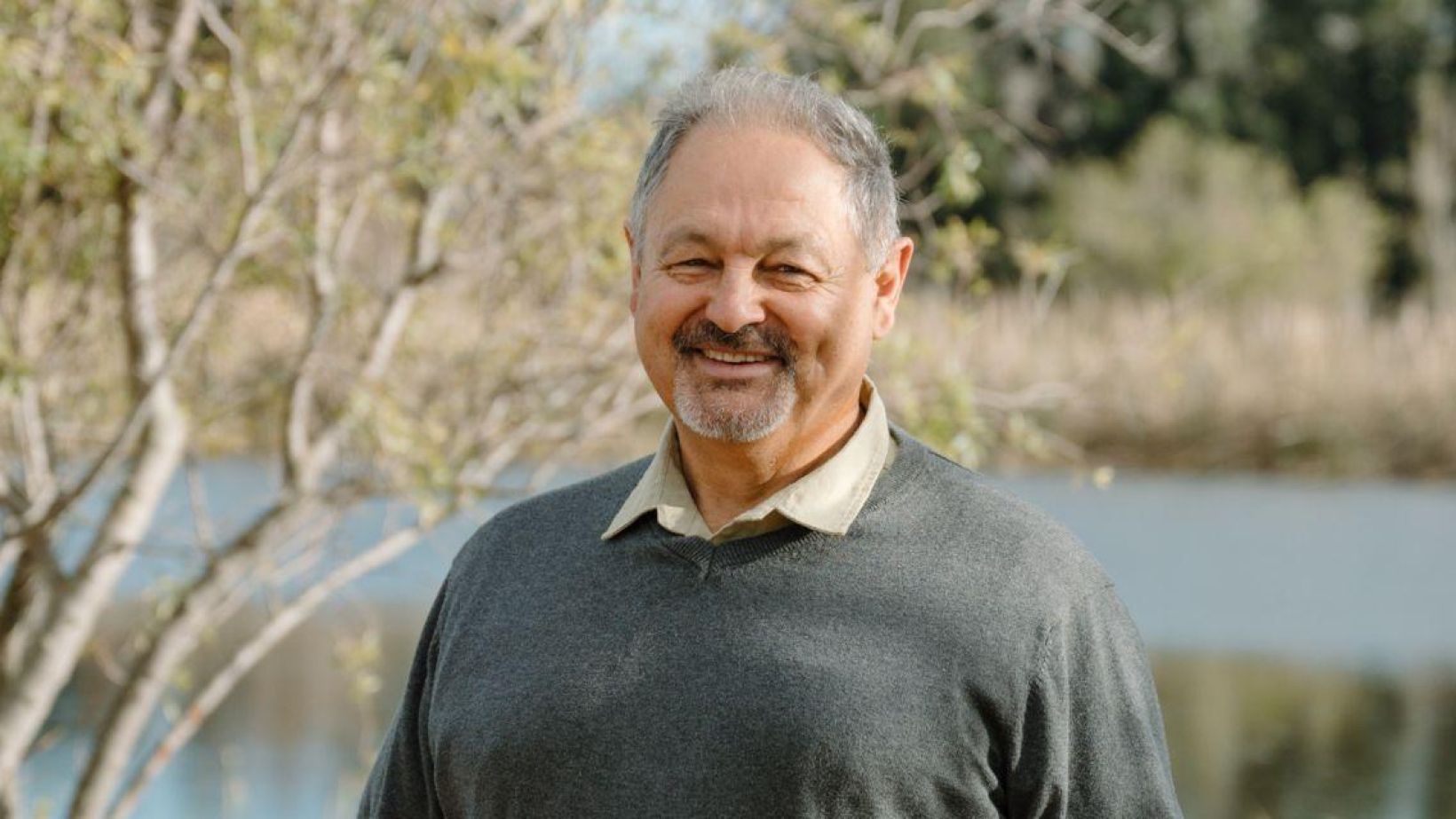
Carl grew up outdoors in rural landscapes. His dad, Ludwig, was a headmaster who preferred small towns, which meant the family was constantly surrounded by farming communities. Holidays were spent exploring, collecting plant samples or simply being outside. “I already knew then that one day I wanted to work with plants in some form,” he says. Wine, however, came later.
He enrolled at Elsenburg Agricultural Training Institute, majoring in fruit production. Back then, wine barely crossed his mind – his parents were strict and alcohol only showed up at family dinners, if at all. But once you move to Stellenbosch, wine has a way of finding you.
It was during his time at Elsenburg that something shifted. He found himself drawn increasingly to wine, not just as a product, but rather the idea behind it. “It fascinated me that wine starts as fruit, but then it has a second life,” he says. “Every other fruit is usually consumed as is, while grapes become something else entirely.”
After graduating top of his class, Carl joined Simonsig, where he worked under Johan Malan. Johan was both a mentor and close friend, someone who instilled discipline and attention to detail in him. “He used to say, ‘The devil is in the detail,’ ” he says. “If you can do every small step just a little bit better, the wine will reflect that.”
Carl was still in his 20s when he stepped into what would become the defining chapter of his career at Hartenberg. Ataraxia winemaker Kevin Grant, who worked with Carl as a young intern at Simonsig, cheekily sent in his CV for a job as cellarmaster at Hartenberg, and he was invited for an interview. “I thought they wanted someone far more experienced,” Carl says. “But it worked out.” He stayed at Hartenberg as cellarmaster for 32 years.
Carl helped rebuild the estate’s reputation, establishing a clear identity, particularly with Shiraz. His connection to the variety extended beyond style into plant material and long-term vineyard thinking. Thanks to his exposure abroad, including to the northern Rhône wine region, he encountered Syrah clones not yet available locally. Working with industry partners, he helped introduce new materials to South Africa. One of these, SH470, has since become widely planted, especially in stony soils, and has proved its value over time. “Working abroad, you learn to see your own environment differently,” he says.
Under Carl’s watch, Hartenberg wines earned major recognition, including multiple SAA red wine trophies. In 2005, he was named Diners Club SA Winemaker of the Year. He also became a long-standing member of the Cape Winemakers Guild, joining in 1997 and later serving as chairman.
The philosophy Ask Carl about wine and the conversation becomes more reflective, moving from process to perspective. He often refers to wine as an “ancient liquid”, something that carries history, complexity and continuity. “It’s one of the few things that has existed for centuries in the same way,” he says. “And we still don’t fully understand it.”
Winemaking is not about control, he says. It’s about awareness and timing. “You often think you need to push in a certain direction,” he says. “But if you wait, the answer tends to come to you.” This approach developed over time. Early in his career, he was highly driven and competitive. That ambition is still there, but it has softened into something more measured.
Recognition followed, but it was never the objective. “I never allowed awards to dictate what we were doing,” he says. “They are just a signal. A way of checking if you’re on the right track.” Instead, he focused on consistency, detail and the people around him. When awards did come, he shared them with his team. For example, prize money from awards was shared among key staff members and he made a point of including assistants or farm team members in industry events.
His interest in climate and the environment also runs deep. Over decades, he has observed how vineyards respond to change and how certain varieties adapt more naturally than others. Shiraz is the most resilient variety, which is why he enjoys working with it. “It’s a tough variety,” he says. “It can handle what’s coming.”
Even with all the technical understanding, there’s a sense that Carl sees wine as something bigger than process alone. “There are things you can’t explain,” he says. “And that’s what makes it so interesting.”
A personal chapter Carl’s departure from Hartenberg after more than three decades, wasn’t part of a long-term plan. The decision came at a time of transition at the estate. Initially, he intended to step back completely. Take time. Do nothing. Then British Master of Wine Tim Atkin called him. “He asked me what I was harvesting,” Carl says. “I told him nothing. He said, ‘That’s not right. You need to start again.’ ” And so he did.
In January last year, he launched Solo Wines, a small project focused on Cabernet Sauvignon, Shiraz, Chardonnay, Riesling, and Merlot, all varieties he knows well. The grapes are sourced from vineyard sites across Stellenbosch and the broader Cape South Coast, and are chosen for quality and specific site expression, rather than location alone.
The name Solo has been around since the late ’80s. It originally belonged to Philip Costandius, a respected figure in the wine industry and former chairman of the Cape Winemakers Guild. Philip had registered it as Solo Individual Wines, a concept that spoke of independence and personal expression. “At the time, I told him I loved the name,” Carl says. “It meant something.” Years later, after leaving Hartenberg, he reached out to Philip to ask whether he would consider selling the name. Instead, Philip offered it to him. “It felt like a meaningful moment,” Carl says.
Solo represents freedom and that’s evident in how he now works. There are no constraints, no legacy structures to maintain, no expectations beyond his own. “If I want to do something, I do it,” he says. “If I don’t, I don’t.” That sense of independence runs through everything. The wines are small batch and deliberately limited, positioned for a more considered audience. He’s not chasing volume. His focus is on collectors, independent retailers and restaurants that appreciate detail, origin, and story.
Export is also in the picture, but in a measured way. Rather than aiming for wide distribution, he places the wines in select international markets, such as Germany and the Czech Republic, where there’s an understanding of South African wine at a premium level. He hopes that when people open a bottle of Solo, they sense that the journey is still unfolding. “I hope they feel that this old winemaker still has his touch, perhaps even more refined than before,” he says.
His life looks different now – it’s more balanced, more free. His dogs, Lady, Lila and Baxter, wait for their walks and sometimes he leaves the vineyards behind to go white-water kayaking in remote places.
His time is no longer devoted only to the cellar. Stepping away from it, helps him to return with a clearer perspective. This chapter feels less like an ending and more like a continuation. Quieter, more personal, but grounded in the same curiosity that first drew him to wine.
To read more articles in our July issue themed “Business as unusual,” buy a copy here.

More from
People, community and tourism

From vineyard to spa: Why Pinotage is more than just a wine grape
In our print feature, Heavenly Scent, we explored the spa experience at Healing Earth Wellness at Laborie Estate. But that experience starts long before you step into the treatment room. It starts in the vineyard. So why Pinotage? What is it about this proudly South African grape that has earned a…
Vyf vrae met Hendrien de Munck
Wynmaak lyk van buite na ’n romantiese beroep, maar agter elke bottel skuil ure se harde werk, besluite en toewyding. Hendrien de Munck, wynmaker van Maia Wines, deel haar perspektief op die realiteit van wynmaak, kreatiwiteit in die kelder en waarom sy glo daar is nog groot potensiaal vir…
Five questions with Liandra Kotzé
“Consumers haven’t stopped loving wine. They’ve changed how they choose it.” Wine marketers spend a great deal of time asking how to sell more wine. According to Vinimark Brand Portfolio Director Liandra Kotzé, the better question is whether we’re listening closely enough to the people we’re…