
Restless traveller
Leandri Bosman has found a special niche, combining the chaos of juggling harvests across two hemispheres with the structure and predictability of a well-managed cellar.

· 4 min read
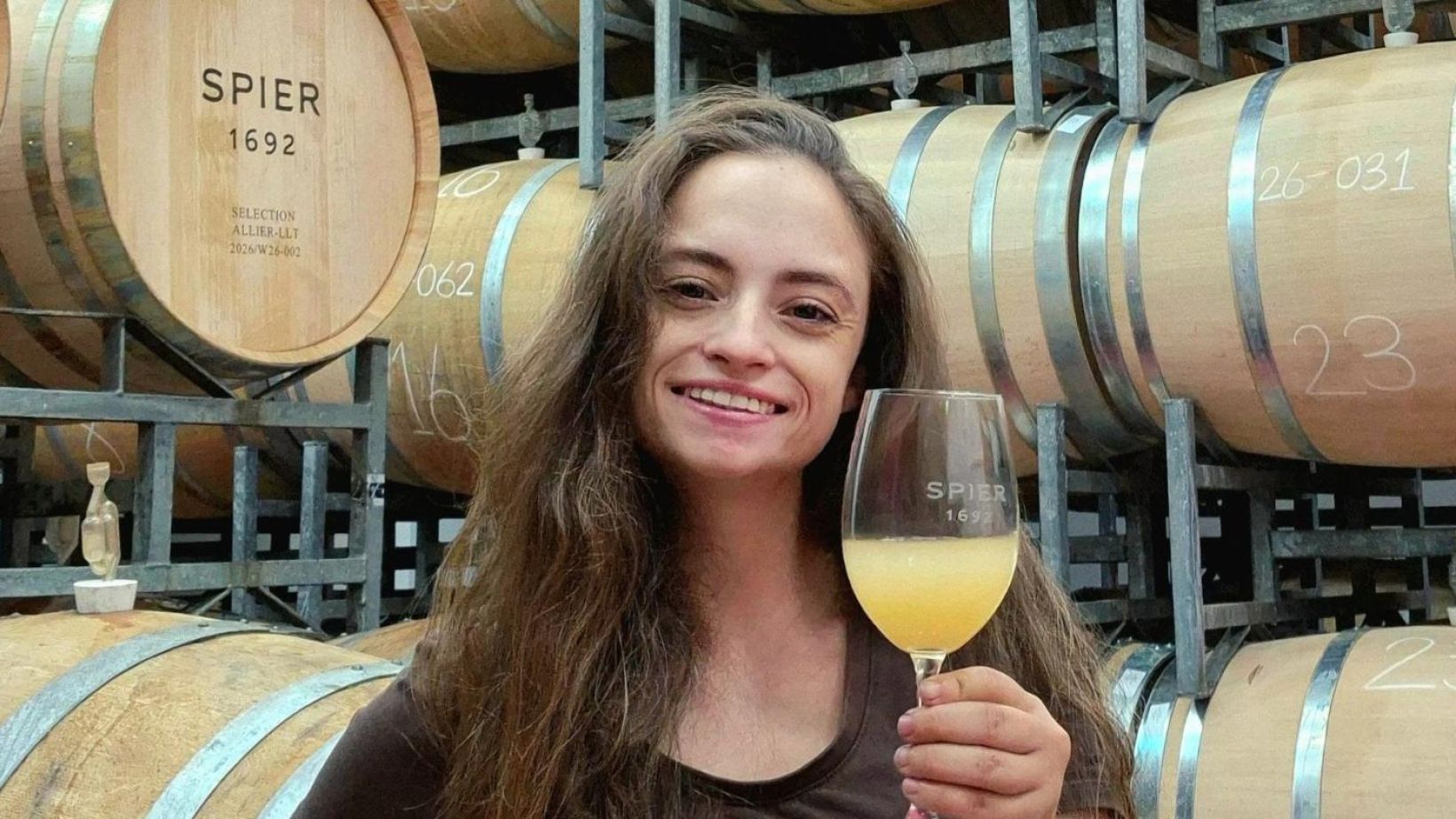
“I’ve always been creative,” Leandri Bosman (26) says. “At school, I had visual arts as a main subject and wanted to go in an artistic direction. But the topic for my final-year art project was botanical feminism, and that’s where my thinking switched from art to biology.”
After matric, she wanted to study microbiology, but without chemistry, a BSc was out of the question. She applied to Elsenburg, hoping to pursue microbiology at the postgraduate level instead. But it never came to that. “Once I started in the wine industry, I began to appreciate the fact that you’re not bound to a lab,” she says. “There’s also more opportunity to move around and for international travel.”
She graduated in 2021 with a degree in oenology and viticulture. For her final-year practical she was fortunate enough to be placed at Tokara, where she was tasked with fermentation and sugar analysis. That was the last time she would spend a full year in South Africa; she’s been alternating harvests between the Southern and Northern Hemispheres ever since. In 2022, she divided her time between Saronsberg in Tulbagh and Divino in Franconia, Germany. In 2023, she worked at Vrede en Lust in Paarl and Winzergemeinschaft Franken GWF in Bavaria. In 2024, it was Flagstone in Somerset West and Tempos Vega Sicilia Oremus in Tokaj, Hungary. Last year she added Château de la Galinière in France to the list, and she’s just concluded a contract at Spier.
Leandri will be off to Germany next, to work as a harvest assistant at Bassermann-Jordan in Pfalz. “My grandmother is a Portuguese citizen, which gives me citizenship and EU access,” she says. “That means I don’t have to go through the process of applying for work visas, which is a huge advantage for both the wineries and me.”
Ironically enough, she’s never spent much time in mainland Portugal. Hungary has been her favourite destination so far, although the pay is better in Germany. “Germany does things by the book, which I prefer, but Hungary is like a family experience – the crazy side of the family! It has soul and good food, which is always important to keep spirits high with hard work.”
She loves the fast pace and constant travelling, but it also has a downside. “I’ve never had a full-time job,” she says. “I’m usually either overqualified or underqualified for the next step. I don’t have the management experience for an assistant winemaker, while my degree overqualifies me for a cellar hand. Part-time work only cares whether you can do the job.”
She still gets her art fix by visiting museums, while the cellar work keeps her grounded. “I appreciate the scientific side of winemaking. I’m a perfectionist about figures and percentages, but I don’t mind getting my hands dirty in the cellar,” she says. “The way I see it, I’ve just exchanged one messy medium for another.”
Rapid fire Q&A
- Red, white or bubbles? White wine, especially cultivars that can be wooded, such as Sauvignon Blanc or Chardonnay. I also enjoy working with Hungarian cultivar Furmint to make Aszú.
- One thing that always makes you laugh? Cats, including my own, or funny cat videos.
- Who in the wine world inspires you the most? I’m inspired by the teams I’ve worked with around the world. I have a lot of respect for the pros who run a cellar like a high-performance machine, focusing on efficiency, consistency and the business of making great wine.
- Your hidden talent outside of wine? I’m very much a “get it done” person in the cellar, so people are often surprised to find out I’m quite artistic. When I’m travelling, it’s the one thing I can take with me.
- One word that describes the SA wine industry? World-class.
Social media
Instagram:@leandri.pikkewyntjie

More from
People, community and tourism
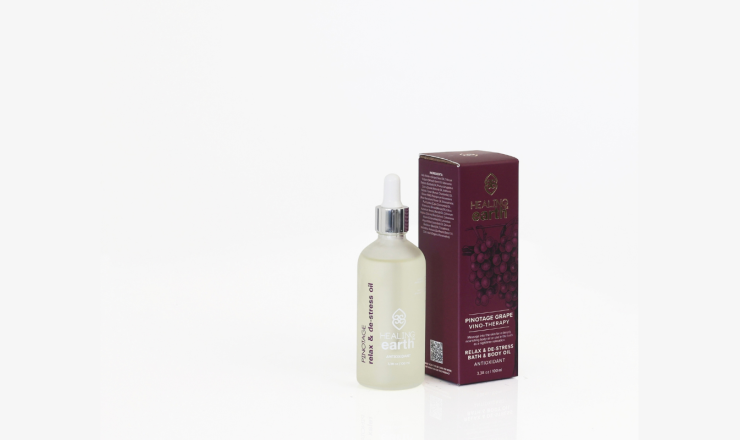
From vineyard to spa: Why Pinotage is more than just a wine grape
In our print feature, Heavenly Scent, we explored the spa experience at Healing Earth Wellness at Laborie Estate. But that experience starts long before you step into the treatment room. It starts in the vineyard. So why Pinotage? What is it about this proudly South African grape that has earned a…
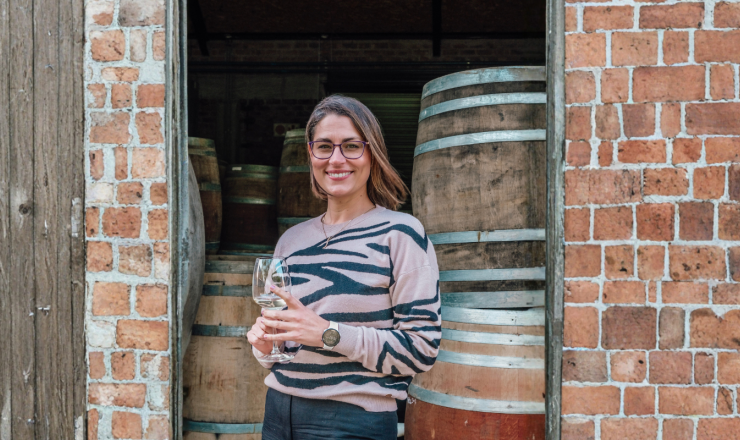
Vyf vrae met Hendrien de Munck
Wynmaak lyk van buite na ’n romantiese beroep, maar agter elke bottel skuil ure se harde werk, besluite en toewyding. Hendrien de Munck, wynmaker van Maia Wines, deel haar perspektief op die realiteit van wynmaak, kreatiwiteit in die kelder en waarom sy glo daar is nog groot potensiaal vir…
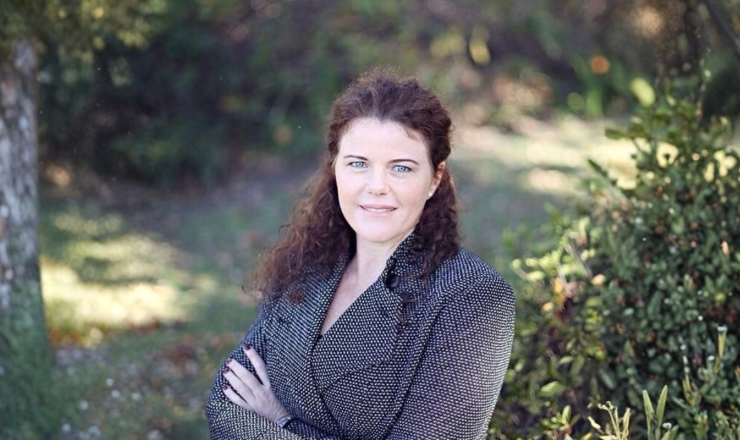
Five questions with Liandra Kotzé
“Consumers haven’t stopped loving wine. They’ve changed how they choose it.” Wine marketers spend a great deal of time asking how to sell more wine. According to Vinimark Brand Portfolio Director Liandra Kotzé, the better question is whether we’re listening closely enough to the people we’re…