
The many lives of Pinotage

· 4 min read
From the glass to the spa, South Africa’s signature grape is turning up in places few people would expect.
Pinotage has spent most of its life in the glass. It is one of South Africa’s best-known wine stories, a variety with a character all its own and a history closely tied to this country. But lately, Pinotage has been appearing in rather different surroundings.
In spas. In skincare. In fragrances. Even on the plate. The grape is no longer only something to drink. It is also becoming an ingredient, a scent and a new way of experiencing the Cape Winelands.
Here are five places where Pinotage has found a second life.
1. In the spa
A tasting room is the obvious place to encounter Pinotage. A treatment room, less so.
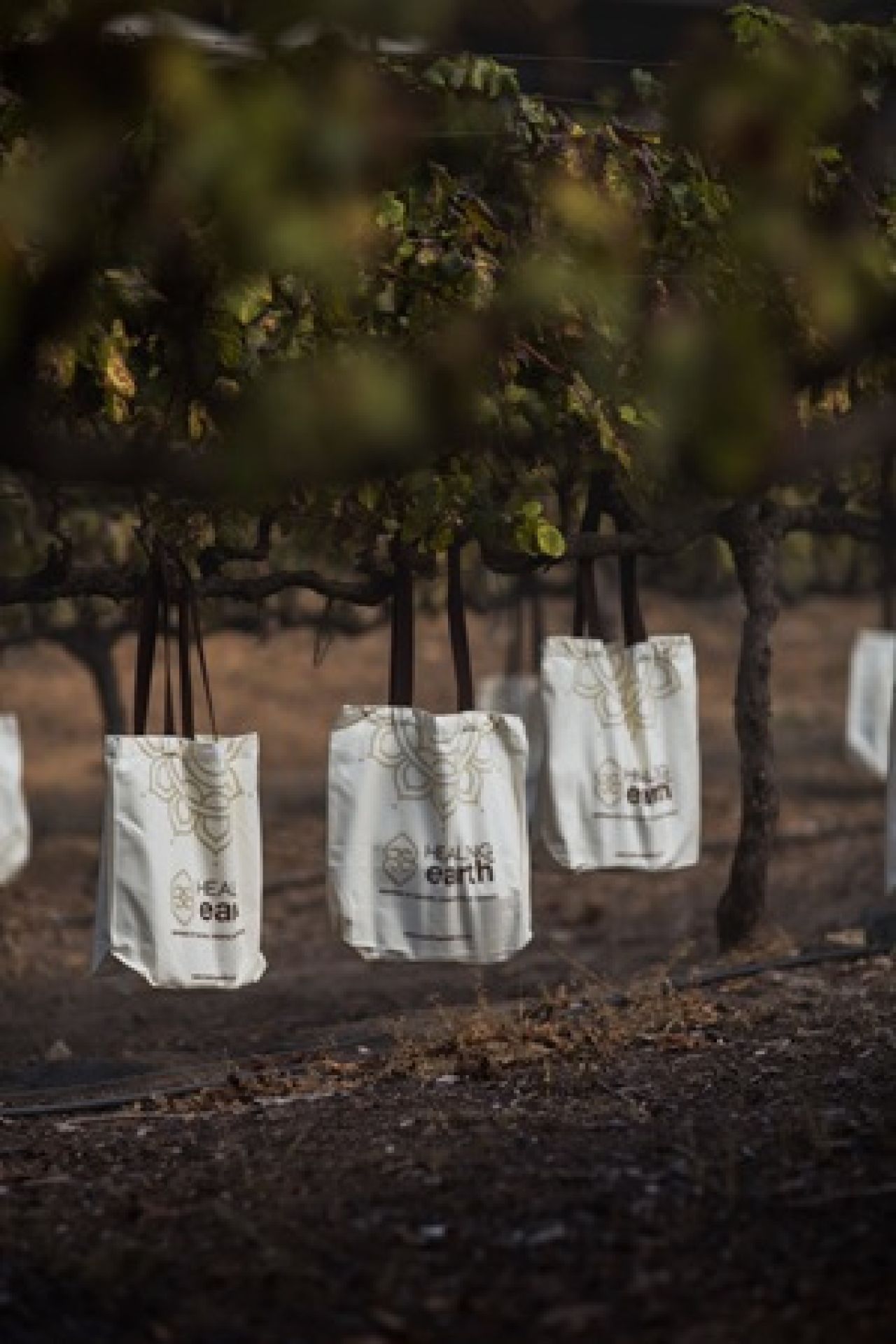
At Laborie Estate in Paarl, Healing Earth has introduced what is believed to be the Cape Winelands’ first dedicated luxury vinotherapy destination. Pinotage forms part of the experience through facials, body rituals and fragrances inspired by the vineyard.
The treatments combine grape-derived ingredients with indigenous botanicals, allowing guests to encounter the variety through touch and scent rather than taste.
It also reflects a broader shift in wine tourism. Visitors are no longer satisfied with a tasting alone. They want to understand a place, spend time in it and leave with a story worth remembering.
2. In skincare
Grapes have been used in beauty products for years, largely because of the natural compounds found in their skins and seeds.
Grape seed extract contains antioxidants, including polyphenols, which are valued for helping the skin cope with environmental stress. It is one reason grape-derived ingredients feature so prominently in premium skincare.
Healing Earth’s Pinotage range draws on those properties, but the appeal lies in more than skincare science. The products also carry a clear sense of origin. They belong to the Winelands and tell a story that could not have come from anywhere else.
3. In fragrance
What does Pinotage smell like when it is not wine?
Perhaps dark berries. Ripe plum. Warm spice. A hint of earth after rain.
These may sound like tasting notes, but they work just as well in fragrance. Pinotage-inspired scents borrow from the aromas associated with the variety and turn them into something that recalls harvest, vineyards and the Cape landscape.
They are not meant to smell like a glass of wine. The idea is subtler than that. It is about capturing a mood, a memory and that unmistakable sense of place.
4. In grape seed oil
Even once the grapes have been pressed, there is still value left behind.
The seeds can be used to produce grape seed oil, a light oil found in skincare, massage products and cooking. It is prized for its texture and for naturally containing vitamin E and essential fatty acids.
There is also a useful sustainability story here. Something once treated as a winemaking by-product can be given another purpose and turned into a product with value.
In a circular economy, very little needs to go to waste.
5. On the plate
Pinotage is increasingly moving off the wine list and into the kitchen.
It can be used in chocolate, sauces, reductions, preserves and desserts. In some cases, the wine contributes flavour. In others, it brings acidity, depth or simply a stronger link between the dish and the vineyard.
For chefs and artisan producers, it offers an ingredient with an unmistakably South African identity. For visitors, it creates another small connection between what grows in the vineyard and what arrives at the table.
More than a grape
There is something pleasing about seeing Pinotage take on these new roles.
The variety remains an important part of South African wine, but its story no longer ends with the last sip. It can now be smelled, touched, tasted and experienced in ways its creators could hardly have imagined.
Perhaps that is what makes it so interesting. Pinotage is still rooted in the vineyard. It has simply found a few more places to belong.
Did you know?
Pinotage was created in South Africa in 1925 by Professor Abraham Izak Perold, who crossed Pinot Noir with Cinsaut, then known locally as Hermitage.

More from
People, community and tourism

KWV laat die vonkelwyn praat
Drie jaar agtereenvolgens die hoogste eer, 12 dubbelgoue medaljes en ’n aand waarop Suid-Afrikaanse wyn behoorlik kon feesvier.

Meet the researcher: Bryan Kariuki Mundia
Wine fermentation is a complex microbial process, with different yeast species interacting with one another throughout fermentation. But what happens when one species is removed from the community?
Building a more inclusive South African wine industry
South Africa's wine industry has a 367-year history, but its story continues to evolve as a new generation of entrepreneurs enters the sector. Karin Kleinbooi, Executive Manager: Inclusion and Development at South Africa Wine, says the growth of black-owned wine businesses is an important part of…