Search
Results for “COD”
Showing 1–12 of 133 results
133 results — page 1 of 12
Get the Right Talent on board
The AGRIBEE sector codes have been revised, tightening the reins on wine-related businesses.
By Carlin Cloete · 3 min read

Winery wastewater for irrigation (Part 1): Irrigation application and water quality
Irrigation with winery wastewater needs to be optimised to minimise leaching, whilst maximising nutrient removal by means of a catch crop is a necessity.
By Carolyn Howell, Karen Freitag & Lester Sassman · 8 min read
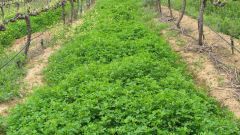
Winery wastewater for irrigation (Part 3): Vineyard catch- and cover crop responses
During wine production, wineries produce large volumes of poor-quality wastewater. This wastewater can be used for irrigation, but this delivers substantial amounts of elements to the soil.
By Carolyn Howell, Karen Freitag & Lester Sassman · 8 min read
In-field fractional use of winery wastewater with raw water (Part 2): Irrigation application, water quality and nutrient load
The primary objective of this project was to assess the fitness for use of winery wastewater for irrigation of different soil types with varying rainfall quantities and leaching levels on vineyard performance in terms of yield and quality under field conditions.
By Carolyn Howell & Reckson Mulidzi · 19 min read
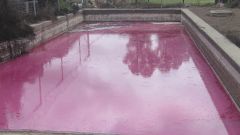
Winery wastewater for irrigation (Part 2): Evaluation of catch crops on open land
Winery wastewater has a high chemical oxygen demand (COD) with high levels of potassium (K) and sodium (Na). Using it for irrigation adds substantial amounts of elements such as K and Na to the soil, therefore maximising element removal by means of a catch crop is important.
By Carolyn Howell, Karen Freitag & Lester Sassman · 7 min read
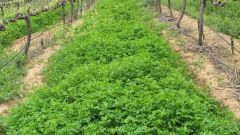
Carbon Heroes
By joining Carbon Heroes, you can showcase your dedication to sustainability and carbon emission reductions.
By Chantelle Smit · 1 min read

In-field fractional use of winery wastewater with raw water (Part 1): Plot selection, augmentation and climatic conditions
A field study was necessary to investigate the use of winery wastewater for vineyard irrigation to determine the sustainability of such a practice in other environments.
By Carolyn Howell & Reckson Mulidzi · 13 min read
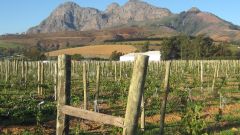
In-field fractional use of winery wastewater with raw water (Part 3): Soil responses
The aim of this study was to determine the effect of in-field fractional use of winery wastewater with raw water for vineyard irrigation on the chemical status of different soils to assess the fitness for use of winery wastewater for irrigation of different soil types with varying rainfall.
By Carolyn Howell & Reckson Mulidzi · 20 min read
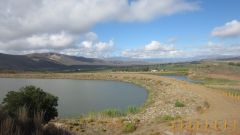
In-field fractional use of winery wastewater with raw water (Part 4): Grapevine and wine responses
The objective of this study was to determine the effect of irrigation with in-field fractional use of winery wastewater with raw water on grapevine growth, yield and wine characteristics.
By Carolyn Howell & Reckson Mulidzi · 26 min read
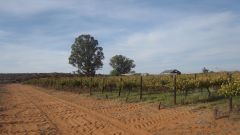
In-field fractional use of winery wastewater with raw water (Part 5): Assessment of the below- and above-ground chemical status of grapevines in the lower Olifants River region
The objective of this study was to make an assessment of the below- and above-ground chemical status of the grapevines growing in the Lower Olifants River region.
By Carolyn Howell & Reckson Mulidzi · 11 min read
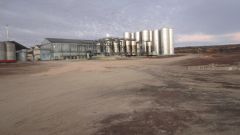
Winery wastewater irrigation (Part 1): Annual dynamics of volumes and quality at two wineries
The objective of this study was to investigate the annual dynamics of winery wastewater volumes and quality at two different wineries.
By Reckson Mulidzi & Carolyn Howell · 18 min read