Search
Results for “vector”
Showing 1–12 of 23 results
23 results — page 1 of 2
Indigenous leafhopper transmits aster yellows
Thus far, the indigenous leafhopper Mgenia fuscovaria is the only confirmed vector of the phytoplasma that causes aster yellows in South Africa.
By Elleunorah Allsopp and Kerstin Kruger · 5 min read

The benefits of certified, virus-tested, true-to-type plant material
Introduction
By Sandile · 8 min read
Virus diversity associated with grapevine leafroll disease
PHOTO: Hanno van Schalkwyk.
By Johan Burger · 12 min read

New Winetech projects for 2017 (Part 3)
1. Investigating the spread of natural vitiviruses
By Winetech Editorial Team · 3 min read

Small bugs, big problems
There are several microscopic maladies that can affect grapevines. Particularly fascinating and challenging is the dreaded leafroll virus, since conventional an
By Lee-anne · 5 min read
New Winetech projects for 2017 (Part 5)
1. Effect of HWT (50°C for 45 minutes) on fungal pathogens in vine nurseries
By Winetech Editorial Team · 5 min read
Proving the aetiology of two important grapevine viral diseases remains a challenge
Grapevine leafroll (GLD) and Rugose wood (RW) are two diseases of great concern for grapevine industries worldwide. GLD causes degeneration of phloem cells, pre
By Doronae · 8 min read
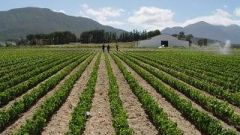
Leafroll control strategy - an integrated approach
What causes leafroll virus? [Fact sheet 1.1]* • Leafroll virus is caused by leafroll associated virus -3 (GLRaV-3). Other types of leafroll associated viruses e
By Lucinda Heyns & Gerhard Pietersen · 4 min read
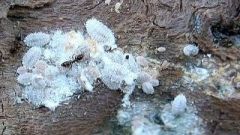
Strategy for the control of mealybug in South African vineyards
PHOTO: Prof. Piet Goussard.
By Doronae · 3 min read
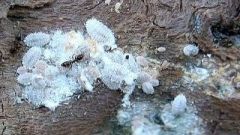
Detection and classification of grapevine stem pitting-associated virus
The aim of this study was to investigate the genetic diversity of GRSPaV in South Africa and to evaluate the success of biological indexing as a detection tool
By Ilani Mostert and Johan Burger and Hano Maree · 9 min read

Grapevine rupestris stem pitting-associated virus
The most prevalent in vineyards and well characterised molecularly, but still relatively unknown.
By Dariusz Goszczynski · 8 min read