
Confronting Climate Change: Carbon jargon - your quick guide to carbon literacy
· 4 min read

CO2, CO2e and GHGs
Greenhouse gases (GHGs) in the atmosphere trap heat that would otherwise radiate into space. The most abundant greenhouse gas in our atmosphere is water vapour, followed by carbon dioxide, methane, nitrous oxide, ozone, fluorocarbons and a few others.
Carbon dioxide (CO2) is the greenhouse gas most generated by human activities. The heat-trapping potential of other greenhouse gases is expressed in CO2-equivalents (CO2e). This facilitates comparison between different greenhouse gases, and allows for their inclusion in emission-reduction programmes.
Fixation is not sequestration
Carbon fixation is the process by which living organisms use inorganic carbon – mostly CO2 – to build organic compounds. Photosynthesis is the main mechanism for carbon fixation. Some of this carbon is incorporated into long-lasting compounds such as wood, but much of it is burnt as fuel during respiration by the plant, and by all the organisms that feed on the plant, either directly or indirectly. Respiration releases CO2, which is why carbon fixation by plants does not equal carbon sequestration.
Carbon sequestration is the long-term removal of carbon dioxide from the atmosphere. Most of the carbon on earth is held in rocks, and interacts with the atmosphere on geological timescales of millions of years. For practical purposes, the ocean is the most important store of CO2 – the deep ocean contains significantly more carbon than the atmosphere, and the exchange between ocean and atmosphere is very slow, occurring over centuries.
Plants and soil hold less than a tenth as much carbon as the deep ocean. Nonetheless, permanent vegetation and soils have an important role to play in carbon sequestration.
Carbon capture and storage usually refers to artificial processes for sequestering carbon, typically in industrial settings. Carbon is either collected as it is emitted, or captured from the atmosphere, and stored in reservoirs.
Offsets and credits
A carbon offset is a reduction in atmospheric greenhouse gases that is offset against emissions that happen elsewhere. The reduction can occur either through not emitting greenhouse gases in the first place, or through increasing the capture and storage of gases that have already been emitted.
A carbon-offset credit – usually just called a carbon credit – is a tradeable certificate or permit that represents an emission reduction of 1 tonne of CO2e.
In very simple terms, if person A captures and stores 1 tonne of carbon dioxide, or its equivalent, they can earn one carbon credit. They can then sell that credit to person B, effectively granting them the right to emit 1 tonne of carbon dioxide, or its equivalent.
Carbon-offset programmes provide quality assurance for offsets in three ways:
- They set the criteria for carbon-offset credits.
- They review offset projects to ensure that credits meet the criteria.
- They operate carbon registries to issue and trade credits.
Criteria for carbon credits
For an offset to qualify as a credit, it must represent a reduction in emissions of 1 tonne of CO2e. Furthermore, the reduction must meet five criteria:
- Additionality.
- Permanency.
- Not overestimated.
- Not double-counted.
- Not environmentally or socially harmful.
The first two are especially relevant to deciduous fruit and wine producers.
Additionality means that the reduction is made in addition to any other reductions that would have been made regardless of a market for carbon credits. In other words, the main driver of the reduction is the anticipated financial gain from trading the carbon credit.
If a reduction in emissions is a side-effect of something that would have happened anyway, it does not meet the criteria of additionality. For example, if an entity is legally required to reduce its emissions, it doesn’t qualify for carbon-offset credits.
Permanence means exactly what it says – a temporary reduction in or short-term storage of greenhouse gases doesn’t qualify for carbon-offset credits.
A common convention is that permanence equals a century – far longer than the lifetime of an orchard or plantation.
Republished with permission from Fresh Quarterly, https://www.hortgro-science.co.za/fresh-quarterly.
– For more information, contact Anél Blignaut at [email protected].

More from
Innovation and insights

Packaging under pressure: What wine businesses should be watching
From lighter bottles to automated packing lines, packaging decisions are becoming increasingly important to the cost and competitiveness of South African wine.
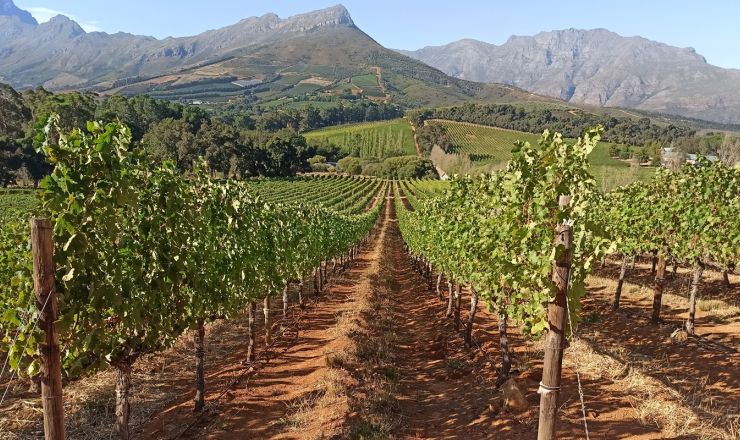
How vine water stress shapes grape and wine quality
This study formed part of the South Africa Wine programme “Grapevine production with limited water resources”, and aimed to evaluate how spatial and temporal water stress affects vine physiology, fruit composition and wine quality.
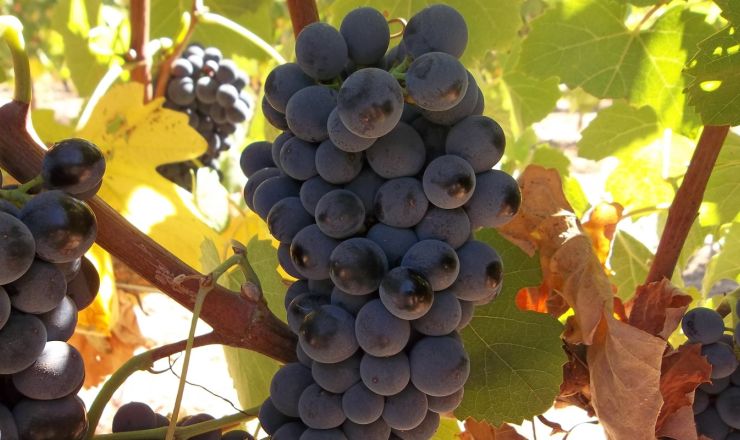
Drought tolerance of different scion cultivars (Part 4): Vegetative growth and yield
The study aimed to assess grapevine vegetative and yield responses in an almost worst-case scenario, i.e. grapevines growing under dryland conditions in sandy loam soil in the Swartland region.