
Hyperspectral - the answer to water stress? (Part 2)
Marc Dukes, Nitesh Poona and Kyle Loggenberg
· 5 min read
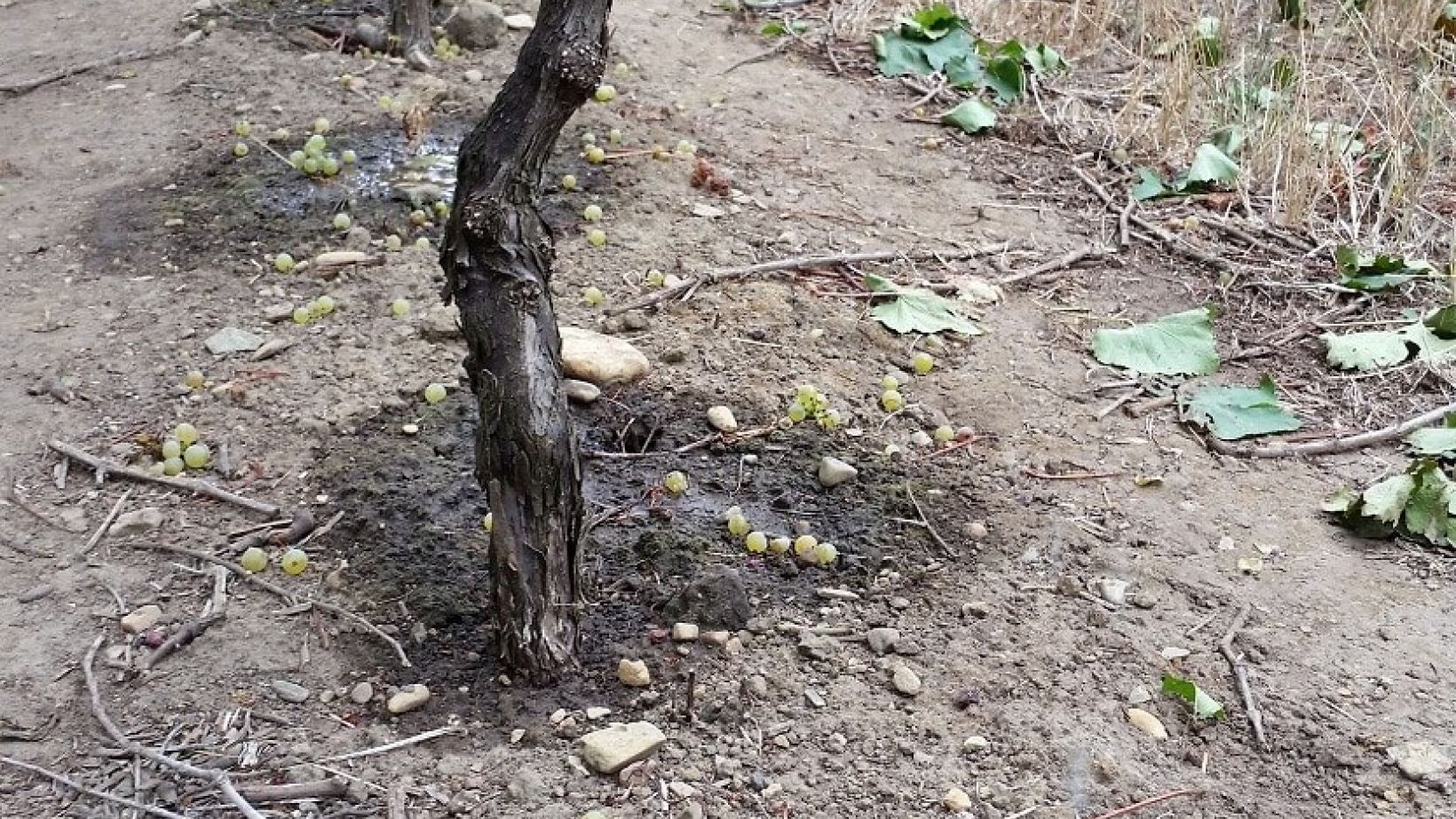
The research presented in Part 2 aims to derive a two-band optimised vegetation index using hyperspectral data captured across the visible near-infrared (VNIR) region of the electromagnetic (EM) spectrum.
Background
Vineyard water stress detection is essential to the sustainability of healthy and high-quality grapes. The early detection of water-stressed vines can aid in the prevention of crop loss and increase productivity. Hyperspectral remote sensing techniques, coupled with the advanced analytics of machine learning, could provide an effective means of water stress detection. Part 1 of this two-part article series, published in June 2022, demonstrated the feasibility of using hyperspectral data to improve the modelling of vineyard water stress. In Part 2, the narrowband characteristics of hyperspectral data are exploited to develop vegetation indices that are optimised for detecting water stress in Shiraz vineyards. Vegetation indices are widely regarded as an industry standard due to their interpretability and ease of use for various applications, such as vine row delineation and biomass estimation. Therefore, optimised vegetation indices for water stress detection are ideally suited for industry end-users.
Materials and methods
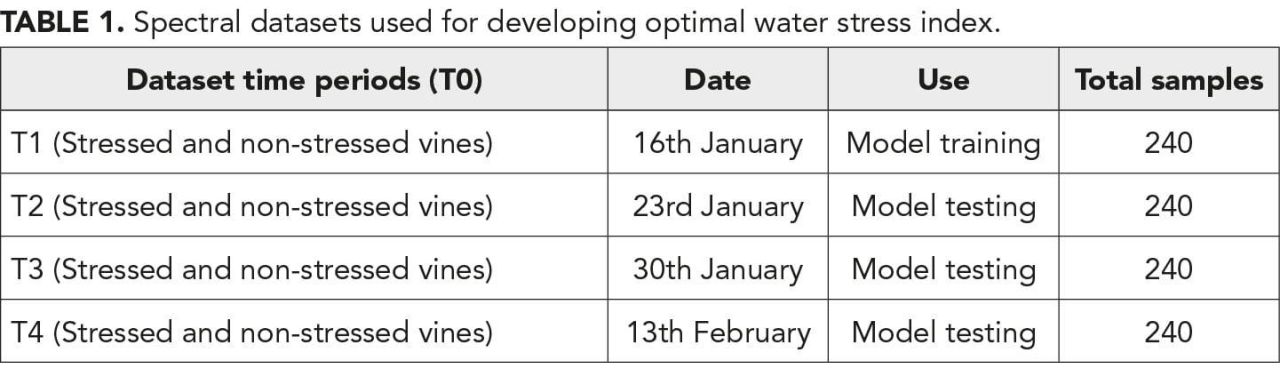
Multi-temporal data of water-stressed and non-stressed Shiraz vines were captured between 16 January and 13 February 2019. Leaf samples were collected in-field and imaged in a laboratory setting. Leaves were imaged using the HySpex VNIR-1800 hyperspectral camera (Norsk Elektro Optikk, Norway), which captured 186 wavebands across the VNIR (400 nm - 1 000 nm). Four datasets (Table 1) were generated, comprising 120 leaf spectra samples, per class (stressed and non-stressed) across four different acquisition dates.
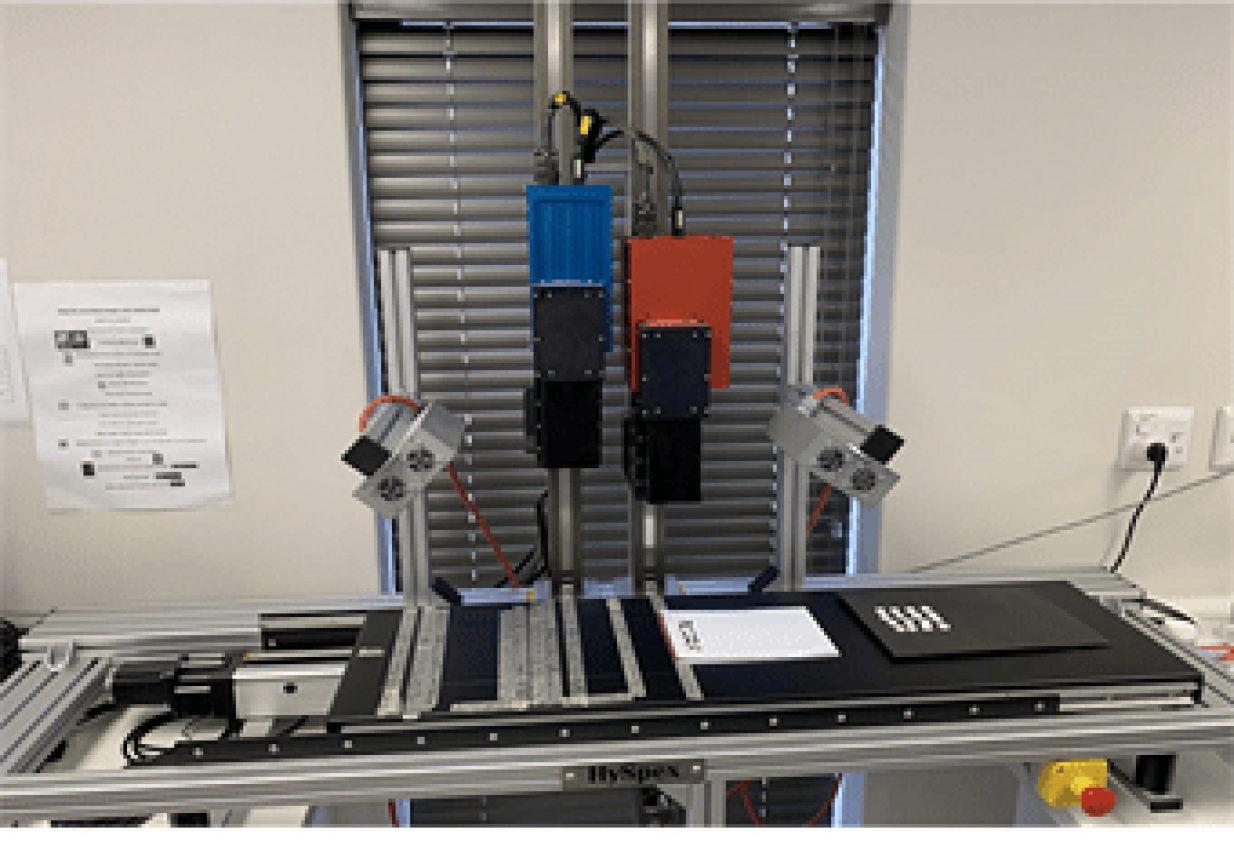
The optimised index was developed using a two-band ratio method (Eq 1) and a wrapper-based feature selection approach. Feature selection was undertaken using the Boruta wrapper1 to identify the wavebands most relevant for discriminating water-stressed from non-stressed vines. Once the important wavebands were identified, they were combined using Eq 1 to generate the optimised indices.
| Optimised index (j.i) = Rj ÷ Ri | Eq 1 |
Where Rj and Ri are the reflectance values from the relevant Boruta-selected wavebands. Rj remained consistent throughout all the indices and was equal to the waveband with the highest Boruta importance score.
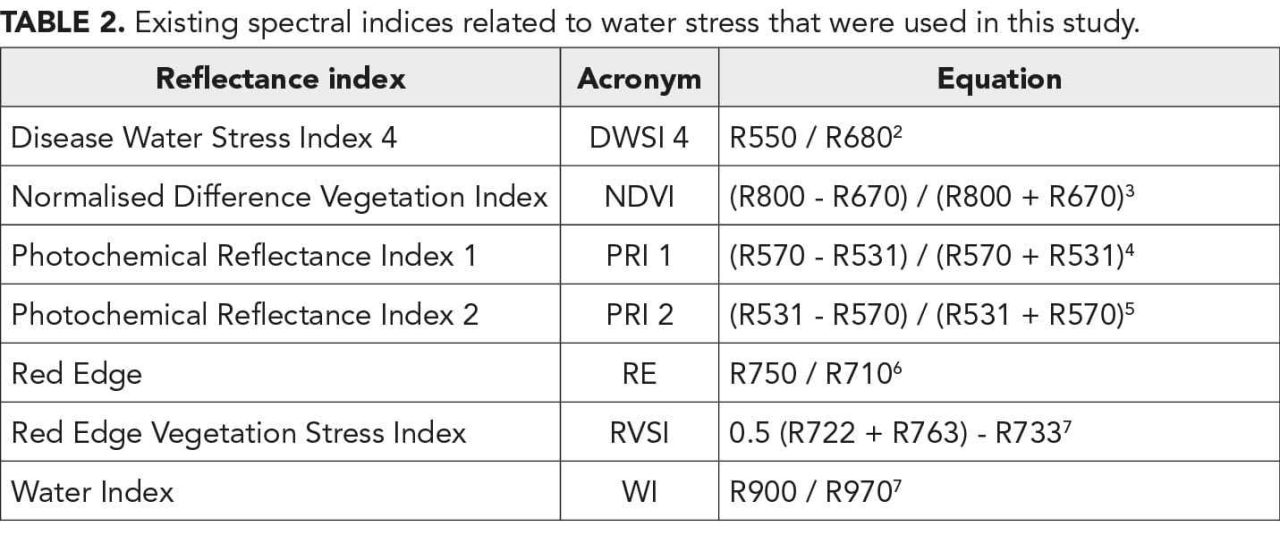
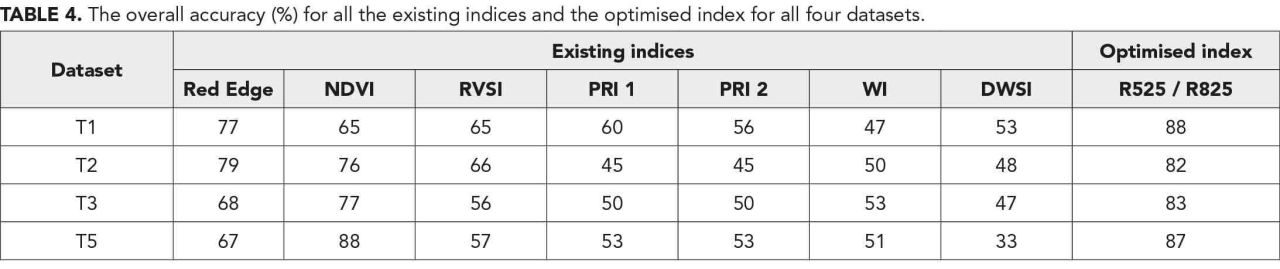
The optimised index was compared to existing water stress indices (Table 2) to determine its performance. The indices were compared based on confusion matrix and KHAT statistic values.
Results
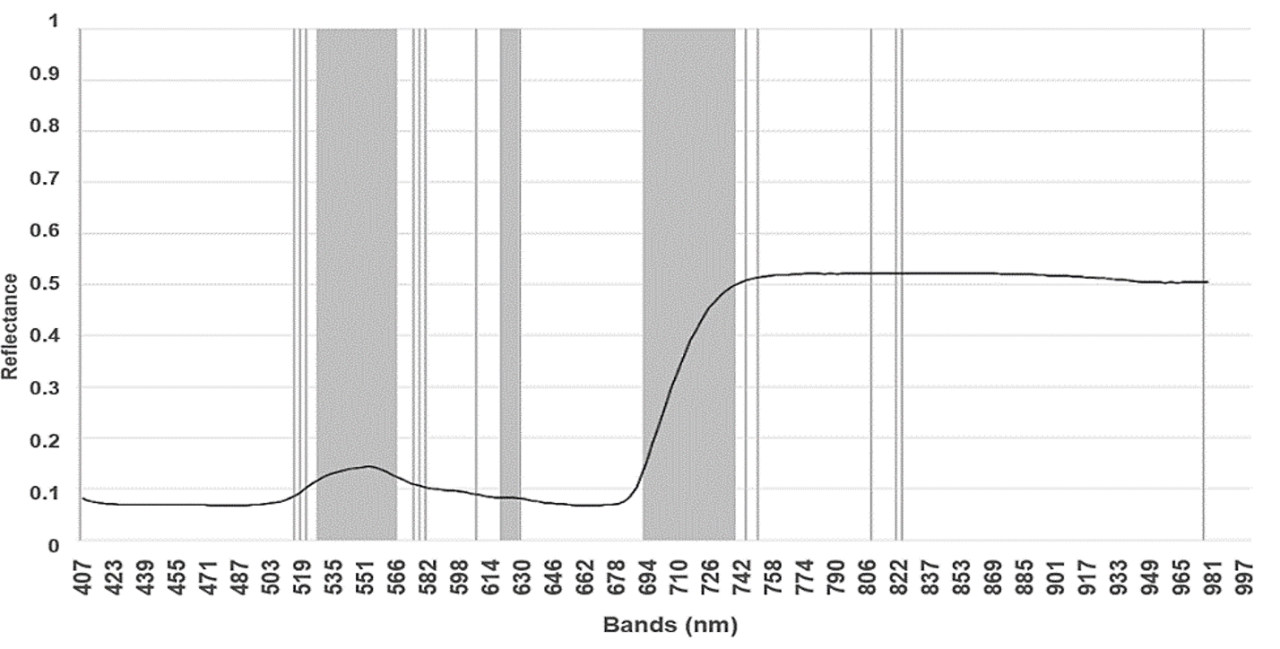
The Boruta wrapper identified 47 wavebands as important for the detection of water-stressed Shiraz vines (see Figure 1), indicating a 74% reduction in data dimensionality. After comparing different iterations of two-band ratios (Table 3), an optimised index was derived comprising the 525 nm and 825 nm wavebands (R525/R825). The optimised index illustrated a clear improvement in classification accuracy when compared to the existing indices (Table 4). A training accuracy of 88% (kappa = 0.77) was obtained with the optimised index, with test accuracies ranging between 82% - 87% (kappa ranged from 0.65 - 0.74) across the three remaining datasets. Overall, the study showed the potential of a two-band vegetation index to model water stress in a laboratory environment. These results illustrate the operational potential of the developed two-band index for water stress detection in Shiraz vineyards.

Hyperspectral: Conclusion
This project presented a novel hyperspectral-machine learning framework for the non-destructive identification of water-stressed vines. The results indicated the viability of narrow wavebands to model vineyard water stress and established the utility of tree-based machine learning algorithms within the domain of viticulture. Furthermore, the study demonstrated the feasibility of feature selection methods for the development of optimised spectral indices. The study provides a point of departure for the operationalisation of future machine learning-remote sensing frameworks for water stress monitoring.
Abstract
The research aimed to derive a two-band optimised vegetation index to model water stress in Shiraz vineyards. The optimised index was developed using visible near-infrared (VNIR) hyperspectral data and a Boruta-derived subset of important wavebands. The optimised index (R525/R825) was compared to existing water stress indices noted in the literature. The results demonstrated a clear improvement in classification accuracy, with the optimised index producing overall accuracies ranging between 82% - 88%.
References
- Kursa, M.B.; Jankowski, A.; Rudnicki, W.R. Boruta - A system for feature selection. Fundam. Informaticae 2010, 101, 271–285, doi:10.3233/FI-2010-288.
- Apan, A.; Held, A.; Phinn, S.; Markley, J. Detecting sugarcane ‘orange rust’ disease using EO-1 Hyperion hyperspectral imagery. Int. J. Remote Sens. ISSN 2004, 25, 489–498, doi:10.1080/01431160310001618031.
- Goward, S.N.; Cruickshanks, G.D.; Hope, A.S. Observed relation between thermal emission and reflected spectral radiance of a complex vegetated landscape. Remote Sens. Environ. 1985, 18, 137–146, doi:10.1016/0034-4257(85)90044-6.
- McGee-Russell, S.M. METHODS FOR At the outset reported the and cytological of a study amid in of the of tissues validity literature, results in the of many required a set of snail, Helix, it hecamiie for clear the to the do consistency, aim of the methods which localiza. J Histochem Cytochem 1958, 6, 22–42, doi:10.1088/0305-4470/24/13/001.
- Elvanidi, A.; Katsoulas, N.; Kittas, C. Automation for Water and Nitrogen Deficit Stress Detection in Soilless Tomato Crops Based on Spectral Indices. Horticulturae 2018, 4, 47, doi:10.3390/horticulturae4040047.
- Zarco-Tejada, P.J.; Miller, J.R.; Noland, T.L.; Mohammed, G.H.; Sampson, P.H. Scaling-up and model inversion methods with narrowband optical indices for chlorophyll content estimation in closed forest canopies with hyperspectral data. IEEE Trans. Geosci. Remote Sens. 2001, 39, 1491–1507, doi:10.1109/36.934080.
- Maimaitiyiming, M.; Ghulam, A.; Bozzolo, A.; Wilkins, J.L.; Kwasniewski, M.T. Early Detection of Plant Physiological Responses to Different Levels of Water Stress Using Reflectance Spectroscopy. Remote Sens. 2017, 9, 745, doi:10.3390/rs9070745.
– For more information, contact Kyle Loggenberg at [email protected].
Click here to get your copy of WineLand Magazine and here to subscribe to our newsletter.

More from
Innovation and insights

Packaging under pressure: What wine businesses should be watching
From lighter bottles to automated packing lines, packaging decisions are becoming increasingly important to the cost and competitiveness of South African wine.
How vine water stress shapes grape and wine quality
This study formed part of the South Africa Wine programme “Grapevine production with limited water resources”, and aimed to evaluate how spatial and temporal water stress affects vine physiology, fruit composition and wine quality.
Drought tolerance of different scion cultivars (Part 4): Vegetative growth and yield
The study aimed to assess grapevine vegetative and yield responses in an almost worst-case scenario, i.e. grapevines growing under dryland conditions in sandy loam soil in the Swartland region.