
Reducing carbon emissions on farms with improved water management
· 4 min read

Previous Confronting Climate Change industry trend reports have indicated that electricity consumption for the pumping of water is the largest source of farm-level carbon emissions.
Irrigation of crops is a necessity in a water-scarce country and predominantly coal-based electricity is used as an energy source for pumps. Improved water management has the purpose of saving water, cost and reducing carbon emissions.
The following opportunities for savings have been obtained during irrigation pumping system assessments on fruit farms:
The starting point is to determine the “correct amount of water” for each tree or hectare. Too little water may reduce the production output and fruit quality, while too much water is a waste of water and energy cost. A study of water flow rates on one farm has shown that some orchards receive only 50% of the intended water supply, while other orchards have received 50% more than target. A system to monitor the soil moisture content is a necessity for good water management on farms.
A lot of water is wasted by evaporation during the irrigation process, mainly due to wind and heat on the ground surface. Improvement in irrigation technology to reduce evaporation losses can save up to 40% of water and related pumping energy.
The irrigation pipe diameters, piping network and geographical height determines the head and flow rates that the pumps are operating on. Higher water pressures require more energy and the irrigation design should attempt to maximise flow and minimise the pressure required. Many cases were identified where the pump head could be reduced significantly with improved piping and irrigation system, while still providing the required water flow rate.
The operation, pressure and flow, of the pump is determined by the irrigation network design. The selection of the pump and the condition of the pump determine the ability to convert electrical energy into the pressure and flow. The efficiency of a sample of pumps was tested and the results show that the pumps use on average around 30% more energy than needed for the required head and flow.
Pumping of water from boreholes has also shown significant losses due to inefficient borehole pumping systems. A sample of 11 boreholes on one farm consumes an average 0.35 kWh/m3. The average consumption of 28 other boreholes at similar borehole depths was 0.62 kWh/m3. This shows that the potential energy, and carbon emission, savings in improved borehole pumping systems can be as high as 50%.
Larger farms have water distribution networks where water is pumped from rivers, boreholes and dams to other dams or orchards. Sometimes water is pumped three times before it reaches the orchard, while each pumping operation adds to the total energy consumed. The sizes and locations of the dams and the relevant position between the dams and the orchards all have an impact on the total energy requirements for the water distribution network. The water distribution network should be optimised by selecting the lower energy boreholes and pumps to do most of the work where possible. This is a more complex and strategic approach towards energy optimisation and can also be used to determine the position and sizing of future dams in the network.
The results obtained from the case studies discussed above are not visible to most farm managers and a technical analysis of the pumping systems are required to identify saving opportunities. It is, however, clear that an average cumulative saving of 30% to 50% on carbon emissions is possible with improved water management techniques on farms.
– For a detailed assessment of your irrigation and energy system, please visit www.kbcindustrial.co.za or contact Koos Bouwer at [email protected]. To calculate your carbon emissions, please visit www.climatefruitandwine.co.za or contact Anél Blignaut at [email protected].

More from
Innovation and insights
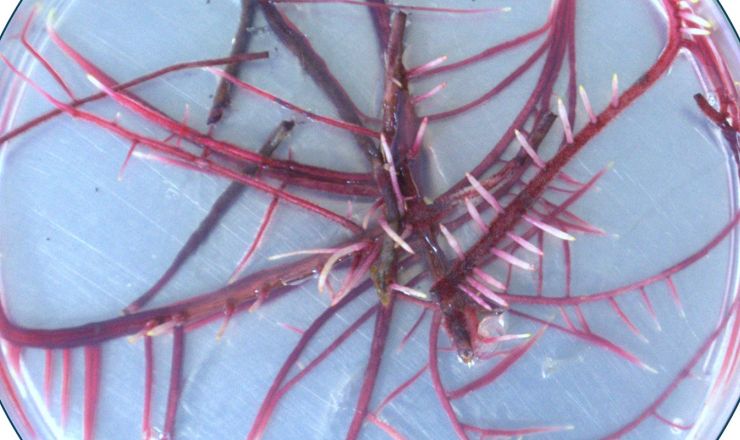
Hairy roots - a biotechnological tool for grapevine improvement
Hairy roots arise when the phytopathogenic bacterium, Rhizobium rhizogenes inserts DNA into a wounded plant’s genome, triggering the formation of rapidly growing root masses. The rapid growth and relatively fast establishment of hairy roots led to their use in laboratories, where they are used to…

To swirl or not to swirl? - that is the question... (Part 2)
This study investigated the sensory suppression effects of H2S on tropical fruit characters and evaluated whether the perceived improvement following swirling is a result of chemical oxidation or physical volatilisation.

Q&A with Jose Luis Aleixandre-Tudo
Jose Luis Aleixandre-Tudo is an Associate Professor in the Department of Food Technology at the Universitat Politècnica de València, Spain, and an Extraordinary Senior Lecturer in the Department of Viticulture and Oenology at Stellenbosch University, South Africa.