
Biodynamic estate Reyneke Wines appoints 2 new winemakers
Biodynamic and organic wine estate, Reyneke Wines, has appointed Barbara Melck as the new winemaker and Armand Esterhuizen as assistant winemaker.
· 4 min read
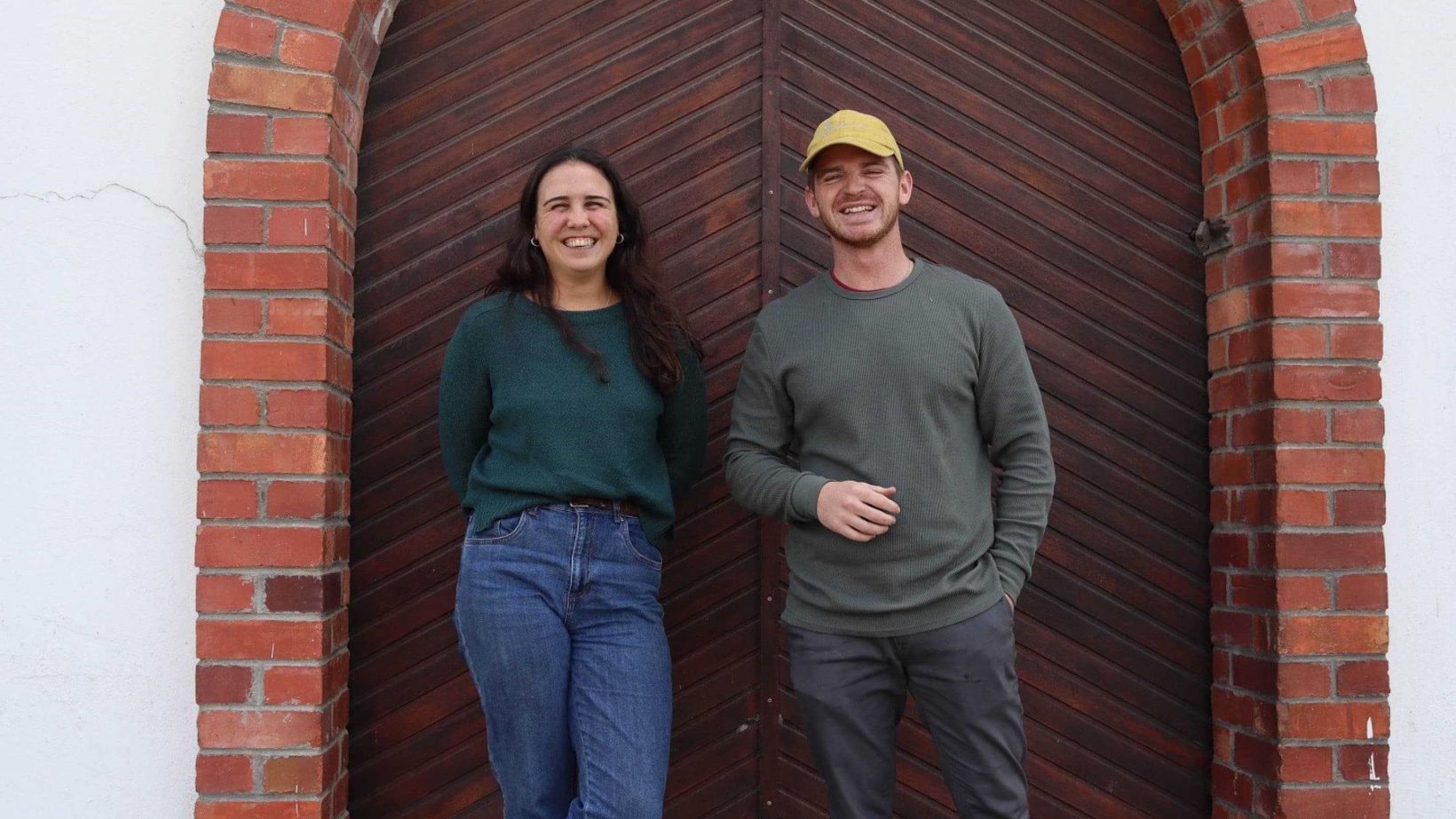
Vinimark’s Rudiger Gretschel remains at the helm as cellarmaster, with owner & viticulturalist Johan Reyneke continuing his involvement in the biodynamic and organic cultivation of the farm’s crop.
Both will continue to support the new duo in maintaining the estate’s focus on quality and sustainability.
Barbara has served as assistant winemaker for Vinimark since July 2016, working across various estates, including Twee Jonge Gezellen.
She completed her BSc in Viticulture and Enology at Stellenbosch University, following which she spent time working at Simonsig, Rupert & Rothschild, Wind Gap and Morgenhof.
Armand has experience of working at Simonsig, Waterford Estate, Glen Carlou and Benguela Cove, before joining Reyneke Wines having also completed his BSc in Viticulture and Enology at Stellenbosch University.
He likens his role as assistant winemaker to a blending component in a wine that ensures smoothness.
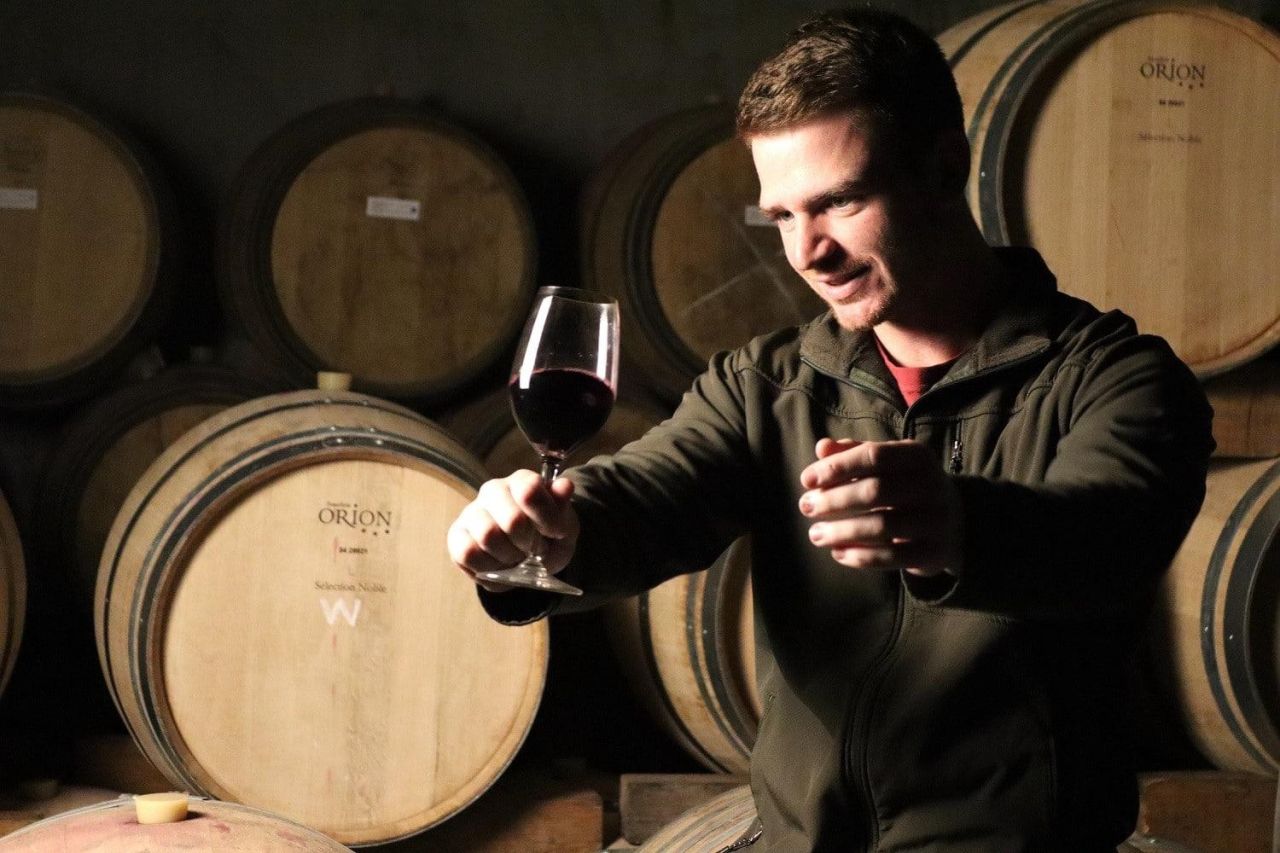
“Whether it is the winemaker, operations manager, cellar team or anyone else involved with Reyneke that needs assistance, I’m the person,” Armand says.
“I see myself as Barbara’s left hand – she uses her right hand to taste wine so that role is already filled!”
With Reyneke having developed an impressive global following for its meticulous biodynamic approach and multi-awarded wines, Barbara doesn’t see the need to tweak the way things work in its Polkadraai Hills cellar.
“I would like to believe that I am rather more informed by the environment in which the grapes are grown, than a particular style,” she says.
“I do believe that as a winemaker, you can never stop learning and adapting.”
She continues: “That always keeps me willing to adapt to the seasons and environments that I encounter. I also am a strong believer in gut instinct and trusting your initial judgement”.
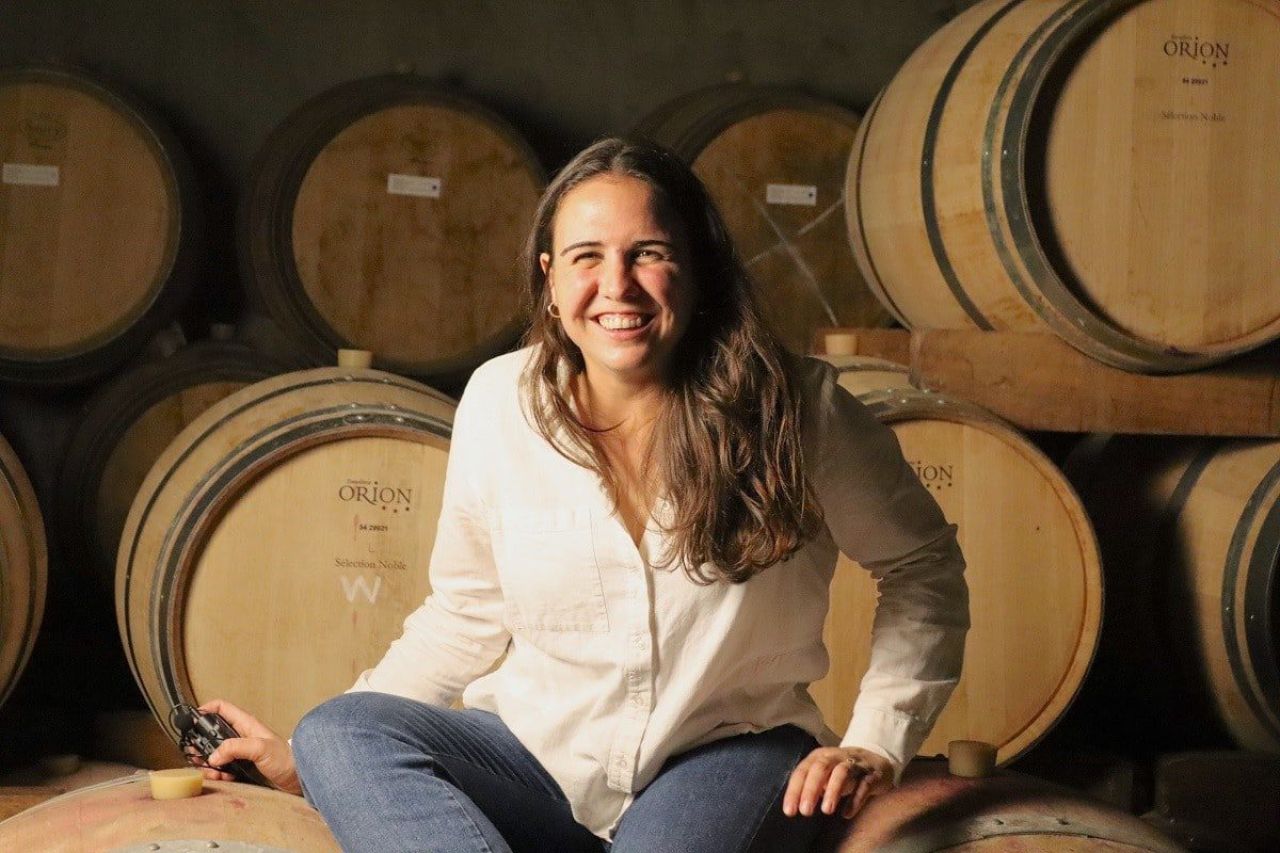
She was attracted to biodynamic and organic winemaking by the respect required for the entire process.
“When you farm this way, you have a different kind of respect for the soil, the land, the vines, people and the environment. You learn to think about this differently and to respect the natural way things are. Working with nature instead of against it,” she says.
New Reyneke Wines’ winemaker
Speaking about the wines, Barbara says that she doesn’t have a favourite amongst the varietals produced by Reyneke, because each is so unique.
“The Sauvignon Blanc is unique in the amount of texture that we get paired with the low pH. The Chenin has this brightness and life to it - the sunshine child, if you must,” she comments.
“The Syrah is wild, but graceful at the same time. The Cabernet Franc has this amazing litheness and freshness to it. Cabernet Sauvignon always has a wonderful density and gravitas, while still maintaining pure fruit.”
“The best thing about all these grapes is that each vineyard is unique and has its own characteristics. I truly look forward to getting to know the Reyneke vineyards a lot better,” she says.
WATCH: SA biodynamic and organic wine estate, Reyneke Wines
ALSO READ: Johan Reyneke: South Africa’s ‘intentional farmer’
Johan Reyneke greets you with the excitement of someone who can’t wait to show you his world.
Caring for his vineyards like Adam must have tended the Garden of Eden – with joy, reverence and wonderment – it’s impossible not to accept his invitation to see the world through his eyes.
With knowledge comes obligation
With no formal viticultural education, Johan’s introduction to the field came when he was looking for a part-time job while doing his master’s degree in environmental ethics.
He joined the roving labourers working on wine farms around Stellenbosch and before long he began to notice an alarming disconnect between the theory and practice.
“You can’t read one thing in the evening that makes sense and do something completely different during the day,” he says. “It just doesn’t work that way.”
He attended his first organic conference in 2000. It was organised by Nietvoorbij and sponsored by Monsanto. “It was crazy,” he recalls. “Nobody knew how it worked.”
After listening to one failed attempt to implement organic farming after another, he walked out. He was determined to try his hand at it himself.
He who lacks the courage to fail, also lacks the courage to succeed
It took some persuading, but Johan’s enthusiasm prevailed and his bank manager eventually agreed to limit his venture to a quarter hectare of Pinotage on the family’s farm.
“As with any new enterprise you’re going to make mistakes and there’s a learning curve,” he says. “Start small, figure it out and learn your lessons before scaling up.”
Click here to get your copy of WineLand Magazine (or better yet, why not subscribe?)
WATCH: Welcome to The Wine Arc!

More from
Innovation and insights
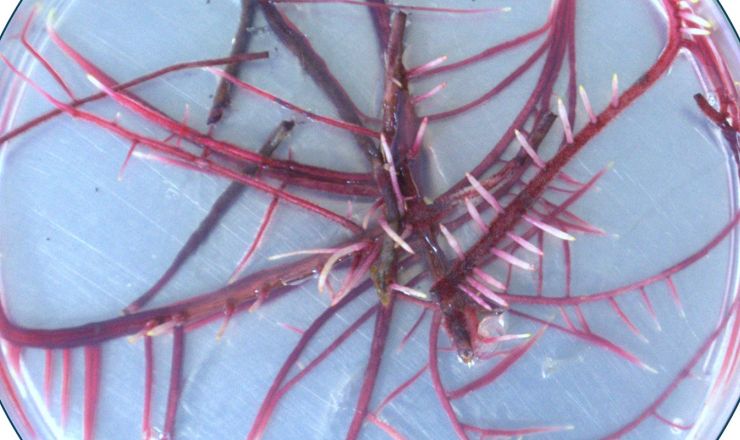
Hairy roots - a biotechnological tool for grapevine improvement
Hairy roots arise when the phytopathogenic bacterium, Rhizobium rhizogenes inserts DNA into a wounded plant’s genome, triggering the formation of rapidly growing root masses. The rapid growth and relatively fast establishment of hairy roots led to their use in laboratories, where they are used to…
To swirl or not to swirl? - that is the question... (Part 2)
This study investigated the sensory suppression effects of H2S on tropical fruit characters and evaluated whether the perceived improvement following swirling is a result of chemical oxidation or physical volatilisation.
Q&A with Jose Luis Aleixandre-Tudo
Jose Luis Aleixandre-Tudo is an Associate Professor in the Department of Food Technology at the Universitat Politècnica de València, Spain, and an Extraordinary Senior Lecturer in the Department of Viticulture and Oenology at Stellenbosch University, South Africa.