
Root-knot nematodes on cover crops
· 2 min read
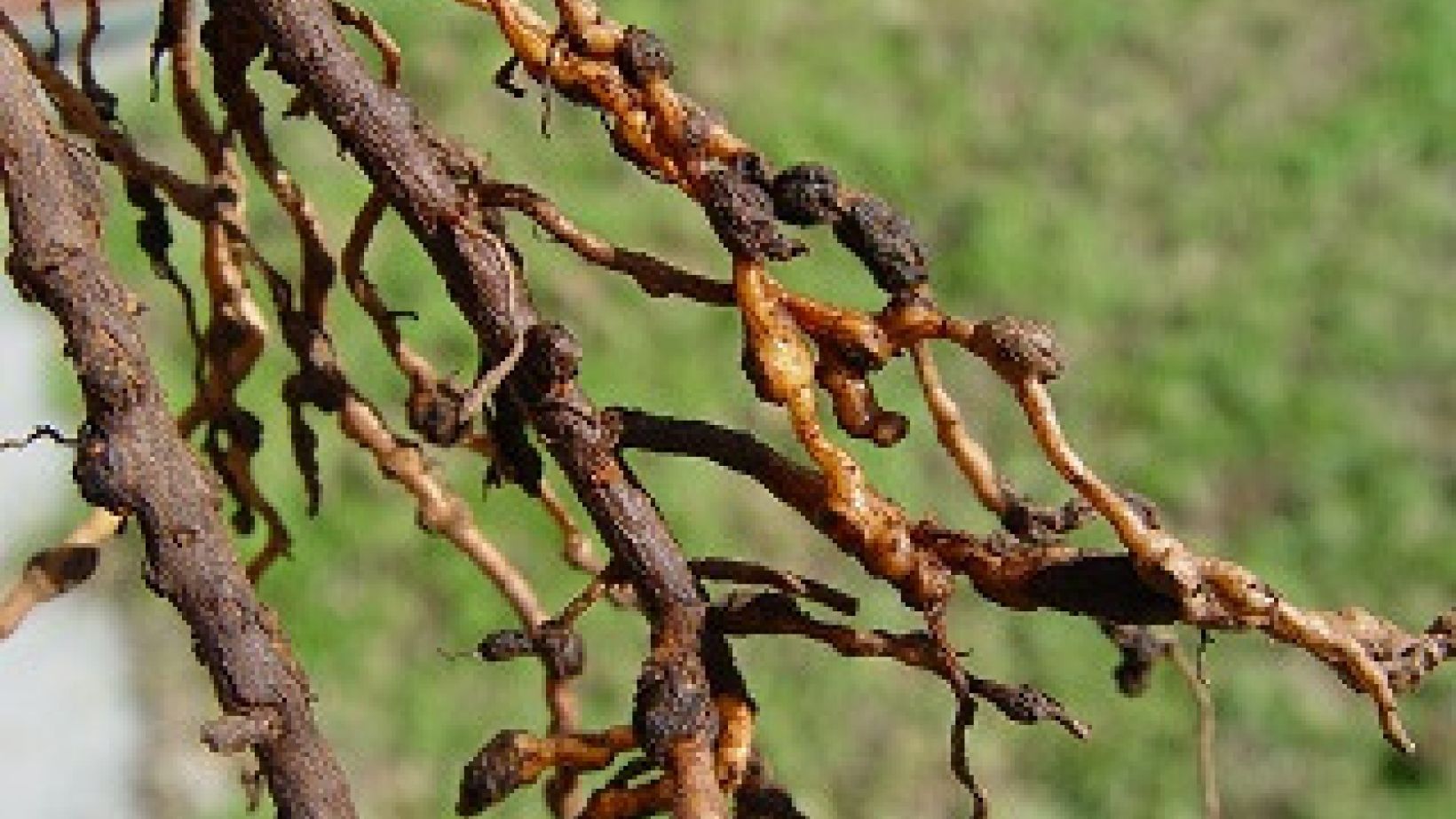
Root-knot nematodes (Meloidogyne spp.) are common in South African vineyards and nursery soils, with M.javanica being the most common species. Soil fumigation and chemical control do not necessarily completely eradicate root-knot nematodes from the soil. Nurserymen cultivate non-host cover crops during the fallow period to reduce nematode numbers even further. Oats (Avenasativa) and triticale (Triticalehexaploide) are commonly used as cover crops, because the general belief is that they are not host plants for root-knot nematodes.
Glasshouse trials conducted at ARC Infruitec-Nietvoorbij, using the oat variety “Kompasberg” and the triticale variety “Tobie” showed that M. javanica can reproduce successfully on both of these cover crops. However, after the trial period of 10 weeks, root-knot galls on the roots of both cover crops were still small and difficult to observe. No negative effect on root mass and above ground growth was discernible. This probably led to the general belief that these cover crops are non-hosts of root-knot nematodes.
Implications for nurseries and producers
The finding that oats (cv. Kompasberg) and triticale (cv. Tobie) are hosts for root-knot nematodes means that these cover crops should be used with caution in vineyards and nursery soils. The cultivation of oats (cv. Kompasberg) and triticale (cv. Tobie) in order to reduce root-knot nematode numbers is therefore not recommended.
Summary
Research conducted at ARC Infruitec-Nietvoorbij showed that root-knot nematodes (Meloidogyne javanica) can reproduce successfully on oats (cv. Kompasberg) and triticale (cv. Tobie). The cultivation of oats (cv. Kompasberg) and triticale (cv. Tobie) in order to reduce root-knot nematode numbers is not recommended.
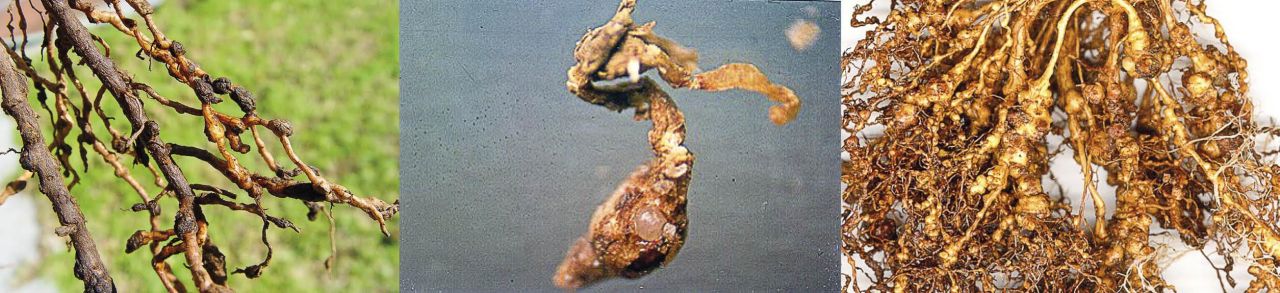
Characteristic root galls on the roots of grapevine, caused by the root-knot nematode, Meloidogyne javanica.
Root-knot nematode is an endoparasite, which penetrates the roots of grapevine. Secretions during feeding induce the formation of characteristic root galls. Heavy infestation weakens the root system, restricting their ability to absorb water and nutrients, leading to reduced vine vigour and much reduced yield.
– For more information, contact Rinus Knoetze at [email protected].

More from
Innovation and insights

Packaging under pressure: What wine businesses should be watching
From lighter bottles to automated packing lines, packaging decisions are becoming increasingly important to the cost and competitiveness of South African wine.

How vine water stress shapes grape and wine quality
This study formed part of the South Africa Wine programme “Grapevine production with limited water resources”, and aimed to evaluate how spatial and temporal water stress affects vine physiology, fruit composition and wine quality.
Drought tolerance of different scion cultivars (Part 4): Vegetative growth and yield
The study aimed to assess grapevine vegetative and yield responses in an almost worst-case scenario, i.e. grapevines growing under dryland conditions in sandy loam soil in the Swartland region.