
Rooted in research - what science says about regenerative viticulture (Part 3)
· 10 min read
Functional biodiversity enhancement
This article is based on a recently published scientific review article. In the review article, the question was: ‘What science exists to support the efficacy of practices used in regenerative viticulture systems or approaches?’.
Article reference: O’Brien, F., Nesbitt, A., Sykes, R. & Kemp, B., 2025. Regenerative viticulture and climate change resilience. OENO One 59(1). https://doi.org/10.20870/oeno-one.2025.59.1.8089.
Introduction – a scientific look at regenerative practices
Drawing from a newly published scientific review, this article explores the evidence behind regenerative viticulture (RV) practices. The review considered how a network of vineyard strategies, though distinct, collectively support RV’s fundamental goals.
We’ve covered organic soil amendments, biostimulants and biocontrol agents, cover crops and weed management in Parts 1 and 2. Now, we’re putting the spotlight on functional biodiversity and how livestock fits into the picture. What do we know so far? And what questions still need answers?
Practice: Cultivating functional biodiversity in vineyards
While much attention in vineyard ecology has traditionally focused on species counts and taxonomic diversity, a more nuanced and impactful concept is gaining ground: functional biodiversity. This term refers not just to how many species are present, but how those species contribute to ecosystem functions like pest control, nutrient cycling and climate resilience. In RV, enhancing functional biodiversity is not just a byproduct – it’s a core strategy.
Why functional biodiversity matters
Functional biodiversity groups organisms based on the roles they play in the vineyard ecosystem – whether they’re insects that pollinate, birds that deter pests, or soil microbes that recycle nutrients. By ensuring that multiple species can perform the same ecological job (a concept called “functional redundancy”), vineyards can stay resilient under pressure from drought, disease, or other stresses. The more diverse the system is in terms of functions, the more stable and productive it becomes.
Boosting biodiversity with plants and insects
Cover crops and natural vegetation are essential tools for promoting functional biodiversity, particularly among beneficial insects. Key plant traits – like root diameter, nitrogen-fixing capacity and flowering duration – directly influence ecosystem services such as soil aggregation, nutrient cycling, and food sources for pollinators.
Field research in north-eastern Italy revealed that inter-row management can significantly shape insect populations. For example, spontaneous grasses left to grow without mowing increased the abundance of predatory mites, which help control grapevine pests. However, these same conditions also favoured pests like the American grapevine leafhopper – a reminder that managing biodiversity is a balancing act.
The selection of cover crop species should therefore be strategic, ensuring that they support beneficial species, while minimising conditions that favour pests. Timing and frequency of mowing can further fine-tune these dynamics, helping to suppress unwanted species, while maintaining habitat for allies.
Avian and mammalian allies – bats and birds
Nature’s pest control doesn’t end with insects. Bats and birds also play critical roles in functional biodiversity. In Chile, bats were found to reduce pest damage and hence boost grape yields by 7% through their control of moth larvae. Similarly, birds of prey such as the American kestrel and New Zealand falcon are used in vineyards to deter pest birds that damage grapes.
Encouraging these predators involves both habitat creation and structural support. Nesting boxes have proven effective in attracting owls, kestrels and other raptors. In California’s Napa Valley, one study estimated that a single pair of barn owls removed over 1 000 rodents in one nesting cycle – offering both an economic and ecological win by reducing the need for rodenticides.
Even smaller insectivorous birds benefit from vineyard practices like cover cropping, which increases the abundance of insects they feed on. Landscape features such as nearby hedgerows, woodlands, and even remnant oak trees can further enhance bird and bat activity, reinforcing the idea that vineyard biodiversity extends beyond the vines.
However, introducing new habitat structures must be approached with care. Green infrastructure can sometimes attract unintended pests, so local ecological assessments are essential before making major changes.
Integrated livestock systems – grazing towards biodiversity
Another powerful method for increasing functional biodiversity in vineyards is through integrated crop-livestock systems. Grazing animals – particularly sheep – can reduce reliance on mechanical or chemical weed control, aerate the soil, and even assist with leaf removal.
These benefits depend heavily on factors like grazing timing, intensity and animal type. For example, too many animals or poorly timed grazing can lead to soil compaction or damage to young vines. But when managed well, sheep grazing can recycle nutrients, add organic matter, and enhance soil microbial activity.
Importantly, the environmental impact of livestock, particularly regarding greenhouse gas emissions, appears to be less severe than often assumed. A two-year study in a Californian biodynamic vineyard found that sheep grazing did not significantly affect overall emissions of CO2, N2O, or methane. Peaks in N2O emissions were mainly linked to wet conditions and localised urine patches, suggesting rainfall patterns play a larger role in emissions than the animals themselves.
A need for continued research
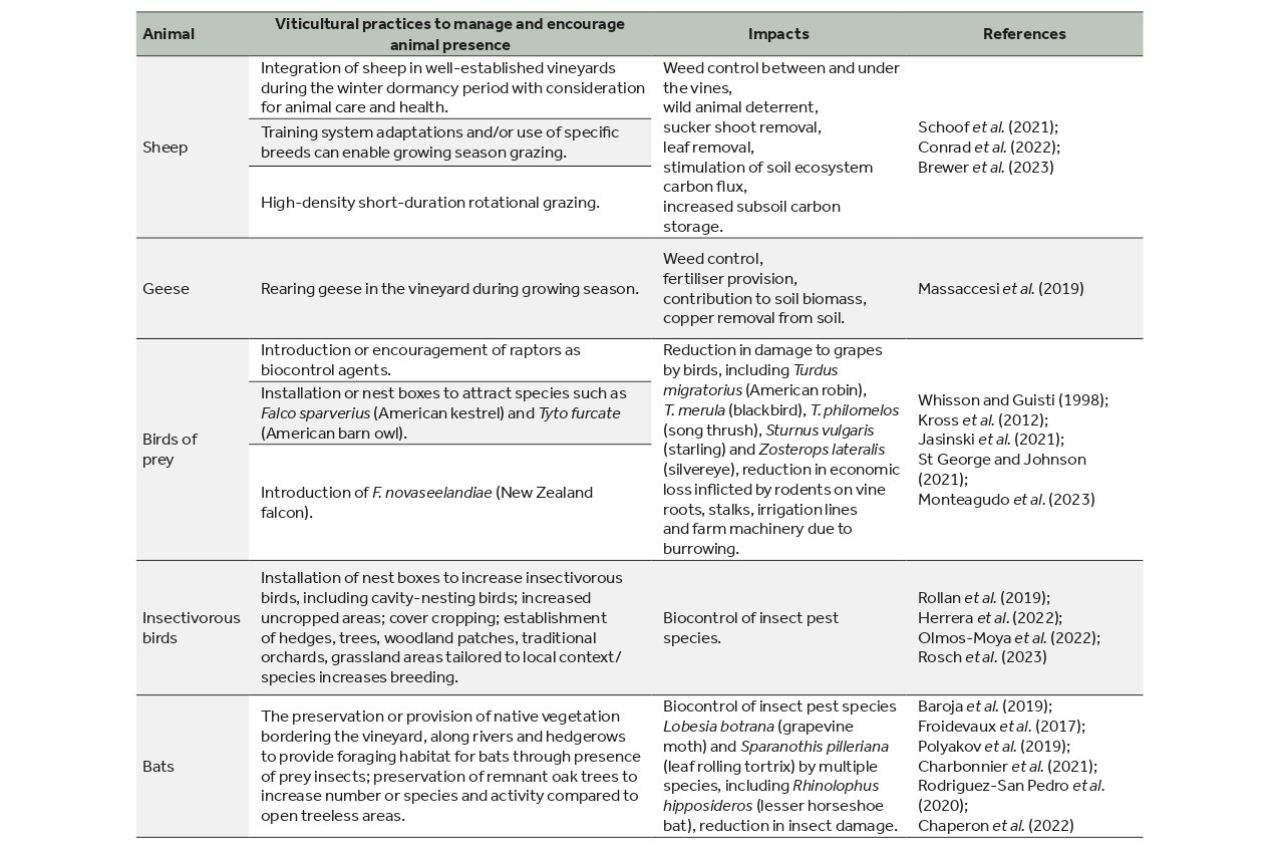
Table 1 summarises the roles of fauna in regenerative viticulture systems and the impact of management practices on their abundance. The interactions between functional biodiversity and RV practices are complex and often location-specific. From soil fauna to flying predators, every living component of the vineyard has the potential to contribute – or occasionally complicate – ecosystem functioning.
TABLE 1. The roles of fauna in regenerative viticulture systems and the impact of management practices on their abundance. (Extracted from O’Brien, F., Nesbitt, A., Sykes, R. & Kemp, B. (2025). Regenerative viticulture and climate change resilience. OENO One 59(1), as allowed by the following Creative Commons licence: https://creativecommons.org/licenses/by/4.0/.
Future research needs to focus not just on individual species or management practices, but on the synergies between them. For example, how do mulching and cover cropping interact with insect populations? Can grazing regimes be tailored to avoid negative impacts on soil structure while maximising pest control?
A holistic understanding of these relationships is crucial for vineyard managers aiming to transition to or optimise regenerative systems. Management decisions that promote functional biodiversity could lead to reduced inputs, enhanced yield stability, and improved environmental outcomes – all while contributing to a more resilient and sustainable viticultural landscape. This integrated, nature-friendly approach is not just an ecological ideal; it’s becoming a practical necessity in the face of climate change and increasing consumer scrutiny.
Conclusion: Regenerative viticulture – towards a more resilient wine future
RV is not just a rebranding of sustainable or organic practices. It’s a transformative approach that seeks to restore and enhance the ecological processes upon which vineyard productivity and resilience depend. Rather than simply replacing synthetic inputs with organic alternatives, RV advocates for a holistic, ecosystem-based model that considers the complex interplay between soil, plants, microbes, animals and climate. Figure 1 illustrates the potential impacts of selected RV practices on aspects of vineyard soil health and GHG emissions.
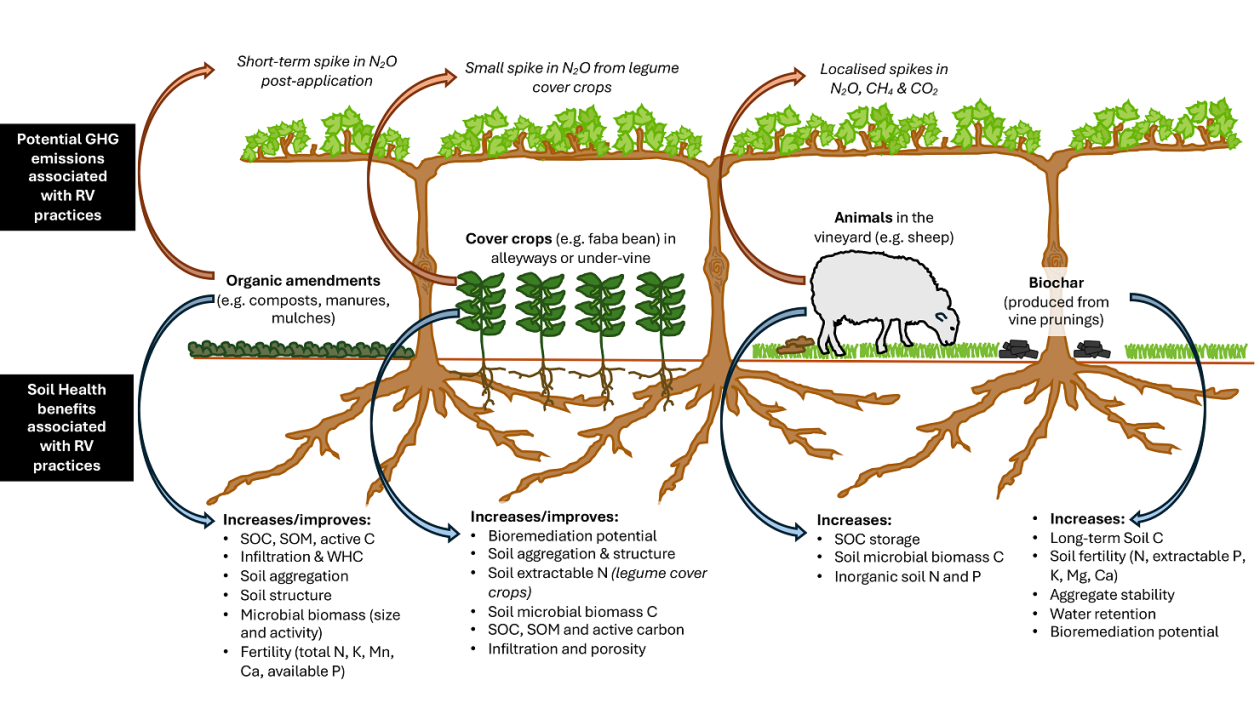
FIGURE 1 illustrates the potential impacts of selected RV practices on aspects of vineyard soil health and GHG emissions. (Extracted from O’Brien, F., Nesbitt, A., Sykes, R. & Kemp, B. (2025). Regenerative viticulture and climate change resilience. OENO One, 59(1), as allowed by the following Creative Commons licence: https://creativecommons.org/licenses/by/4.0/.
This review reveals that while interest in RV is growing, the scientific literature is still in its infancy – particularly when it comes to studying entire vineyard ecosystems as interconnected wholes. Most studies to date have focused narrowly on individual practices, often assessing their effects on isolated variables such as soil chemistry or vine growth. As a result, there’s a critical need for broader, longer-term, and more integrated research to truly understand how RV functions across different contexts and climates.
The case for holistic and collaborative research
To build a more robust evidence base for RV, future studies must adopt multidisciplinary and multi-location approaches. Investigating how RV practices – like cover cropping, compost application, or livestock integration – interact with variables such as grapevine physiology, grape and wine quality, pest dynamics, and greenhouse gas (GHG) emissions, would paint a clearer picture of system-wide effects. Collaboration between scientists and growers, including participatory research across regions with differing soils, climates and pest pressures, will be crucial to developing actionable, locally relevant guidance.
Soil health as a foundation
One of the most consistent findings in the literature is the positive impact of RV practices on soil health. Cover cropping and reduced tillage have been shown to improve soil organic matter, structure, water retention and microbial diversity – all key indicators of a thriving vineyard ecosystem. These practices can also support vine performance indirectly by influencing the soil microbiome, which in turn affects nutrient availability and even the flavour compounds found in grapes and wine.
However, research on how these soil improvements translate into tangible outcomes like wine quality or vine resilience, is limited. Similarly, more context-specific studies are needed to help growers tailor their cover crop selections and management strategies to local conditions and goals, such as reducing vegetative growth or enhancing natural pest control.
Weed management, mulches and alternatives
Cover crops and organic mulches offer RV-aligned alternatives to conventional herbicides and tillage. Not only do they suppress weeds, but they also support soil health and provide habitat for beneficial organisms. While the long-term ecosystem impacts of herbicide use and tillage remain contentious, mulches stand out for their positive contribution to vineyard resilience, especially in buffering vines against heat and drought.
That said, emerging weed control technologies, such as electric weeding or targeted flame weeding, show potential compatibility with RV principles, but require further evaluation. More research is also needed into how these methods interact with soil health and biodiversity to determine their true value in regenerative systems.
Biostimulants, BCAs and the vineyard microbiome
Biostimulants and biological control agents (BCAs) are increasingly seen as promising tools to reduce reliance on synthetic agrochemicals. Yet, this review highlights a lack of field-based data on their efficacy in vineyards, especially concerning soil-borne disease suppression and impacts on the grapevine microbiome.
Future studies could explore how these products interact with rootstocks and influence vine traits, as well as how they perform across different soil types and climates. Molecular tools could shed light on the interactions between microbial communities and vine phenotypes, helping refine these products for use in RV systems.
Functional biodiversity and climate resilience
RV’s emphasis on functional biodiversity – whether through livestock, birds, bats, or beneficial insects – has clear potential to deliver ecological services such as pest control, nutrient cycling and climate adaptation. Yet the review also underscores that more data is needed to understand the context-specific benefits and risks of these interventions. For instance, attracting certain predator species may inadvertently support pests in some scenarios.
Final reflections – toward a regenerative future
There are many reviews concerning agroecology and regenerative agriculture. This is however, the first review to specifically assess the literature regarding regenerative practices and the potential of these practices to help achieve the goals of RV within vineyard systems.
The findings are clear: RV offers multiple pathways to improve ecological and production outcomes simultaneously. Although significant knowledge gaps remain – particularly in areas like agroforestry, wastewater reuse and socio-economic impacts – there is a growing foundation upon which future research and policy can build. For policymakers, this review provides a timely opportunity to broaden the scope of regenerative agriculture initiatives to include viticulture, aligning environmental goals with the needs of one of the world’s most culturally and economically significant agricultural sectors.
As climate extremes increasingly threaten viticulture, practices that bolster vineyard resilience are likely to become essential for both economic viability and environmental stewardship. As we look to the future of winegrowing in a changing climate, regenerative viticulture holds the promise of a more resilient, biodiverse, and sustainable path forward.
For more information, contact Anel Andrag at [email protected].
Click here to get your copy of WineLand Magazine.

More from
Innovation and insights

Packaging under pressure: What wine businesses should be watching
From lighter bottles to automated packing lines, packaging decisions are becoming increasingly important to the cost and competitiveness of South African wine.
How vine water stress shapes grape and wine quality
This study formed part of the South Africa Wine programme “Grapevine production with limited water resources”, and aimed to evaluate how spatial and temporal water stress affects vine physiology, fruit composition and wine quality.
Drought tolerance of different scion cultivars (Part 4): Vegetative growth and yield
The study aimed to assess grapevine vegetative and yield responses in an almost worst-case scenario, i.e. grapevines growing under dryland conditions in sandy loam soil in the Swartland region.