
To swirl or not to swirl? - that is the question... (Part 2)
This study investigated the sensory suppression effects of H2S on tropical fruit characters and evaluated whether the perceived improvement following swirling is a result of chemical oxidation or physical volatilisation.
Matija Lesković, Jeanne Brand and Wessel du Toit
· 9 min read
This article is adapted from a publication in OENO One. Article reference: Lesković, M., Bekker, M.Z., Shoba, S., Brand, J., Du Toit, W.J., 2026. Effect of glass swirling on the removal of ‘reductive’ off-odours caused by H2S in wine. OENO One. Vol. 60 No. 1. DOI: https://doi.org/10.20870/oeno-one.2026.60.1.9616.
Introduction
Winemakers often utilise oxygen-limiting techniques to preserve delicate varietal thiols, such as 3SH and 3SHA, which are responsible for the desirable “tropical” aromas of passionfruit and guava in Chenin blanc and Sauvignon blanc. However, these same reductive conditions can facilitate the accumulation of volatile sulphur compounds (VSCs), specifically hydrogen sulphide (H2S) and methanethiol. These compounds introduce undesirable “reductive” off-odours, frequently described as rotten egg or cooked cabbage.
When a wine is perceived as “closed” or reductive upon opening, industry practice suggests orbital glass swirling to remediate the profile. This action is hypothesised to function through two primary mechanisms:
- Oxidative reactions: Increasing oxygen contact to facilitate the oxidation of VSCs, potentially mediated by quinones binding.
- Volatilisation: Enhancing the evaporation of these compounds, which possess significantly lower boiling points than other wine constituents.
Despite the anecdotal ubiquity of this practice, the scientific mechanism behind the reduction of off-odours via glass swirling remains largely unquantified. This study investigated the sensory suppression effects of H2S on tropical fruit characters and evaluated whether the perceived improvement following swirling is a result of chemical oxidation or physical volatilisation.
Materials and methods
Wine and chemical analysis performed
A 2022 Chenin blanc was used in this experiment, obtained shortly after alcoholic fermentation. Three H2S levels were assessed in this wine: no H2S additions, H2S was added at 10 µg/L (lower H2S level) and 20 µg/L (high H2S level). The H2S levels in the wines were determined using specially H2S gas detection tubes and the varietal thiols using a published UPLC method.
Swirling and serving protocols for sensory testing
Tastings were conducted in ISO-standard wine glasses with 25 mL of wine at 20 ± 2°C. To replicate realistic service, samples were covered with Petri dish lids, and the time between pouring and panel evaluation was tightly controlled. Three handling styles were compared:
1. No swirl (glass covered)
This treatment will be indicated as “T” or “T + H2S” (and the analogous combinations for hT/hH2S). The procedure entailed pouring of the model wine and covering for 15 minutes before smelling.
2. Swirl then cover (S)
This treatment will be indicated as “T + H2S + S”. The procedure entailed pouring of the model wine and swirling for 30 seconds in an uncovered glass (about 1.5 - 2 circular motions per second), then covered for 15 minutes before smelling.
3. Swirl then leave open (S + O)
This treatment will be indicated as “T + H2S + S + O”. The procedure entailed pouring of the model wine and swirling for 30 seconds in an uncovered glass, then left uncovered for 15 minutes, and covered briefly only just before sensory evaluation.
The 15-minute period allowed headspace and liquid to reach equilibrium for highly volatile compounds like H2S, which mirrors what often happens in real tasting scenarios where a poured sample sits for a short time before evaluation.
For strict oxygen management, the wine was stored in stainless steel kegs, transferred under inert gas (argon or nitrogen) into brown glass bottles, sealed with crown caps, and kept cold (4°C). Additions H2S were performed in an anoxic glove box (<1% O2), and bottles were resealed immediately to prevent oxygen exposure. The effects of swirling the glass on H2S concentrations were also tested in the anoxic box, as well as under ambient air conditions.
Sensory panel and training
A trained panel of 10 assessors (all females; ages 30 - 63) performed the sensory work, which included rigorous training and assessing the intensity of the model wine treatments using descriptive analyses.
Results and discussion
Effects of glass swirling in Chenin blanc wines
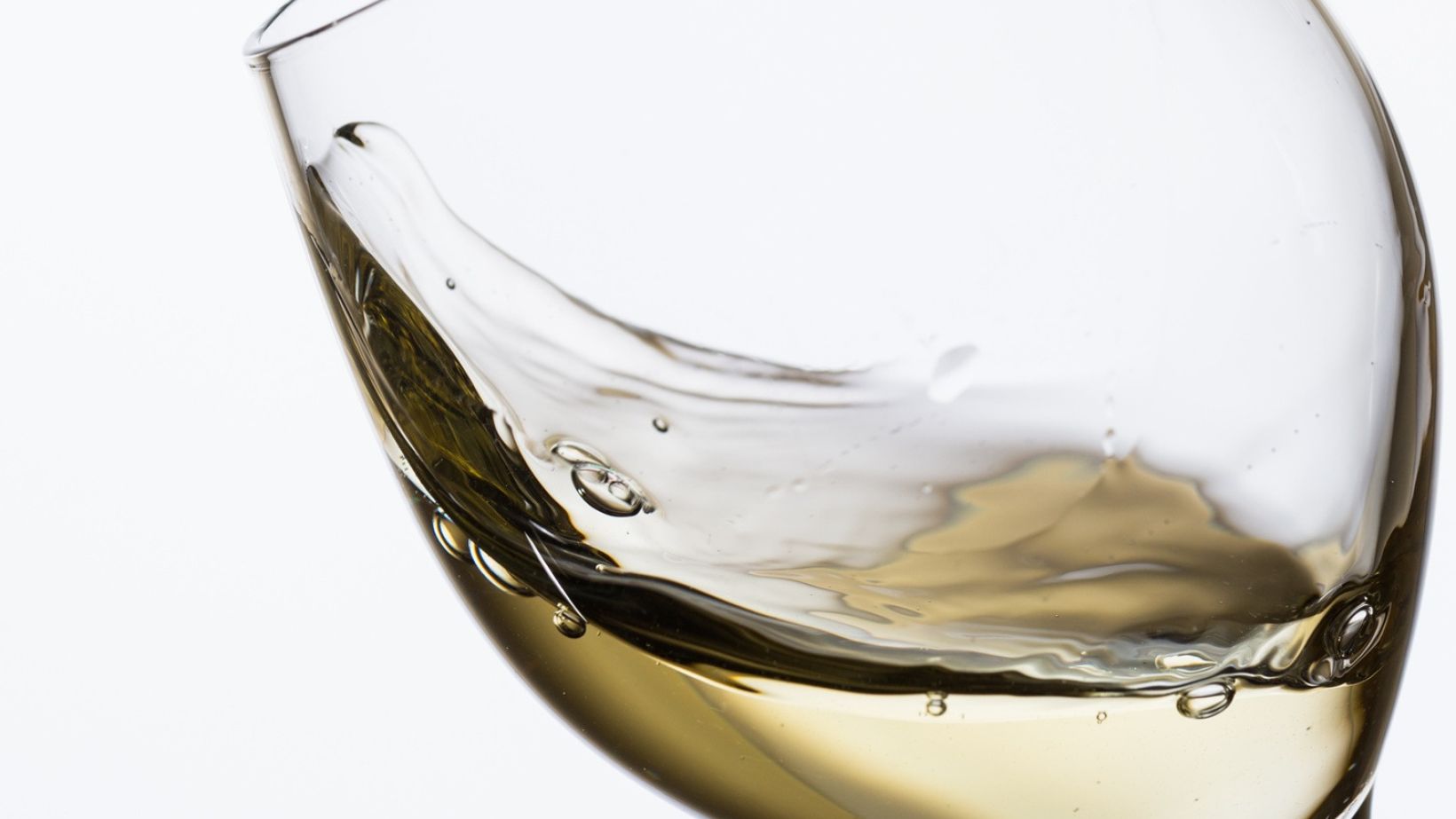
Wines containing H2S were clearly distinguished from the control Chenin blanc samples by the panel. Treatments involving glass swirling tended to move closer to the control wine in terms of their sensory profile, indicating a reduction in reductive character and a partial recovery of fruit expression. This overall pattern confirms that physical handling of the wine in the glass, specifically swirling and managing air exposure, can significantly influence how aromas are perceived in Chenin blanc wine.
Chenin blanc with low hydrogen sulphide
In Chenin blanc wines containing lower levels of H2S (10 µg/L added), swirling the glass for 30 seconds proved to be an effective way of reducing reductive aromas. Sensory evaluation showed that wines which had been swirled were no longer distinguishable from the untreated control in terms of “boiled egg” character, suggesting that the unpleasant sulphur note associated with H2S had largely dissipated.
At the same time, fruity aromas such as peach and apricot responded differently depending on what happened after swirling. When the glass was swirled and then covered, the intensity of these fruity notes increased noticeably compared to the wine that contained H2S, but was not swirled. In contrast, when the glass was left open after swirling, fruit intensity tended to decrease. In some cases, it even dropped below that of the untreated control wine.
This contrast highlights the importance of what happens in the glass after swirling. Covering the glass appears to protect volatile fruit compounds from escaping into the air, allowing them to build up in the headspace and reach a new balance between the liquid and the gas above it. This equilibration makes fruity aromas more noticeable to the drinker. When the glass is left open for an extended period, however, these same aroma compounds can be lost through continued volatilisation, resulting in a weaker fruit impression.
Interestingly, while fruit aromas were sensitive to whether the glass was covered or left open, H2S associated aromas were not. Both swirling treatments, covered and uncovered, were equally effective at reducing reductive notes. This likely reflects the very high volatility of H2S compared to fruity esters. Once the wine is agitated, H2S, present at lower levels, escapes rapidly, and additional air exposure contributes little further reduction.
The overall effect where the swirled wines became more like the control wines suggests that, at low H2S concentrations, swirling alone is sufficient to reduce reductive off-odours associated with H2S in Chenin blanc.
Chenin blanc with higher hydrogen sulphide
The situation changed noticeably when Chenin blanc wines contained higher concentrations of H2S (20 µg/L). In these wines, reductive aromas were more dominant, and fruit expression was more broadly suppressed. Sensory analysis showed that several key fruity attributes, including pineapple, passionfruit, peach/apricot, grapefruit and apple, were significantly reduced when H2S levels were high.
This broader masking of fruit aromas highlights the strength of H2S-derived reductive character relative to other aroma compounds in the wine. At higher concentrations, H2S does not merely add an unpleasant sulphur note; it actively interferes with the perception of multiple desirable aromas.
Despite this, swirling once again played a crucial role. Wines that were swirled for 30 seconds showed a marked improvement in fruit expression compared to unswirled, high-H2S wines. Attributes such as pineapple, passionfruit, peach/apricot and apple increased significantly after swirling, bringing the sensory profile closer to that of the control wine. In fact, swirling alone was more effective than swirling followed by leaving the glass open.
While chemical measurements indicated that leaving the glass open after swirling led to a further decrease in free H2S (discussed later), this additional chemical change was not reflected in the sensory data. Wines that were swirled and left open did not show further reductions in reductive aromas, nor did they show improvements in fruit expression. In some cases, fruit intensity was lower than in the control wine.
A similar pattern had already been observed in the low-H2S Chenin blanc wines, where fruity aromas were more intense when the glass was covered after swirling than when it was left open. Together, these results suggest that while swirling effectively removes H2S, prolonged exposure to air may lead to the loss of desirable aroma compounds, preventing fruit aromas from accumulating in the headspace.
We also analysed the varietal thiol and H2S levels in the wines which underwent the different treatments. There were no significant differences in 3SH and 3SHA concentrations in the Chenin blanc wines between the different treatments. In other words, the levels of varietal thiols in the wine stayed essentially the same, suggesting that they were not noticeably lost through oxidation or evaporation in this situation. However, for the H2S levels, a different picture emerged. When Chenin blanc wine was swirled, free hydrogen sulphide levels dropped by just over a third, both in normal air and in an oxygen-free environment. When the wine was then left uncovered, the reduction became far more pronounced, with H2S decreasing by almost 97% in the ambient air and 86% in the chamber with very low oxygen levels. The slightly greater loss observed under air exposure suggests that oxidation played a small supporting role. However, the overall pattern clearly shows that physical release via volatisation into the air was the main reason H2S levels fell.
Practical implications
Overall, these results confirm that glass swirling is a powerful and immediate tool for reducing reductive aromas in Chenin blanc wines. At low H2S levels, a brief swirl is usually sufficient to restore balance, particularly if the glass is then covered to preserve fruit aromas. At higher H2S levels, swirling remains effective, but leaving the glass open does not always necessarily provide additional sensory benefits and may even reduce fruit intensity. It also demonstrates that the decline in H2S and its associated aromas occurred through simple evaporation rather than through oxygen uptake and subsequent oxidation, as is often assumed.
For winemakers, sommeliers and consumers alike, these findings reinforce the idea that how a wine is handled in the glass can meaningfully shape the drinking experience. Simple actions such as swirling or allowing limited further air exposure can shift the balance between reductive notes and fruit expression in white wine.
(This article has been written with the assistance of Copilot.)
Reference
Lesković, M., Bekker, M.Z., Shoba, S., Brand, J. & Du Toit, W., 2026. Effect of glass swirling on the removal of ‘reductive’ off-odours caused by H2S in wine. OENO One (Vol. 60, no. 1). https://doi.org/10.20870/oeno-one.2026.60.1.9616
For more information, contact Wessel du Toit at [email protected].
Click here to get your copy of WineLand Magazine.

More from
Innovation and insights

Packaging under pressure: What wine businesses should be watching
From lighter bottles to automated packing lines, packaging decisions are becoming increasingly important to the cost and competitiveness of South African wine.
How vine water stress shapes grape and wine quality
This study formed part of the South Africa Wine programme “Grapevine production with limited water resources”, and aimed to evaluate how spatial and temporal water stress affects vine physiology, fruit composition and wine quality.
Drought tolerance of different scion cultivars (Part 4): Vegetative growth and yield
The study aimed to assess grapevine vegetative and yield responses in an almost worst-case scenario, i.e. grapevines growing under dryland conditions in sandy loam soil in the Swartland region.