
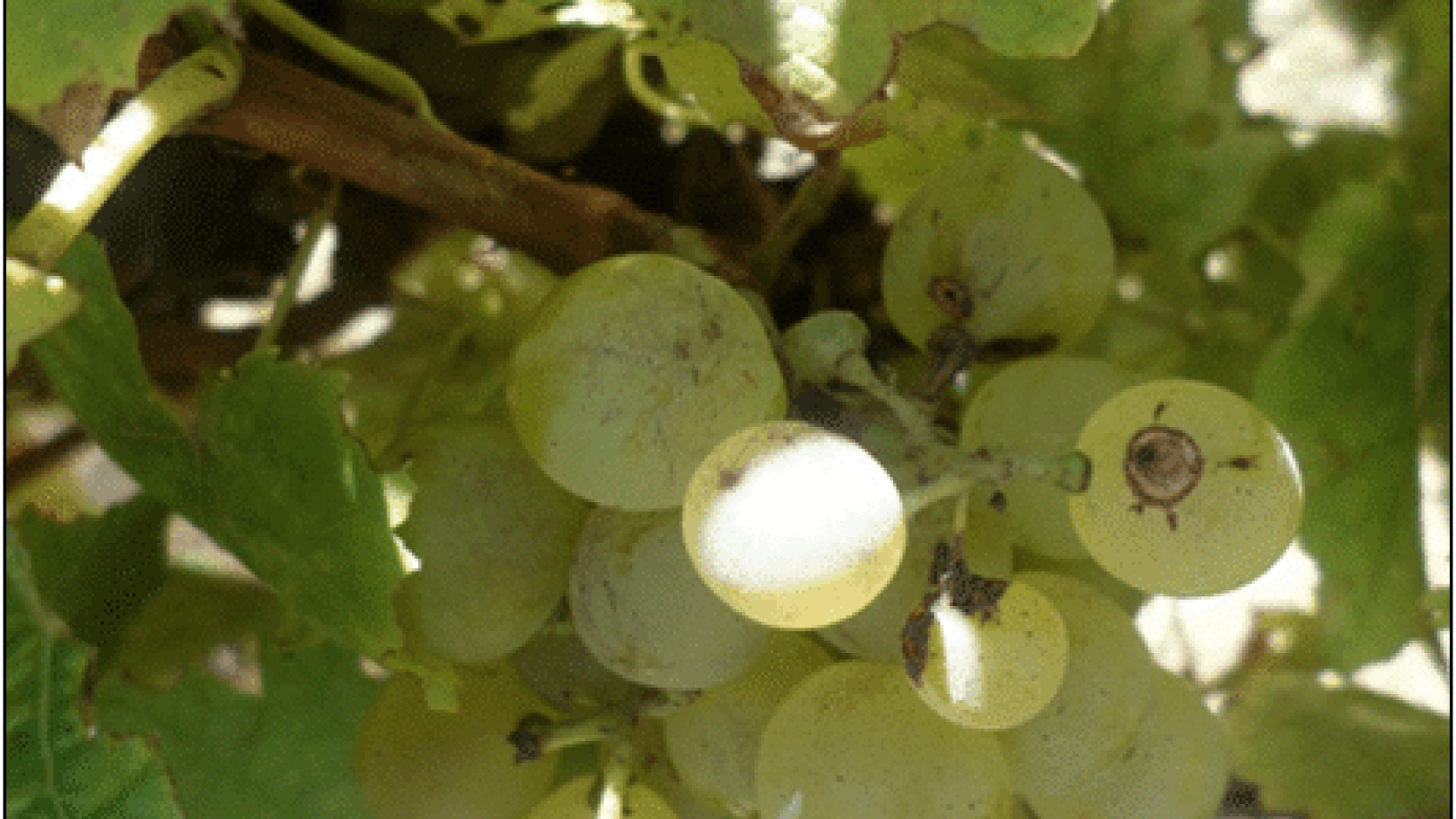
Weevils in vineyards
References:
Allsopp, E., Barnes, B.N., Blomefield, T. & Pringle, K.L., 2015. Insect of deciduous fruit and nut trees and olive – grapevine. In: Prinsloo, G.H & Uys, V.M. (Ed.), Insects of cultivated plants and natural pastures in Southern Africa. Entomological Society of Southern Africa, Pretoria, South Africa.
Barnes, B.N. & Giliomee, J.H., 1992. Fruit-feeding behaviour of banded fruit weevil, Phlyctinus callosus (Schönherr) (Col., Curculionidae), in apple orchards. Journal of Applied Entomology 113: 407 - 415.
Barnes, B.N. & Pringle, K.L., 1989. Oviposition by banded fruit weevil, Phlyctinus callosus (Schoenherr) (Coleoptera: Curculionidae), in deciduous fruit orchards in South Africa. Bulletin of Entomological Research 79: 31 - 40.
Barnes, B.N., 1989a. Different life and seasonal cycles of banded fruit weevil, Phlyctinus callosus (Coleoptera: Curculionidae), in apple orchards in the South-Western Cape. Phytophylactica 21: 147 - 157.
Barnes, B.N., 1989b. Embryonic and immature stages of Phlyctinus callosus Boh. (Coleoptera, Curculionidae): Aspects of biology and behaviour with respect to control in deciduous fruit orchards. Journal of the Entomological Society of Southern Africa 52: 165 - 178.
Dlamini, B., Malan, A.P. & Addison, P., 2019. Control of the banded fruit weevil, Phlyctinus callosus (Schönherr) (Coleoptera: Curculionidae) using entomopathogenic nematodes. Austral Entomology 58: 687 - 695. Doi: 10.1111/aen.12386.
Ferreira, T. & Malan, A.P., 2014. Potential of entomopathogenic nematodes for the control of the banded fruit weevil, Phlyctinus callosus (Schönherr) (Coleoptera: Curculionidae). Journal of Helminthology 88: 293 - 301 (Doi: 10.1017/S0022149X13000175).
Pringle, K.L., Barnes, B.N & Blomefield, T.L., 2015. Insect of deciduous fruit and nut trees and olive - apple. In: Prinsloo, G.H & Uys, V.M. (Ed.), Insects of cultivated plants and natural pastures in Southern Africa. Entomological Society of Southern Africa, Pretoria, South Africa.

More from
Innovation and insights
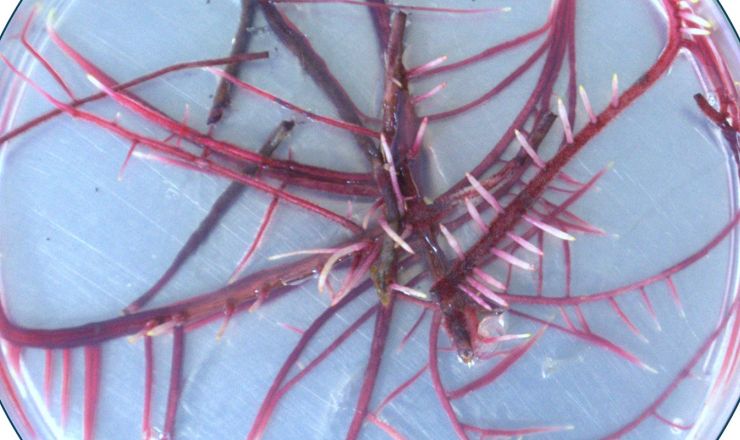
Hairy roots - a biotechnological tool for grapevine improvement
Hairy roots arise when the phytopathogenic bacterium, Rhizobium rhizogenes inserts DNA into a wounded plant’s genome, triggering the formation of rapidly growing root masses. The rapid growth and relatively fast establishment of hairy roots led to their use in laboratories, where they are used to…

To swirl or not to swirl? - that is the question... (Part 2)
This study investigated the sensory suppression effects of H2S on tropical fruit characters and evaluated whether the perceived improvement following swirling is a result of chemical oxidation or physical volatilisation.

Q&A with Jose Luis Aleixandre-Tudo
Jose Luis Aleixandre-Tudo is an Associate Professor in the Department of Food Technology at the Universitat Politècnica de València, Spain, and an Extraordinary Senior Lecturer in the Department of Viticulture and Oenology at Stellenbosch University, South Africa.