
Exchange rate movements
· 2 min read
For producing agricultural products, a large number of inputs are needed such as seeds, fertilisers, pesticides, fuel and agri-implements. Moreover, South Africa is a net importer of much of these inputs. Exchange rate movements is of immense importance within the agricultural industry.
South Africa imports roughly above 80% of fertiliser. Moreover, 98% of agrochemicals is also imported. Overall, all these inputs with fuel included, make up a significant component of inputs used in the farming businesses.
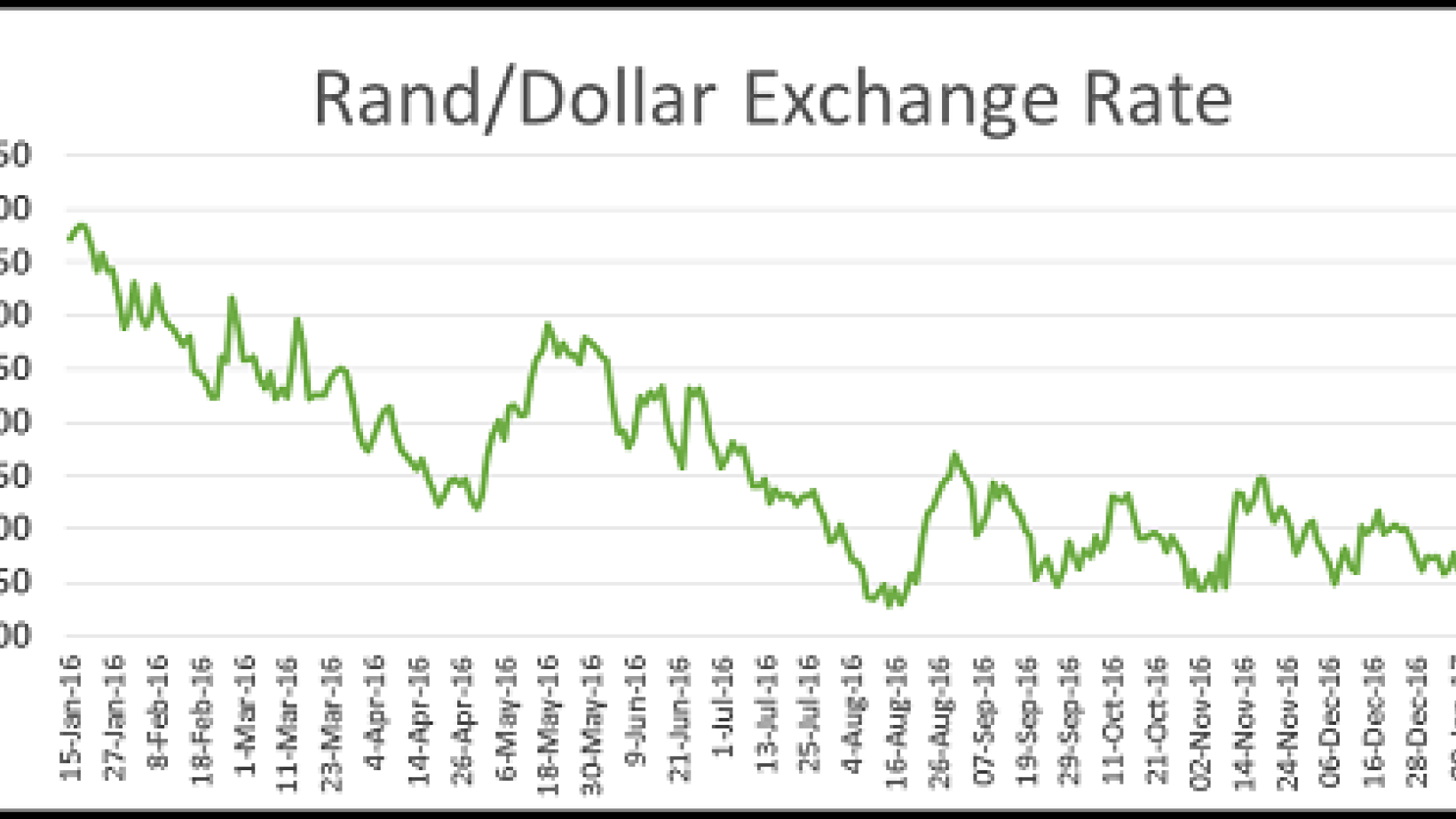
In essence, farmers remain exposed to currency volatility. This brings a challenge to the planning of inputs purchases which subsequently influences the profitably of the business. The South African rand has gained some traction against the US dollar from levels seen last year January by about 18%, now trading at R13.54 (Figure 1). This brings some relief to producers as they can purchase the much needed inputs at relatively affordable prices.
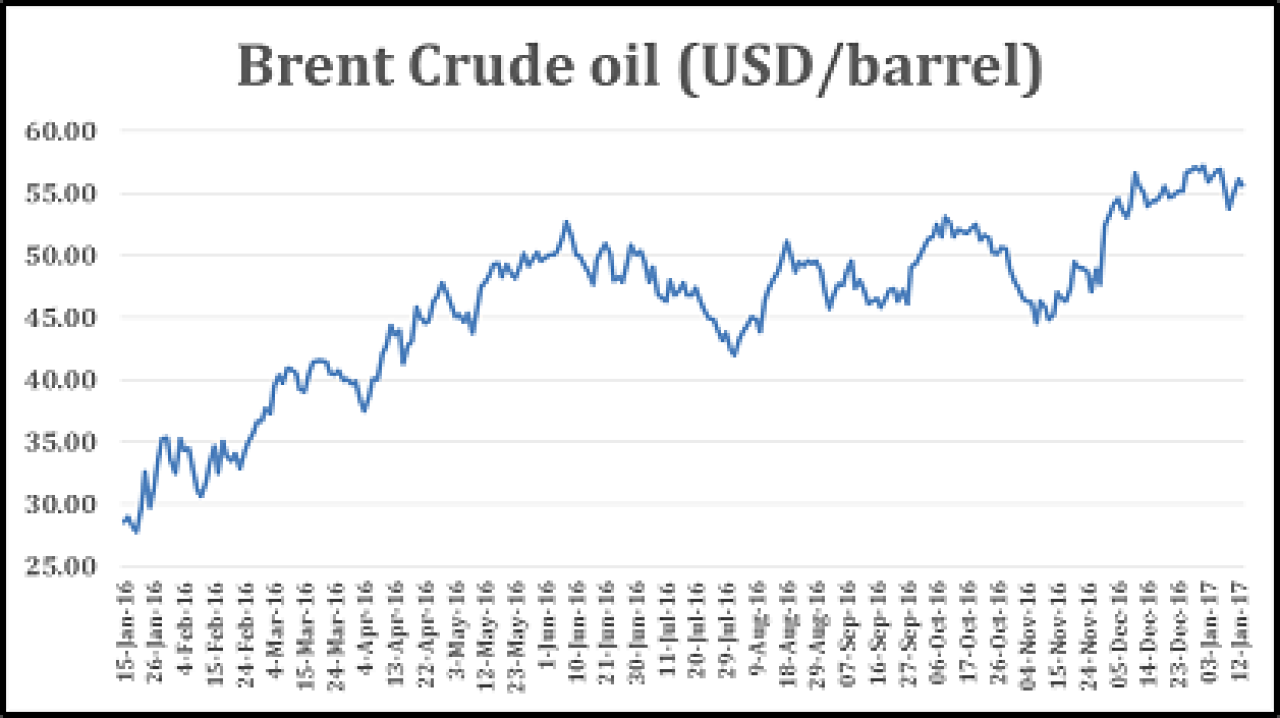
However, the gains on the rand/US dollar were not enough to offset the impact of the international brent crude oil prices on fuel prices. The Brent crude oil prices have recovered from levels this time last year of $28.52/barrel, now trading at $55.63/barrel (Figure 2).
Furthermore, the Automobile Association (AA) is predicting an increase of 48c/l for petrol (95 ULP Inland) and 37c/l for diesel (0.05% wholesale) on 01 February 2017. This will take the current petrol price from R13.33 per litre to R13.77 per litre and diesel from R11.42 per litre to R11.79 per litre. Over the foreseeable future the rand could remain volatile following uncertainty regarding the global economic outlook. Ongoing domestic political tensions could also weigh in on the currency.

More from
Markets, business and trade

How research is changing the wine we drink
Wine research starts long before the bottle reaches the shelf. It gives producers a better understanding of what happens in the vineyard and cellar, while providing evidence for decisions that can affect the wine consumers eventually drink.

Precision Fermentation: Biotech to balance Flavours, Acid and Alcohol
As warmer vintages widen the gap between ripeness and freshness, a new generation of selected yeasts lets winemakers rebalance wine during fermentation, not after.
WBWE – a global business barometer
If you want to understand where the global wine industry is heading, don’t look only at retail shelves or export statistics. Look at what is happening in the bulk wine market.