
The business of building a wine brand
Getting a wine brand onto the market is an important first step, but securing a lasting place on the shelf is a different challenge. This was one of the central issues at South Africa Wine’s Inclusive Growth Indaba, held at The Wine Arc in Stellenbosch on 17 November 2026.

· 6 min read
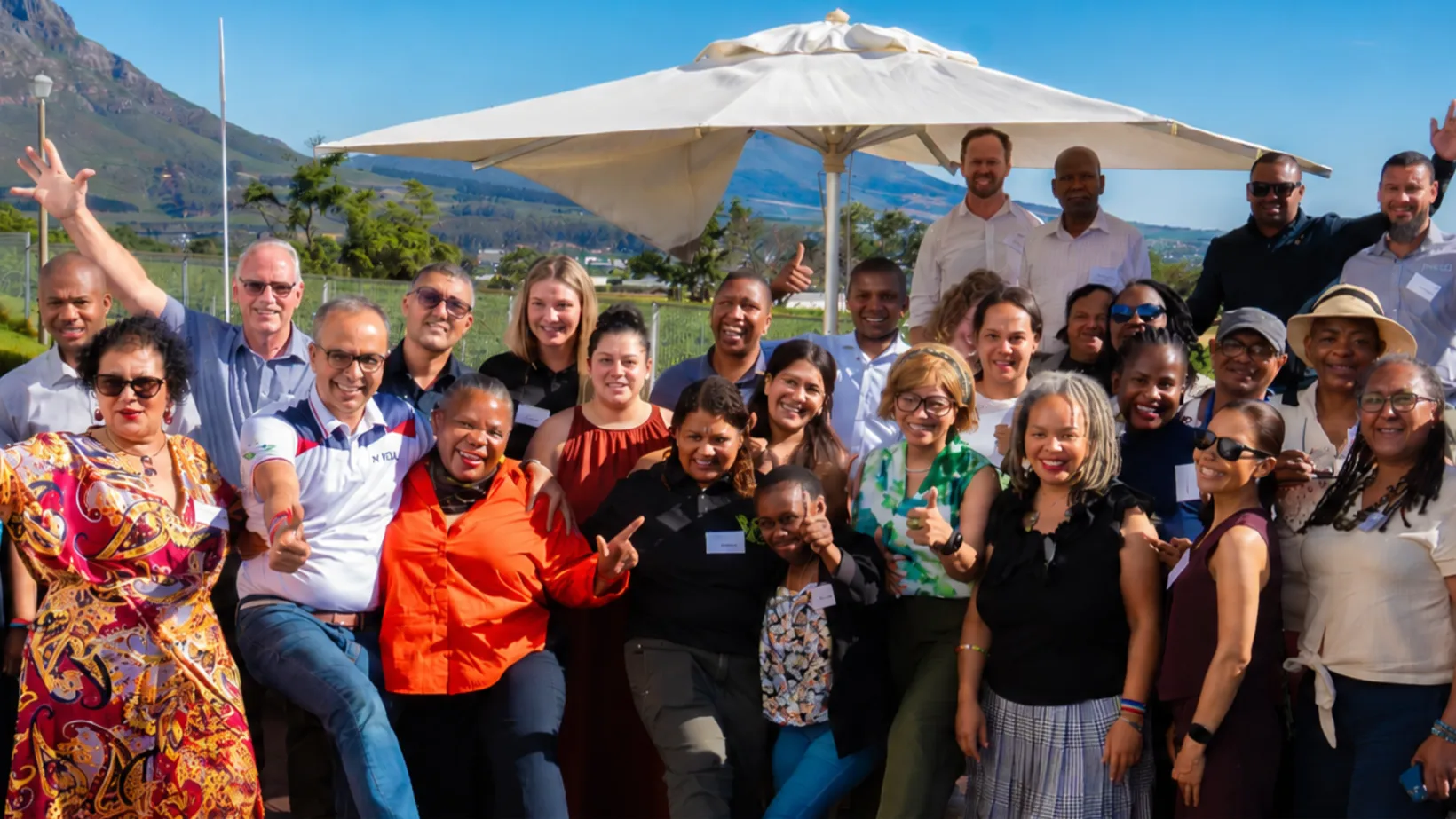
Black-owned wine brands, wine grape producers, industry stakeholders and strategic partners attended the event to consider the realities of building businesses within the South African wine industry. Directed by Ivor Price, the discussions examined the barriers to commercial growth and the role the wider industry can play in addressing them.
Following the welcome by Rico Basson, Chief Executive Officer of South Africa Wine, Karin Kleinbooi, Executive Manager of Inclusion and Development at South Africa Wine, opened the programme with an overview of the industry’s transformation efforts. She highlighted the progress made in advancing Black ownership and participation, while acknowledging the structural barriers and commercial challenges facing the broader wine industry, many of which are particularly pronounced for Black-owned wine enterprises. Her address emphasised the need to look beyond funding and participation figures and assess progress through improvements in business performance, competitiveness, market access and long-term sustainability.
Karin recognised that stakeholders view the industry through different lenses, shaped by their respective responsibilities and commercial realities. However, advancing inclusion is not a responsibility the industry can choose to set aside. Building a wine industry that represents South Africa’s diversity requires creating space for every viable business seeking to participate and compete. This is not only a question of fairness and inclusion, but also of the industry’s long-term competitiveness, resilience and growth.
She also emphasised that this requires shared responsibility, stronger strategic partnerships and a collective commitment to creating an environment in which Black-owned enterprises have a fair opportunity to establish themselves, grow and become commercially independent.
The commercial position of Black-owned wine brands was a central theme. Phil Bowes, Inclusive Growth Strategies Manager at South Africa Wine, examined brands listed by Wines of South Africa (WoSA), sharing an analysis of their pricing in the commercial markets they serve. Industry sales data showed that, while there has been some growth in the range of cultivars and styles offered, many brands operate in the higher-priced segment. This presents negotiation challenges when trying to establish a customer base in a market where most local wine is sold at lower price points.
Beverage consultant Chris O’Shea, who joined Phil for the presentation, reminded attendees to de-emphasise price during negotiations and instead account for every stage of the cost chain. This would help avoid the eventual concession of low-profit trading at the expense of building value and a brand over the longer term. Chris presented evidence that packaging and presentation play a crucial role in market differentiation in what he described as a market full of ‘labels’ but with few recognised ‘brands’. The distinction between these two concepts is important to understand.
There may be opportunities in the premium sparkling wine category, particularly for brands interested in Cap Classique. However, producing these wines requires specific capital investment and attention to detail, some of which is required upstream.
Capturing margins closer to the point of distribution was identified as offering distinct advantages. Using Backsberg as an example, Phil discussed how the brand advanced its market positioning following the sale of a majority stake in Backsberg Family Wines to DGB. He pointed to the value of a distinct brand identity complementing an existing distribution network, suggesting that the arrangement helped Backsberg overcome certain market visibility constraints associated with its localised farm site. The central point of the Backsberg example was that, while new industry entrants often seek to purchase independent wine estates, the established estate Backsberg opted for the benefits of integrating with a downstream operation in exchange for a significant equity stake.
Phil’s message was clear: "Embed black-owned brands, don’t just launch them."
Phil also challenged businesses to look at the market through a retailer’s eyes. "What are you replacing on shelf?" he asked. A retailer needs a commercial reason to allocate space to a product, particularly when established brands are already competing for that position. A listing alone does not guarantee sales, and brands need to give consumers a reason to return to their products.
This is where the discussion about market access connects with the support available to businesses. Karin outlined the work of South Africa Wine’s Inclusion and Development department, which starts by assessing each enterprise’s needs before providing tailored assistance. The intention is to help businesses develop the capacity to operate independently and eventually access commercial finance.
She was also candid about the fact that enterprises do not all progress at the same pace. Not every business will reach commercial sustainability, and the support required can extend well beyond funding. Assistance from the department has included resolving municipal building-plan issues and helping businesses obtain access to water. These practical difficulties can delay operations regardless of the quality of the wine or the strength of the business idea.
Kachné Ross, People Development Manager at South Africa Wine, also addressed the role of skills development, including the work of the South Africa Wine learning management system and the South African Wine Industry Professional Body (SAWIPB). Developing a business requires people with the knowledge and skills to manage its operations, while owners need to understand what is required to move towards greater independence.
The experiences of the entrepreneurs themselves added an important perspective to these discussions. Their contributions are particularly important because the realities of running a wine business are not always apparent from the outside. The decisions involved in establishing a brand, finding production partners and approaching retailers carry different implications for each enterprise. Building a customer base that returns to the wine remains an important part of establishing a sustainable business.
South Africa Wine is also advancing its monitoring and evaluation system to assess business performance, with employment and sales figures among the measures under consideration. This will help establish whether enterprise support is translating into progress within the businesses themselves. The intention is for the Indaba to become an annual event, allowing the industry to revisit these discussions and assess developments.
The commercial success of Black-owned wine businesses cannot be measured simply by how many brands enter the market. Their ability to secure a lasting place within it is a more telling measure. This requires businesses to have a genuine opportunity to compete, while the wider industry must be prepared to support their participation beyond the initial launch.
As Karin said in her closing remarks: "We do not need the same history to share responsibility for the future."

More from
Markets, business and trade
Stables restaurant reopens
Vergelegen Wine Estate has officially reopened its beloved Stables Restaurant, a triumphant milestone after a devastating fire destroyed one of the Somerset West estate’s best-loved hospitality spaces.

The next 25 years
DGB has been recognised by Mundus Vini as its Best South African Producer over the past 25 years. But what will it take to remain successful for the next 25? We asked Executive Chairman Tim Hutchinson about premiumisation, changing consumer behaviour, climate, technology, and where he believes the next opportunities lie.
Paving the way to a sustainable wine trade
On 2 November 2026, WWTG Governments endorsed principles that governments may take into account to avoid unjustified or unintended impacts on trade for the wine sector related to sustainability policies.