
Raise a glass: South Africa celebrates Cap Classique
Cap Classique Day, celebrated each year on 1 September, honours South Africa’s sparkling wines made using the traditional French bottle-fermentation method. Renowned for their elegance, complexity, and fine mousse, Cap Classique wines have grown from boutique beginnings to become a defining…
· 3 min read
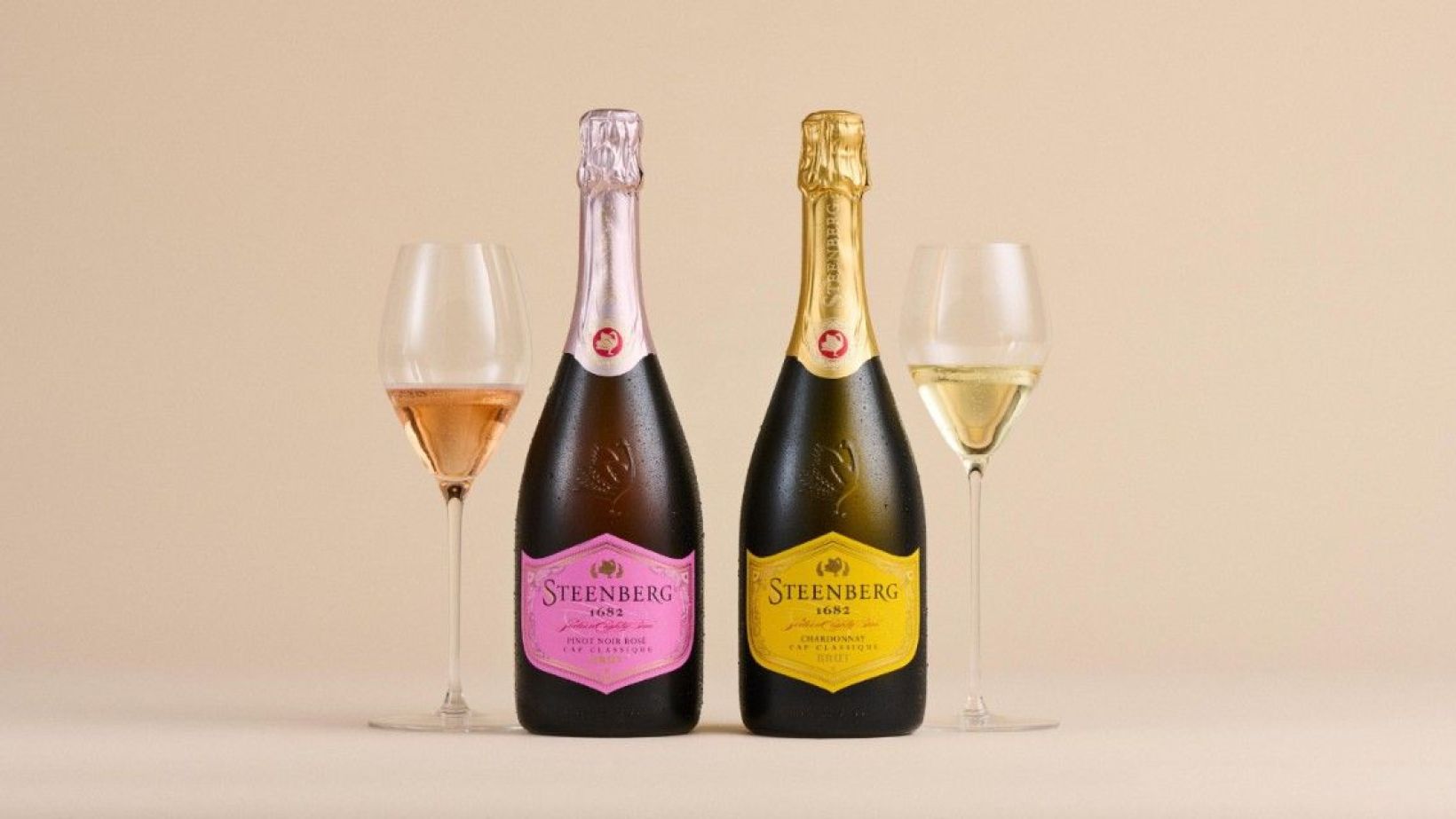
The Cap Classique story began in 1971, with South Africa’s first bottle-fermented sparkling wine (Kaapse Vonkel “Cape Sparkle”, Simonsig). The Cap Classique Producers’ Association, launched in 1992, formally defined the category and helped cement its identity (capclassique.co.za).
Today, Cap Classique is the fastest-growing category in South African wine, doubling in volume approximately every 4.5 years. Production has recently reached around 10.2 million bottles annually, with the UK emerging as the largest export market, followed by the U.S. and Sweden (Wine Pages).
“Cap Classique has really come of age,” says Carryn Wiltshire, Marketing Manager at Steenberg Vineyards. “The public perception has shifted from seeing it purely as a celebration wine to appreciating it as a fine wine in its own right.”
Within this landscape, Steenberg Vineyards in Constantia is celebrating 25 years of its Méthode Cap Classique, a milestone not of the category, but of the estate’s own sparkling legacy. Their first MCC release, under the 1682 label (a nod to the estate’s founding year), emerged in 2000 and quickly became a hallmark of Steenberg’s cool-climate elegance.
“The 1682 range has always been about more than sparkling wine,” says Wiltshire. “It is also about capturing the meticulous care invested at every stage.”
Behind the scenes, the process is deeply artisanal. Steenberg’s MCC production involves traditional riddling, where bottles are rotated and tilted by hand to move sediment into the neck. A team riddles around 11,700 bottles twice daily for 42 weeks a year, before disgorgement and ageing on lees (a step that imparts the creamy texture and nutty complexity so prized in fine sparkling wines).
Steenberg’s MCC has grown with its audience, adapting to changing tastes. The 1682 Chardonnay Cap Classique has become a favourite for both everyday occasions and milestone celebrations, with its flavours of lemon cordial, honeyed nectarines, toasted croissant and pistachio evident on the palate.
“South Africans are embracing MCC as a lifestyle wine. It’s no longer just for weddings or birthdays. Rather, it’s something to enjoy with a meal or to elevate a casual gathering,” says Wiltshire. This mirrors a category-wide shift that sees Cap Classique having become more of an everyday indulgence for many South Africans (South-Africa.Wine).
To mark its 25-year milestone, Steenberg will unveil a refreshed tasting experience from 1 October. The new menu will feature a dedicated glass tasting of the Steenberg Cap Classique range, designed to highlight aroma, effervescence, and texture.
“The new glasses enhance the aromas, texture, and elegance of our MCC. They help guests fully appreciate what 25 years of craft looks like in a glass,” Wiltshire adds.
The annual Cap Classique celebration shines a light on a category that embodies both tradition and innovation in South African winemaking. From pioneering estates like Steenberg to newer boutique producers, the style reflects a growing pride in local sparkling wine.
“The story of MCC is one of evolving ambition and growing sophistication,” says Wiltshire. “It reflects South Africa’s winemaking progress, and we’re excited to see how the next 25 years will continue to shape and define the style.”

More from
People, community and tourism
Hoe om herlewingslandbou te laat leef
'n Twee-dag sessie deur WIETA and Stronger Together South Africa op etiese leierskap vir kelders, plase en handelsmerke by Lourensford en Du Kloof Lodge het insigte oor herlewingsboerdery opgelewer.
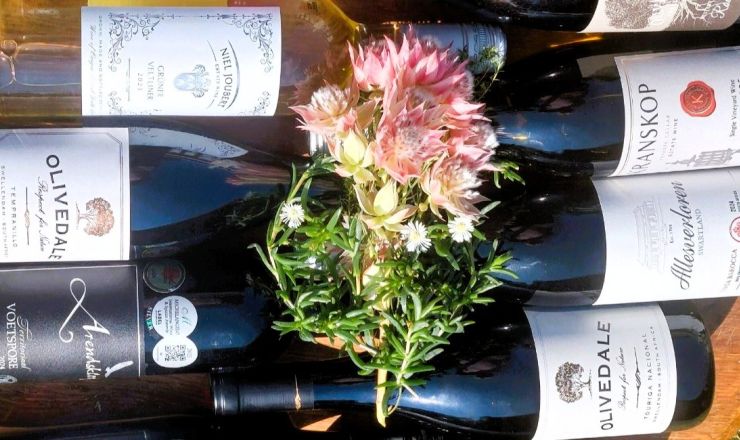
Results of the Niche Varieties Challenge 2026
The Niche Varieties Challenge took place again in 2026 to give innovative niche wines a more visible platform and to highlight the diversity developing beyond South Africa's mainstream cultivars.
Are wine clubs in South Africa still relevant?
A bottle of wine is rarely just about what is in the glass. Sometimes it is about the people around the table, which may explain why wine clubs have managed to stick around. The Blaauwklippen Blending Competition offers a glimpse into why this old-school tradition still has a place in a changing…