
Telmont reveals its environmental ambitions “In Nomine Terrae” - in the name of Mother Nature.
Since 1912, the year the House was founded by Henri Lhôpital, on his land of Damery, near Epernay, Telmont has defended its vision of viticulture and the values it holds dear: loyalty, humility and courage. The House revels in its singularity, proclaimed by its motto: Nec Pluribus Impar, unlike…
· 4 min read
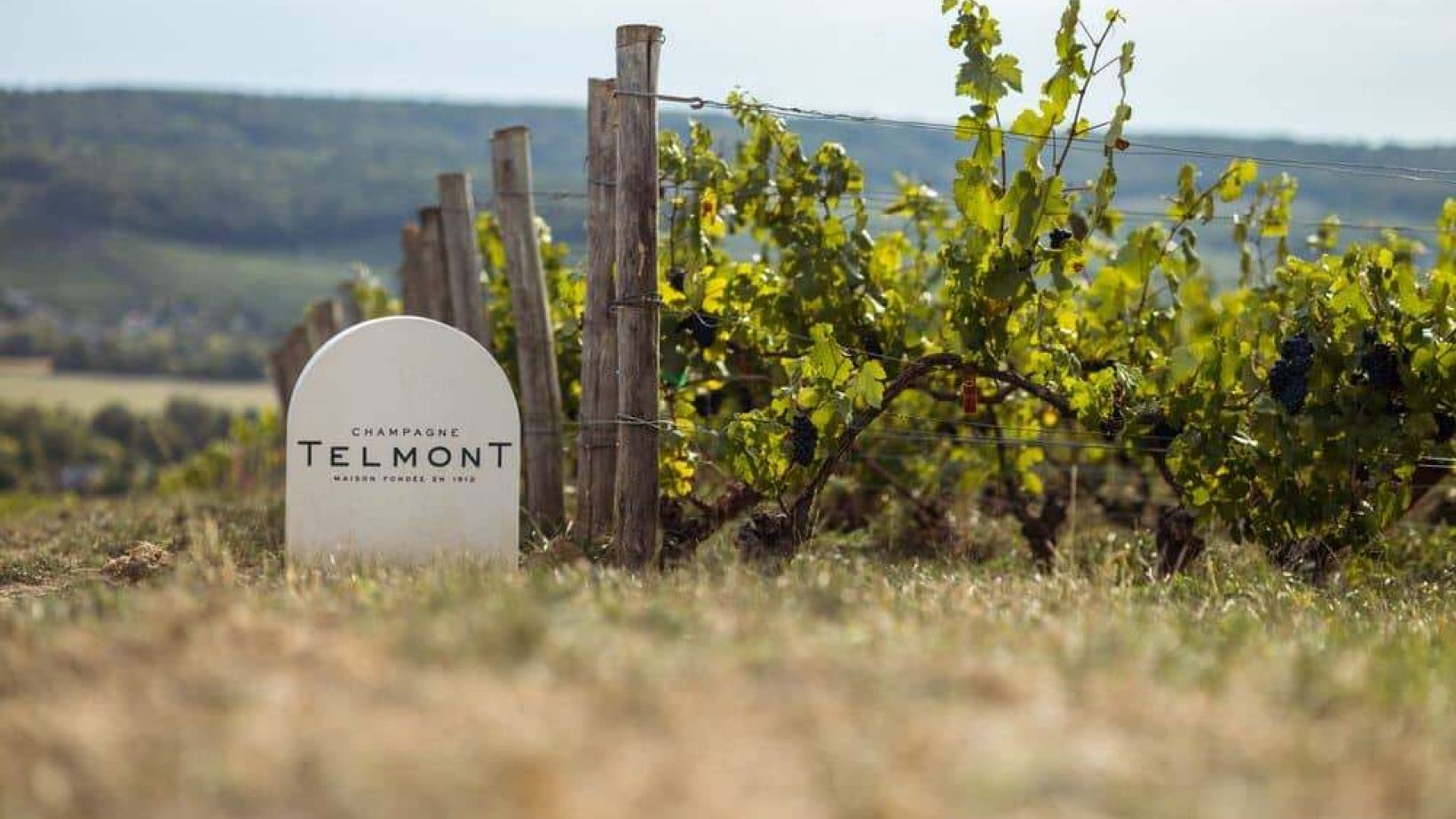
Champagne Telmont is determined to pursue its ambition: carving a path towards a 100% organic house using production methods with reduced impact on its natural surroundings. Telmont has decided to act “in the name of Mother Nature”, thus advocating for the preservation of nature’s gifts.
The House of Telmont has set five tangible objectives.
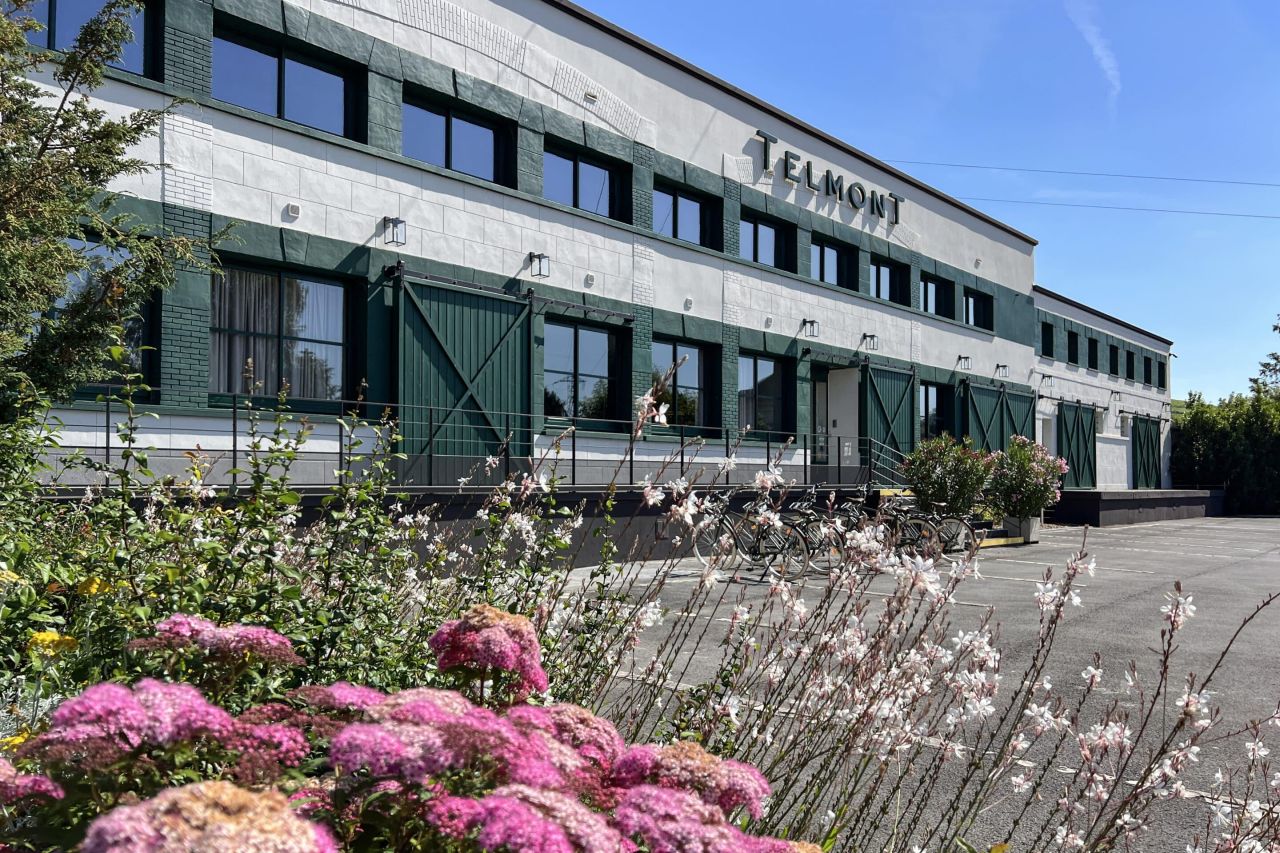
Objective #1:preserving terroir and biodiversity.
Today, 90% of the estate’s 24.5 hectares are certified in organic agriculture or are in the process of conversion. The aim is to convert 100% of the estate by 2025. Telmont Champagne’s partner winegrowers (55 hectares) will be supported by the House in their shift towards organic agriculture (51% of their vineyards are already certified or in conversion). This ambitious transformation targets the conversion to organic agriculture of 100% of all cultivated areas by 2031, for both the Telmont estate and partner winegrowers. Biodiversity is encouraged across the entire estate, both in the vineyards and in the adjacent natural areas. To this end, 5000 shrubs will be planted to provide ‘insect hotels’ in the Telmont vineyards, with a further 13800 shrubs on partner vineyards; thereby preserving species diversity and promoting sustainable carbon binding.
Objective #2: generalizing eco-design.
Telmont is breaking away from ordinary champagne codes. As of 2021, the House decided to focus on “the bottle and nothing but the bottle”, banning all production and use of outer packaging or gift boxes. This was a first in Champagne. In addition, transparent bottles, made from 0% recycled glass, were discontinued in 2021, and replaced by only green bottles. These are 100% recyclable and contain up to 87% recycled glass. Telmont has also abandoned bespoke bottles weighing 900 grams or more, choosing to focus exclusively on the standard green champagne bottle weighing 835 grams. Following a successful test phase with Verallia, Telmont is progressively adopting a bottle weighing only 800 grams, a potential new standard for Champagne bottles. Lighter bottles use less glass and therefore have a lower carbon emission and footprint.
Objective #3:Transitioning to 100% renewable electricity and promoting use of ‘green’ energy sources for all its activities.
To this end, the Telmont atelier in Damery runs 100% on renewable energy, the entire on-site vehicle fleet is powered by electric energy, and all viticulture tractors run on biofuel.
Objective #4: overhauling the logistics chain, upstream and downstream, to limit greenhouse gas emissions indirectly related to its business.
Telmont has totally eliminated air freight for its supply and distribution and will select transporters according to their CSR score. By 2025, Neoline sailing ships will be used for sea freight on the trans-Atlantic route.
Objective #5: intensifying efforts in terms of transparency and information.
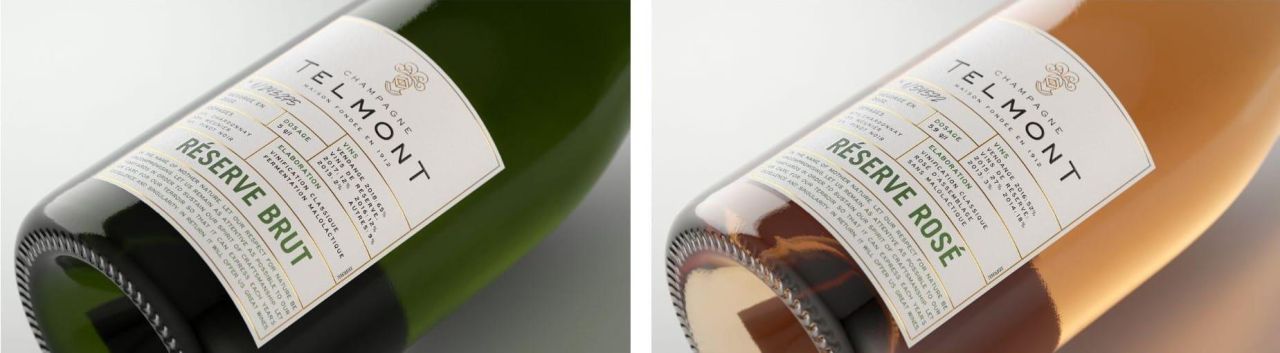
Each bottle is numbered, enabling its production itinerary to be traced, and all labels contain transparent production-related information and detailed contents. “In Nomine Terrae” (In the Name of Mother Nature) will dictate the House’s actions for decades to come. The unbiased outcome of each of these five objectives will be shared with the general public through House communication. The Rémy Cointreau Group, having become majority shareholder of the House in October 2020, wholeheartedly backs this ambitious program, which Ludovic du Plessis, President and shareholder of the House, will implement together with Bertrand Lhôpital, great-grandson of the House’s founder, Henri.
“My first tasting experience of Telmont Champagne was a beautiful discovery. The wines had a unique personality, presence, complexity and maturity, all the while preserving a remarkable ethereality. Backed by the Rémy Cointreau Group and alongside Bertrand Lhôpital, I feel very lucky to be leading this incredible adventure. Telmont is a house with character, boasting a legacy of craftsmanship and a strong ambition, poised to become the standard bearer of a new relationship with nature. We have one foot rooted in tradition and one in modernity, and both feet on (and in) the earth.” - Ludovic du Plessis, President of the House of Telmont.
“I’m proud of the wine-growing legacy which has been handed down in my family from one generation to the next. This heritage enables us to be in close contact with the earth and people, to work with the soil and create our wines the Telmont way. When Rémy Cointreau joined the adventure, contributing their proven commitment to terroir and savoir-faire, it added a new dimension to the quest for excellence which has driven our family for years.” - Bertrand Lhôpital, Cellar Master and Head of Viticulture of the House of Telmont.

More from
People, community and tourism
Hoe om herlewingslandbou te laat leef
'n Twee-dag sessie deur WIETA and Stronger Together South Africa op etiese leierskap vir kelders, plase en handelsmerke by Lourensford en Du Kloof Lodge het insigte oor herlewingsboerdery opgelewer.
Results of the Niche Varieties Challenge 2026
The Niche Varieties Challenge took place again in 2026 to give innovative niche wines a more visible platform and to highlight the diversity developing beyond South Africa's mainstream cultivars.
Are wine clubs in South Africa still relevant?
A bottle of wine is rarely just about what is in the glass. Sometimes it is about the people around the table, which may explain why wine clubs have managed to stick around. The Blaauwklippen Blending Competition offers a glimpse into why this old-school tradition still has a place in a changing…