
Where nature leads the way
Work with life, not against it. This simple philosophy underpins everything at Avondale.

· 5 min read
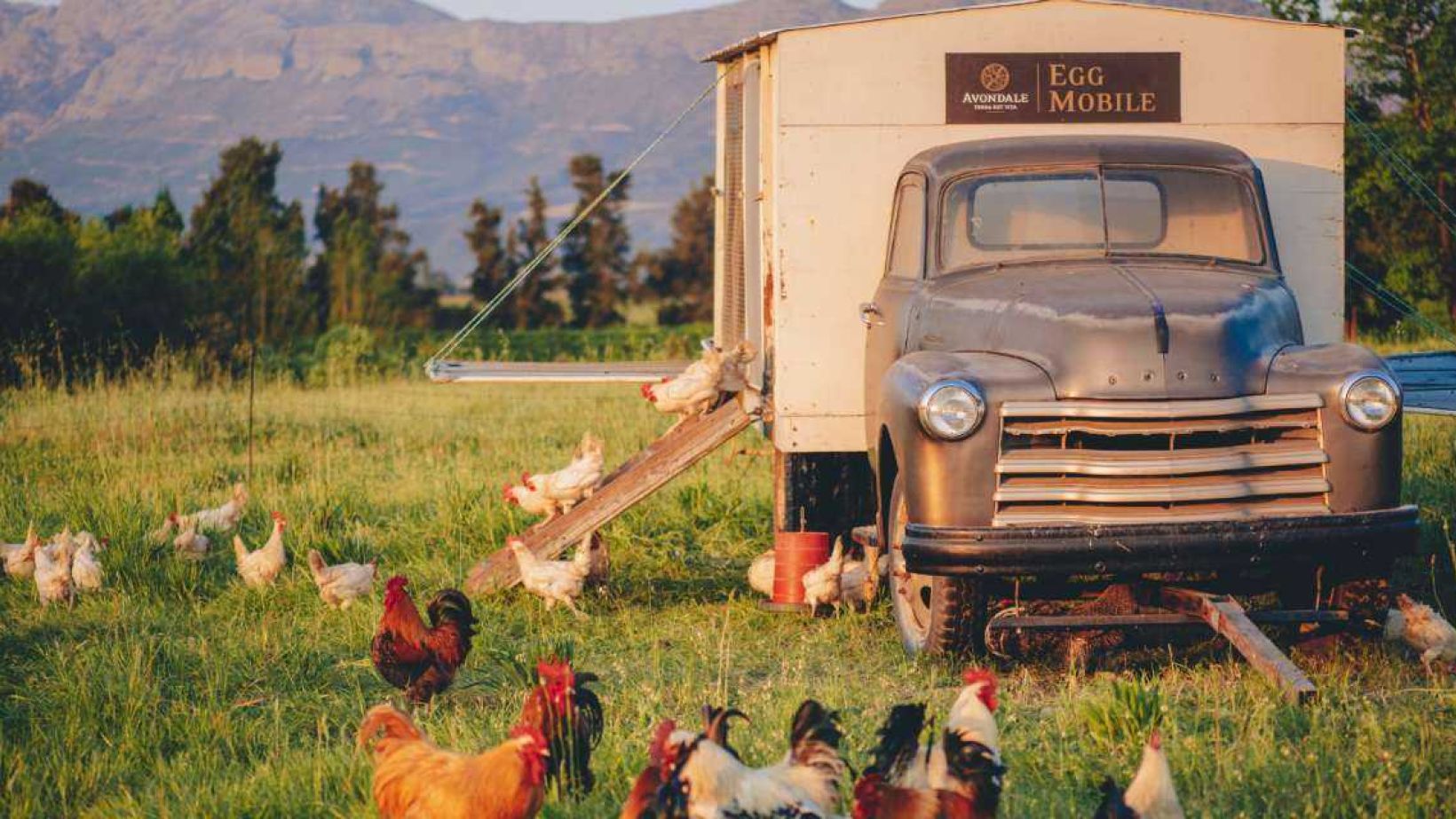
When Jonathan Grieve first arrived at Avondale in Paarl, he had no farming experience. Fresh from studying fine arts, he was more familiar with a palette knife than a spade. His lack of agricultural training meant he followed the conventional wisdom of the time, using fertilisers, herbicides, fungicides and heavy tillage. It was farming by the book, with the promise that science and chemicals would provide the perfect solution to every problem.
But it didn’t take him long to realise something was amiss. “After a few years, it became clear to me that there was very little life on the farm and what life we had was going backwards,” he says. “We were always promised the perfect solution to a problem, and in the short term, the chemicals worked. But a few months later, we had more problems, which meant more chemicals. All the while, life was diminishing.”
This realisation sparked a turning point, and he began wondering if there was another way – one which promoted life and balance, and worked with nature instead of against it. “I thought, surely there must be some sort of system that gets Mother Nature to do the work,” he says. “After all, she’s been growing things for millennia.”
This was the beginning of Avondale’s journey towards organic, biodynamic and regenerative farming – long before these practices were embraced by the wider wine industry in South Africa. By working with nature, experimenting with creativity and trusting instinct, Avondale has carved out a path that is deeply respectful of tradition and boldly innovative. The result is not just wines with character, but a living farm that continues to inspire the industry to think differently.
Life at the centre
Jonathan’s fine arts background was surprisingly important in shaping his vision. “Studying art made me approach agriculture without blinkers,” he says. “In conventional agricultural education, we’re often indoctrinated into the chemical way, which is very difficult to leave behind. For me, it was different. I wasn’t tied to convention, which allowed me to place life and the living farm in the spotlight, and cut out the aspects that degrade it.”
This open-mindedness led to practices that, at the time, were considered radical. “I remember 25 years ago planting extensive multispecies cover crops and having farmers stop their bakkies next to our vineyards, even coming in to ask what on earth we’re doing,” Jonathan says. “They thought we had completely lost the plot.” Today, cover cropping is standard practice among quality-focused producers, but Avondale was doing it decades ago.
Another example of Avondale’s out-of-the-box thinking is what Jonathan calls “living nutrition”. Instead of applying chemical nutrients directly to the soil, the team ferments or cultures them first, essentially pre-digesting them into a bioavailable form. “It’s like fermented foods and their benefit for the human body – things such as kimchi, sauerkraut, kombucha and kefir,” he says. “By transforming a substance from something elemental and lifeless into something living, nature can accept and use it to energise the soils.”
This philosophy underpins Avondale’s entire approach: work with life, not against it. Let the farm’s soils, microbes, plants and animals be the foundation of health.
Guided by intuition
While Jonathan’s vision begins in the vineyards, it ultimately finds expression in the cellar, where winemaker Corné Marais’ guiding principle is to listen rather than control. “At Avondale, instinct and intuition are at the forefront,” he says. “We don’t follow a recipe. We don’t add commercial yeast, enzymes or finings. In conventional winemaking, the process is very structured, and the winemaker dictates the timing of everything. But here, the wines guide me. They show me the next step in the journey, from the moment the grapes arrive at the cellar until they eventually end up in the bottle.”
This approach creates wines that are alive, layered and engaging. “Happiness is the first thing that comes to mind,” Corné says when asked what he hopes people feel when drinking Avondale wines. “I truly believe our wines have a unique energy because of how we do things, which transfers to the person enjoying it. Each time you return for another sip, you pick up something different. They’re wines that make you think, but they’re also wines you can simply enjoy with food or on their own.”
Avondale also embraces innovation in the cellar. In 2017, it became the first winery in South Africa to import qvevri clay pots directly from Georgia. Alongside amphorae, larger-format barrels and tanks, these vessels add various textures and flavours to Avondale’s wines. “Each vessel gives you something unique,” Corné says. “We do many whole-bunch fermentations of white and red grapes in the qvevri and amphorae. The stems bring a different tannin profile, adding another layer of complexity. For us, it’s about using what nature gives us each year and doing it justice in the journey to the bottle.”
Jonathan sees Avondale as a constantly evolving project. The farm is always testing new ideas, balancing natural processes with the benefits of modern technology – but never without asking a simple question: Does Mother Nature approve?
He believes the wine world is shifting rapidly in this direction. “There’s a huge movement towards more sustainable practices,” he says. “In the not-too-distant future, you’ll struggle to sell your product and maximise its value if you don’t have some green credentials. Consumers, especially younger generations, want to know what they consume and where it comes from. Any producer must provide them with this information.”
Corné shares this long-term vision. When asked what he hopes people will say about Avondale’s wines in 20 years, he says, “Hopefully they’ll still enjoy wines that have aged gracefully but remain young at heart; wines that tell the story of our land rather than the person who made them. If that happens, I’ll be happy.”
To explore more articles in our November issue, Movers & Shakers, purchase our digital or print magazine here.

More from
People, community and tourism
Hoe om herlewingslandbou te laat leef
'n Twee-dag sessie deur WIETA and Stronger Together South Africa op etiese leierskap vir kelders, plase en handelsmerke by Lourensford en Du Kloof Lodge het insigte oor herlewingsboerdery opgelewer.
Results of the Niche Varieties Challenge 2026
The Niche Varieties Challenge took place again in 2026 to give innovative niche wines a more visible platform and to highlight the diversity developing beyond South Africa's mainstream cultivars.
Are wine clubs in South Africa still relevant?
A bottle of wine is rarely just about what is in the glass. Sometimes it is about the people around the table, which may explain why wine clubs have managed to stick around. The Blaauwklippen Blending Competition offers a glimpse into why this old-school tradition still has a place in a changing…