Search
Results for “sodium”
Showing 1–12 of 50 results
50 results — page 1 of 5
Winery wastewater for irrigation (Part 4): Soil responses
Using winery wastewater for irrigation adds substantial amounts of potassium and sodium to the soil.
By Carolyn Howell, Karen Freitag & Lester Sassman · 8 min read
Treated municipal wastewater for irrigation (Part 1): Irrigation application and water quality
This study’s objectives were to assess the quality of treated municipal wastewater (TMW) used for irrigation of commercial vineyards and to quantify the amount of plant nutrients applied via TMW irrigation.
By Carolyn Howell, Karla Hoogendijk, Philip Myburgh, Vink Lategan & Eduard Hoffman · 15 min read
Winery wastewater for irrigation (Part 1): Irrigation application and water quality
Irrigation with winery wastewater needs to be optimised to minimise leaching, whilst maximising nutrient removal by means of a catch crop is a necessity.
By Carolyn Howell, Karen Freitag & Lester Sassman · 8 min read
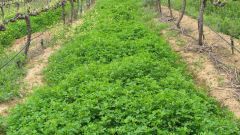
Winery wastewater for irrigation (Part 3): Vineyard catch- and cover crop responses
During wine production, wineries produce large volumes of poor-quality wastewater. This wastewater can be used for irrigation, but this delivers substantial amounts of elements to the soil.
By Carolyn Howell, Karen Freitag & Lester Sassman · 8 min read
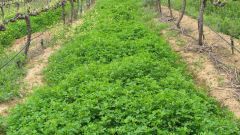
In-field fractional use of winery wastewater with raw water (Part 2): Irrigation application, water quality and nutrient load
The primary objective of this project was to assess the fitness for use of winery wastewater for irrigation of different soil types with varying rainfall quantities and leaching levels on vineyard performance in terms of yield and quality under field conditions.
By Carolyn Howell & Reckson Mulidzi · 19 min read
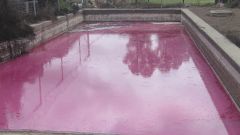
Winery wastewater irrigation (Part 1): Annual dynamics of volumes and quality at two wineries
The objective of this study was to investigate the annual dynamics of winery wastewater volumes and quality at two different wineries.
By Reckson Mulidzi & Carolyn Howell · 18 min read
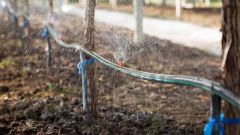
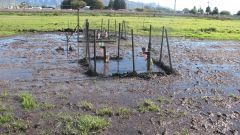
Winery wastewater irrigation (Part 2): Soil chemical responses on poorly drained soils
The objective of this study was to investigate the effect of winery wastewater (WWW) irrigation on soil chemical properties and potential environmental impacts at a new paddock at a winery near Stellenbosch where no WWW had previously been applied.
By Reckson Mulidzi & Carolyn Howell · 17 min read
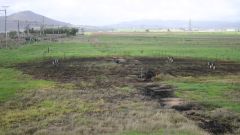
Winery wastewater irrigation (Part 3): Soil chemical responses on a well-drained soil
The objective of this study was to investigate the effect of winery wastewater (WWW) irrigation on the chemical soil properties and potential environmental impacts at an existing grazing paddock at a winery near Rawsonville where WWW has been applied for many years.
By Reckson Mulidzi & Carolyn Howell · 21 min read
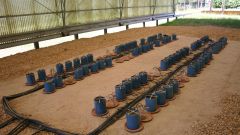
Winery wastewater irrigation (Part 4): Evaluation of a pot experiment on four differently textured soils
The objective of the study was to design and evaluate a pot experiment to determine the effects of irrigation with diluted winery wastewater on different soils.
By Reckson Mulidzi & Carolyn Howell · 10 min read
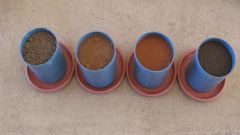
Winery wastewater irrigation (Part 5): Effect on soil K, Na and pH(KCl)
The objective of this study was to determine the effects of irrigation with diluted winery wastewater on selected chemical properties of four soils varying in parent material and clay content.
By Reckson Mulidzi & Carolyn Howell · 23 min read
Winery wastewater for irrigation (Part 2): Evaluation of catch crops on open land
Winery wastewater has a high chemical oxygen demand (COD) with high levels of potassium (K) and sodium (Na). Using it for irrigation adds substantial amounts of elements such as K and Na to the soil, therefore maximising element removal by means of a catch crop is important.
By Carolyn Howell, Karen Freitag & Lester Sassman · 7 min read