
Winery wastewater irrigation (Part 5): Effect on soil K, Na and pH(KCl)
The objective of this study was to determine the effects of irrigation with diluted winery wastewater on selected chemical properties of four soils varying in parent material and clay content.
Reckson Mulidzi and Carolyn Howell
· 23 min read
Abstract
Due to environmental legislation, the South African wine industry needs solutions for wastewater treatment, or use thereof. The feasibility of using diluted winery wastewater (WWW) was assessed in a pot experiment under a rain shelter over four simulated irrigation seasons. Four soils varying in clay content were irrigated with WWW diluted to 3 000 mg/L chemical oxygen demand (COD), whereas the control received municipal water. The four different soils responded to irrigation with WWW containing relatively high levels of potassium (K+) and sodium (Na+) compared to the municipal water control. The rate of K+ increase in the soil containing 20% clay was higher than in soils containing 13% clay or less. This suggested that heavy soils will aggravate the risk of high K+ levels. The risk of Na+ accumulation increased linearly with clay content. Irrigation with diluted WWW increased soil pH(KCl) substantially in all soils over four simulated seasons. The soil pH increase was attributed to the addition of organic/bicarbonate salts to the soil. It must be noted that the results represent a worst-case scenario, i.e. in the absence of rainfall or crops.
Introduction
Increased wine production in South Africa is putting more pressure on natural resources. Due to the intensification of legislation pertaining to the environment,1 the wine industry needs to find solutions for the treatment of winery wastewater (WWW) or use thereof.2 This initiated the development of guidelines for the management of wastewater and solid waste at wineries.3
A shortage of good quality water often leads to an increasing demand to irrigate with poor quality water, such as saline groundwater, drainage water and treated wastewater.4 The effects of using industrial and municipal wastewater for agricultural irrigation and their impact on the soil are well-documented.5,6,7,8,9,10,11,12,13,14 However, the impact of irrigation with treated wastewater on the environment has not been widely investigated.15
Replacement of calcium (Ca2+) and magnesium (Mg2+) by potassium (K+) and sodium (Na+) during irrigation can potentially lead to the breakdown of the soil structure. Exchangeable soil Na+ tends to increase where wastewaters containing high levels of Na+ are used for irrigation.16 Where wineries use Na+-based cleaning agents, e.g. sodium hydroxide (NaOH), accumulation of monovalent cations on the exchange sites has the potential to degrade soil structure through clay dispersion and flocculation.11 Consequently, soil hydraulic conductivity can be reduced where WWW is used for irrigation.13 Indications of poor soil aeration and water infiltration observed in various soils where WWW was used for irrigation were attributed to structure degradation caused by high Na+ concentrations added to the soil.17 This was confirmed when irrigation with diluted WWW reduced the hydraulic conductivity of differently textured soils.18 Using WWW for irrigation could also result in K+ accumulation in the soil, resulting in the leaching of Ca2+ and Mg2+ and increasing the instability of the soil structure in the long run.11 Since K+ has affinity for clay minerals, high soil K+ can cause clay swelling and dispersion where wastewater is used for irrigation.12 Similar to Na+, K+ in WWW can reduce soil hydraulic conductivity.19 However, knowledge regarding negative effects of K+ on soil structure stability is limited compared to Na+.
Soil pH tends to increase when wastewater with high pH and Na+ concentrations is used for irrigation.16 A study carried out in the Western Cape showed that disposal of grape processing effluents changed the soil pH from acidic to alkaline.6 This pH increase was attributed to initial soluble organic matter removal through volatilisation of CO2 during biodegradation. In contrast, application of wine vinasse containing high bicarbonate concentrations slightly reduced the pH of a Mediterranean soil.20 In this case, the pH reduction was attributed to the high electrical conductivity of the soil solution (ECe), i.e. 9.2 dS/m, and transformation of organic sugars by micro-organisms.
These contrasting results of various studies imply that soil responses to the application of WWW cannot be readily predicted. The soils of the South African winelands are highly heterogeneous and can show a high degree of spatial variation in a relatively small area.21 Soils range in parent material, texture, structure, drainage, coarse fragment content and chemistry. Parent material is usually largely responsible for the physical and chemical composition of a soil. In the Stellenbosch region, two of the dominant parent materials are shale and granite, whereas in the Breede River and Olifants River wine growing regions, transported aeolian or fluvial sands are an important parent material.22 Due to the heterogeneity of the soils in the winelands, they are likely to respond differently to the application of WWW. However, there has been previous research to determine these responses. Therefore, the objective of this study was to determine the effects of irrigation with diluted WWW on selected chemical properties of four soils varying in parent material and clay content.
Materials and methods
Experimental layout
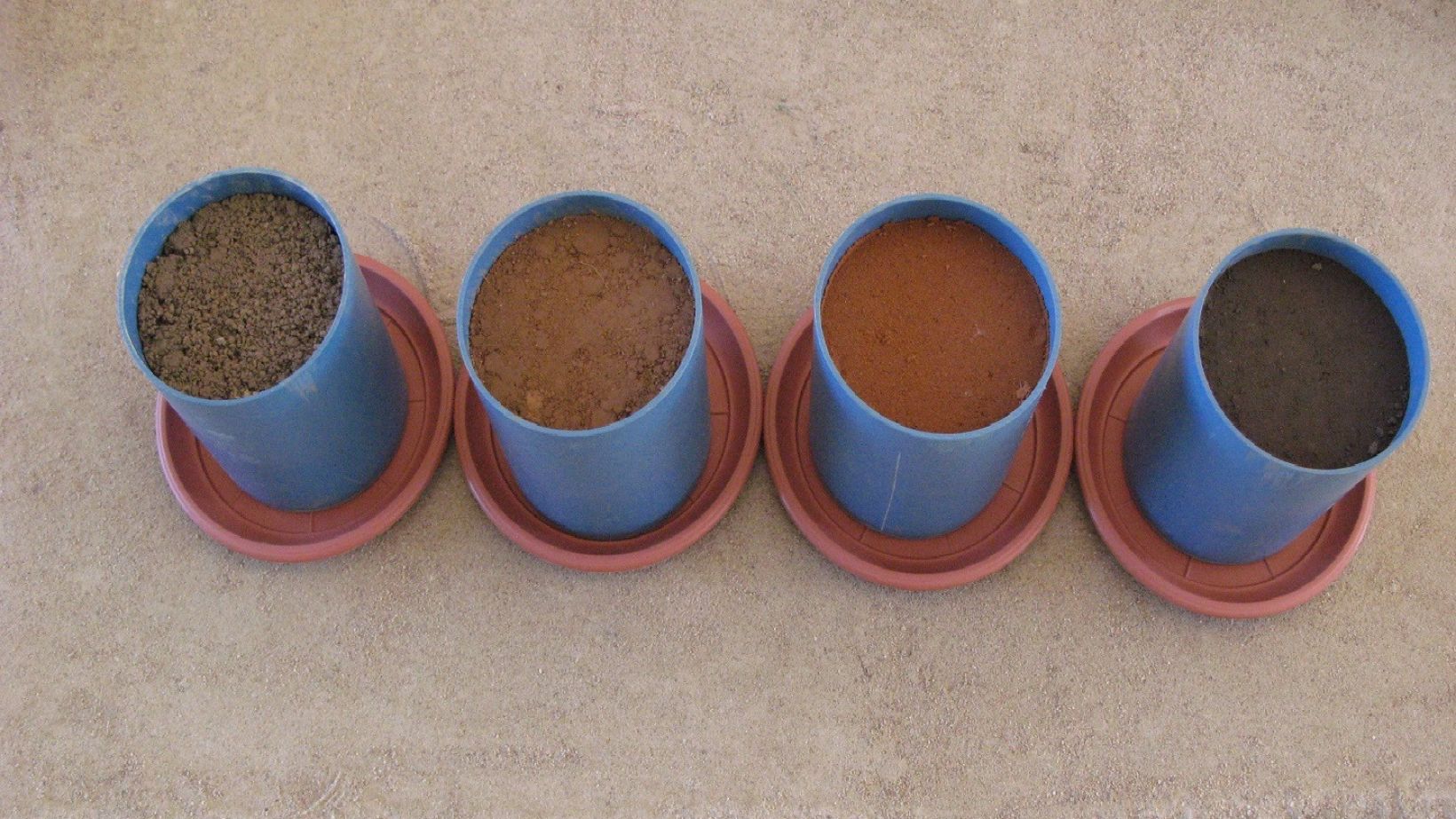
Details of the pot experiment were given previously.23 In brief, a pot experiment was carried out under a 20 m x 40 m translucent fibreglass rain shelter at ARC Infruitec-Nietvoorbij. Four different soils, namely a Rawsonville sand, Lutzville sand, Stellenbosch shale and Stellenbosch granite, were included in the pot experiment. The control treatment soils were irrigated with water supplied by the Stellenbosch municipality. For the wastewater treatments, WWW was diluted to a chemical oxygen demand (COD) level of 3 000 mg/L. The undiluted WWW was collected from the wastewater pit at a winery near Rawsonville. Treatments were applied over four simulated irrigation seasons.
Soil sampling and analyses
To make provision for destructive soil sampling, each experimental “plot” consisted of four pots. Following each simulated irrigation season, the soil in one of the pots was collected for sampling, i.e. after six, 12, 18 and 24 irrigations. Soil samples were collected from the 0-10 cm and 10-20 cm layers in the pots of all replications. A commercial laboratory analysed the samples for chemical parameters according to methods described previously.23 The extractable sodium percentage (ESPʹ) and extractable potassium percentage (EPPʹ) of the soils were calculated.
Statistical procedures
Each soil/water treatment was replicated three times in a complete randomised design. The four soils were randomly allocated within each block. The treatment design was a split-plot with soil type as the main plot factor and soil depth as the sub-plot factor. Analyses of variance were performed separately for each season using SAS.24 The Shapiro-Wilk test was performed to test for non-normality.25 Student’s “t” least significant difference (LSD) was calculated at the 5% significance level to facilitate comparison between treatment means.26 Linear regressions were calculated using Statsgraphics.
Results
Chemical composition of the water and amount of elements applied
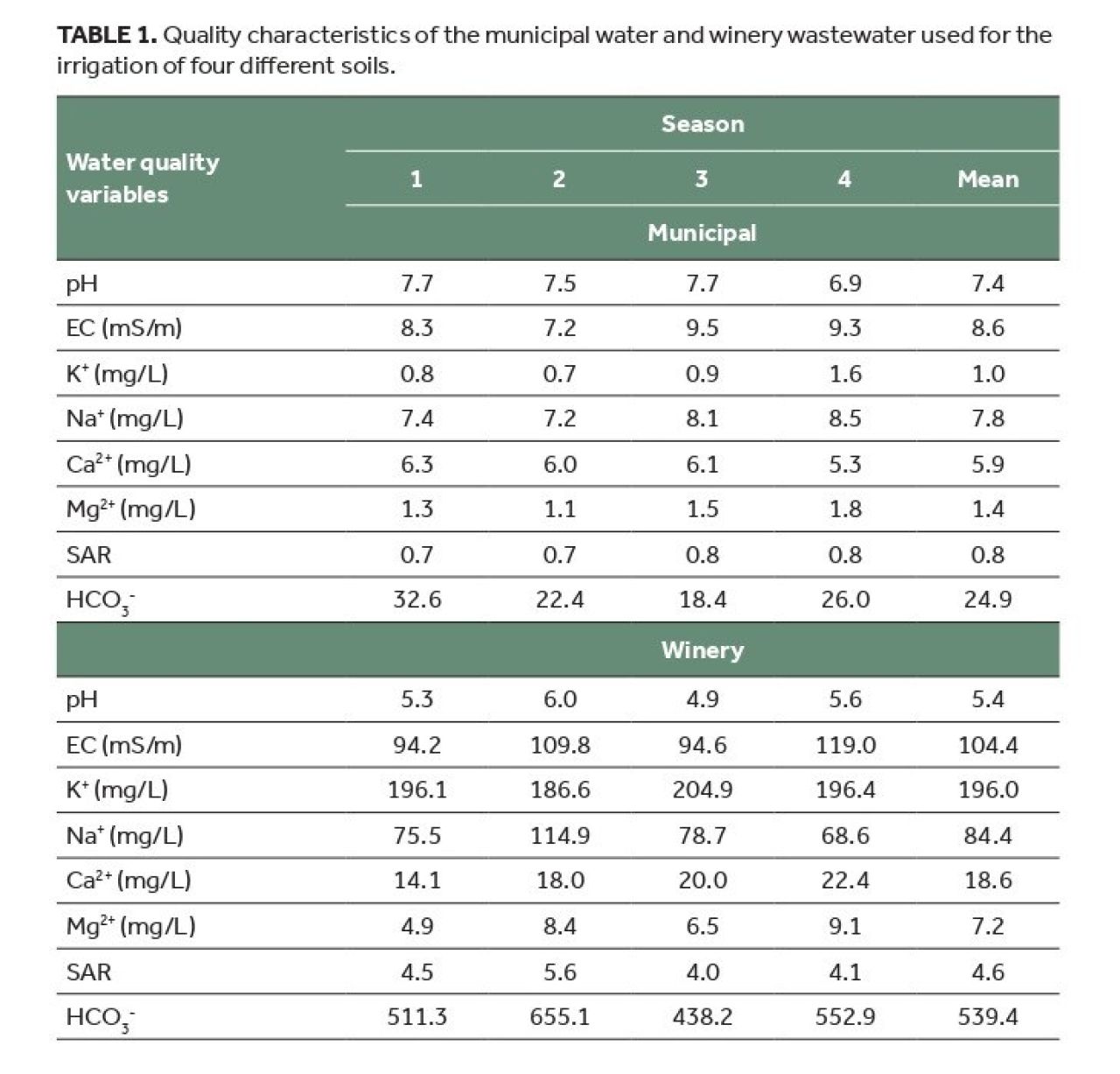
The COD in the municipal water was substantially lower compared to the diluted WWW (data not shown). The COD in the diluted WWW was comparable between the four simulated seasons and was reasonably close to the target level of 3 000 mg/L. Most of the other WWW quality variables were considerably higher compared to the municipal water. On most irrigation days, the WWW pH was lower compared to the municipal water. The average sodium adsorption ratio (SAR) of the WWW was close to five, which is the limit for irrigation with wastewater according to the South African water quality legislation.27 Due to the differences in the chemical composition of the municipal and diluted WWW, considerably more cations were applied to the soil via the WWW compared to the municipal water. The average amount of K applied per season via the irrigation water was 15 kg/ha and 2 785 kg/ha for the municipal water and diluted WWW, respectively. The average amount of Na applied per season was 110 kg/ha and 1 162 kg/ha for the municipal water and diluted WWW, respectively.
Soil potassium and EPPʹ
Municipal water irrigation had no effect on soil K+extr, irrespective of clay content (data not shown). In contrast, irrigation with the diluted WWW increased K+extr substantially over the four seasons. The K+extr in the 0-10 cm soil layer was slightly higher compared to the 10-20 cm layer, irrespective of clay content (Figure 1). It was previously reported that a higher amount of exchangeable K+ is retained by soils higher in clay content than soils low in clay content following WWW irrigation.19 This may have resulted in a similar trend being observed in the four soils. Furthermore, K+extr in the four soils increased linearly with the cumulative amount of K+ applied via the irrigation waters (Figure 1). In the 0-10 cm layers, the degree of K+ extraction was similar for the four soils with an increase of 0.0002 cmol(+)/kg per kg K+ applied.
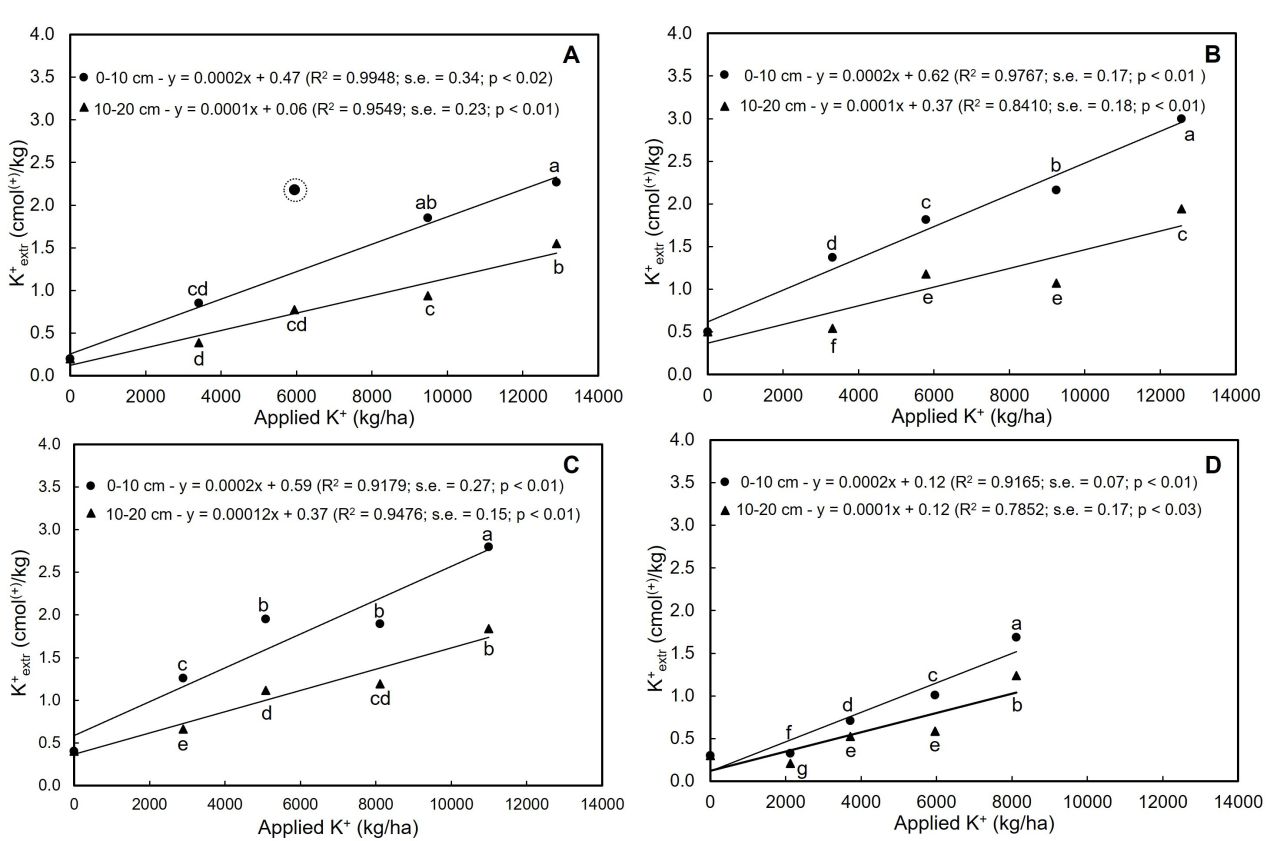
FIGURE 1.Effect of K+ applied via diluted winery wastewater over four seasons on the extractable K+ in the 0-10 cm and 10-20 cm layers of (A) Rawsonville sand, (B) Lutzville sand, (C) Stellenbosch shale, and (D) Stellenbosch granite soils. The encircled data point was regarded as an outlier due to experimental error and was not included in the equation. Values designated by the same letter do not differ significantly (p ≤ 0.05).
Municipal water irrigation did not affect the soil EPPʹ (data not shown). In contrast, irrigation with diluted WWW increased EPPʹ over the four seasons (Figure 2). The EPPʹ in the 0-10 cm soil layer was slightly higher compared to the 10-20 cm layer with the exception of the Stellenbosch granite soil. In the case of the sandy soils and Stellenbosch shale soil, the EPPʹ in the 0-10 cm showed a slower increase following the second season (Figures 2A, 2B and 2C). The EPPʹ in the 10-20 cm layer showed an almost linear increase with applied K+. In the case of the Stellenbosch granite, these trends did not occur as EPPʹ was comparable in both soil layers (Figure 2D). After the fourth season, EPPʹ was similar in both layers, which suggested that the granite soil was no longer retaining high amounts of K+ in the 0-10 cm layer.
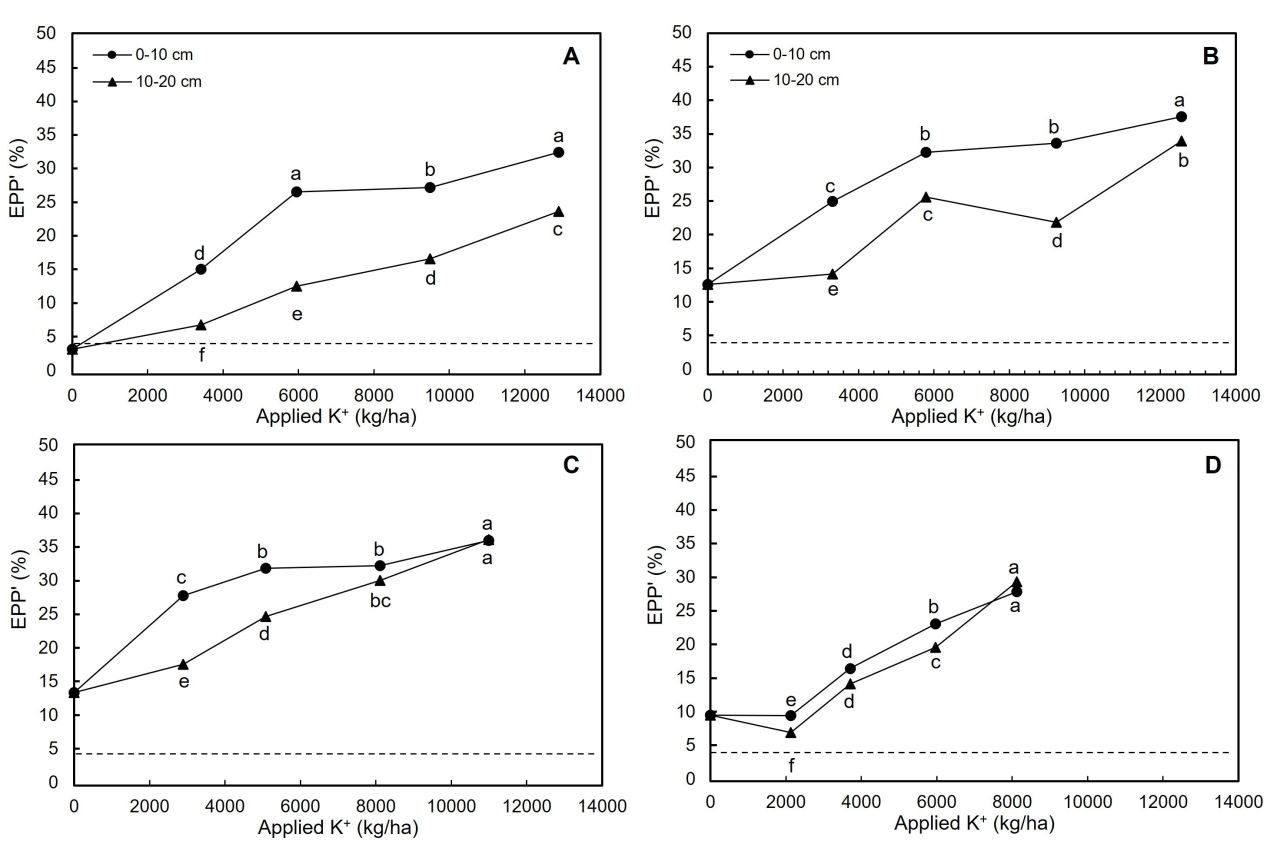
FIGURE 2. Effect of K+ applied via irrigation with diluted winery wastewater over four seasons on the extractable potassium percentage (EPPʹ) in the 0-10 cm and 10-20 cm layers of (A) Rawsonville sand, (B) Lutzville sand, (C) Stellenbosch shale, and (D) Stellenbosch granite soils. The dashed line indicates the critical EPPʹ threshold for grapevines. Values designated by the same letter do not differ significantly (p ≤ 0.05).
For healthy grapevine growth in soils with pH ≤ 6, it is recommended that a K+ saturation of 4% is required on the exchange sites.28 Prior to irrigation, the EPPʹ was greater than 4% in all soils, except for the Rawsonville sand, which had an EPPʹ of 3.7% (data not shown). Thus, for the soils investigated, K+ added via the WWW does not represent a benefit in terms of nutrient balance and supply. In fact, high K+extr levels may cause excessive absorption by grapevines, which could result in high wine pH, and eventually reduce colour stability of red wines where WWW is applied.29,30 Under normal cropping conditions, there is a possibility that K+ applied via WWW can be beneficial if it can maintain optimum levels when K+ is absorbed by grapevines and/or inter-row crops, or if K+ is leached by rainfall in winter. It should be noted that the observed K+ accumulation occurred in the absence of rainfall or crops. Determining the effect of leaching by winter rainfall, where diluted WWW is used for irrigation, will be presented in another article.
Soil sodium and ESPʹ
Municipal water irrigation had almost no effect on the Na+extr, irrespective of clay content (data not shown). On the other hand, irrigation with the diluted WWW increased Na+extr substantially over the four seasons. In the case of all the soils, the degree of Na+extr accumulation in the 0-10 cm layer was higher compared to the 10-20 cm layer (Figure 3). The difference between the layers was most prominent in the shale (Figure 3C), followed by the granite (Figure 3D) and then the sandy soils (Figures 3A and 3B). These trends indicated that more Na+ was extracted in the 0-10 cm layer of the heavier soils compared to the sandy soils. The increased extraction of Na+ from the top layer may be a result of less sorption of Na+ to the soil and evaporative concentration of Na+ in the evaporating soil solution. In fact, previous studies have shown that the adsorption of Na+ was reduced by the presence of high K+ levels where WWW was applied.13 In all soils, the Na+extr increased linearly with the cumulative amount of Na+ applied via the irrigation waters (Figure 3). However, the increase in Na+extr with increase in applied Na+ (Na+extr/Na+appl) differed between the soils. The Na+extr/Na+appl increased with clay content in the 0-10 cm layer, but no correlation was observed in the 10-20 cm layer (Figure 4). Where municipal water was applied, the ESPʹ amounted to 3.2%, 4.4%, 2.9% and 4.3% in the Rawsonville sand, Lutzville sand, Stellenbosch shale and Stellenbosch granite soils, respectively, after four seasons. The ESPʹ values were comparable to the baseline values with the exception of the Stellenbosch granite soil, which had a higher baseline ESPʹ (data not shown). Where WWW was applied over four seasons, the ESPʹ did not show a definite linear increase with the amount of Na+ applied in any of the layers (Figure 5).
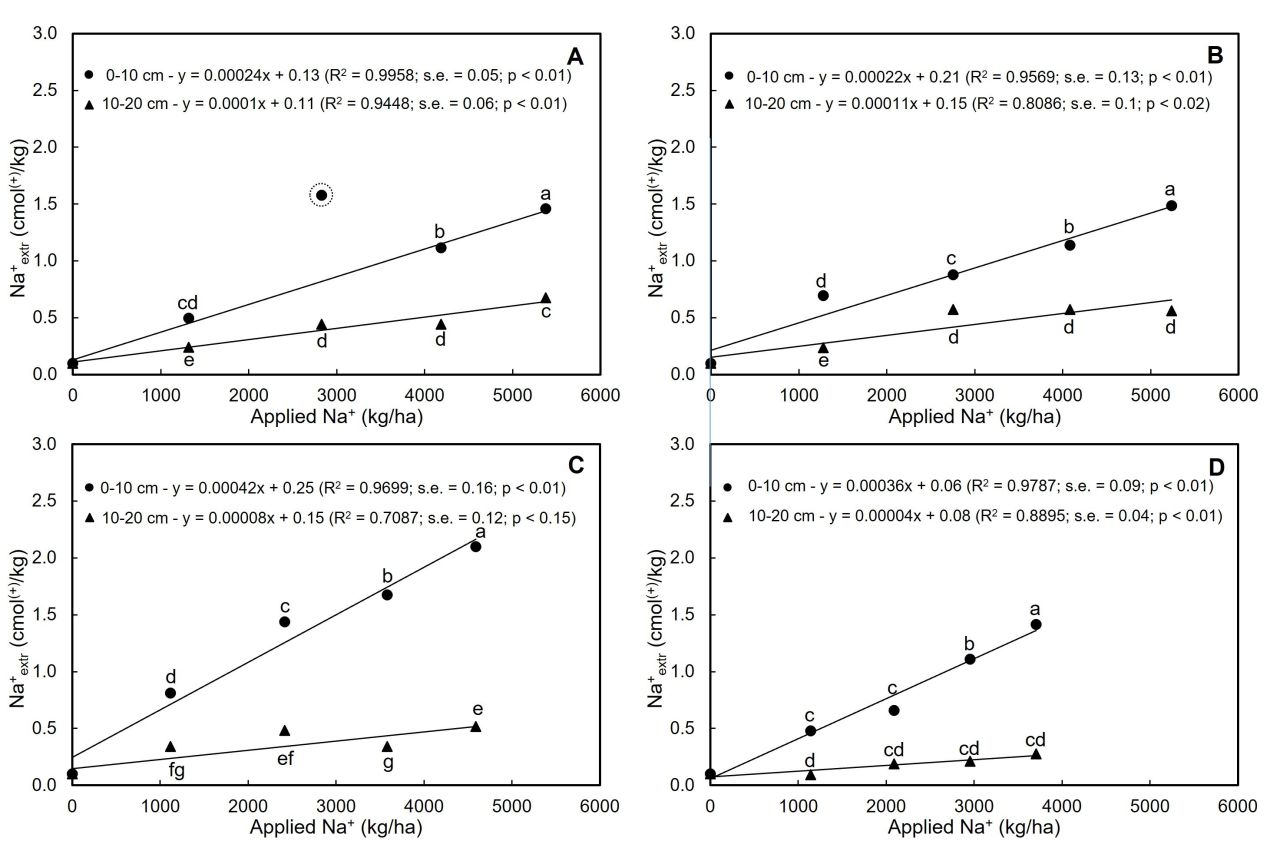
FIGURE 3. Effect of Na+ applied via irrigation with diluted winery wastewater over four seasons on the extractable Na+ in the 0-10 cm and 10-20 cm layers of (A) Rawsonville sand, (B) Lutzville sand, (C) Stellenbosch shale, and (D) Stellenbosch granite soils. The encircled data point was regarded as an outlier due to experimental error and was not included in the equation. Values designated by the same letter do not differ significantly (p ≤ 0.05).
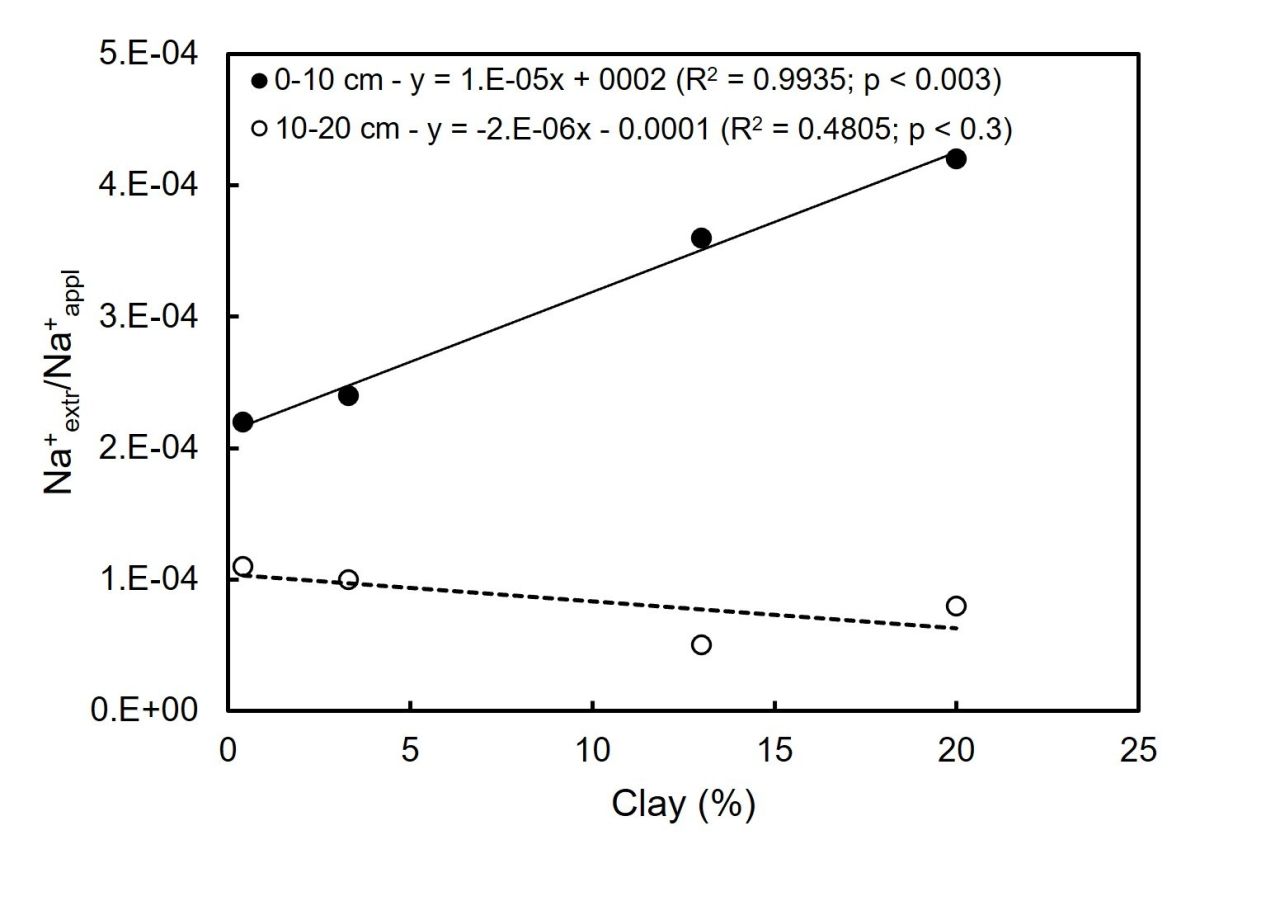
FIGURE 4. Relationship between the ratio of extractable sodium (Na+extr) to sodium applied per hectare (Na+appl) and clay content for four different soils.
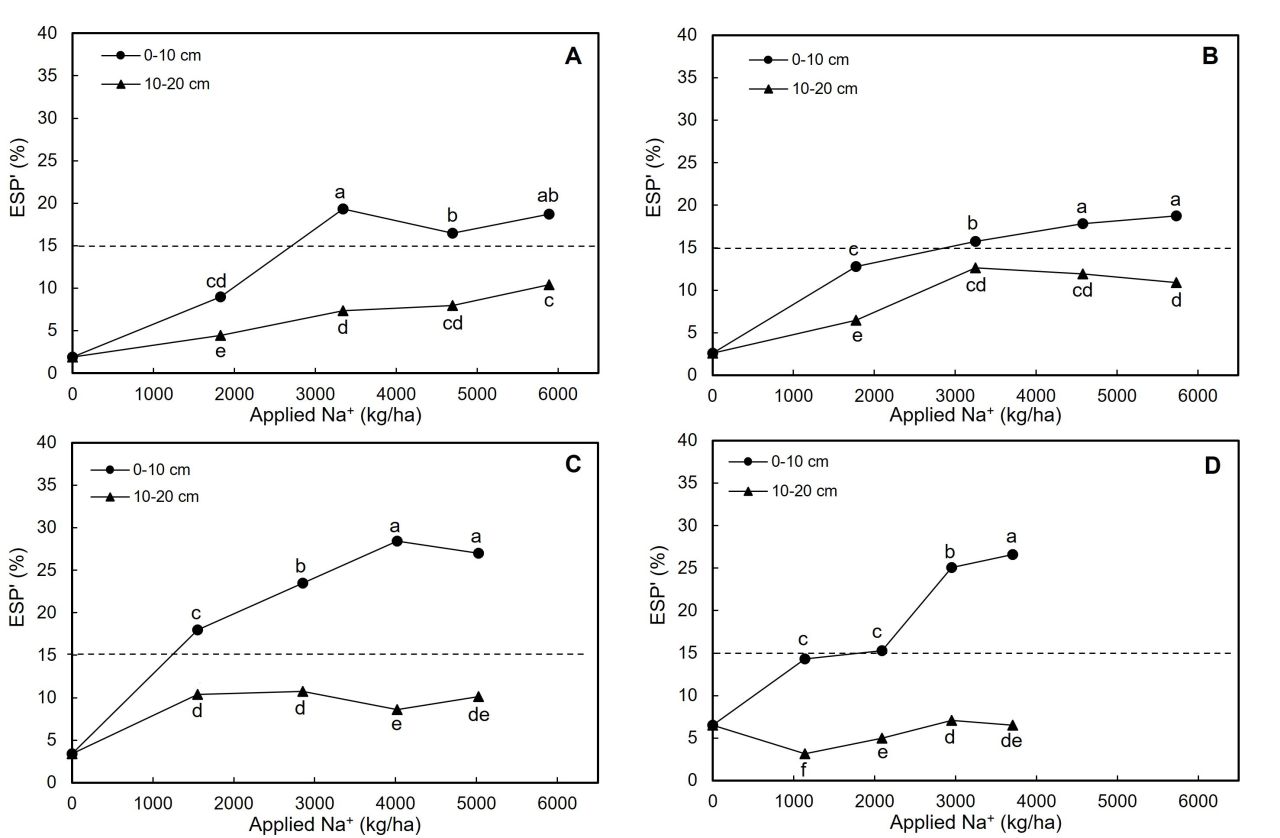
FIGURE 5. Effect of Na+ applied via irrigation with diluted winery wastewater over four seasons on the extractable sodium percentage (ESPʹ) in the 0-10 cm and 10-20 cm layers of (A) Rawsonville sand, (B) Lutzville sand, (C) Stellenbosch shale, and (D) Stellenbosch granite soils. The dashed line indicates the critical ESPʹ threshold for grapevines. Values designated by the same letter do not differ significantly (p ≤ 0.05).
In the case of the Rawsonville sand, the ESPʹ exceeded the critical threshold of 15% for sustainable agricultural use from the second season onwards in the 0-10 cm layer (Figure 5A). Wastewater irrigation increased the ESPʹ above 15% from the first season in the Lutzville sand, but also only in the 0-10 cm layer (Figure 5B). From the first season, the ESPʹ exceeded 15% only in the 0-10 cm layer of the Stellenbosch shale soil (Figure 5C). Although no infiltration problems occurred after four seasons, it does not rule out the possibility that sodicity could have negative effects on soil structure in the long run. In the case of the Stellenbosch granite soil, the ESPʹ exceeded 15% after the third season, but also only in the 0-10 cm layer (Figure 5D). Although the ESPʹ in the two sandy soils seemed to have reached a plateau at approximately 20%, it might induce negative effects on grapevine growth and yield if the ESPʹ remains near the threshold over time. Given the higher ESPʹ in the heavier soils, sodicity will have negative effects on plant growth and soil physical conditions if these soils are irrigated with WWW, even if it is diluted. The Stellenbosch shale soil showed no visual signs of infiltration problems, but water infiltration into the Stellenbosch granite soil was considerably slower where the wastewater was applied compared to the municipal water. It must be noted that the infiltration problems occurred right from the first season, i.e. when the ESPʹ in the top layer was around 15%.31 It is well documented that Ca2+ and Mg2+ can counter the negative effects of Na+ on water infiltration, but Ca2+extr and Mg2+extr in the Stellenbosch shale and granite soils were comparable (data not shown). It was previously reported that the saturated conductivity of a topsoil of a similar granitic soil at Nietvoorbij was 112 mm/h.32 Since the drip application rate was 115 mm/h,31 it could be that the infiltration rate of the granitic soil was exceeded, thereby causing the slow water infiltration. Another possible reason for the slow infiltration rate in the granitic soil is the dispersive nature of the bleached topsoil. Bleached topsoils are pale in colour due to the loss of iron (Fe2+) from the horizon. Iron oxides play an important role in stabilising clays against dispersion.33 The lack of Fe2+ in the granitic topsoil might make this soil more susceptible to clay dispersion and surface sealing when irrigated with wastewater containing high levels of Na+ and K+. The red Oakleaf soils in the Stellenbosch region have a high Fe2+ content.34 This may explain why infiltration in these soils was unhindered despite the poor quality of the irrigation water.
pH(KCl)
Irrigation with municipal water did not substantially affect pH(KCl), irrespective of soil clay content (data not shown). In contrast, irrigation with diluted WWW increased pH(KCl) substantially in all the soils over the four seasons (Figure 6). In all the soils, pH(KCl) in the 0-10 cm soil layers tended to be higher compared to the 10-20 cm layer. This means that despite the wastewater having a fairly low pH (4.9-6.0), it actually increased the soil pH. The Lutzville, Rawsonville and Stellenbosch shale soils showed a pH increase of approximately 2 pH units, while the granite soil, which received less irrigation water, only showed a pH increase of 1 unit. Although this may seem counter intuitive, it is not an unusual phenomenon and has been recorded in numerous studies where organic substrates are added to a soil.35,36,37 When salts of organic acids are added to a soil, decarboxylation and hydrolysis of the organic/bicarbonate anions increase the pH.35 The WWW used in this study has an extremely high total alkalinity (Table 1). It is likely that this alkalinity comprises a number of deprotonated organic acids, as well as bicarbonate ions. The charge on these anions is largely countered by K+ and Na+ cations; thus, when applied to soils, this results in a pH increase due to decarboxylation and anion hydrolysis reactions as described previously. These authors found that Na+ and K+ organic salts are more effective at increasing soil pH than Ca2+ and Mg2+ organic salts. This would explain why the soil pH(KCl) increased linearly with the cumulative amount of K+ plus Na+ applied via the diluted WWW (Figure 6). Similar increases in pH were reported when high alkalinity WWW was applied to vineyard soils.13
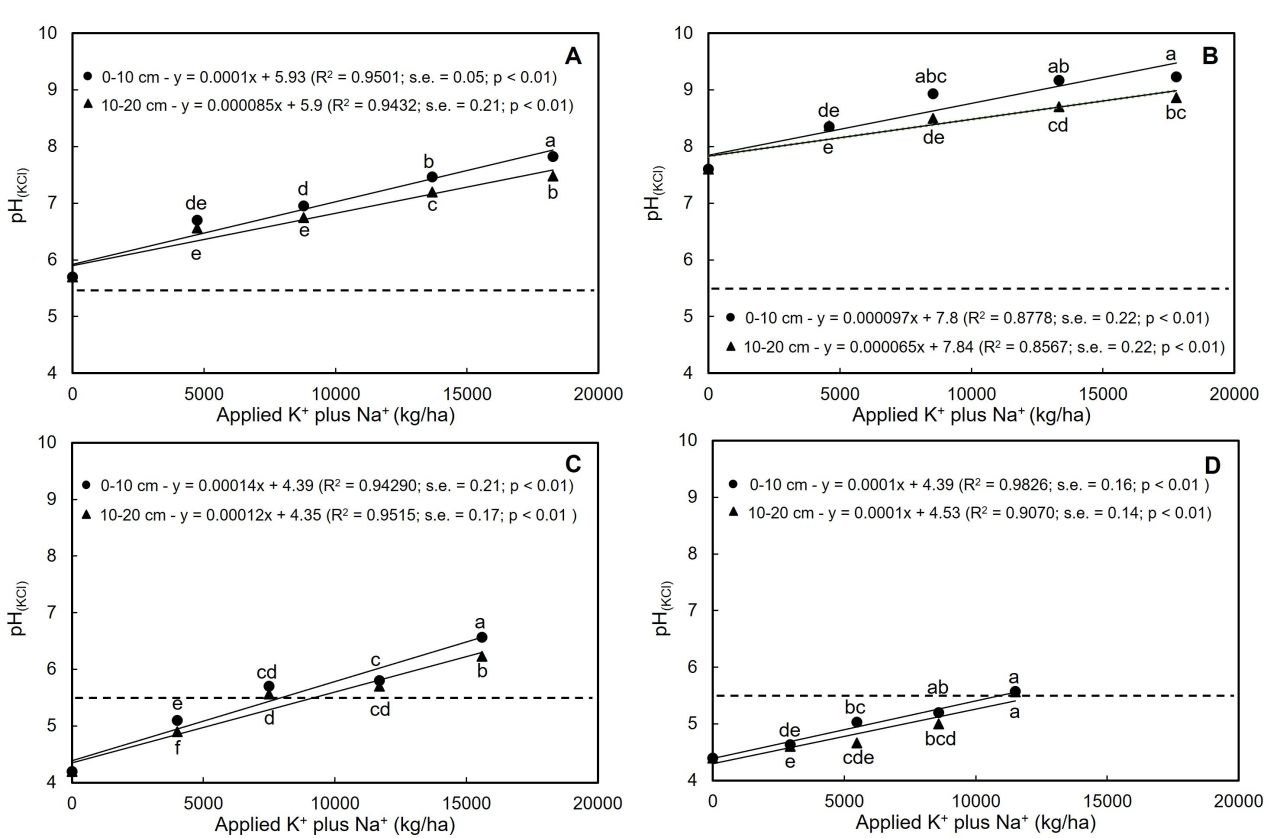
FIGURE 6. Effect of K+ plus Na+ applied via diluted winery wastewater over four seasons on the pH(KCl) in the 0-10 cm and 10-20 cm layers of (A) Rawsonville sand, (B) Lutzville sand, (C) Stellenbosch shale, and (D) Stellenbosch granite soils. The dashed line indicates lower pH(KCl) threshold for grapevines. Values designated by the same letter do not differ significantly (p ≤ 0.05).
Conclusions
The four different soils responded to irrigation with WWW containing relatively high levels of K+ and Na+ compared to the municipal water control. Since the K+extr increase with increasing amounts of K+ applied was comparable for the four soils, it suggested that clay content did not play a significant role. The EPPʹ was above the critical level of 4% in all the soils before the experiment commenced. This means that, under the prevailing conditions, there is a high risk of K+ accumulating to levels that could have negative effects on wine colour if the excess K+ is not leached out in winter or absorbed by inter-row crops in summer. In the heavier soils, the increase of Na+extr with increasing amounts of Na+ applied was almost double compared to the sandy soils. This indicated that the risk of Na+ reaching excessive levels will be less where vineyards in sandy soils are irrigated with diluted WWW than in heavier soils. Although the ESPʹ exceeded the threshold of 15% only in the 0-10 cm layer, Na+ accumulation in the deeper layers could increase ESPʹ to excessive levels in the long run. The soil pH(KCl) increase, irrespective of clay content, could be attributed to organic anions added to the soil via irrigation with diluted WWW. In the sandy soils, where the pH(KCl) approached eight, or even higher values, nutrient solubility and absorption could be reduced if WWW is used for vineyard irrigation. It must be noted that the foregoing results represent a worst-case scenario, i.e. in the absence of rainfall or crops.
Effects of irrigation with diluted WWW on the phosphorus status of the four soils in the pot study will be presented in the next article.
Acknowledgements
- This article is an output of WRC Project K5/1881, entitled “The impact of wastewater irrigation by wineries on soils, crop growth and product quality”. This solicited project was initiated, funded and managed by the WRC. The project was co-funded by Winetech and ARC.
- Goudini Winery for providing wastewater for the research.
- ARC for infrastructure and resources.
- Staff of the Soil and Water Science division at ARC Infruitec-Nietvoorbij for their assistance, and in particular Mr. F. Baron for his dedicated technical support.
References
- Belcher A., Grobler, D., Barbour, T., Conrad, J., Dobinson, L., Jonker, V., Kleynhans, T. & Rossouw, N., 2011. Integrated socio-economic and ecological scenario specialist report for the classification of significant water resources in the Olifants-Doorn WMA, Department of Water Affairs, South Africa.
- Van Schoor, L.H., 2001. A formula for the quantification and prioritization of negative environmental impacts in the wine industry. Wineland May 2001, 100-102.
- Van Schoor, L.H., 2005. Guidelines for the management of wastewater and solid waste at existing wineries. Winetech, P.O. Box 528, Paarl, 7624.
- Jalali, M., Merikhpour, H., Kaledhonkar, M.J. & Van Der Zee, S.E.A.T.M., 2008. Effects of wastewater irrigation on soil sodicity and nutrient leaching in calcareous soils. Agr. Water Manage. 95, 143-153.
- Bond, W.J., 1998. Effluent irrigation - an environmental challenge for soil science. Aust. J. Soil Res. 36, 543-555.
- Papini, A.G., 2000. Land treatment of grape processing effluents near Robertson, Western Cape. M.Sc. thesis, University of Cape Town, Private Bag X3, Rondebosch, 7701.
- Mulidzi, A.R., 2001. Environmental impact of winery effluent in the Western and Northern Cape Provinces. M.Sc. thesis, University of Pretoria, Private Bag X20, Hatfield, 0028.
- Arienzo, M., Christen, E.W., Quayle, W. & Kumar, A., 2009a. A review of the fate of potassium in the soil-plant system after land application of wastewaters. J. Hazardous Mat. 2-3, 415-422.
- Christen, E.W., Quayle, W.C., Marcoux, M.A., Arienzo, M. & Jayawardane, N.S., 2010. Winery wastewater treatment using the land filter technique. J. Environ. Manage. 91, 1665-1673.
- Laurenson, S. & Houlbrooke, D., 2011. Winery wastewater irrigation - the effect of sodium and potassium on soil structure. Report prepared for Marlborough District Council. Agresearch. 1-22.
- Mosse, K.P.M., Patti, A.F., Christen, E.W. & Cavagnaro, T.R., 2011. Review: Winery wastewater quality and treatment options in Australia. Aust. J. Grape and Wine Res. 17, 111-122.
- Arienzo, M., Christen, E.W., Jayawardane, N.S. & Quayle, W.C., 2012. The relative effects of sodium and potassium on soil hydraulic conductivity and implications for winery wastewater management. Geoderma. 173-174, 303-310.
- Laurenson, S., Bolan, N.S., Smith, E. & McCarthy, M., 2012. Review: Use of recycled wastewater for irrigating grapevines. Aust. J. Grape Wine Res. 18, 1-10.
- Howell, C.L. & Myburgh, P.A., 2014a. Effect of irrigation with augmented winery wastewater on soil chemical status. In: Myburgh, P.A. & Howell, C.L. (eds). The impact of wastewater irrigation by wineries on soil, crop growth and product quality. Water Research Commission Report No. 1881/14. Private Bag X03, Gezina, South Africa, 0031.
- Walker, C.W. & Lin, H., 2008. Soil property changes after four decades of irrigation: A landscape perspective. Catena 73, 63-74.
- Lieffering, R.E. & McLay, C.D.A., 1996. Effects of high pH solutions with large monovalent cation concentrations on cation exchange properties. J. Soil Res. 34, 229-242.
- Mulidzi, A.R., Laker, G., Wooldridge, J. & Van Schoor, L., 2009. Composition of effluents from wineries in the Western and Northern Cape provinces (Part 1): Seasonal variation and differences between wineries. Winetech Technical Yearbook 2009/10, 58-61.
- Howell, C.L. & Myburgh, P.A., 2014b. Effect of irrigation with augmented winery wastewater on the hydraulic conductivity of different soils. In: Myburgh, P.A. & Howell, C.L. (eds). The impact of wastewater irrigation by wineries on soil, crop growth and product quality. Water Research Commission Report No. 1881/14. Private Bag X03, Gezina, South Africa, 0031.
- Arienzo, M., Quayle, W.C., Christen, E. & Jayawardane, N., 2009b. Irrigating with winery wastewater? Developing soil stability thresholds and managing total cations. Aust. N.Z. Grapegrow. Winem. October 86-88.
- Bueno, P.C., Rubi, J.A.M., Gimenez, R.G. & Ballesta, R.J., 2009. Impacts caused by the addition of wine vinasse on some chemical and mineralogical properties of a luvisol and a vertisol in La Mancha (Central Spain). J. Soils Sedim. 9, 121-128.
- Van Schoor, L.H., 2001. Geology, particle size distribution and clay fraction mineralogy of selected vineyard soils in South Africa and the possible relationship with grapevine performance. MSc thesis, Stellenbosch University, Private Bag X1, 7602 Matieland, South Africa.
- Bargmann, C.J., 2003. Geology and Wine production in the Coastal Region, Western Cape Province, South Africa. Geoscience Canada. 30, 161-182.
- Mulidzi, A.R., 2016. The effect of winery wastewater irrigation on the properties of selected soils from the South African wine region. PhD dissertation, Stellenbosch University.
- SAS, 2008. SAS Version 9.2., SAS Institute, Campus Drive, Cary, North Carolina 27513.
- Shapiro, S.S. & Wilk, M.B., 1965. An analyses of variance test for normality (complete samples). Biometrika 52, 591-611.
- Ott, R.L., 1998. An introduction to statistical methods and data analysis. Duxbury Press, Belmont, California.
- Department of Water Affairs, 2013. Revision of general authorizations in terms of Section 38 of the National Water Act, 1998 (Act No. 36 of 1998), No. 665. Government Gazette No. 36820, 6 September 2013. Dept. Water Affairs, Pretoria, South Africa, 3-31.
- Conradie, W.J., 1994. Vineyard fertilization. ARC-Fruit, Vine and Wine Research Institute, Private Bag X5026, Stellenbosch, South Africa, 7599.
- Mpelasoka, B., Schachtman, D.P., Treeby, M.T. & Thomas, M.R., 2003. A review of potassium nutrition in grapevines with special emphasis on berry accumulation. Aust.J.Grape Wine Res. 9, 154-168.
- Kodur, S., 2011. Effects of juice pH and potassium on juice and wine quality, and regulation of potassium in grapevines through rootstocks (Vitis): a short review. Vitis 50, 1-6.
- Mulidzi, A.R., Clarke, C.E. & Myburgh, P.A., 2016. Design of a pot experiment to study the effect of irrigation with diluted winery wastewater on four differently textured soil. Water SA 2, 20-25.
- Myburgh, P.A., 2015. A lysimeter study to determine input values for a simple parametric soil evaporation model for vineyards. S.Afr. J. Plant Soil 32, 1-8.
- Tombacz, E., Libor, Z., Illes, E., Majzik, A. & Klumpp, E., 2004. The role of reactive surface sites and complexation by humic acids in the interaction of clay mineral and iron oxide particles. Org.Geochem. 35, 257-267.
- Le Roux, J.L., 2015. The occurance of bleached topsoils on weakly structured subsoil horizons in the Western Cape and Mpumalanga Provinces of South Africa. MSc. thesis, Stellenbosch University, Private Bag X1, 7602 Matieland, South Africa.
- Li, Z.A., Zou, B., Xia, H.P., Ding, Y.Z., Tan, W.N. & Fu, S.L., 2008. Role of low-molecule-weight organic acids and their salts in regulating soil pH. Pedosphere 18, 137-148.
- Rukshana, F., Butterly, C.R., Baldock, J.A. & Tang, C., 2011. Model organic compounds differ in their effects on pH changes of two soils differing in initial pH. Biol. Fertil. Soils 47, 51-62.
- Rukshana, F., Butterly, C.R., Baldock, J.A., Xu, J.M. & Tang, C., 2012. Model organic compounds differ in priming effects on alkalinity release in soils through carbon and nitrogen mineralization. Soil Biology & Biochem. 51, 35-43.
For more information, contact Reckson Mulidzi at [email protected].
Click here to get your copy of WineLand Magazine.

More from
Vineyard, cellar and production
How to understand regenerative farming
Regenerative farming is becoming part of the language of modern viticulture, but what does it actually look like in a vineyard?

JC Smith praat oor wynmaak in die Oos-Vrystaat
JC Smith is ’n derdegeslag-wynmaker. Sy oupa Dassie en pa Flip was albei wynmakers, en hy het tussen wingerde en wynkelders grootgeword. Hy is tans die wynmaker by Blydschap in die Oos-Vrystaat.
Cellar hygiene
Maintaining a spotless wine cellar requires a comprehensive management plan, which includes structural design, equipment sanitation, environmental controls and routine microbial monitoring.