
19th AWITC, Adelaide, Australia (Part 1): Highlights from the conference plenary sessions
· 7 min read


The Australian Wine Industry Technical Conference (AWITC) is held every three years in conjunction with the Winetech Trade Exhibition. According to Mark Kristic, Managing Director of the Australian Wine Research Institute (AWRI) and Chair of AWITC Inc, the AWITC has a strong tradition of delivering thought-provoking scientific presentations with highly adaptable technical information. There are also scientific posters on display.
Dr Carolyn Howell of the Soil and Water Science division at ARC Infruitec-Nietvoorbij attended the 19th AWITC in Adelaide, South Australia. There were 1 111 delegates, 119 of whom were international ones. Other colleagues from South Africa also attended the AWITC (Figure 1). Fifty speakers made presentations across 11 plenary sessions. Just over 100 scientific posters were displayed. At the Winetech Trade Exhibition, there were 167 stands, 924 exhibitors and 2 565 attendees.
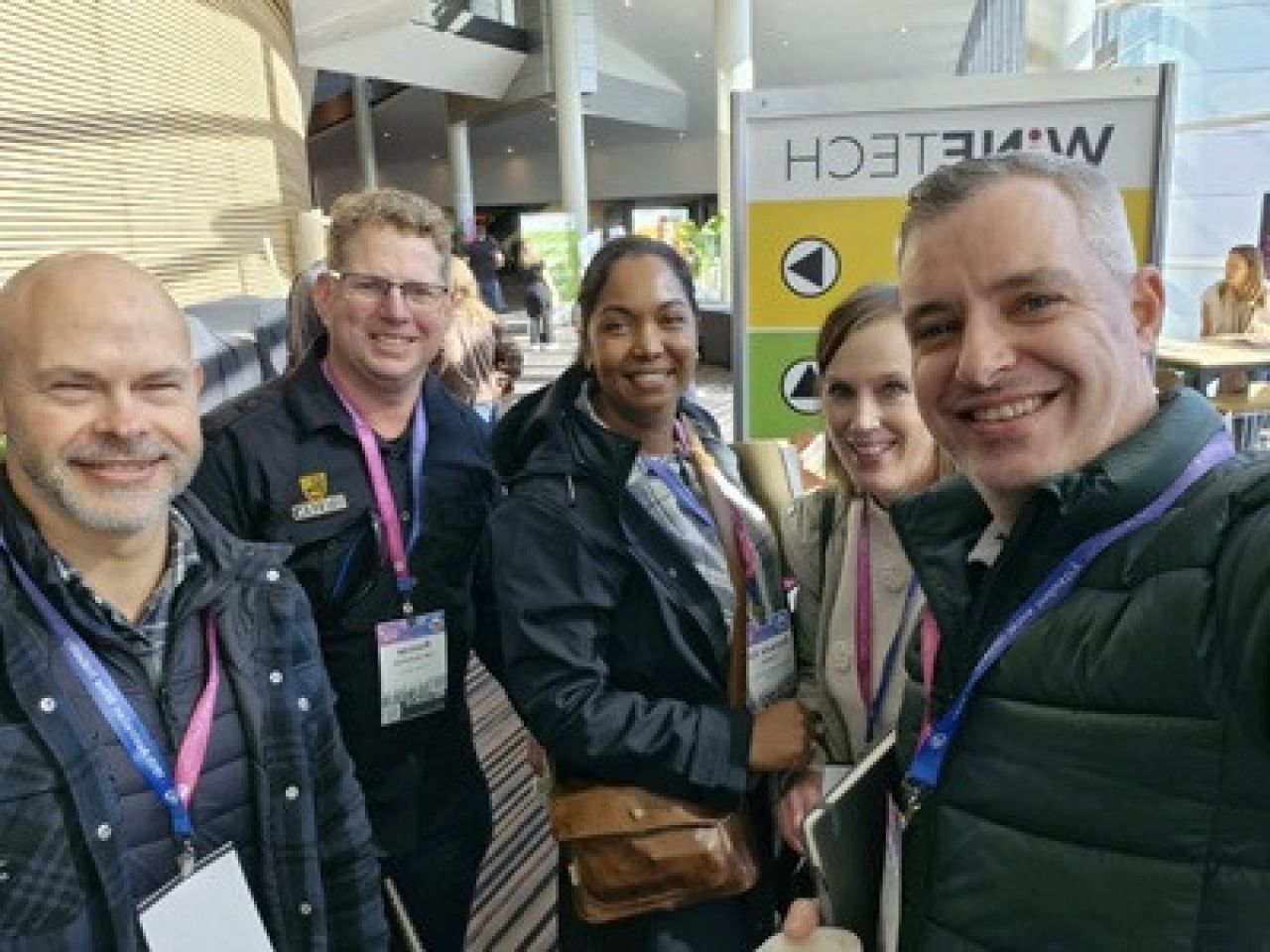
FIGURE 1. Gerhard Swart of Flagstone, Renier van Greunen of Giesen Wines in New Zealand, Oursula Lenee of KWV, Carolyn Howell from the Soil and Water Science division at ARC Infruitec-Nietvoorbij, and Kobus van der Merwe of KWV attended the 19th AWITC in Adelaide, Australia.
Venue
The 19th AWITC was held at the Adelaide Convention Centre (Figure 2), which can accommodate up to 3 500 people. The Kaurna people are the traditional custodians of the Adelaide Plains on which Adelaide and the Adelaide Convention Centre are located.
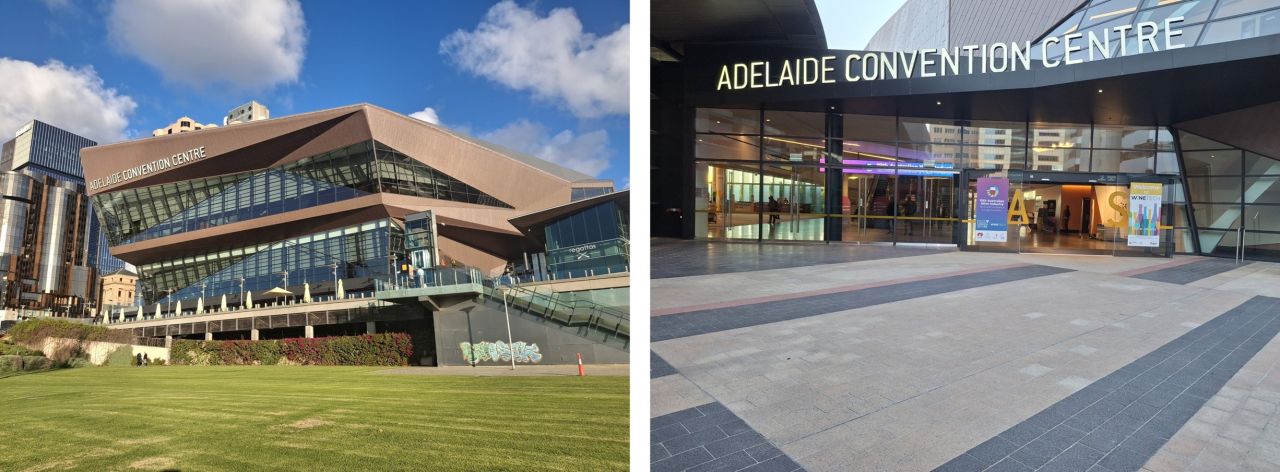
FIGURE 2. The Adelaide Convention Centre as viewed from the (A) Torrens River side, and (B) main entrance on North Terrace in Adelaide, South Australia.
Information boards were placed inside the Adelaide Convention Centre (Figure 3). The information board on the Kaurna people’s Water Ceremony was of particular interest. The Kaurna people believe that we are physically, emotionally and spiritually intertwined with the land, waters and sky. The stairway to the lecture hall was decorated with the conference emblem (Figure 4). The AWITC was mainly self-service; participants had to register and print their own name cards (Figure 4).
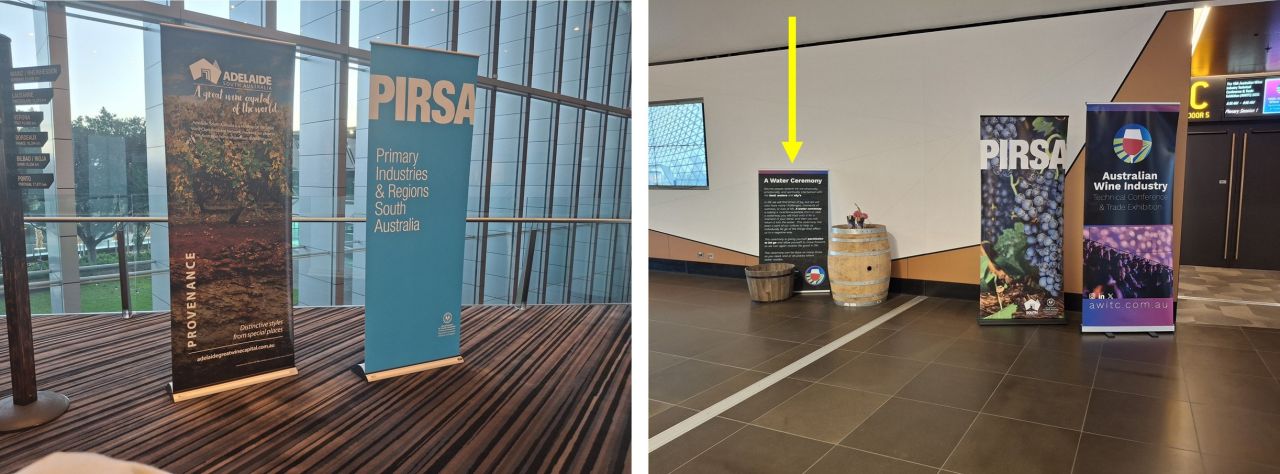
FIGURE 3. Information boards were placed inside the Adelaide Convention Centre for the 19th AWITC. Note the yellow arrow pointing towards the information for the Water Ceremony of the Kaurna people.
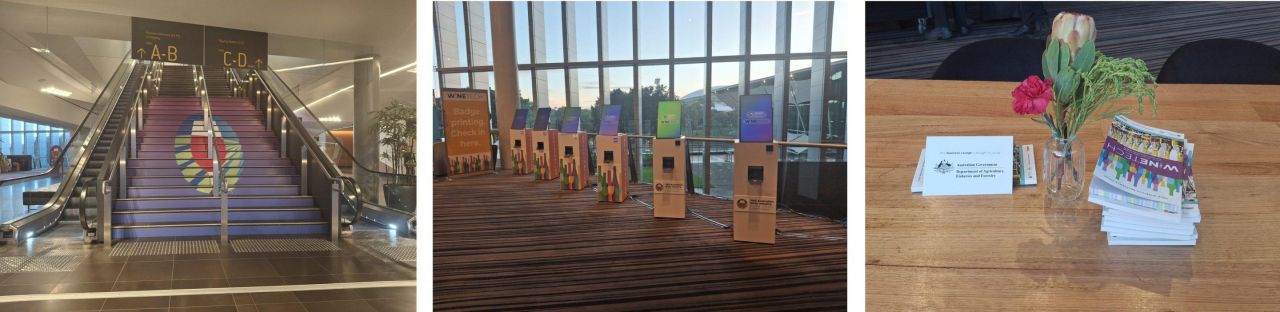
FIGURE 4. The venue was decorated with the 19th AWITC emblem.
Conference plenary sessions
The plenary sessions began in the Plenary Hall and covered a wide range of topics. These were:
- Navigating the complexities of global grape and wine supply.
- Decoding global consumer trends and strategies.
- Cultivating social responsibility and inclusion.
- Sustainable strategies for the wine industry.
- Innovative solutions for vineyard health.
- Embracing technology in viticulture and winemaking.
- Innovative solutions for wine production.
- Positioning organisations for success.
- Australian wines in global markets.
Highlights of the plenary sessions
A representative of the Kaurna people, Mickey Kumatpi O’Brien, welcomed participants in a Kaurna Welcome to Country ceremony. Mark, the 19th AWITC Chair, also welcomed participants in a formal presentation and mentioned that the AWITC is an important partnership between the Australian Society for Viticulture and Oenology and Australian Wine Research Institute (AWRI).
A highlight of the session on navigating the complexities of global grape and wine supply was a presentation made by Yvette van der Merwe, President of the International Organisation of Vine and Wine (OIV). She spoke about understanding the global wine trade through the lens of supply and demand. In 2024, the world vineyard surface area was 7.1 million ha, which includes all planted grapevines for all users, namely wine, table grapes, dried grapes, spirits and vinegars. Forty seven percent of the global vineyard surface area is planted to wine grapes. Yvette highlighted that there has been a 9% decrease in the surface planted to grapes since 2000. The global wine production of 226 million hectolitres in 2024 is the lowest since 1961, likely due to extreme weather events. Global wine consumption is also at its lowest in 60 years, at 214 million hectolitres, with a steep decline in Chinese consumption due to inflationary pressures and consumer preferences. In conclusion, Yvette shared a few thoughts relating to the data she presented. She observed challenges in production, consumption and trade, but for those who adapt, there are opportunities. In this regard, climate change is the biggest challenge for production, but using different wine grape cultivars can be considered, which give different types and styles of wine. Yvette highlighted that the wine industry is also in a position to serve as a role model for sustainability.
In the session on cultivating social responsibility and inclusion, Peter Stanbury of Sustainable Wine Roundtable spoke about embedding Environmental, Social and Governance (ESG) into business strategy and culture. He indicated that the current key priorities for sustainability are transparency, packaging and labour standards. Peter mentioned there are more than 40 wine sustainability standards globally, which makes sense as sustainability standards reflect local realities and terroir. However, the multitude of standards can be confusing. Peter introduced his Sustainability Wine Roundtable and noted that the membership reflects the entire global supply chain.
Belinda Elworthy of Gotcha4Life delivered a very powerful, deeply personal presentation on championing mental fitness in your business. She emphasised that there are three powerful truths in mental fitness. These are (i) it is OK to feel big feelings, (ii) connection is protective, and (iii) seeking help is a strength. Belinda urged participants to lead with an open heart in the workplace and recommended that organisations have weekly connection rituals to improve mental health and foster meaningful collaboration between colleagues.
Amanda Schapel of the South Australian Research and Development Industry (SARDI) enlightened the participants on vineyard soil carbon. She highlighted the importance of soil carbon in soil health and function, plant productivity and resilience. There are three factors that affect soil carbon: climate, soil and management. In this regard, Amanda mentioned that organic carbon inputs should be optimised, whereas organic carbon losses should be minimised. Management practices to improve soil organic carbon include increasing biomass and root exudation. Amanda noted that composts and mulches also increase the food source for microbes and enhance nutrient availability, water retention and soil structure. However, composts need to be reapplied to maintain a carbon source. Composts and mulches generally yield the greatest increase in organic carbon, but unfortunately, they are also the most expensive. Cover crops in the mid-row and under-vine regions improve soil structure, water infiltration and retention. They also provide habitat for beneficial insects, promote microbial activity, suppress weeds and reduce erosion. Improving soil surface cover to minimise erosion.
Some interesting observations were made in the presentation on navigating towards a climate-resilient vineyard by Johann Martínez-Lűuscher from the University of Navarra in Spain. Modelling done by his research group suggests that the temperature during the two months of grape ripening will increase by 2.83°C and 4.18°C in the Southern and Northern Hemispheres, respectively. Johann noted that the advancement of bud break due to climate change is a key impact that reduces ripening temperatures. This earlier phenology means further warming of the ripening period. He observed that grapevine water consumption increases by 6% for a 1°C increase in temperature. This implies a 15% increase in evapotranspiration if the temperature increases by 2.5°C. Johann provided guidelines to help address rising temperatures in vineyards and emphasised that irrigation practices need to improve. Producers were encouraged to protect their fruit from the sun and reduce grapevine vigour. Vine spacing and row orientation are key factors that also require careful consideration.
Key lessons learnt
- The Australian wine industry has hit rock bottom due to overproduction.
- Wine consumption is declining worldwide.
- We need to focus on the unique selling points of our wines and give “experiences” to visitors to our cellars.
- Australians are very concerned about mental health and fitness, so they have made it a priority.
- Sustainable production of grapes and wine will become even more critical in the future.
- In addition to doing research on grape and wine-related aspects to improve grape and wine production, marketing of the wine is an equally important aspect of wine grape production that deserves attention.
Acknowledgements
- Agricultural Research Council (ARC) for the opportunity to attend the 19th AWITC.
- South Africa Wine for funding to attend the 19th AWITC.
For more information, contact Carolyn Howell at [email protected].
Click here to get your copy of WineLand Magazine.

More from
Innovation and insights

Packaging under pressure: What wine businesses should be watching
From lighter bottles to automated packing lines, packaging decisions are becoming increasingly important to the cost and competitiveness of South African wine.
How vine water stress shapes grape and wine quality
This study formed part of the South Africa Wine programme “Grapevine production with limited water resources”, and aimed to evaluate how spatial and temporal water stress affects vine physiology, fruit composition and wine quality.
Drought tolerance of different scion cultivars (Part 4): Vegetative growth and yield
The study aimed to assess grapevine vegetative and yield responses in an almost worst-case scenario, i.e. grapevines growing under dryland conditions in sandy loam soil in the Swartland region.