
Beyond the flames: What the Cape wine industry is really learning about fire, climate and resilience
When the helicopters stop circling and the smoke thins across the Franschhoek valley, the headlines fade quickly. But on the ground, long after the last ember is extinguished, the real work begins.
· 9 min read
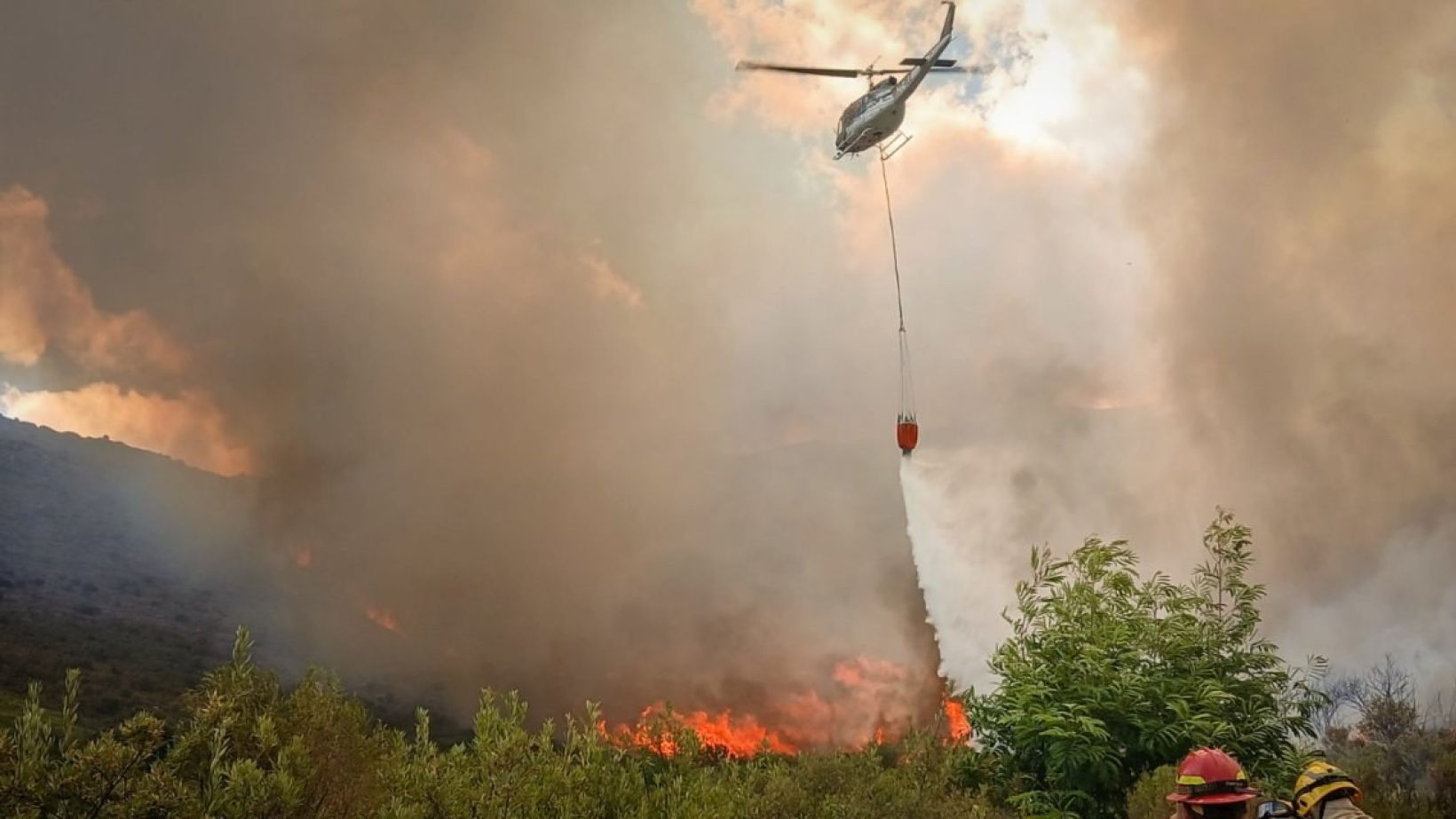
In the Cape Winelands, wildfires are no longer viewed as anomalies. It is part of a broader climate reality that the industry must prepare for and respond to with discipline.
This season’s fires were geographically specific, not universal. Many vineyards were untouched. Others faced operational disruption. But what emerges from conversations across firefighting services, wine estates, technical suppliers and industry bodies is not a story of crisis. It is a story of coordination, science, landscape management and collective responsibility.
For Vinimark, the purpose of reflecting on this season is not to amplify alarm. It is to understand what worked, where the pressure points are, and how resilience is being built into the sector’s fabric in a warming, windier and more volatile climate.
Three themes consistently surface: preparedness, community and practical intervention.
On the ground in Franschhoek: Proximity, preparedness and perspective
At La Bri in Franschhoek, General Manager and Winemaker, Irene de Fleuriot, describes a season that came close but did not directly claim their vineyards.
“We were fortunate,” she explains. “The closest the fire came to us was about two kilometres away.”
La Bri sits near the town centre, surrounded by neighbouring farms. When flames advanced across the mountains, precautionary measures were activated immediately. A tractor and sprayer were positioned near the river as a makeshift response vehicle. Communication channels were already in place.
Franschhoek’s agricultural community operates an active WhatsApp network that connects farms in real time. When a general call goes out, neighbours respond.
“If someone has a bakkie with a water tank on the back, off they go,” de Fleuriot says. “Everyone helps everyone.”
While La Bri’s vineyards were not burned, neighbouring producers were not as fortunate. For many in Franschhoek, this was the first time the fire moved across the entire mountain range rather than remaining contained to a single area. The scale was unprecedented in recent memory.
Fire in the Cape: A climate and landscape reality
The Western Cape’s Mediterranean climate makes it well-suited globally for premium wine production. It also makes it fire-prone.
Hot, dry summers. Berg winds. Mountainous terrain. Natural fynbos vegetation that has evolved in response to periodic fire cycles. These are not new factors. What is shifting is intensity and unpredictability. Climate variability is increasing the likelihood of extreme heat events, extended dry spells and erratic wind patterns that accelerate fire spread.
In this context, wildfire is not simply an agricultural risk. It is a landscape-level issue that intersects with biodiversity, invasive species, land management and community planning. Understanding this distinction changes the response.
On the front line: Strategy, not reaction
Jeremy Rose, Director of Operations for the Volunteer Wildfire Services in the Western Cape, approaches fire as both firefighter and environmental scientist.
Wildfire response, he explains, is strategic long before it is physical.
Teams assess slope gradients, fuel loads, wind direction and escape routes before committing to a line. Crews establish containment zones, implement backburning where appropriate and prioritise structural protection while aerial support addresses the head of the fire.
“Our priority is always life and property,” Rose says. Agricultural assets matter, but human safety drives tactical decisions.
Preparedness, however, determines outcome.
Volunteer Wildfire Services offers structured firefighting and fire management training that is open to members of the public, including those working in agriculture. Vineyard managers, farm workers and cellar teams can gain practical understanding of fire behaviour, suppression protocols and safety procedures.
“The more people understand how fire behaves, the more effective the response,” Rose explains.
Volunteer capacity remains central to regional resilience. VWS currently has around 350 active volunteers, but the demand for trained individuals extends beyond firefighting itself. Logistics, dispatch, equipment maintenance and operational support are equally critical.
In a region where terrain complicates suppression efforts, knowledge is not optional. It is infrastructure.
The fuel factor: Alien vegetation and intensity
One of the most significant fire accelerants in the Cape landscape is invasive alien vegetation.
Unmanaged pine forests, for example, dramatically increase fuel loads and fire intensity. Rose recounts fighting fires in areas where pine stands had not been managed for two decades. Despite multiple helicopters and ground teams, suppression became extremely difficult due to fuel accumulation.
Clearing invasive species is therefore not a conservation add-on. It is frontline risk mitigation. Reducing fuel load before summer arrives is often the single most effective prevention strategy available.
At estate level, this translates into practical adjustments. De Fleuriot describes how La Bri recently ploughed what had been a brush-and-pruning dump site into bare sand to eliminate potential kindling.
“You have to make sure there’s nothing that can catch,” she explains. “Fire breaks and fire plans are essential. That’s what you can control.”
Conservancies, volunteer groups, and estates are increasingly coordinating alien-clearing programmes year-round. Reducing fuel load before summer arrives is often the single most effective fire prevention strategy available.
“It’s not only about fighting fires,” Rose notes. “It’s about preventing them from escalating.”
Smoke taint: From uncertainty to science
Even vineyards untouched by flame may face risk through smoke exposure.
For de Feluriot, the greater concern this season was not fire damage but smoke taint.
“Because we are lower on the valley floor, the smoke largely passed over us,” she explains. “But we saw neighbours right in the middle of it.”
Early-harvested Chardonnay juice showed discolouration at pressing, prompting immediate separation and careful handling in the cellar.
If smoke compounds are absorbed into grape skins, rain will not wash them away. Once bound, they must be managed through winemaking decisions.
“You don’t press as hard. You keep everything very cold. You choose your yeast carefully,” de Fleuriot says. “You deal with the grapes differently.”
Laboratories in Stellenbosch, including specialised wine analysis facilities, test for volatile phenols associated with smoke exposure. Micro-ferments and chemical analyses now guide decisions before full-scale production begins.
A decade ago, smoke exposure often meant automatic loss. Today, the response is more nuanced.
Clayton Reabow of FermTech Solutions notes that research, particularly following extensive Australian wildfire seasons, has significantly advanced understanding of smoke taint chemistry. Targeted yeast cell wall preparations and early intervention strategies can reduce undesirable compounds without stripping desirable aromatics.
Products such as ClearUp™ BIO, part of the 2B FermControl range distributed by FermTech, use highly purified organic yeast cell wall preparations to bind volatile phenols associated with smoke taint. These matrices can also target reduction compounds such as hydrogen sulphide and certain thiols.
Applied early in fermentation, these tools allow undesirable compounds to be removed without significantly stripping desirable flavour and aroma components.
“It’s about understanding the chemistry and acting early,” Reabow says.
He recounts successfully producing a batch of Cap Classique from smoke-exposed fruit. With careful testing and intervention, premium sparkling wine remained viable.
Not every batch can be fully restored. But the presence of targeted remediation options represents a fundamental shift. Innovation is no longer reactive. It is embedded within winemaking strategy.
When competitors become neighbours
If there is one defining characteristic of this season, it is collective response.
Marc Kent of Boekenhoutskloof describes water tankers being shared and teams crossing property boundaries to assist one another. De Fleuriot echoes this sentiment from Franschhoek.
“The community has been phenomenal,” she says. “Feeding firefighters, providing water, stepping up wherever needed.”
More than 200 firefighters were deployed in parts of the valley at peak intensity. Helicopters were stationed locally. The financial cost of such operations is significant.
Beyond operational response, the economic impact on individual producers is substantial. Replanting costs can exceed one million rand per hectare before a single grape is harvested. Vines may take 4 to 5 years to return to commercial production.
Most producers insure buildings. Few can afford to insure vineyards themselves.
“You’ve already spent the year’s investment getting the grapes to harvest,” de Fleuriot explains. “If the block burns the day before you pick, that’s gone. And the future income from that block is gone too.”
Recovery, where vines are destroyed, is long-term. If a vineyard is burnt beyond viability, it is not harvested. It is replanted.
Dr Etienne Terblanche, Consultation Services Manager at Vinpro, highlights how communication has evolved over the past decade.
“Band together in times like these,” he says. “Create WhatsApp groups. The agility and speed of communication today is extraordinary compared to 10 or 20 years ago.”
In agricultural systems, isolation increases vulnerability. Connectivity reduces it.
Sustainability as risk management
At Creation Wines in Hemel-en-Aarde Ridge, co-founder Carolyn Martin and sustainability manager Salomé Geldenhuys frame the conversation in human and ecological terms.
“Our hearts go out to those directly affected,” Martin says. “Behind every vineyard are families and communities.”
Creation integrates firebreak maintenance, alien-invasive clearing, water management and conservancy collaboration into standard operations. But Geldenhuys emphasises a critical point.
“Landscape management is shared. If one area is neglected, everyone is exposed.”
Resilience extends beyond individual farms. It sits within ecosystems.
Training vineyard teams in basic fire response, supporting volunteer services and investing in ecological restoration are no longer viewed as optional sustainability projects. They are strategic continuity planning.
Practical actions shaping the next season
Across the industry, several clear priorities are emerging:
- Expanded participation in wildfire training for agricultural workers and estate teams
- Coordinated alien vegetation clearing to reduce fuel loads
- Early smoke-taint testing before rejecting fruit
- Strengthened inter-estate communication networks during high-risk periods
- Financial and logistical support for volunteer firefighting services
Supporting the front line
Volunteer capacity must be in place before the next fire season begins. Donations fund protective gear, vehicles, training and operational infrastructure.
In recognition of the critical role volunteers play, Vinimark has contributed to Volunteer Wildfire Services to support ongoing operations.
VWS welcomes further support through SnapScan, card payments, EFT and monthly debit orders, with Section 18A certificates available for qualifying contributions.
As de Fleuriot puts it, supporting firefighting crews is one of the most direct ways the public can help. Community support, whether through donations or simply standing alongside affected producers, strengthens the entire system.
Supporting wildfire services is not a charitable gesture. It is an investment in the long-term protection of agricultural landscapes, communities, and biodiversity.
A measured outlook
The 2025 wildfire season has tested parts of the Western Cape wine industry. Yet it has also highlighted its capacity for coordination, innovation and collective action.
The defining narrative is not panic. It is preparedness.
In a region where climate volatility is becoming part of the operating environment, the Cape wine industry is not standing still. It is learning, adapting and investing in resilience at every level, from landscape management and volunteer training to fermentation science.
Beyond the flames lies a quieter truth.
Fire may be inevitable in this landscape. Vulnerability is not.

More from
Innovation and insights
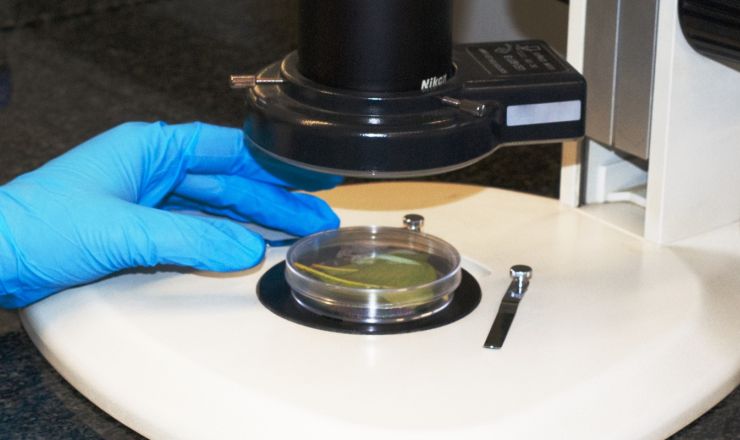
Safeguarding agricultural biosecurity through insect diagnostics
Insect diagnostics are managed through the Plant Disease Clinic (PDC), based at Stellenbosch University, and have emerged as a critical advisory service for South African agriculture. This article outlines the scope of samples analysed by the PDC, the services it provides and the role it will play…

Packaging under pressure: What wine businesses should be watching
From lighter bottles to automated packing lines, packaging decisions are becoming increasingly important to the cost and competitiveness of South African wine.
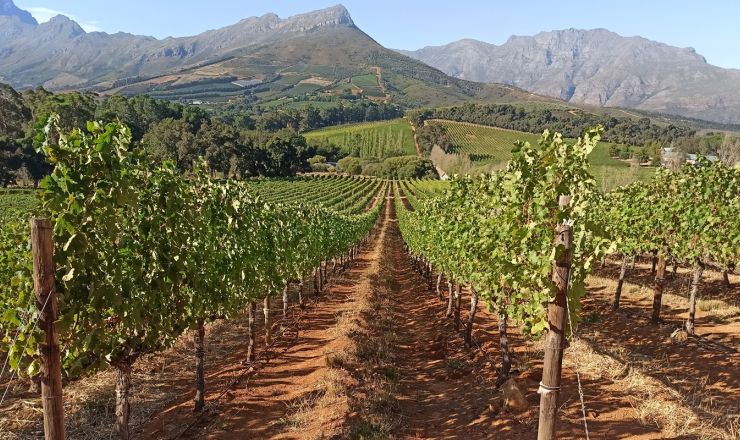
How vine water stress shapes grape and wine quality
This study formed part of the South Africa Wine programme “Grapevine production with limited water resources”, and aimed to evaluate how spatial and temporal water stress affects vine physiology, fruit composition and wine quality.