
PhenoLAB can help you make better red wine
The aim of this project was to develop rapid, accessible phenolic analysis methods and to create a platform where results could be stored, visualised, and meaningfully compared with other red grape and wine samples.
Wessel du Toit and José Luis Aleixandre-Tudo
· 7 min read

The importance of phenolic compounds in red wine is well established. However, these compounds are often not routinely measured in grapes, during fermentation, or throughout the ageing of red wines. Two main factors contribute to this situation. First, the analytical complexity of phenolic measurements frequently discourages producers from undertaking such analyses. Second, the lack of a suitable reference database against which grape or wine samples can be compared makes the interpretation of phenolic results challenging. As a result, phenolic data are often perceived as difficult or impractical for decision-making in the cellar.
To address these challenges, South Africa Wine funded a collaborative project involving Dr José Luis Aleixandre-Tudo and Prof Wessel du Toit of the South African Grape and Wine Research Institute at Stellenbosch University. The aim was to develop rapid, accessible phenolic analysis methods and to create a platform where results could be stored, visualised, and meaningfully compared with other red grape and wine samples.
Following an extensive research programme in which thousands of grape and wine samples were analysed, the PhenoLAB platform was developed. PhenoLAB is a web-based platform that facilitates both the measurement and interpretation of phenolic data in red grapes and wines. It allows for the analysis of grape samples, as well as wines during and after alcoholic fermentation.
Unlike traditional phenolic analyses, which are often time-consuming, costly, and reliant on commercial laboratories, PhenoLAB provides wine producers with a fast and flexible alternative. Phenolic results are generated from a limited number of spectrophotometric measurements and converted into actionable data using validated, optimised prediction algorithms.
By allowing analyses to be performed either in the producer’s own cellar or via an affiliated laboratory, PhenoLAB places critical phenolic information directly in the hands of winemakers – when it matters most for production decisions.
Using PhenoLAB, South African wine producers or commercial laboratories can now routinely quantify and interpret anthocyanins, tannins, polymeric pigments, total phenolics, and colour density in grapes and wines. These parameters are essential for understanding colour development, extraction, mouthfeel and long-term colour stability.
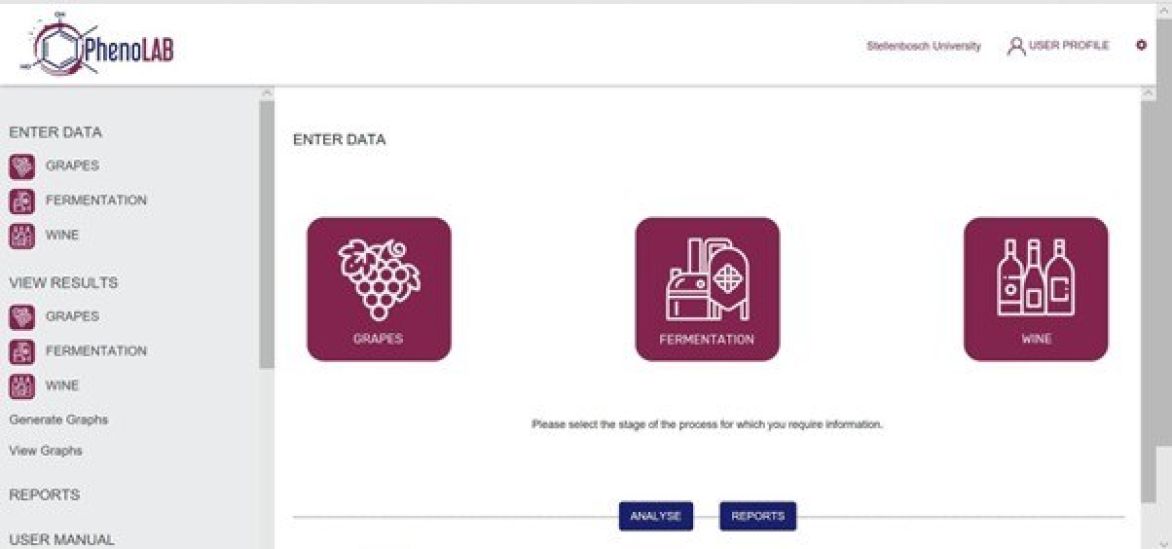
FIGURE 1. The platform’s main page, which facilitates entry and interpretation of grapes, fermenting must and wine is shown.
A major advantage of the platform is speed. Once absorbance values are measured and uploaded, phenolic concentrations are generated almost immediately. This eliminates the long turnaround times associated with conventional wet chemistry or HPLC-based methods, allowing winemakers to respond rapidly during grape ripening, fermentation and ageing.
In addition, PhenoLAB provides access to polymeric pigment levels – an important indicator of colour stability in red wines. This measurement typically requires specialised HPLC analysis, which is rarely accessible or cost-effective through commercial laboratories. PhenoLAB therefore provides producers with advanced analytical insight that was previously difficult to obtain routinely.
The ability to conduct phenolic analyses in-house gives wine producers greater autonomy and scalability. Frequent sampling, previously limited by cost, becomes feasible, enabling closer monitoring of phenolic development throughout grape ripening and fermentation.
To ensure analytical reliability, the platform includes built-in spectrophotometer calibration requirements. Spectrophotometric instruments must be calibrated before data uploads are accepted, and users are alerted when recalibration is due. This quality control safeguards data integrity, while requiring minimal administrative effort from the producer.
Beyond generating numerical results, PhenoLAB’s value lies in how phenolic data are contextualised and interpreted. Results can be visualised using interactive graphs and tables that clearly show trends, comparisons and ranges.
Wine producers can benchmark their samples against their own historical data, data from selected cultivars, regions or vintages, or a large and growing South African database of phenolic measurements.
This comparative capability allows producers to quickly identify whether grape or wine phenolic levels are low, average, or high relative to industry norms. Such insight is rarely available when using standard commercial laboratory reports, which typically provide isolated results without broader context. However, user data is still kept confidential among users, with only ranges or averages being shown to protect the data of individual producers.
For grapes and fermenting musts, trend charts enable real-time monitoring of phenolic evolution. For wines, comparative bar graphs facilitate evaluation of extraction success, blending options, or ageing potential.
Figure 2 shows an example of a producer’s Pinotage grape tannin data collected at two different sampling dates in February. The results are compared with the average Pinotage grape tannin values and the overall range available on the PhenoLAB platform. The data indicate that tannin levels in the producer’s Pinotage grapes increased between the two sampling dates; however, they remained below the average Pinotage grape tannin levels recorded in the platform database.
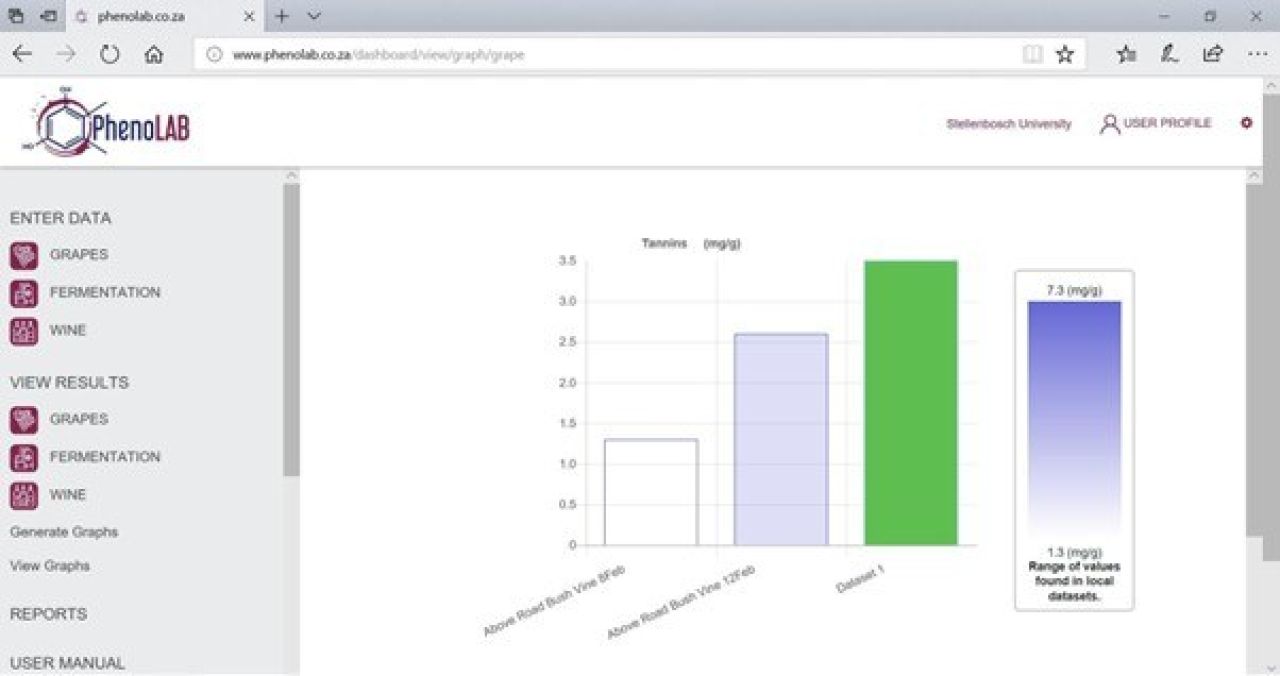
FIGURE 2. Tannin data of Pinotage grapes analysed on the 8th and 12th of February, with PhenoLAB, can be seen. The green bar indicates the average grape Pinotage data on the platform, and the range of the highest and lowest levels of grape Pinotage data stored on the platform.
PhenoLAB thus supports informed decision-making across multiple stages of winemaking. Optimising harvest timing using phenolic maturity in addition to sugar content, and supporting more accurate evaluation of red grape quality, where price is influenced by more than just Balling and acidity levels. Adjusting fermentation and maceration strategies to achieve the desired tannin and colour profiles, while evaluating pressing regimes and overall extraction efficiency, can now also be improved. PhenoLAB can also enhance ageing strategies and better identify wines for earlier release. PhenoLAB also supports improved blending decisions and provides additional quality parameters and specifications that enhance price determination when purchasing bulk red wines.
In a practical case study, a winery tracked tannin accumulation in Cabernet Sauvignon wines pressed at different fermentation stages. The data revealed that later pressing resulted in significantly higher tannin levels. Based on this insight, the winery adjusted its pressing regime, producing wines with a quicker, softer mouthfeel that could be released sooner, demonstrating a direct commercial benefit of phenolic monitoring.
Every analysis performed on PhenoLAB strengthens the platform. New results are automatically added to the database, which already includes hundreds of grape samples, and thousands of fermenting must and wine samples. This creates a dynamic, continuously evolving reference set that benefits all users.
As the database expands, comparisons become more robust, increasing the platform’s value for producers seeking to benchmark their wines in a broader industry context.
PhenoLAB was intentionally designed to be user-friendly and accessible. Clear instructions guide users through sample preparation, data entry and result interpretation. Data can be exported for internal reporting, further analysis, or archiving, and graphs can be easily generated and saved.
While personal onboarding has been valuable in early adoption, the long-term goal is a fully independent, standalone platform that producers can integrate seamlessly into their routine quality control and decision-making processes. Support is also available to help producers set up basic laboratory infrastructure where required.
PhenoLAB provides the wine industry with a practical, cost-effective solution for routine phenolic analysis. By combining rapid measurements, advanced prediction models, intuitive visualisation tools and a comparative database, the platform transforms phenolic data into meaningful, actionable knowledge.
For wine producers, this means better control over grape quality, fermentation outcomes, wine style and release timelines. Ultimately, PhenoLAB enables more informed decisions, improved product consistency, and greater competitiveness in the market. PhenoLAB’s development demonstrates how applied research can strengthen the competitiveness of the South African wine industry. For further information, visit the website of PhenoLAB: www.phenolab.co.za. The South African Grape and Wine Research Institute at Stellenbosch University now also offer phenolic analyses for producers using the PhenoLAN platform.*
Acknowledgement
South Africa Wine for funding.
* This article has been written with the assistance of Copilot.
For more information, contact Wessel du Toit at [email protected].
Click here to get your copy of WineLand Magazine.

More from
Innovation and insights

Packaging under pressure: What wine businesses should be watching
From lighter bottles to automated packing lines, packaging decisions are becoming increasingly important to the cost and competitiveness of South African wine.
How vine water stress shapes grape and wine quality
This study formed part of the South Africa Wine programme “Grapevine production with limited water resources”, and aimed to evaluate how spatial and temporal water stress affects vine physiology, fruit composition and wine quality.
Drought tolerance of different scion cultivars (Part 4): Vegetative growth and yield
The study aimed to assess grapevine vegetative and yield responses in an almost worst-case scenario, i.e. grapevines growing under dryland conditions in sandy loam soil in the Swartland region.