
Local producer has Africa’s most advanced Perlite filter aid facility
· 3 min read
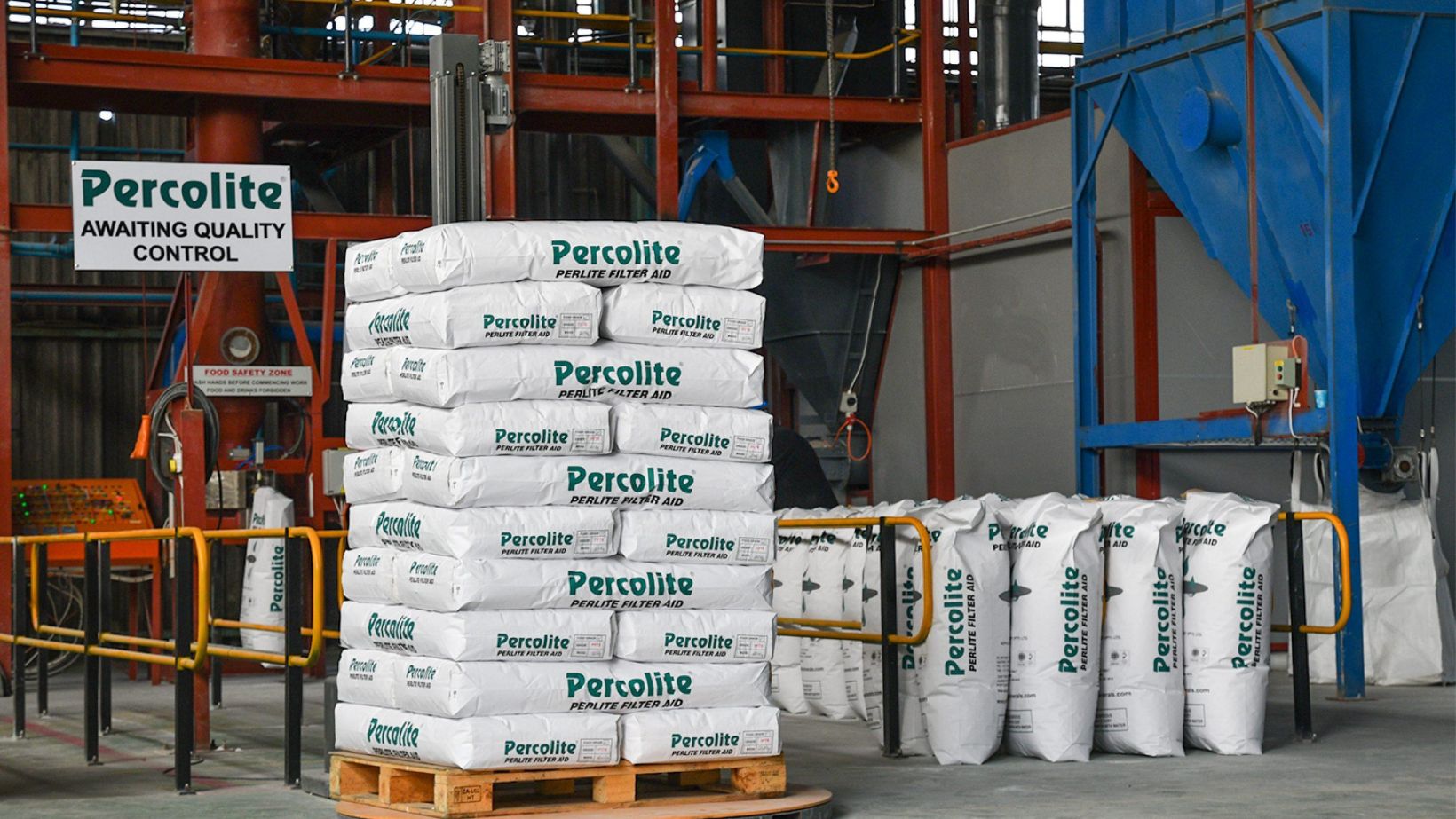
Percolite® filter aid from Pratley is ideal for a range of filtration applications involving the separation of liquids and solids. These applications range from oils, wine and beverages to pharmaceuticals, chemicals and industrial filtration applications where solid and liquid separation is required.
Percolite producer Pratley has a dedicated, state-of-the-art filter aid production facility that represents the most advanced plant on the continent. Here proprietary technology is used to process Perlite raw material to ultimately produce an extremely high-quality filter aid.
Perlite is a unique, naturally occurring vitreous volcanic lava rock. The crushed material is expanded in a furnace at 950˚C to produce millions of tiny hollow bubbles. The high temperature also means that the filter aid is completely inert and sterile. It also does not impart any colour, taste, or odour into the filtrate.
These bubbles are then carefully milled using specialised production methods and accurately classified to produce the various Percolite grades. The unique interlocking structure of Percolite forms a myriad of microscopic interparticle channels, ensuring the product efficiently removes particulate material from the filtrate. The main advantage of Percolite filter aid is a high flow rate combined with exceptional clarity.

“The accurate size classification and the unique structure of Percolite filter aid leads to one of the highest flow rate to clarity ratios possible,” highlights Pratley marketing director Eldon Kruger. “The fundamental problem of filtration is to maximise two desirable yet conflicting parameters, namely clarity and flow rate. Percolite achieves just that.”
The Percolite manufacturing process is ISO 9001-2015 certified. In addition, Percolite meets the standards listed in the food chemicals codex published by the US National Academy of Sciences. Pratley Percolite also holds Halaal certification and the company is a member of the International Perlite Institute.
In addition, Pratley has a cutting-edge R&D laboratory supervising quality control of the end product. Sophisticated test equipment includes a laser particle size analyser, turbidity meters, X-ray diffractometer, scanning electron microscopes, viscometers, an atomic absorption spectrometer, Fourier transform infrared spectrometer and filtration flow rigs. This equipment not only ensures stringent quality control but also allows Pratley to thoroughly analyse customer liquids in order to recommend the most suitable Percolite grade for the job.
Percolite filter aid ranges from fine grades for absolute clarity to coarser grades with fast flow rates for maximum productivity. Grades can be manufactured and tested to meet unique customer-specific requirements. Percolite may be used in almost any industry requiring fine liquid/solid separation:
Food & beverage: Wine, oil, starch, beer, glucose, fruit juice, syrup | Pharmaceutical: Antibiotics, enzymes, Epsom salt | Chemicals: Acids, resins, polymers, adhesives, hydrolysed vegetable protein | Industrial: Water treatment, oil and solvent recovery, industrial fillers, heavy metal solutions, industrial chemicals, platinum-bearing solutions, copper-cobalt-nickel solutions, titanium solutions, electroplating solutions, dry cleaning | Coatings and paint: Varnish, waxes, gums, textured paints, oils, polishes | Environmental: Oil and petrochemical clean-up, water filtration.
Pratley has supply depots located in Gauteng, Cape Town, Durban and Port Elizabeth offering countrywide sales and support. The product is professionally packed and supplied in food-safe paper packaging.
Connect with Pratley on either on Facebook or Twitter to receive the company’s latest news.

More from
Innovation and insights
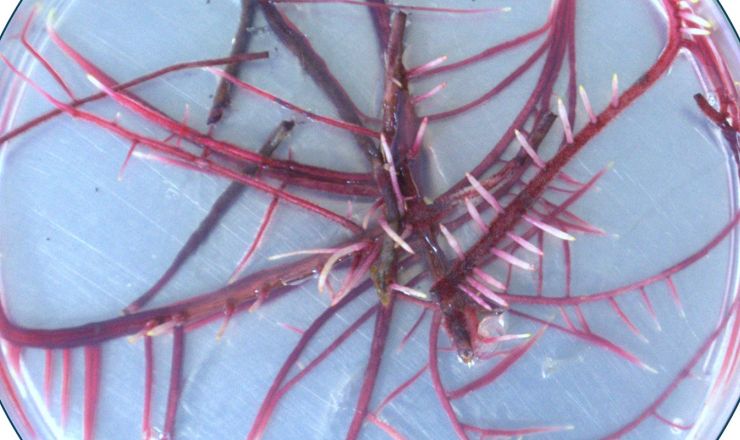
Hairy roots - a biotechnological tool for grapevine improvement
Hairy roots arise when the phytopathogenic bacterium, Rhizobium rhizogenes inserts DNA into a wounded plant’s genome, triggering the formation of rapidly growing root masses. The rapid growth and relatively fast establishment of hairy roots led to their use in laboratories, where they are used to…
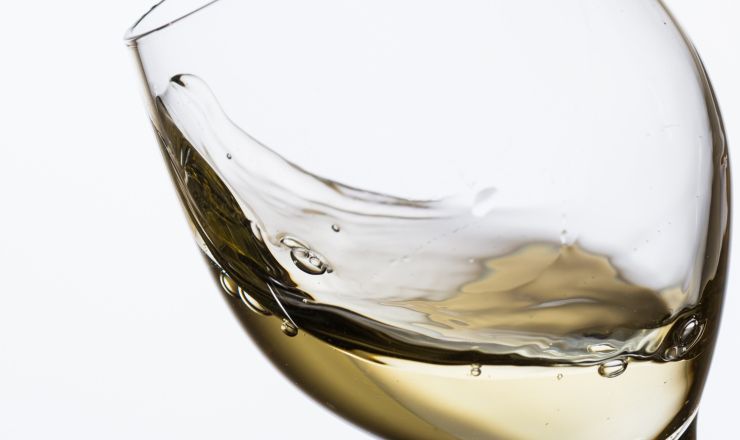
To swirl or not to swirl? - that is the question... (Part 2)
This study investigated the sensory suppression effects of H2S on tropical fruit characters and evaluated whether the perceived improvement following swirling is a result of chemical oxidation or physical volatilisation.

Q&A with Jose Luis Aleixandre-Tudo
Jose Luis Aleixandre-Tudo is an Associate Professor in the Department of Food Technology at the Universitat Politècnica de València, Spain, and an Extraordinary Senior Lecturer in the Department of Viticulture and Oenology at Stellenbosch University, South Africa.