
Shear-enhanced flotation separation to treat winery wastewater
· 6 min read
Abstract
Wineries generate variable wastewater effluent that could be costly to treat and difficult to discharge or reuse. A shear‑enhanced flotation separation (SEFS) process – combining hydrodynamic shear, coagulation, flocculation and dissolved air flotation was designed, developed and piloted to address this challenge using winery wastewater. Under optimised conditions, SEFS achieved approximately 99% reductions in turbidity and total suspended solids (TSS) and a 66% reduction in chemical oxygen demand (COD) at pilot scale, outperforming conventional air flotation techniques. Although SEFS utilises more energy than other floatation techniques, it uses ~40 - 45% less coagulant and ~35 - 40% less flocculant as compared to dissolved air flotation (DAF), with an overall 10% net increase in cost per cube of wastewater processed that may be offset by improved downstream processing and compliance. Treated water quality is suitable for certain reuse pathways, while the concentrated solids stream (froth) is produced for potential valorisation pending agronomic evaluation. The technology provides a practical option for wineries seeking reliable primary treatment that stabilises operations and reduces load on biological or membrane polishing steps.
The importance of the SEFS technology
The production and disposal of wastewater in the wine industry have long been a subject of concern. Traditional treatment methods, such as sedimentation and DAF, have proven to be inadequate. As a result, innovative approaches are currently being assessed to address both cost considerations and compliance with municipal discharge regulations. Winery wastewater typically exhibits low pH, high organic content, and substantial concentrations of suspended solids. The volume and characteristics of this effluent can fluctuate significantly based on seasonal variations and cellar activities, creating challenges for achieving consistent and reliable plant performance. Inadequately treated wastewater can result in environmental and regulatory non-compliance, potentially leading to fines. Furthermore, ineffective processing may generate community and environmental concerns due to unpleasant odours and possible contamination risks. To mitigate these challenges, the industry requires compact, user-friendly primary treatment solutions capable of rapidly removing solids and turbidity, reducing chemical oxygen demand (COD) prior to biological or membrane processes, and producing water suitable for reuse or discharge.
SEFS as a technology
SEFS is a flotation process distinguished by its unique high shear mixing adaptation. The most widely utilised flotation methods for wastewater treatment are dissolved air flotation (DAF) and induced air flotation (IAF), with DAF serving as the industry benchmark for eliminating low-density suspended solids and contaminants that are either too light to settle or possess a density similar to that of water. These techniques demonstrate high efficiency in separating such contaminants. Consistent with conventional flotation practices, coagulants and flocculants are introduced to facilitate the aggregation of contaminants and their attachment to minute air bubbles, which subsequently rise to the surface as froth for removal and collection. The shear-enhanced component employs a stator/rotor mixer to generate controlled turbulence, thereby destabilising colloids, forming more robust flocs and improving bubble-particle attachment.
What was done
A SEFS pilot system was developed and implemented for winery wastewater treatment. The process commenced with lime alkalisation to adjust the pH to 8 - 9, followed by shear mixing, addition of an aluminium-based coagulant, gentle flocculation and microbubble flotation. Operational parameters were determined through laboratory optimisation, including rotor-stator shear rates established at 3 250 - 4 000 rpm, coagulant dosing to achieve near-zero zeta potential, and flocculant dosing calibrated to maximise TSS and turbidity removal without overdosing. Benchmark trials were conducted to compare conventional DAF, which lacks shear, with the SEFS system, which incorporates shear. Standard methods were employed to assess pH, electrical conductivity, turbidity, TSS and COD, ensuring that shear mixing, coagulation, flocculation and microbubble flotation processes were consistently optimised from laboratory to pilot scale. System performance was evaluated against traditional DAF benchmarks.
Key results
The primary outcomes of the SEFS process and its related trials focused on evaluating the removal efficiency of suspended solids and dissolved organics, the quality of processed water, and the potential applications of the resulting froth in additional agricultural processes. The following findings were observed during the study of winery wastewater treatment.
Solids and clarity: SEFS cut TSS by 99% (≈2 620 → 17 mg/L) and turbidity by 99.6% (≈849 → 3 NTU). DAF also performed well, but not as strongly (TSS ≈ 75 mg/L; turbidity ≈ 35 NTU). Clearer water improves downstream stability and overall odour control. A visual comparison of wastewater treatment is presented in Figure 1.
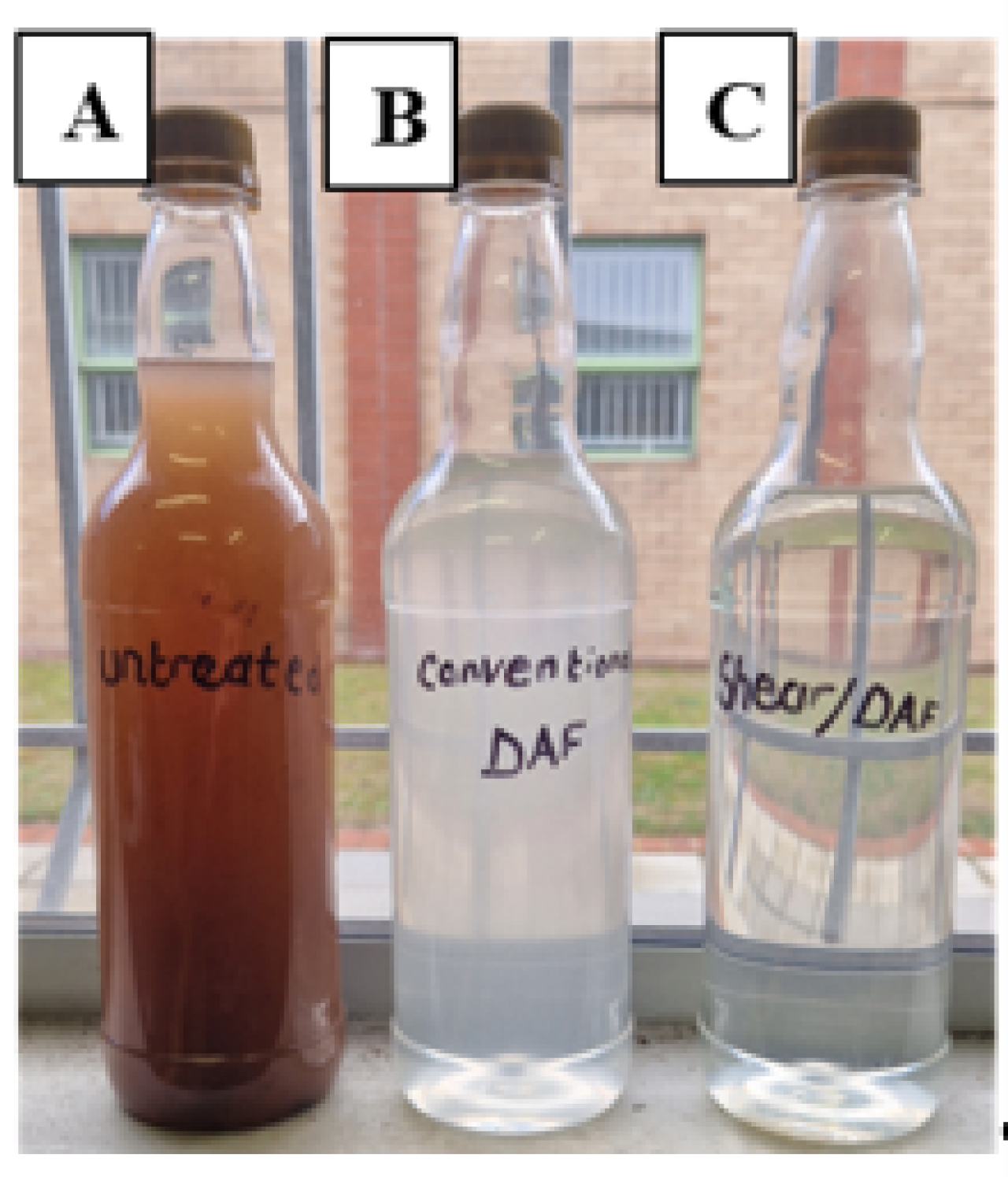
FIGURE 1. Visual comparison between (A) Untreated, (B) Conventional DAF, and (C) SEFS-treated wastewater. Chemical oxygen demand: SEFS reduced COD by approximately 66% (≈11 140 → 3 800 mg/L) versus approximately 51% for DAF.
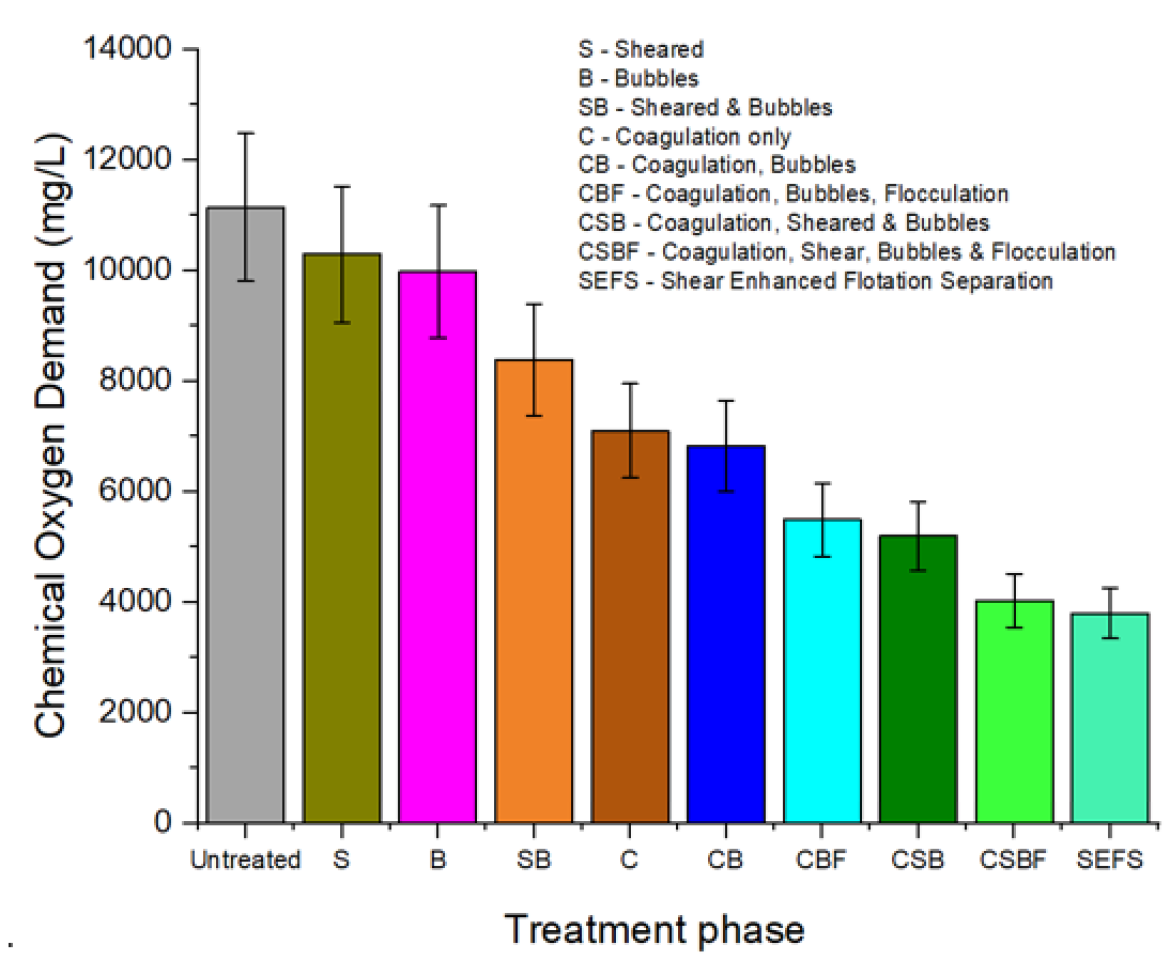
FIGURE 2. Chemical oxygen demand as a function of treatment stages.
Chemicals and energy: Relative to DAF, SEFS used approximately 45% less coagulant and approximately 40% less flocculant, thanks to shear-driven aggregation and improved bubble capture. Energy use was higher (≈1.1 vs 0.6 kWh/m³). In the study, this translated to an operating cost difference (≈R2.50 vs R2.29 per m³ at 2023 electricity prices), which may be offset by lower downstream costs and better overall environmental compliance.
Water reuse potential: After SEFS, water quality was compatible with non-potable reuse (e.g., floor washing) and within general authorisation limits, with irrigation up to 50 m³/day, where COD allowances are higher (400 - 5 000 mg/L depending on volume band). Site-specific checks remain essential.
Solids (froth): SEFS produces a concentrated solids fraction. The nutrient content of wastewater-processed samples indicates potential for soil application, but further agronomic studies are required before it can be positioned as a fertiliser or soil enhancer.
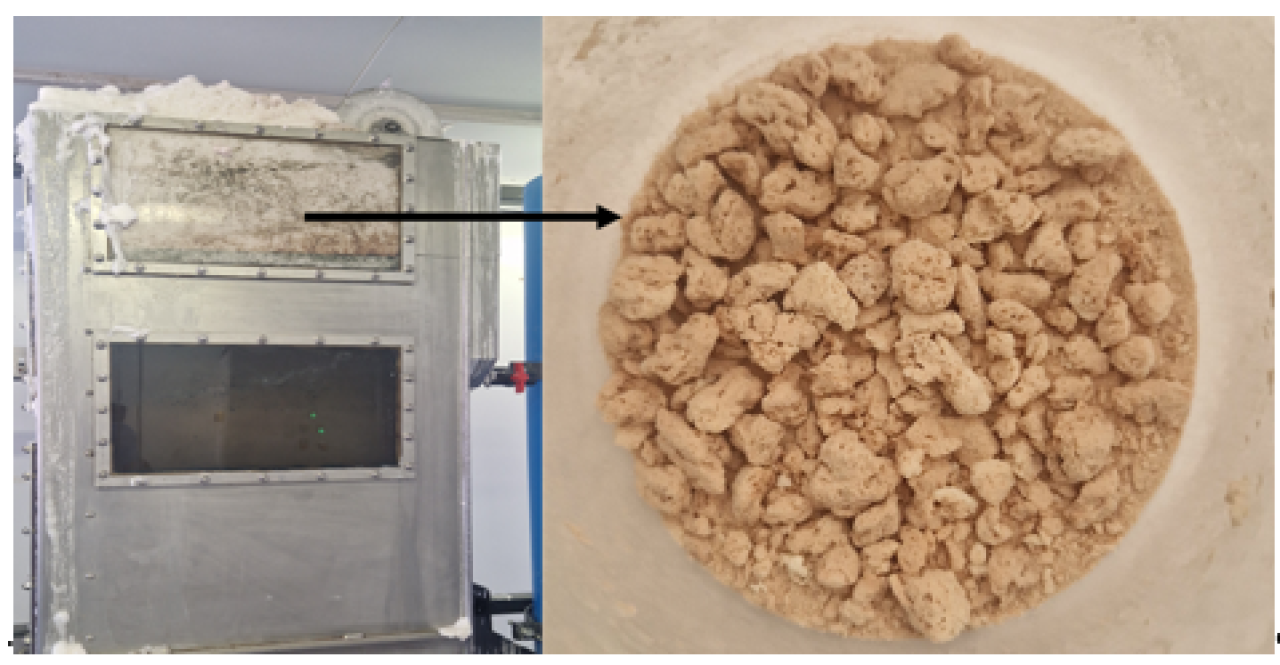
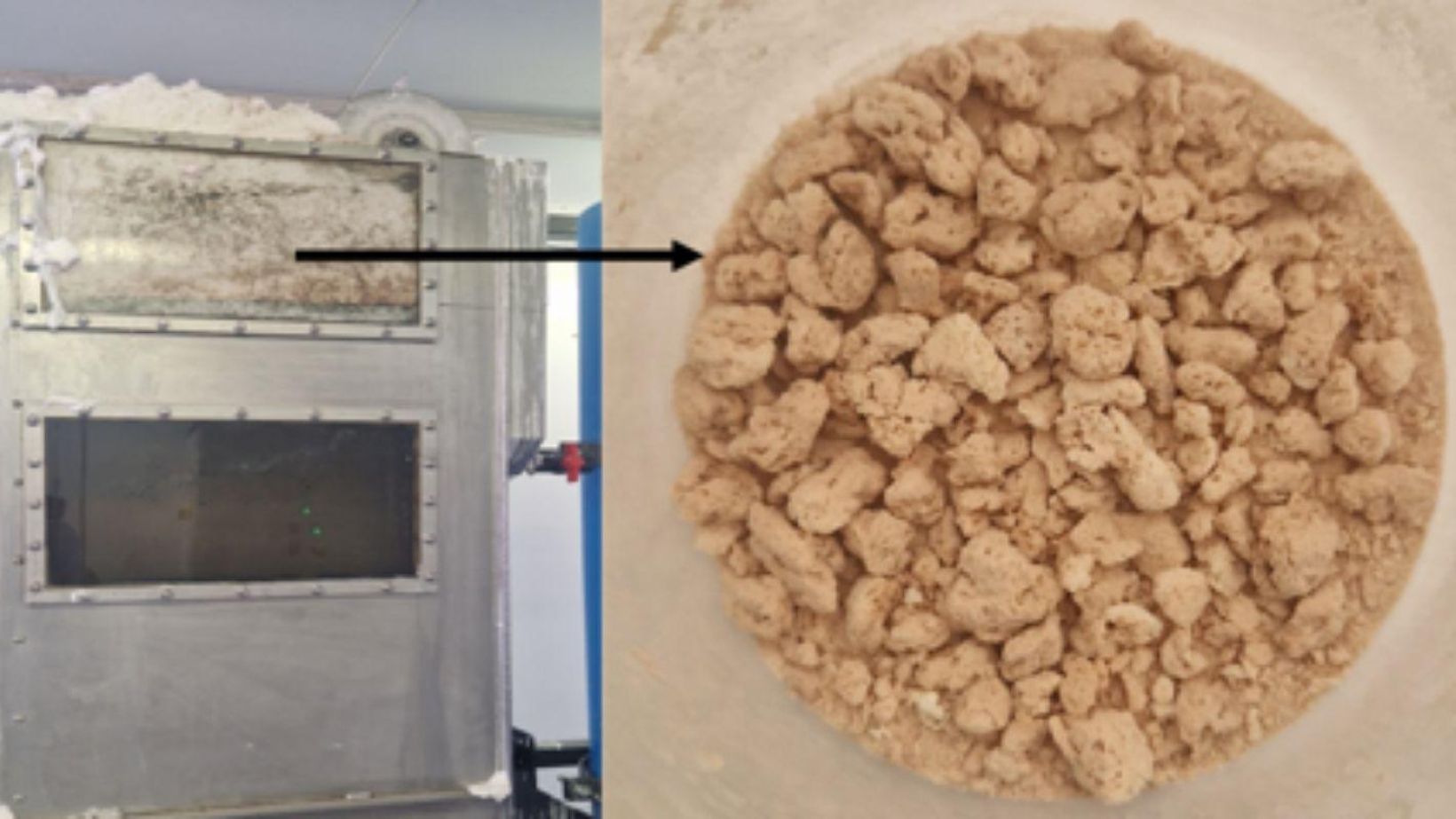
FIGURE 3. Froth is produced during the SEFS treatment process.
What does it mean for the cellar?
SEFS enables faster and more reliable primary wastewater treatment by effectively removing contaminants that are difficult to settle, thereby enhancing the performance of biological ponds and membrane systems during periods of peak vintage variability.
This process supports improved environmental compliance by reducing total suspended solids (TSS), turbidity and chemical oxygen demand (COD) entering secondary treatment stages, which helps facilities consistently meet discharge and reuse standards.
The approach entails reduced chemical use and a slight increase in energy consumption, yielding potential reagent savings and a modest energy premium. The overall economics of plant operations depend on local tariffs, penalties for non-compliance, and efficiencies gained in downstream processes. In case studies involving wineries, higher non-compliance penalties have demonstrated a favourable return on investment for flotation system upgrades.
Take-home message
SEFS provides wineries and cellars with an efficient and dependable solution for upgrading primary treatment processes. The system ensures effective clarification of complex wastewater, alleviates demands on secondary treatment stages, and increases possibilities for water reuse. With the implementation of SEFS, wineries can improve odour management, strengthen regulatory compliance, and maintain operational stability throughout the vintage cycle.
For more information, contact Bradley Cerff at [email protected].
Click here to get your copy of WineLand Magazine.

More from
Innovation and insights

Packaging under pressure: What wine businesses should be watching
From lighter bottles to automated packing lines, packaging decisions are becoming increasingly important to the cost and competitiveness of South African wine.
How vine water stress shapes grape and wine quality
This study formed part of the South Africa Wine programme “Grapevine production with limited water resources”, and aimed to evaluate how spatial and temporal water stress affects vine physiology, fruit composition and wine quality.
Drought tolerance of different scion cultivars (Part 4): Vegetative growth and yield
The study aimed to assess grapevine vegetative and yield responses in an almost worst-case scenario, i.e. grapevines growing under dryland conditions in sandy loam soil in the Swartland region.