
UNIDO project grant drives change
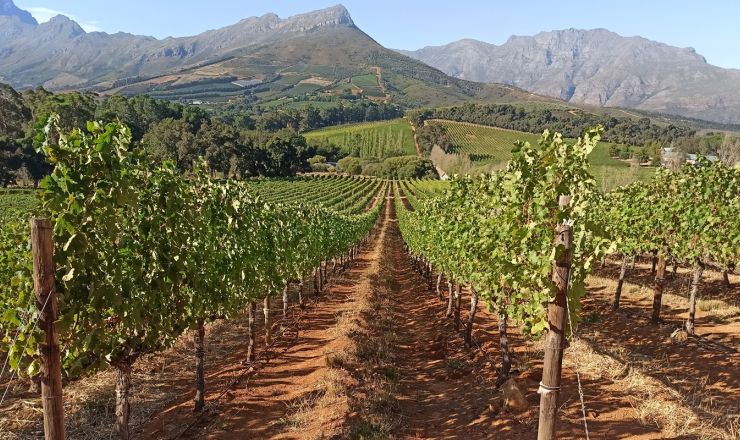
Reyneke Wines was one of four South African companies to receive grant support last year from the South African Industry Adaptation (SAIA) project implemented by the the United Nations Industrial Development Organization (UNIDO).
· 4 min read
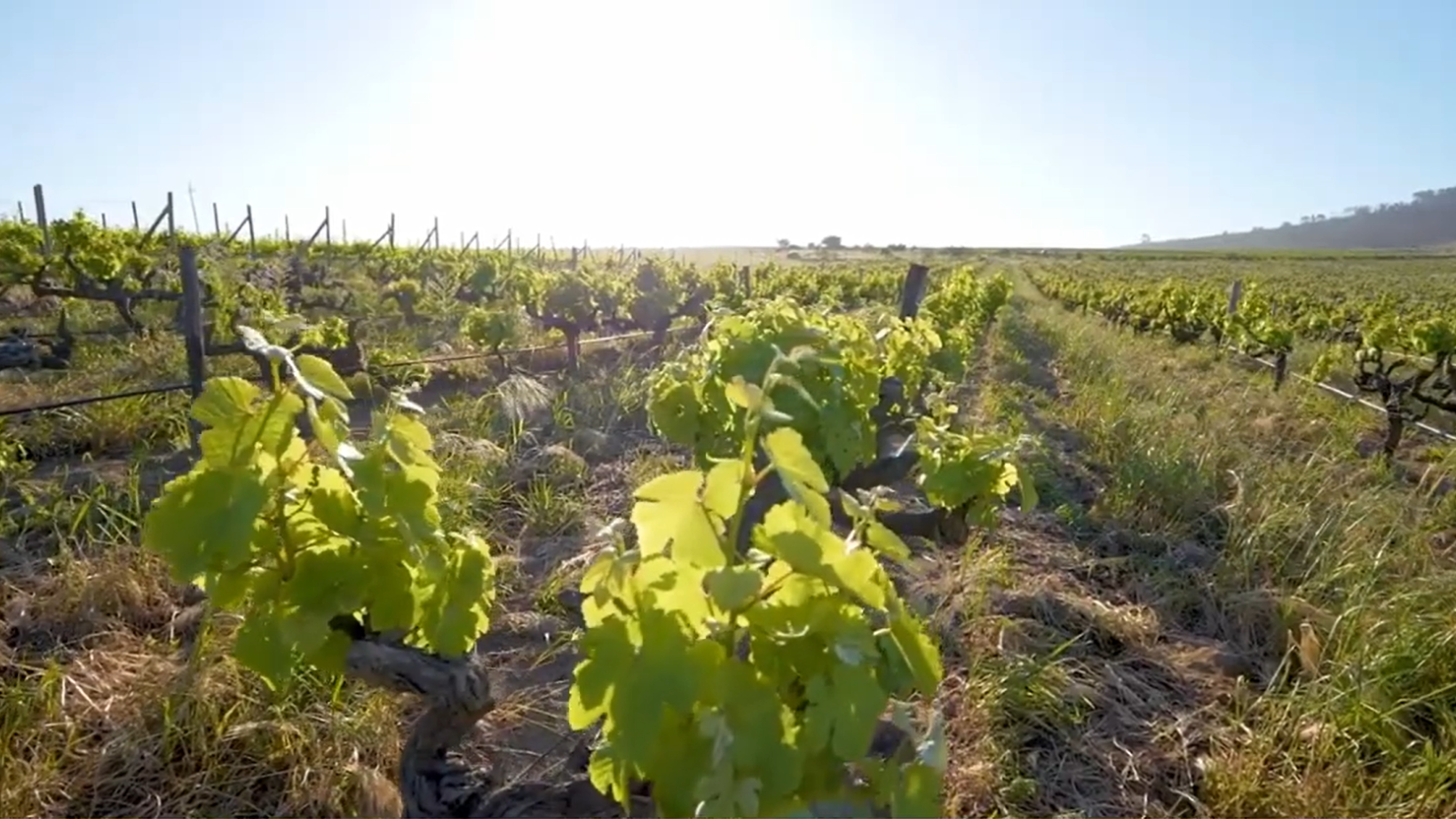
Reyneke Wines was recently one of four South African companies selected to receive grant support through the South African Industry Adaptation (SAIA) project, which is implemented by the United Nations Industrial Development Organisation (UNIDO) in collaboration with the National Cleaner Production Centre of South Africa (NCPC-SA) and the Technology Innovation Agency (TIA).
The project is funded by the Government of Flanders, and focuses specifically on water-energy nexus projects in the agro-processing sector, with the intention of sharing and replicating the learnings. Its overarching aims are to strengthen climate resilience, protect the environment and natural resources, respond to changing climate challenges, and prepare for the future.
“We discussed our land-caring and land-sharing approaches with the SAIA team,” Johan says. “They agreed to assist us in both the vineyard and cellar, reflecting the project’ focus on energy and water.”
“The secret of change is to focus all of your energy, not fighting the old, but on building the new.” – Socrates
Efficient viticulture
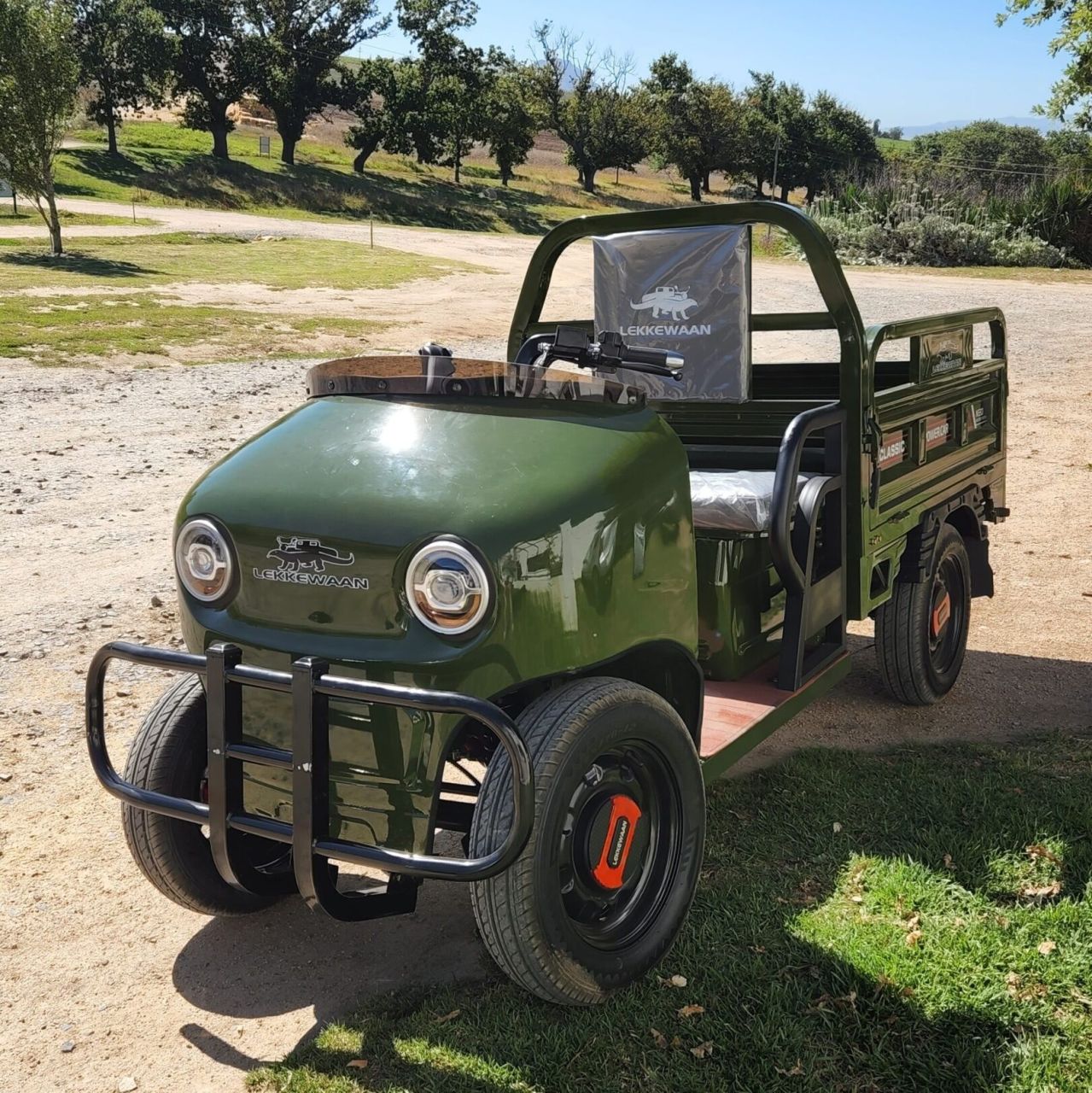
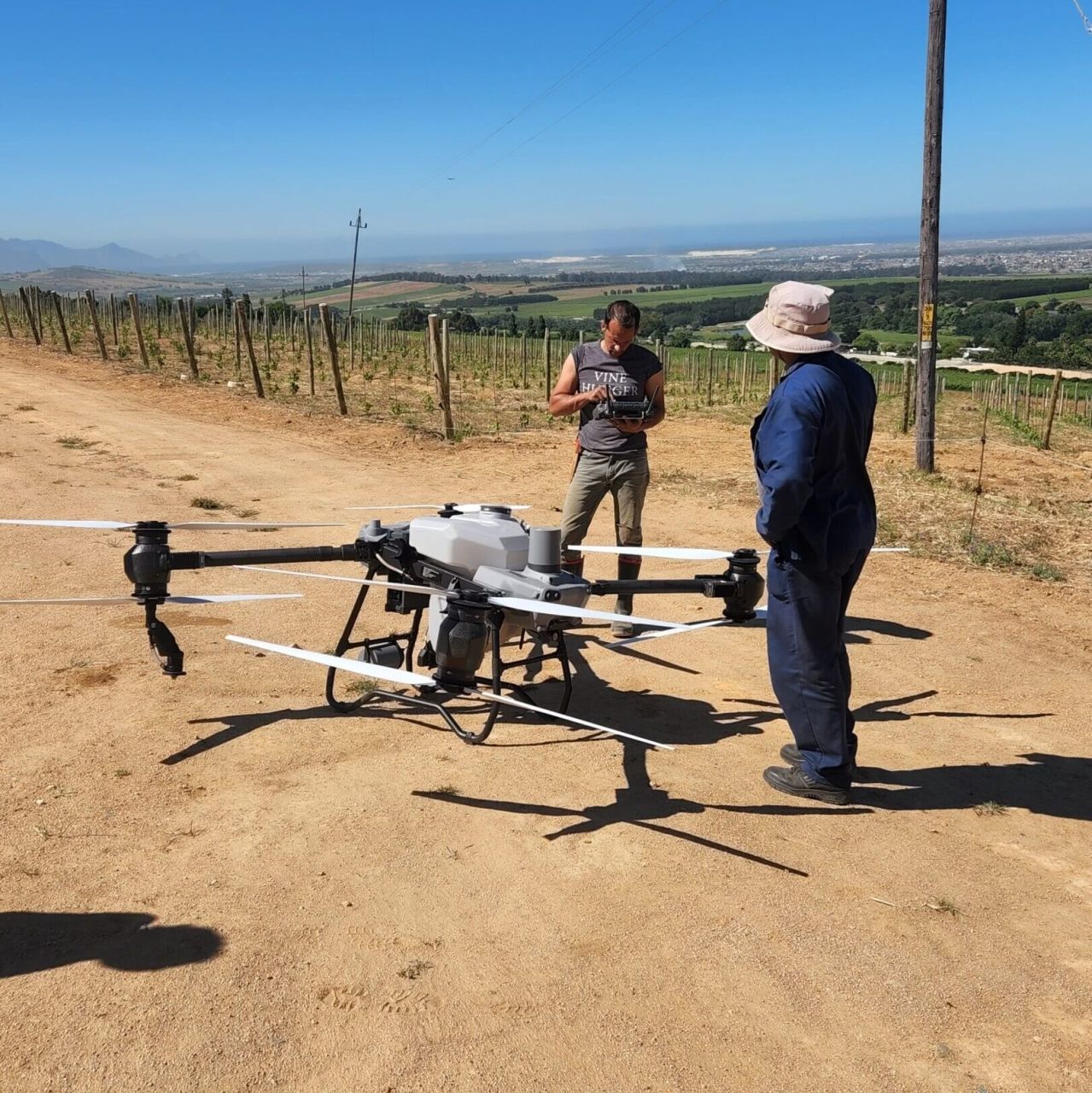
To reduce the energy use on the farm, the SAIA project provided grant funding to co-finance a drone and an electric vehicle for the farm. “The idea is to reduce our dependence on the bakkie and tractor, thereby reducing our carbon footprint and allowing us to farm more efficiently,” Johan says.
The drone is being employed to spray young vineyards. “It works like a charm. It’s fast, and there’s no soil compaction.”
“There will always be work for a tractor on any farm, but vehicles are often only used to get from point A to point B. The electric vehicle and drone are much cheaper to operate than a diesel-guzzling tractor.”
Building a sustainable cellar
Reyneke Wines is a rapidly growing business, and their existing cellar is no longer sufficient to accommodate the grapes coming in. A new cellar is therefore being planned to start production in 2027, and this presented another opportunity for conservation.
The team identified a nearby estuary which could potentially be impacted by wastewater from the cellar and nearby households. The SAIA project agreed to fund a portion of a bioreactor to process this effluent. Reyneke Wines has contracted Andrew Hulsman of HWT to start working on the bioreactor and to help plan the drainage and floors of the new cellar.
“The reactor will purify the water enough that it can be reused or released without impacting the environment,” Johan says. “It’s incredible to see a UN-implemented project supporting a farm in South Africa this way.”
The local architects will also be supported by a Danish firm that specialises in sustainable architecture. The goal is to use (and reuse) as much locally available material as possible, while incorporating some of the farm’s existing sustainability practices.
Sharing their lessons
Johan says the sentiment has changed notably over the past 25 years. “There was a lot of scepticism in the beginning. People said it wasn’t possible or desirable. People are more positive now and are ready to start taking action. This gives me hope.”
The SAIA grants show that Johan’s hopes aren’t misplaced. Reyneke Wines has attracted the attention of like-minded business and organisations working towards the same goals.
“I want to acknowledge Wihan Bekker and Jean Pierre du Plessis of ADTech, who brought the programme to our attention and encouraged us to enrol, not to mention Lucy Gibbons, who did much of the background work. Vinimark’s senior sustainability manager, Siglinda Lösch, was also very involved in achieving this outcome,” Johan says.
“We’re proud to be leading the charge and are immensely grateful for the recognition.”
Reyneke Wines hosted members of UNIDO South Africa last year, ahead of SAIA’s Conference on Climate Adaptation, to share some of the work they’ve been doing to mitigate climate change in viticulture and agriculture.
WATCH

More from
Innovation and insights
Safeguarding agricultural biosecurity through insect diagnostics
Insect diagnostics are managed through the Plant Disease Clinic (PDC), based at Stellenbosch University, and have emerged as a critical advisory service for South African agriculture. This article outlines the scope of samples analysed by the PDC, the services it provides and the role it will play…

Packaging under pressure: What wine businesses should be watching
From lighter bottles to automated packing lines, packaging decisions are becoming increasingly important to the cost and competitiveness of South African wine.
How vine water stress shapes grape and wine quality
This study formed part of the South Africa Wine programme “Grapevine production with limited water resources”, and aimed to evaluate how spatial and temporal water stress affects vine physiology, fruit composition and wine quality.