
Changing of the GUARD
· 5 min read
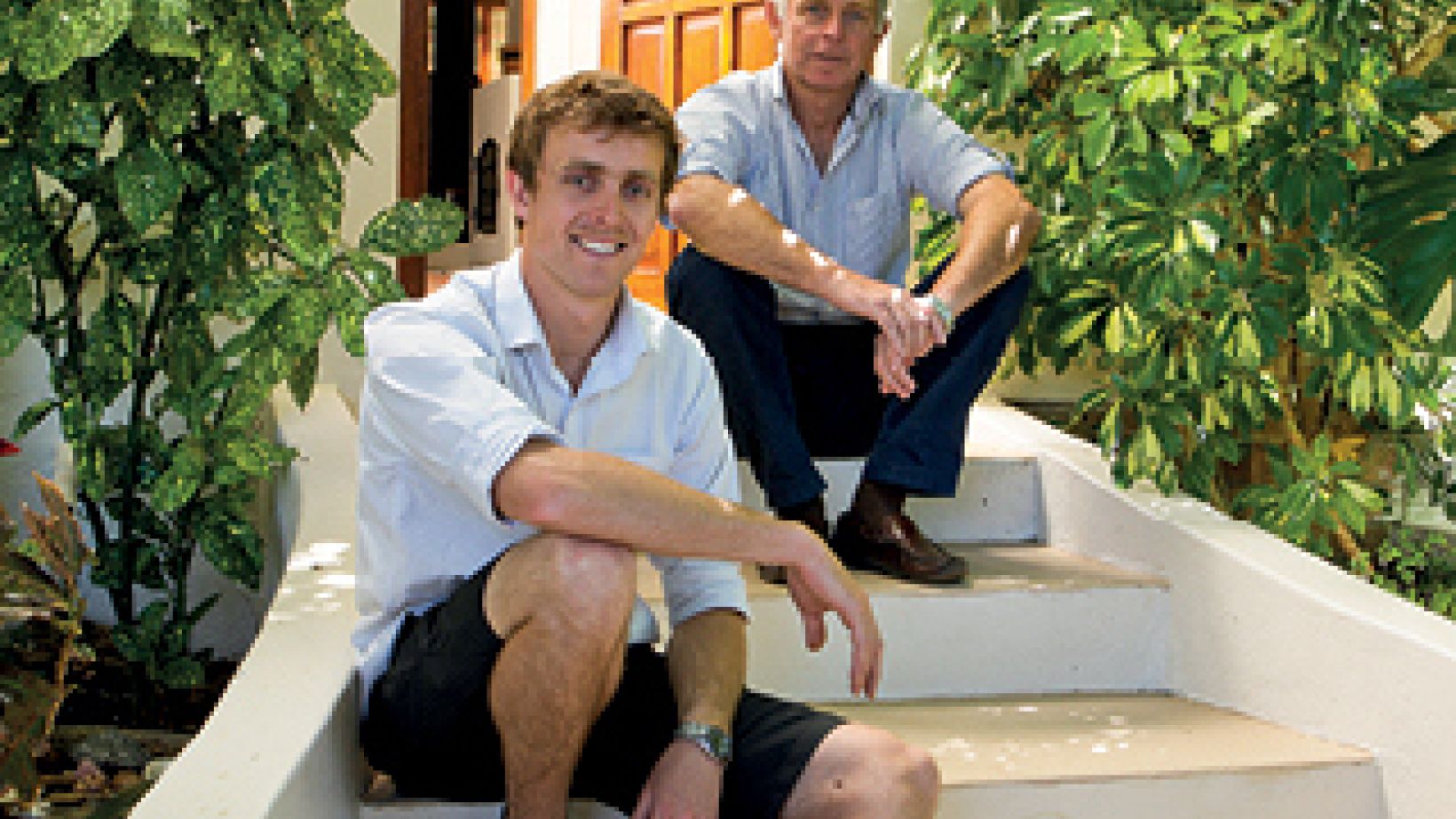
A winemaking legacy passed on from one generation to the next is not only a great tradition but also ensures the transfer of knowledge.
You need look no further than South Africa’s rich and diverse winelands for proud winemaking legacies. Over the years the South African wine industry has been subjected to political turmoil, volatile exchange rates and underperforming wine prices. But there are many success stories and for some their strength lies in the winemaking heritage, tradition and knowledge passed on by a parent.
Le Riche Wines winemaker Christo le Riche has fond memories of his childhood and spending time with his dad, Etienne. “I grew up on a wine farm and remember always being around vines, cows and sheep,” he says. “Back then farming was much more diversified, but if I helped my dad it was often in the winery. This was out of choice and I was never pressured by him to pursue a career in winemaking. I finally decide to become a winemaker when I was 16.”
Mentorship is key
Christo says his dad played a big role in mentoring him. “But besides my dad’s mentorship, I also got immense value in terms of his outlook on life. He’s well known for his gentle personality and being soft spoken, but when he talks people listen. He also thinks things through and takes time to make important decisions. These characteristics serve you well when producing wine. It also helps you to be patient while waiting for nature to take its course. And then, when a decision is made, it can be made with confidence.”
When it comes to general decision making in the cellar, father and son are in sync. “We tend to approach things in the same way,” Christo says. “For instance, we’re both proponents of open cement tanks and not fiddling with wine too much. This allows the vines to show their character. But with vineyard management I have a more modern approach and am very involved with my producers. This is an area where we can take the next step towards quality and make sure our wines can reach the next level.”
Hard work and teamwork
Opstal Estate head of winemaking and marketing Attie Louw remembers his dad, Stanley, as being a “grafter”. “He’s always been an extremely hard worker and with loads of energy to boot. As kids I remember him finishing supper and then going off to do more work in the cellar. His work ethic has rubbed off on me.”
Attie says he knew he wanted to be a winemaker in high school and relished all the challenges that came with it. “I knew I would enjoy being a winemaker, producer and marketer for the rest of my life. And this is the reality of a family estate business these days – you have to be multiskilled to be able to perform a wide range of tasks. My dad’s presence was key in developing and honing my skills and something I’ll always appreciate is how good he was at communicating his experience and knowledge to me. My first harvest after studying was at another estate in our valley – I was the only winemaker there and had to handle 1 500 tons of grapes. My dad was not on speed dial, but we had two-way radios and I constantly asked for his advice. Some of the best advice he ever gave me is to make sure tanks are always kept full right from the start.
“You mustn’t forget the teamwork aspect of a father-and-son legacy. My dad’s much more practical than me and by combining forces we can still make improvements in layout, expansion and optimisation of processes. This has helped me to focus more on certain wines, expand of our barrel store and introduce alternative fermentation techniques.”
It’s all about choices
Peter Finlayson of Bouchard Finlayson ascribes his love of winemaking and for the industry to a variety of factors, including his parents who were a major driving force in his career. “My love of the Cape and its mountains was also a solid reason for me to study wine as it ensured that I could remain here,” he says. “I graduated with a BSc in Oenology from Stellenbosch University in 1974.”
Peter’s son, Peter-Allan Finlayson, who owns the Crystallum label, also decided to study oenology at Stellenbosch University but changed to philosophy, politics and economics (PPE) in his third year of wine science.
“After graduating with a PPE degree he suddenly developed the urge to enter the wine industry again. With no ticket to his name it was going to be a challenge to establish himself in the wine industry. I also realised he wasn’t a candidate to follow a slow employment option under the wing of some domineering winemaker. I suggested he rent cellar space and work under my instruction. His first year was costly but thereafter he quickly managed to go the solo route – and may I add with great success!
“With regard to mentorship, I think guiding the business model for Peter’s Crystallum label was quite valuable. Fortunately he has inherited a super sharp palate which essentially underwrites his greatest talent.”
Technology in the winemaking value chain has changed tremendously over the past 20 years but it hasn’t undermined certain core values. “You can have all the technology in the world and still fail when it comes to a wine’s quality and personality,” Peter says. “Approaching winemaking the same way top-notch sportspeople would approach their particular discipline is essential but this must be backed by a sharp and confident palate. Peter-Allan is a natural and he loves the wine industry. I guess this has saved him a great deal of stumbling during his fledgling winemaking years.”
There are important lessons the modern-day generation of winemakers can learn from their predecessors. Long live this great winemaking tradition!

More from
Markets, business and trade

A certificate is not a career
The wine industry invests in training, but how do we know whether it is making people better at their jobs? South Africa Wine’s Kachné Ross believes the answer lies in looking beyond courses and qualifications to what people can do.
Before the first sip: What your wine bottle is already saying
A wine bottle protects what is inside. It also tells a story about the brand, influences how consumers perceive value and has implications for everything from production costs to sustainability. So, how much thought should go into choosing the right glass?
Your stand is not your strategy
Three days, thousands of potential connections and one chance to make an impression. As South African producers prepare for Wine Paris 2027, Carolyn Martin, co-founder and marketing director of Creation Wines, shares what it takes to turn a trade exhibition into meaningful business. From choosing the right buyers to knowing which wines to pour, her advice is simple: arrive prepared, stay curious and remember that relationships matter more than business cards.