
The fine print: meeting the EU’s new labelling requirements
By December 2023 all wine producers selling in the European Union will be legally required to provide allergy, energy, ingredient and nutritional information to consumers on their labels in all official EU languages.
· 5 min read

Until 2021, alcoholic beverages containing more than 1.2% alcohol by volume (ABV) were exempt from having to list their nutritional content on their labels. This changed when the EU published new regulations on its Common Agricultural Policy (CAP), which stipulate that from 8 December 2023 all wine producers selling in the European Union will be legally required to provide allergy, energy, ingredient and nutritional information to consumers on their labels in all official EU languages.
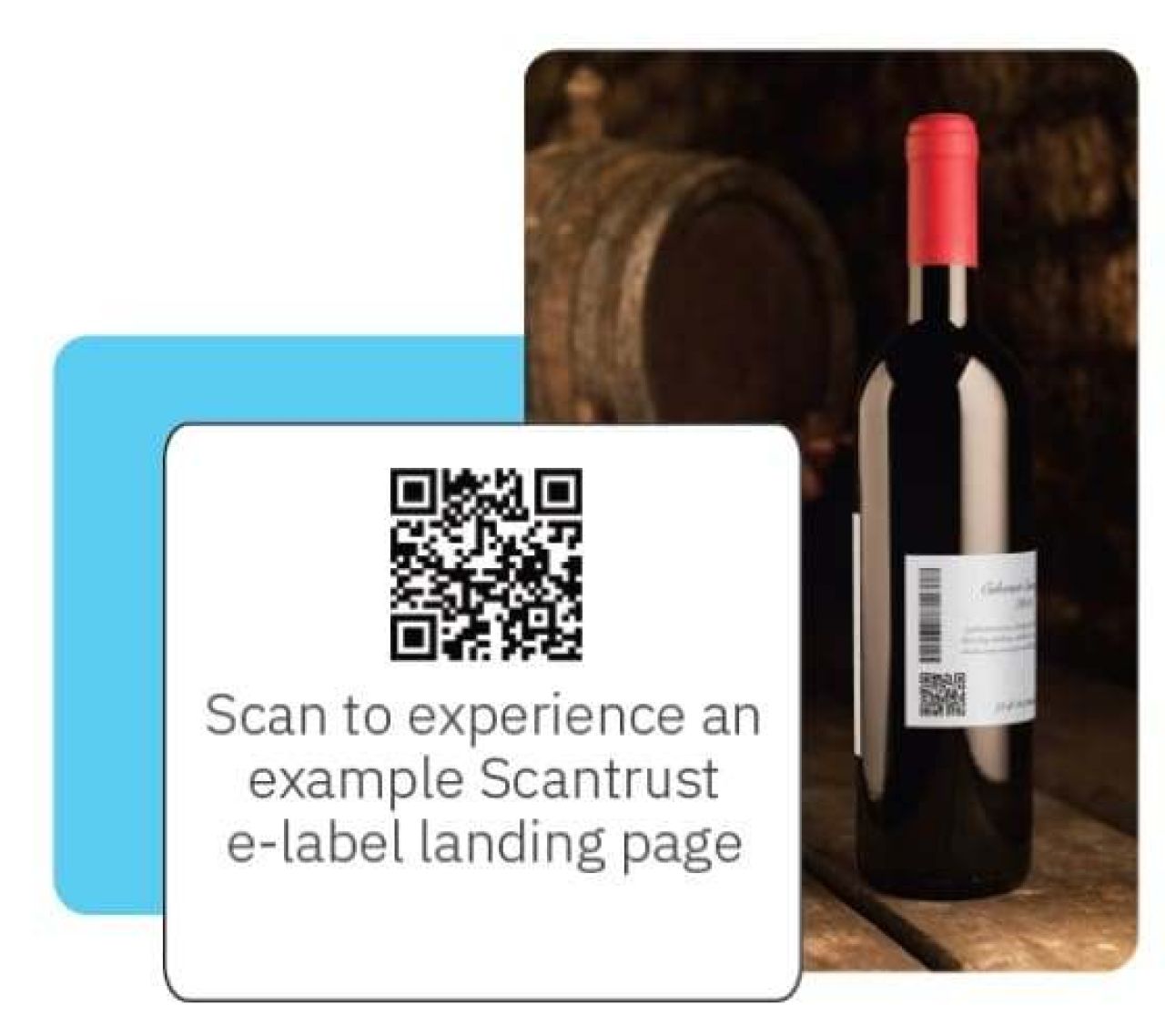
“While intolerance, allergy, and energy information must be printed directly on the label, required ingredient and nutrition lists can be provided electronically via QR code or a link, leading to an independently hosted e-label,” says Nathan Anderson, CEO of Scantrust, a company that specialises in providing compliant e-label and QR code solutions worldwide.
Stipulations
Responsibility for compliance will fall squarely on wine brand owners who want to sell in the EU. Wine bottles that do not have compliant labels will not be allowed into the EU and cannot be legally sold on the shelves. Administrative penalties may also apply according to the legislation.
“The challenge for winemakers, not only in South Africa, is to fit all required information in all EU languages onto the label,” according to Nathan. “This seems impossible to do without using electronic means to store these vast amounts of information.”
Regulation 2021/2117 gives producers the option of showing the full nutrition declaration on the physical label or only listing the energy value preceded by an “E” symbol. Opting for the latter, the full nutritional declaration and ingredients list must be provided by electronic means such as a QR code.
Fortunately it’s not necessary to lab-test every product, as average values may be calculated from the ingredients or best available data.
Even when using a QR code, ingredients related to allergies or intolerances (e.g. sulphites, egg albumin, or milk casein) must also appear on the printed label. The e-labels/QR codes may not contain any information for sales or marketing purposes, or be used to collect or track user-specific data.
The local solution
DIGI-Label is a local platform specifically developed to help wine and liquor companies comply with the international label legislation. “The DIGI-Label platform was created according to the EU regulations that was/is available regarding mandatory nutritional and ingredients labelling in the block,” says Olivia Poonah, executive manager of the Wine and Spirits Board, which operates the new platform. She adds that the process does not form part of SA legislation.
DIGI-Label charges no subscription fees and all liquor products can be registered on the platform. According to the manual available online (500 kb PDF), “South African liquor companies benefit from the legal and technical expertise needed to generate e-labels without incurring additional costs.”
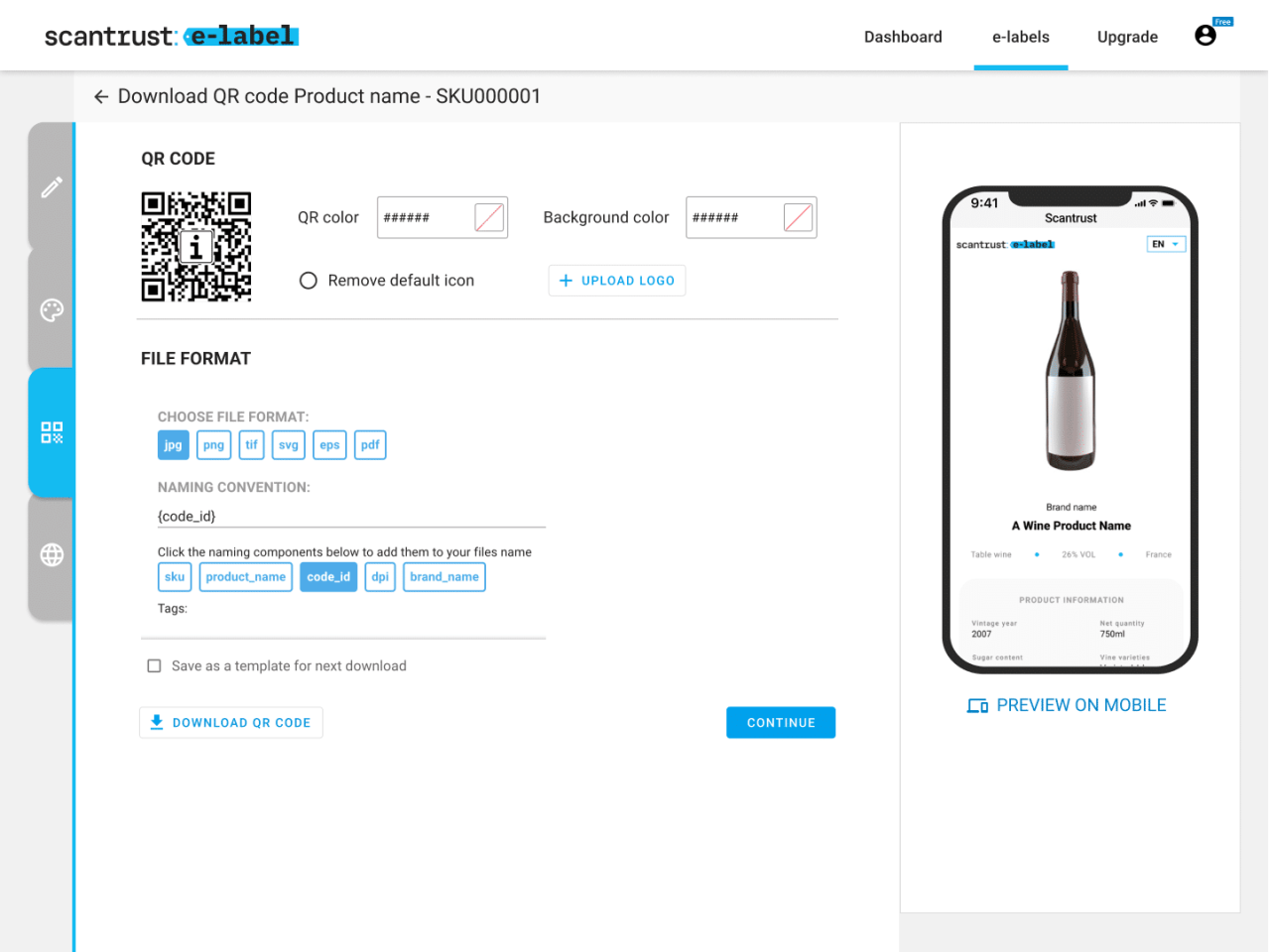
The platform enables users to create product batch and lot-specific QR codes to be included with the other mandatory information on the physical product label, making the product’s nutritional information, ingredients list, and related warnings immediately accessible to end consumers. Once the information has been loaded, a QR code is generated and becomes downloadable for use in the product’s label design.
International experience
Larger wineries looking for a fully-fledged service might appreciate Scantrust’s mature platform with its established track record in European markets. “Scantrust’s QR Code Manager has been deployed with Fortune 500 Companies for nearly a decade, managing billions of QR codes and meeting enterprise standards for security and reliability,” says Nathan. “E-Label users will automatically benefit from the system’s battle tested stability and industry-leading QR Code Security features.”
The platform also allows for GDPR-compliant data insights on, for example, anonymised scan location clusters. The system records the approximate location of each scan, which the brand owner can see on a scan map, while a scan analytics dashboard provides more insights into the area.
Localisation
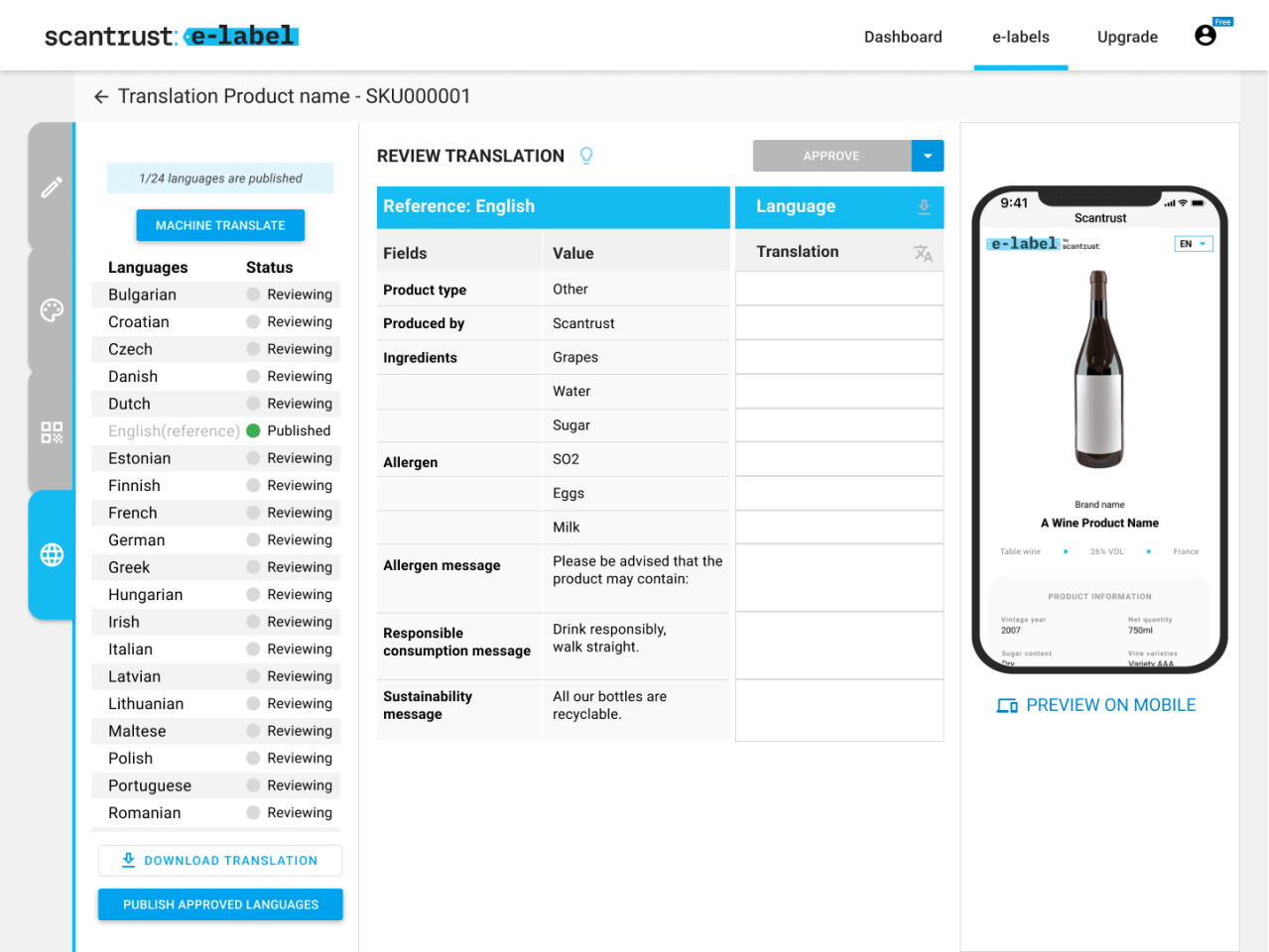
The Scantrust e-label solution supports automatic translation into 24 EU languages. Users can input the information in their preferred language, and the information will be automatically translated to the user’s preferred language when the code is scanned.
“South African wineries will appreciate the flexibility to use one QR Code with our geo-redirect for different landing pages based on scan location,” says Nathan. “For instance, the same QR code scanned in the US can lead to a different e-label or a marketing experience. It also supports uploading and selecting regional sustainability and health risk infographics based on the scan country or region.”
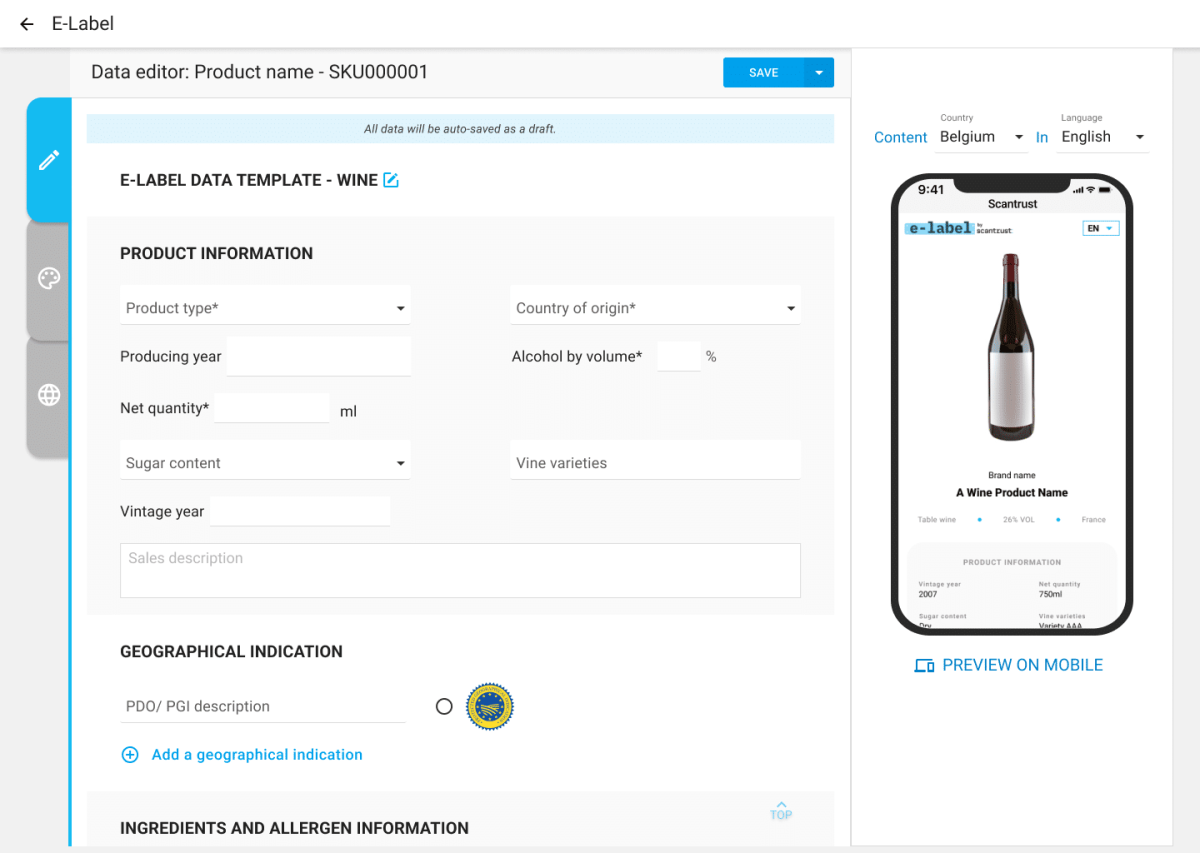
The system features an efficient, user-friendly interface with real-time preview. Features such as bulk uploads and a label duplicator can save valuable time, while customisable colours and logo upload allows designers to keep the label on-brand. Winemakers can use the tool for free (forever) for up to three labels and sign up for trials here.
With offices located in the Americas, EMEA and APAC countries, Scantrust users can expect best-in-class customer support across time zones.
“The Scantrust team works closely with associations in the EU to keep up to date on latest regulatory developments which are shared in our newsletter. Alternatively, you can learn more about the legislation by reading the e-label article on our website or talk to one of our e-label experts directly by requesting a meeting.”
Opting for an e-label or QR code and landing page is a cost-effective, space-saving and regulation compliant alternative to printing the full nutrition and ingredient information on wine labels. It also gives brand owners the flexibility to adjust content dynamically if the requirements evolve.
With the United States also considering similar legislation to mandate nutritional labelling on wine, there are compelling reasons for exporters to make e-labels and nutritional information a part of their regular workflow. Fortunately, there are already a variety of solutions available to suit everyone’s needs.
The full text of the EU Regulation 2021/2117 is available online.

More from
Markets, business and trade

How research is changing the wine we drink
Wine research starts long before the bottle reaches the shelf. It gives producers a better understanding of what happens in the vineyard and cellar, while providing evidence for decisions that can affect the wine consumers eventually drink.
Precision Fermentation: Biotech to balance Flavours, Acid and Alcohol
As warmer vintages widen the gap between ripeness and freshness, a new generation of selected yeasts lets winemakers rebalance wine during fermentation, not after.
WBWE – a global business barometer
If you want to understand where the global wine industry is heading, don’t look only at retail shelves or export statistics. Look at what is happening in the bulk wine market.