
A toast to Charles
Wine negociant and brand owner Charles Withington is one of the Cape wine industry’s most beloved figures. He’s also active on the Darling cultural scene.

· 5 min read
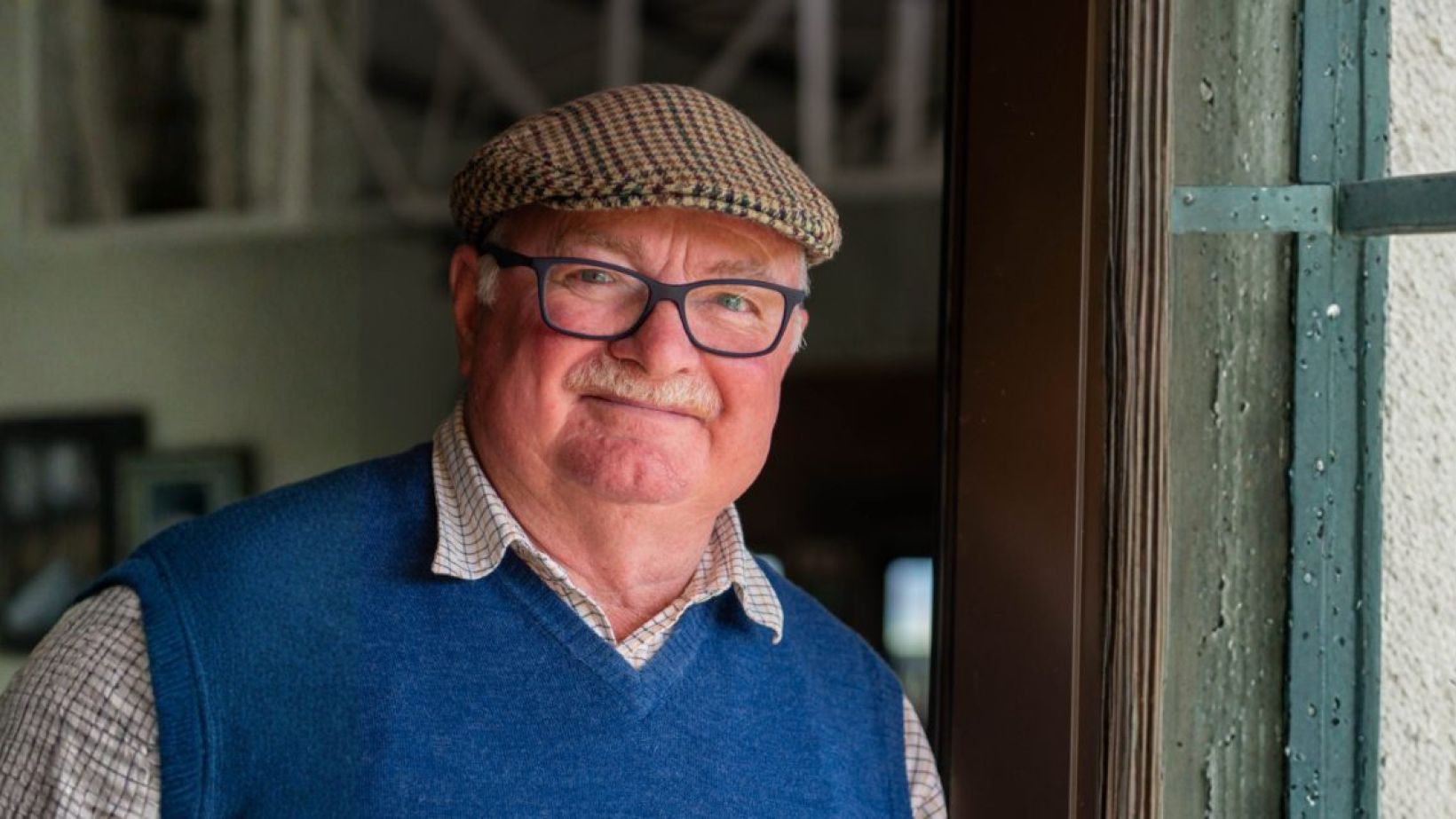
Thanks to a chance meeting outside the Stellenbosch post office, Charles Withington never completed his studies at Stellenbosch University. He happened to bump into the legendary Reg Nicholson, retiring winemaker of Rustenburg Estate, who offered him the life-changing opportunity to become part of the team at the Barlow-owned property.
He joined the estate’s young new winemaker, Etienne le Riche, who went on to bottle South Africa’s first certified Cabernet Sauvignon. They both worked at Rustenberg for over 20 years until 1996 when Etienne started Le Riche Wines. At the time, Sydney Back was looking for a business manager to represent his burgeoning Backsberg brand on the international stage and approached Charles. It was an offer he couldn’t refuse. “We were in the new South Africa and it was a great time to be in the industry,” he says. “Exports were opening and the world wanted to know about South Africa. There were so many opportunities.”
For the love of bandy At Backsberg, Sydney instilled in Charles a love for fine brandy that has never waned. “Sydney was one of the most remarkable people I’ve ever worked with,” Charles says. “He was a man of vision. Steadfast, principled and with a steely determination. It was this determination that led to him taking on the big corporates that had monopolised brandy production in South Africa and making it possible for individual wine farmers to produce their own brandy.”
Charles could not have wished for a finer product on which to cut his teeth. “The Backsberg first release shot the lights out both locally and internationally,” he says. “It was awarded the Domecq Trophy for Best Brandy in the World at the 1995 London International Wine & Spirit Competition.”
The people Charles met during this period helped shape his career. He hosted the likes of Pippa Woods, founder of Seckford Agencies, who helped give South Africa a leg up in the UK market. He also launched his own wine brand and marketed his first wine through UK wine merchant Averys in 2001. “John Avery MW, a good friend of South Africa, came to me for a well-priced, European-style South African brand and we put together a red blend that lasted for about 12 years. It was small, never more than 4 000 cases a year, but completely South African.”
Charles’ ability to forge genuine personal connections often turns into business opportunities. While at Backsberg, he met Niel Joubert and has been his export manager since 1996 – a role he’ll relinquish this year, three decades later. And it was on a train to see Pippa in Colchester that Charles conceptualised the “Buy now UK later” project, which leveraged his Seckford connections to provide cellar door sales at client farms such as Rustenberg, Glenelly, Kanonkop, Rust en Vrede and Ernie Els.
On to Darling After five years at Backsberg, Charles was approached to act as consultant for the Barrydale and Ladismith distilleries merger. The job again proved pivotal. “My wife and I were so smitten with the Little Karoo that we bought a bolt-hole cottage in Barrydale, which we simply loved.”
About 10 years ago, the brandy bug bit again when Charles discovered a small Karoo distiller. “By then, we’d moved to Darling and I’d become involved in the Darling Voorkamerfest,” he says. “In the old days, the voorkamer or front room was the heart of family life – the place to share stories and laughter, and to share and enjoy a fine Cape brandy.”
Charles has a particular fondness for fine Cape Potstill. “The great attraction for me is that fine brandy is generally consumed slowly and thoughtfully,” he says. “Right now, our way of life makes moments of nothingness a rarity. The continual assault of media on our senses steals that space. We no longer know how to find neutral. At the end of the day, nothing beats reflecting on the day’s events and the day ahead while discovering the length and depth of flavours that are coming out of your glass.”
What about French Cognac? “Cognac is well-established in the local market, and quite attractive to the emerging young market due to strong brand recognition. The process and specification are identical, but the provenance makes them distinctive,” Charles says. “A Cape brandy made from Chenin or Colombar brings out that alluring fruitiness of peaches, apricots and hints of tropical fruit. Cognac, on the other hand, generally sources from Ugni Blanc, which imparts a woodier character and hence a more austere taste. Both are great, so it’s a question of preference.”
He has a few ideas for promoting South African brandy. “Our highly regarded certification system provides a way to protect the integrity of Cape Potstill,” he says. “It allows us to verify the varietal, effectively bonding the heritage of the spirit to the heritage of the vineyard of origin, putting a face and a place to Cape brandy. Congratulations to the recently auctioned KWV Pinotage XO Cape Potstill, which has been first out of the starting blocks in spreading this message.”
To explore more articles in our January issue, Future Now, purchase our digital or print magazine here.

More from
People, community and tourism
Hoe om herlewingslandbou te laat leef
'n Twee-dag sessie deur WIETA and Stronger Together South Africa op etiese leierskap vir kelders, plase en handelsmerke by Lourensford en Du Kloof Lodge het insigte oor herlewingsboerdery opgelewer.
Results of the Niche Varieties Challenge 2026
The Niche Varieties Challenge took place again in 2026 to give innovative niche wines a more visible platform and to highlight the diversity developing beyond South Africa's mainstream cultivars.
Are wine clubs in South Africa still relevant?
A bottle of wine is rarely just about what is in the glass. Sometimes it is about the people around the table, which may explain why wine clubs have managed to stick around. The Blaauwklippen Blending Competition offers a glimpse into why this old-school tradition still has a place in a changing…