
Western Cape Department of Agriculture appoints 120 graduate interns
· 3 min read
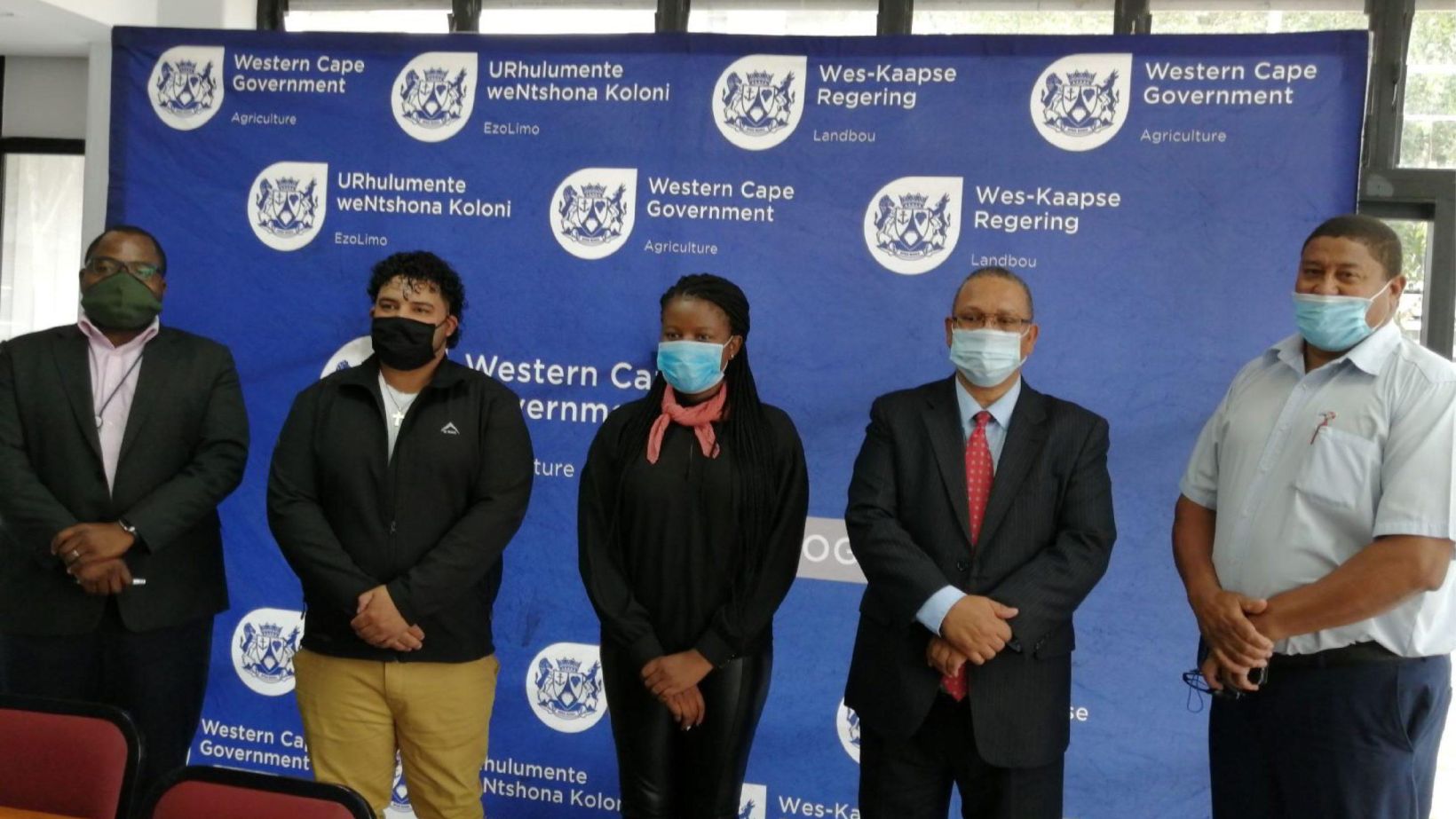
Photo caption:Dr Mogale Sebopetsa (HoD Western Cape Department of Agriculture), agricultural graduate interns Dilan Lakey and Asiphe Kamte, Dr. Ivan Meyer (Western Cape Minister of Agriculture) and mentor Trevor Abrahams.
On Wednesday (9 December), the Western Cape Minister of Agriculture, Dr Ivan Meyer, welcomed the placement of 120 agricultural graduate interns who will be taking up their two-year internship within the Western Cape agriculture sector.
Minister Meyer: “In line with two of my priorities, namely, structured education and training and farmer support and development, I am pleased to offer 120 graduate interns with an agricultural related qualification, placement with farmers or enterprises for work-integrated learning, as our contribution to the priority of jobs and dignity of the Western Cape Government.”
According to Minister Meyer the Western Cape Department of Agriculture (WCDoA) aims to increase employability of agricultural graduates through on-the-job experience at major agricultural host farms and entrepreneurial entities.
Minister Meyer: “The initiative targets qualified unemployed graduates in agriculture, who want to venture into entrepreneurial projects related to agriculture. The key placement areas within agriculture are livestock rearing and poultry production, horticulture/crop production, aquaculture production, viticulture, agro-processing, agricultural extension and agricultural economics.”
One such graduate intern who has benefited from the WCDoA’s graduate programme is Asiphe Kamte.
Kamte: “I am extremely grateful to the Department for the journey I was able to undertake as an intern. My willingness to learn has resulted in me being able to take up a position with the Deciduous Fruit Development Chamber.”
A critical component of the graduate programme is identifying experienced mentors.
Trevor Abrahams is one of several farmers who has volunteered to mentor agriculture graduates.
Abrahams: “It is about sharing our farming experience. It’s about teaching our interns the value of knowing every tree, every sheep and every cow on the farm. Sharing our knowledge and experience is fulfilling to both us and our graduates. It is also about the future of agriculture.”
Minister Meyer highlights that the internship creates a pool of future farmers/entrepreneurs among young people and reduces youth unemployment.
Meyer continues: “We must provide a platform for the active participation of youth in the agriculture value chain and create an enabling environment to support the establishment of youth owned and/or managed enterprises.”
The Western Cape Government has identified three key priorities namely, safety, jobs and dignity and well-being.
Meyer: “The placement of graduate interns is a direct response to these three priorities. We are investing in youth development in agriculture as the future is driven my innovation, technology, big data and research.”
Meyer concludes: ”Our farmers in the Western Cape are sharing their practical, hands on experience to contribute to creating a bigger pool of professional farmers to work the land #ForTheLoveOfAgriculture.”

More from
People, community and tourism
The Portrait of a South African Winemaker
In James Joyce's A Portrait of the Artist as a Young Man, Stephen Dedalus resolves to express himself "as freely as I can and as wholly as I can". Joyce's hero refuses to be just one thing. That same many-sided energy is increasingly being asked of the modern South African winemaker, who has to adopt different faces for different places.

Who will drink South African wine tomorrow?
Tomorrow’s wine drinker is already here, standing at the braai with a can in one hand and a phone in the other. South African wine still has time to join the occasion, although it may need to loosen its collar first.
Ice in the Chenin and other South African wine crimes
There is ice in the Chenin Blanc, Cap Classique in an ordinary wine glass and a bowl of curry waiting beside a bottle of something pink. By old wine standards, the afternoon is a small crime scene.