Search
Results for “wine yeasts”
Showing 1–12 of 121 results
121 results — page 1 of 11
Wine yeasts and energy saving in wineries
Over the past few decades, the wine industry has increasingly relied on selected microorganisms to enhance the reliability and predictability of fermentation.
By Laffort · 7 min read
Yeasts, smoke taint and Chenin Blanc wines
This project investigated yeast selection’s effects on the volatile phenols associated with wines made from smoke-exposed Chenin blanc juice.
By Heinrich du Plessis and Co-workers · 7 min read


Thiol-releasing and low VA-forming hybrid wine yeasts
PHOTO: Shutterstock.
By Rodney Hart, Bongani Ndimba and Neil Jolly · 5 min read
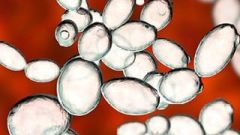
The impact of sulphur dioxide additions at crush on wine yeasts, bacteria and sensory attributes
Sulphur dioxide is for sure the most general additive during winemaking. As result of its anti-microbial and anti-oxidative properties it is unique and no subst
By Charl Theron · 5 min read
Minimising volatile phenols in wine
PHOTO: Julian Sullivan.
By Heinrich du Plessis and Co-workers · 6 min read

Manipulation of Shiraz flavour
PHOTO: Shutterstock.
By Heinrich du Plessis and Co-workers · 8 min read
Active bioprotection in red wines with Metschnikowia pulcherrima
One of the non-Saccharomyces yeasts studied is Metschnikowia pulcherrima. This article will focus on the antagonistic activity of a specific strain, M. pulcherrima LEVEL2 Guardia™, on other wine yeast species for bioprotection applications.
By Amandine Deroite · 5 min read
Effective microbiological monitoring in wine cellars
The making of wine is a microbiological process with yeasts and bacteria playing a decisive role. All yeasts and bacteria are however not necessarily beneficial for wine, but can spoil it. It is consequently important that cellars monitor the microflora during winemaking.
By Charl Theron · 5 min read
Fruit salad vs varnish - nitrogen sources and their impact on aroma production in wine
Nitrogen is a key element necessary for synthesising amino acids, nucleic acids, vitamins and various other compounds in living organisms, including wine yeasts.
By James Duncan & Benoit Divol · 12 min read
Why wine smells like wine
The research suggests that the ‘wine’ character that distinguishes wine from other beverages, and also allows consumers to identify a product as ‘wine’, is entirely due to the metabolic activity of yeast.
By Samantha Fairbairn · 4 min read