
Drought tolerance of different scion cultivars (Part 4): Vegetative growth and yield
The study aimed to assess grapevine vegetative and yield responses in an almost worst-case scenario, i.e. grapevines growing under dryland conditions in sandy loam soil in the Swartland region.
Carolyn Howell, Karen Freitag and Reckson Mulidzi
· 16 min read
Abstract
Drought-tolerant scion cultivars can reduce the risk of yield losses in viticulture. Therefore, a field trial was conducted in the Swartland region, South Africa, to determine vegetative growth and yield of alternative and reference scion cultivars. Nine red and eight white scion cultivars were planted in an experimental vineyard near Malmesbury in July 2018, and vegetative growth and yield were measured for four seasons. Results showed that there were substantial differences between the different scion cultivars in terms of their cane mass production, where Shiraz and Assyrtiko had the strongest growth, and the poorest growth was for Piquepoul blanc. For the red wine grape scion cultivars, higher and lower numbers of berries per bunch for Grenache noir and Malbec, respectively, were reflected in their bunch mass. Therefore, the average yield was the highest for Grenache noir and lowest for Malbec. For the white scion cultivars, Macabeo and Chardonnay had the highest and lowest number of berries per bunch, respectively. This was reflected in their average bunch mass at harvest, and the average yield was the highest for Macabeo and lowest for Chardonnay. Piquepoul blanc also produced higher yields compared to the other white scion cultivars. It should be noted that Macabeo and Piquepoul blanc struggled to ripen their grapes under the prevailing conditions.
Introduction
Nine red and eight white alternative and reference wine grape scion cultivars were selected to evaluate their drought tolerance in a field trial near Malmesbury in South Africa. The alternative red wine grape scion cultivars were Arinarnoa, Durif, Grenache noir, Malbec, Marselan, Tempranillo and Touriga naçional. Assyrtiko, Macabeo, Marsanne, Piquepoul blanc, Verdelho and Vermentino were selected as alternative white grape scion cultivars. Reference cultivars were Pinotage (red), Shiraz (red), Chardonnay (white) and Chenin blanc (white). In South Africa, 18.5%, 9.4%, 7.7% and 7.6% of the total area of wine grapes are Chenin blanc, Shiraz, Pinotage and Chardonnay, respectively.1 More specifically for the Swartland region, 20.2%, 16.2%, 11.1% and 5.8% of the total hectares in the region are planted to Chenin blanc, Shiraz, Pinotage and Chardonnay vineyards, respectively.1
With regard to the wine grape scion cultivars selected, Durif which is also known as Petite Sirah, originated in France.2 In South Africa, it is viewed as an alternative cultivar and some vineyards are found in the Malmesbury, Paarl and Stellenbosch areas. Grenache noir comes from Spain and is an important cultivar in southern Europe.2 It produces large grape harvests that are used for sweet, fortified wines, as well as rosé and table wines. Malbec, also known as Pressac in France, is a very old traditional cultivar and is very well known in France.2 Pinotage is a South African cultivar bred by Professor Perold in 1925, with Pinot noir and Cinsaut being its parents.2 Shiraz is originally from the Rhône Valley in France, where it is known as Syrah.2 Tempranillo, otherwise known as Tinta Roriz, originates from Spain. Touriga naçional is the most widely planted port cultivar in the Douro Valley of Portugal, but outside of Portugal it is also cultivated on a limited scale in Australia and California.2 For the white scion cultivars, Chardonnay is a French cultivar and is a popular cultivar worldwide.2 Chenin blanc, also known as Steen in South Africa, is originally from the south-west of France.2 Due to its adaptability, it is one of the most widely planted cultivars in South Africa. Verdelho is a Portuguese cultivar and is grown mainly on the island of Madeira and in the Douro Valley.2
Since selecting alternative scion cultivars could be an important tool for developing drought adaptation strategies to increase the sustainability of the wine industry, and there is no information regarding their performance in South Africa, the objective of the study was to quantify this for selected scion cultivars. The study aimed to assess grapevine vegetative and yield responses in an almost worst-case scenario, i.e. grapevines growing under dryland conditions in sandy loam soil in the Swartland region.
Materials and methods
Experimental layout
The experimental vineyard is located on the westerly side of Malmesbury, South Africa, where nine red and eight white cultivars were planted at 3.00 m × 1.25 m in July 2018. All cultivars were grafted onto 99 Richter rootstock. Details of the soil preparation, soil chemical status and vine establishment were reported previously.3 Further details on the soil and grapevine water status were also given.4,5,6 Grapevines were cultivated under dryland conditions. Black plastic film was installed on grapevine rows after planting to reduce evaporation from grapevine rows. The vineyard was managed according to the grower’s normal viticultural practices. In the 2020/21 and 2021/22 seasons, the crop load was reduced to ca. eight and 16 bunches per grapevine, respectively. However, the crop load of some wine cultivars exceeded the allocated bunches per grapevine per season. Since the bunches were removed in November, the dense canopies of these cultivars made it difficult to locate all the bunches. No crop load adjustments were made in the 2022/23 and 2023/24 seasons.
Cane mass
To quantify growth vigour, cane mass at pruning (July) was weighed for each experimental plot using a hanging balance. Cane mass per plot (kg) was converted to tonnes per hectare.
Yield and its components
Grapes were harvested when they reached the target sugar content of 22 - 24°B and 20 - 22°B for the red and white scion cultivars, respectively. At harvest in the 2020/21 to 2023/24 seasons, all the bunches of the eight experimental grapevines per plot were picked and counted. Grapes were weighed using a platform scale. The number of bunches per grapevine was calculated by dividing the total number of bunches per plot by the number of experimental grapevines per plot. Grape mass per grapevine (kg/grapevine) was calculated and converted to yield in ton per hectare. Berry mass at harvest was determined on 200-berry samples.
Statistical analysis
For logistical reasons, the red and white scion cultivars were planted in separate blocks. Consequently, the statistical analyses of the red and white scion cultivars were carried out separately. Averages were calculated from the seasonal data for vegetative growth and yield. Analyses of variance were carried out using STATGRAPHICS®. Means were compared by the least significant difference (LSD) test at the 5% level of significance.
Results and discussion
Cane mass
In the case of both the red and white scion cultivars, growth vigour varied (Figure 1). Under the prevailing conditions, the growth of the Shiraz grapevines tended to be the most vigorous, whereas Durif, Marselan and Pinotage showed the poorest growth for the red cultivars. For the white cultivars, Assyrtiko had the strongest vegetative growth, whereas Piquepoul blanc and Verdelho had the lowest growth vigour. Visual observations in the canopies at the end of November 2021 showed substantial differences in the canopies of the different cultivars (Figures 2 and 3). The average cane mass (Figure 1A) of the Shiraz in the current study was higher than that of 2.6 t/ha reported for Shiraz grapevines growing in the Breede River Valley, South Africa, and irrigated at 90% depletion of plant available water (PAW) throughout the growing season.7 The cane mass of the Pinotage (Figure 1A) was slightly higher than 1.74 t/ha which was previously reported for Pinotage grapevines irrigated at 75% PAW for the growing season.8 In contrast, Chenin blanc cane mass (Figure 1B) was lower than 2.2 t/ha reported for grapevines growing in the Stellenbosch region of South Africa and which were only irrigated at pea size berries.9
In the case of the Shiraz and Assyrtiko, the strongest vegetative growth in relation to the other cultivars was evident from August 2021 (data not shown). The poorest growth of the Piquepoul blanc was also consistent from 2021 (data not shown).
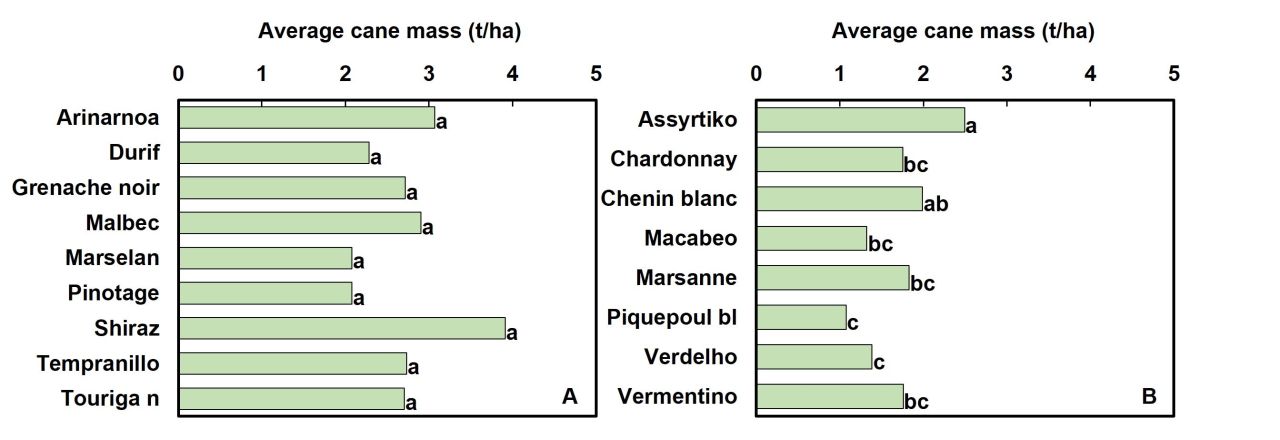
FIGURE 1. The average cane mass at pruning of the nine red and eight white cultivars for the four bearing seasons from 2020/21 until 2023/24.
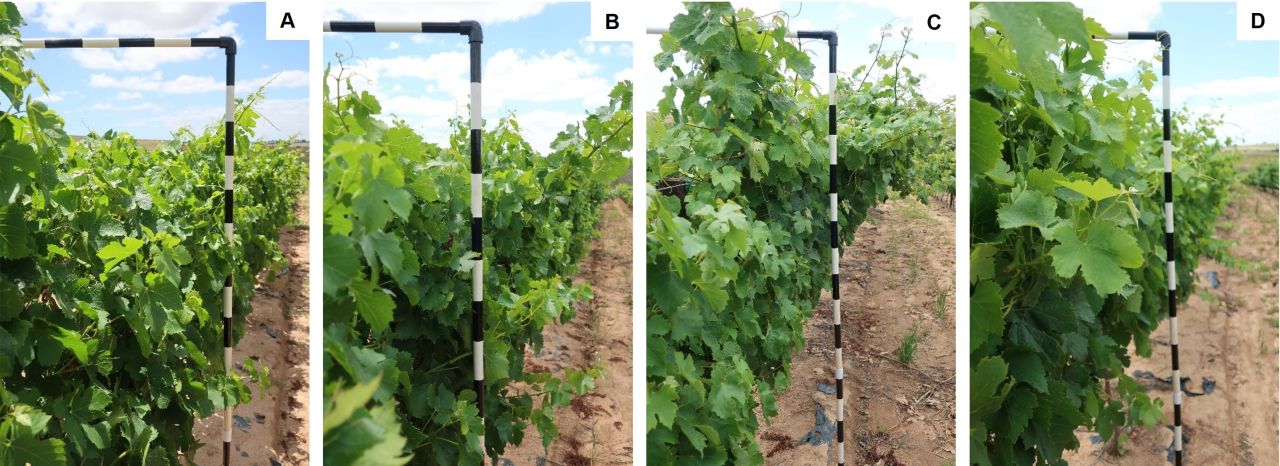
FIGURE 2. Examples of (A) Durif, (B) Marselan, (C) Arinarnoa, and (D) Shiraz grapevine canopies on 29 November 2021. The black and white frames were 0.8 m wide and 1.8 m high.
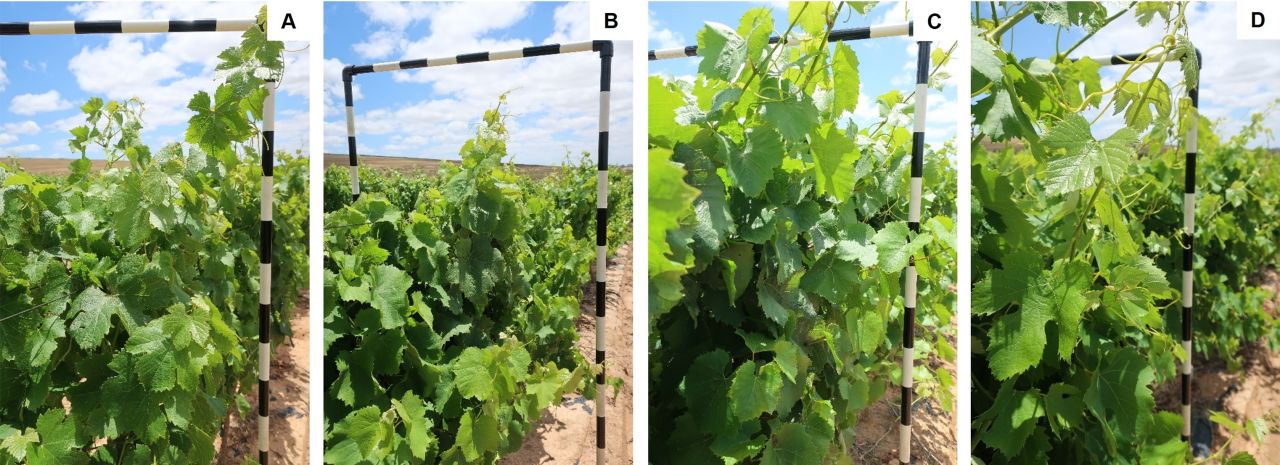
FIGURE 3. Examples of (A) Piquepoul blanc, (B) Verdelho, (C) Chardonnay, and (D) Assyrtiko grapevine canopies on 29 November 2021. The black and white frames were 0.8 m wide and 1.8 m high.
Time of ripening
Harvest dates were inconsistent between the 2020/21, 2021/22, 2022/23 and 2023/24 seasons (Table 1). The harvest dates of the different wine grape scion cultivars ranged between 5 February and 5 March, 28 January and 10 March, 30 January and 7 March, as well as 25 January and 20 February in the 2020/21, 2021/22, 2022/23 and 2023/24 seasons, respectively. In 2022/23, some scion cultivars were harvested slightly earlier, whereas others were harvested later compared to the 2020/21 and 2021/22 seasons. The 2023/24 grape harvest season was an early one. Using the harvest dates from the four seasons, a classification of the anticipated harvest dates of the different scion cultivars was made (Table 1). The harvest period stretched from late January to March, with Pinotage being the earliest red scion cultivar. Grenache noir, Malbec, Marselan, Shiraz, Tempranillo and Touriga were the cultivars that ripened the latest. Chardonnay and Verdelho were the earliest white grape scion cultivars to be harvested in late January to early February. It should be noted that the Macabeo and Piquepoul blanc struggled to ripen their grapes under the prevailing conditions.
At harvest, there were substantial differences in the grapevine canopies of some of the scion cultivars (Figure 4). Note the Marselan grapevines showing almost no sign of leaf degradation and in fact, the leaves were mostly still intact and dark green. In contrast, the Arinarnoa grapevines had lost nearly all their leaves in the bunch zone by the time these grapes were harvested.
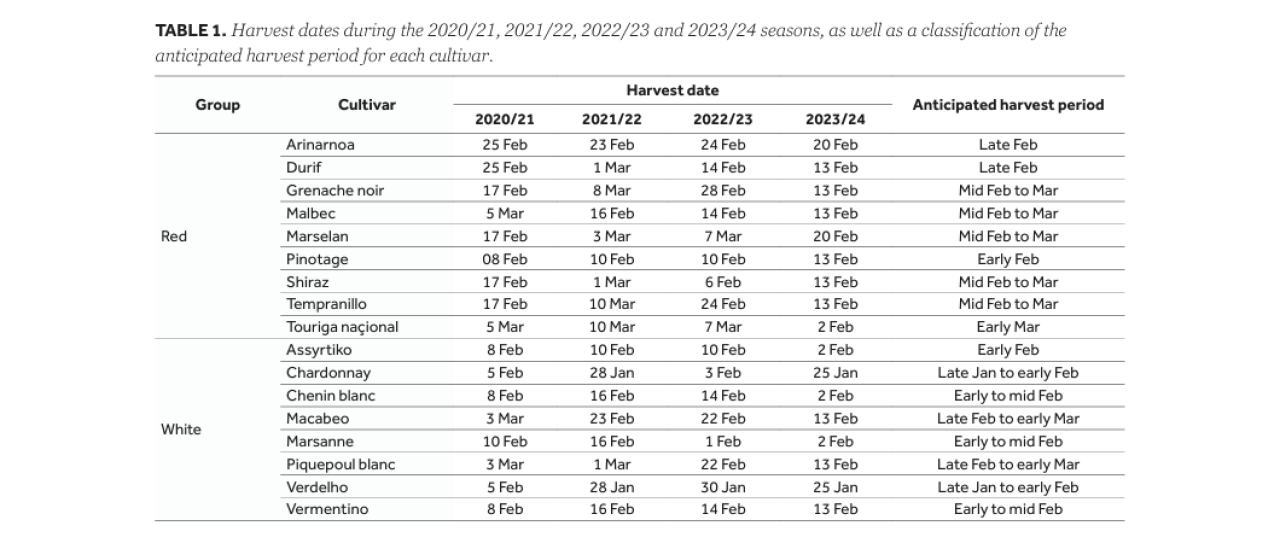
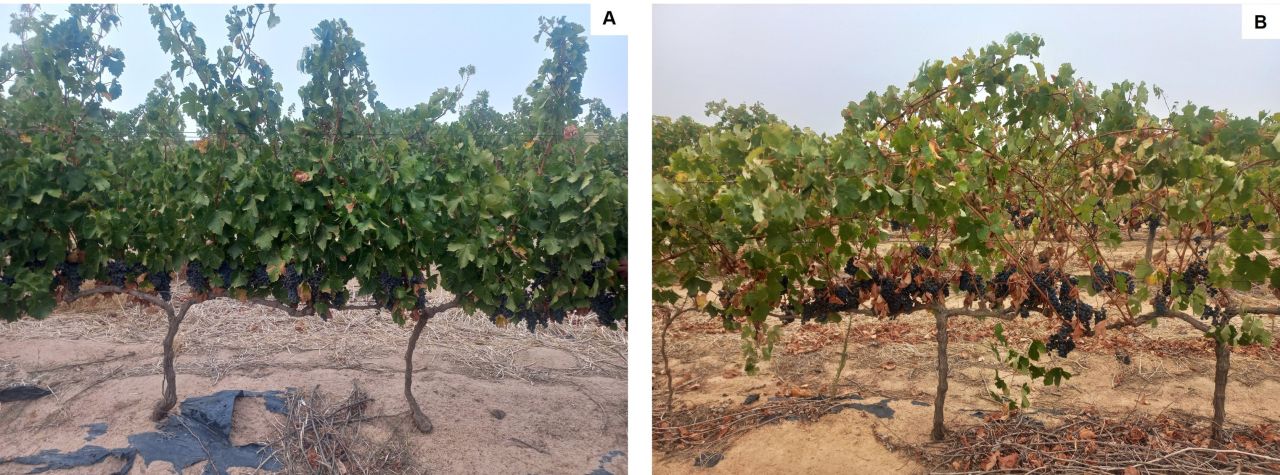
FIGURE 4. Examples of (A) Marselan and (B) Arinarnoa grapevines at harvest on 20 February 2024.
Yield and its components
There was considerable variation in the yield components of the different cultivars. In general, yield was poorly related to berry mass in every season (data not shown). Likewise, number of bunches had no effect on yield. However, the natural ability to produce bigger bunches, i.e. more berries per bunch, played an important role in bunch mass. Therefore, yield was well related to bunch mass.
Berry mass: For the red scion cultivars, on average for the four bearing seasons, Grenache noir produced the biggest berries, and Durif and Marselan the smallest (Figure 5A). The average berry mass of 1.3 g/berry for the Shiraz (Figure 5A) was slightly higher than that of 1.1 g/berry reported for Shiraz grapevines growing in the Breede River Valley.7 Berry mass of Pinotage (Figure 5A) was similar to that previously reported for grapevines growing in the Breede River Valley.8 Photographs of the smaller Durif and bigger Tempranillo berries at harvest are given in Figure 6.
In the case of the white grape scion cultivars, on average for the four bearing seasons, Vermentino produced the biggest berries, and Chardonnay and Verdelho the smallest (Figure 7A). Chenin blanc berry mass (Figure 7A) was substantially lower than the 1.77 g/berry reported in another study for grapevines growing in the Stellenbosch region.9 Photographs of the smaller Chardonnay and bigger Assyrtiko berries at harvest are given in Figure 8.
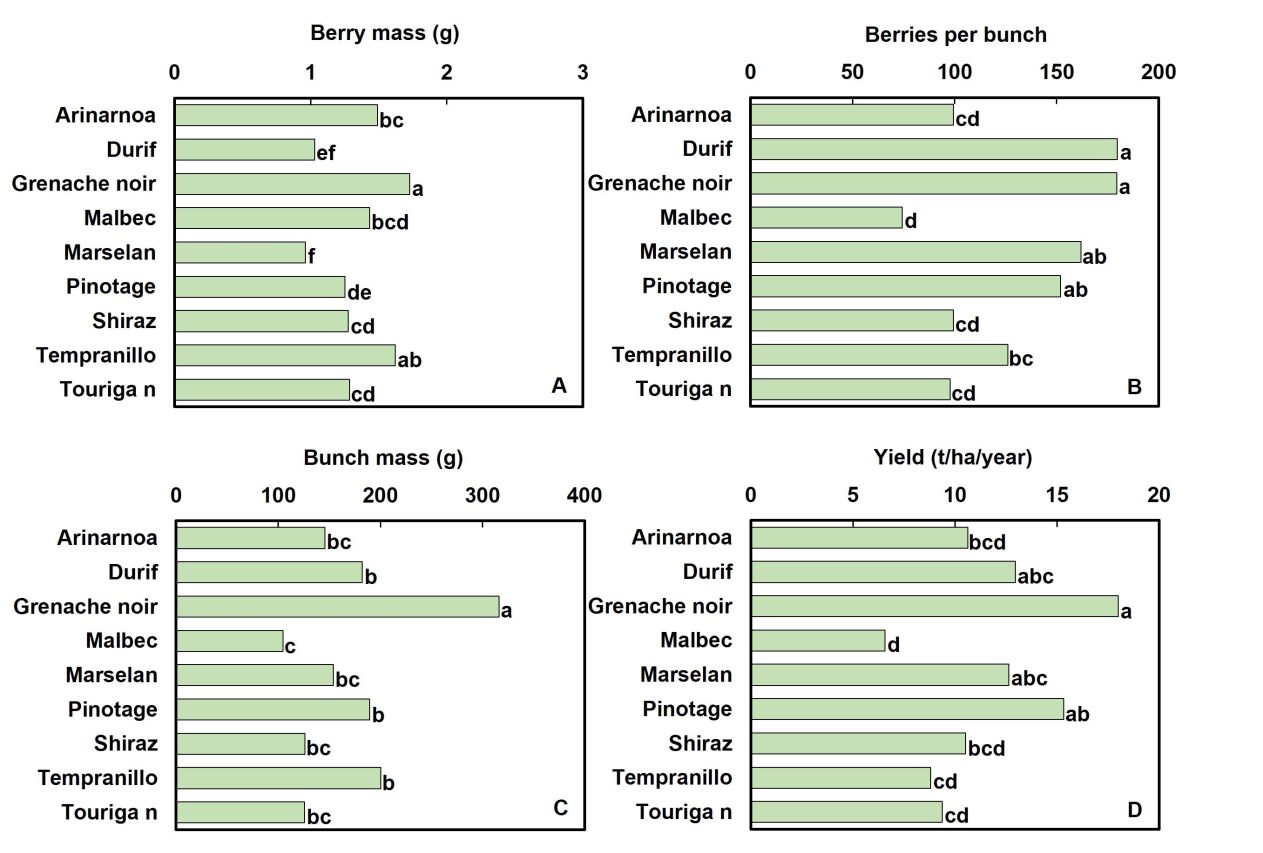
FIGURE 5. The average (A) berry mass, (B) berries per bunch, (C) bunch mass, and (D) yield for the 2020/21, 2021/22, 2022/23 and 2023/24 seasons. Data are the means for the red scion cultivars.
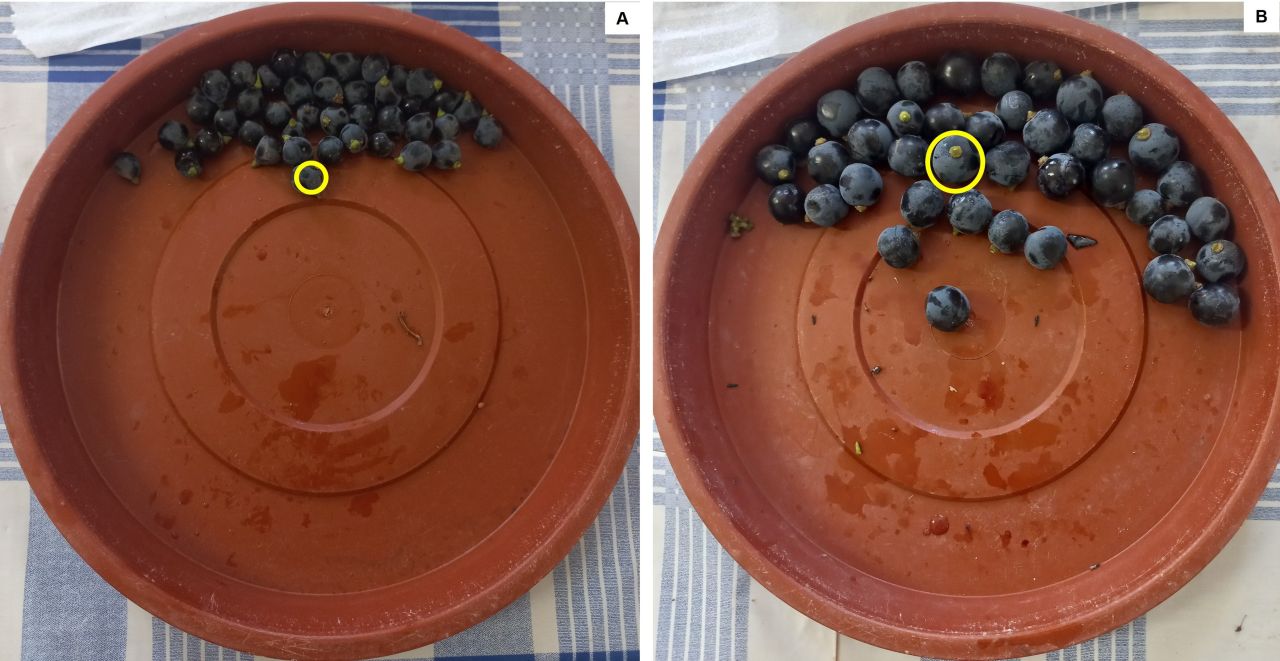
FIGURE 6. Examples of (A) Durif and (B) Tempranillo berries measured at harvest in the 2023/24 season. Note that the yellow circle encircles a single berry.
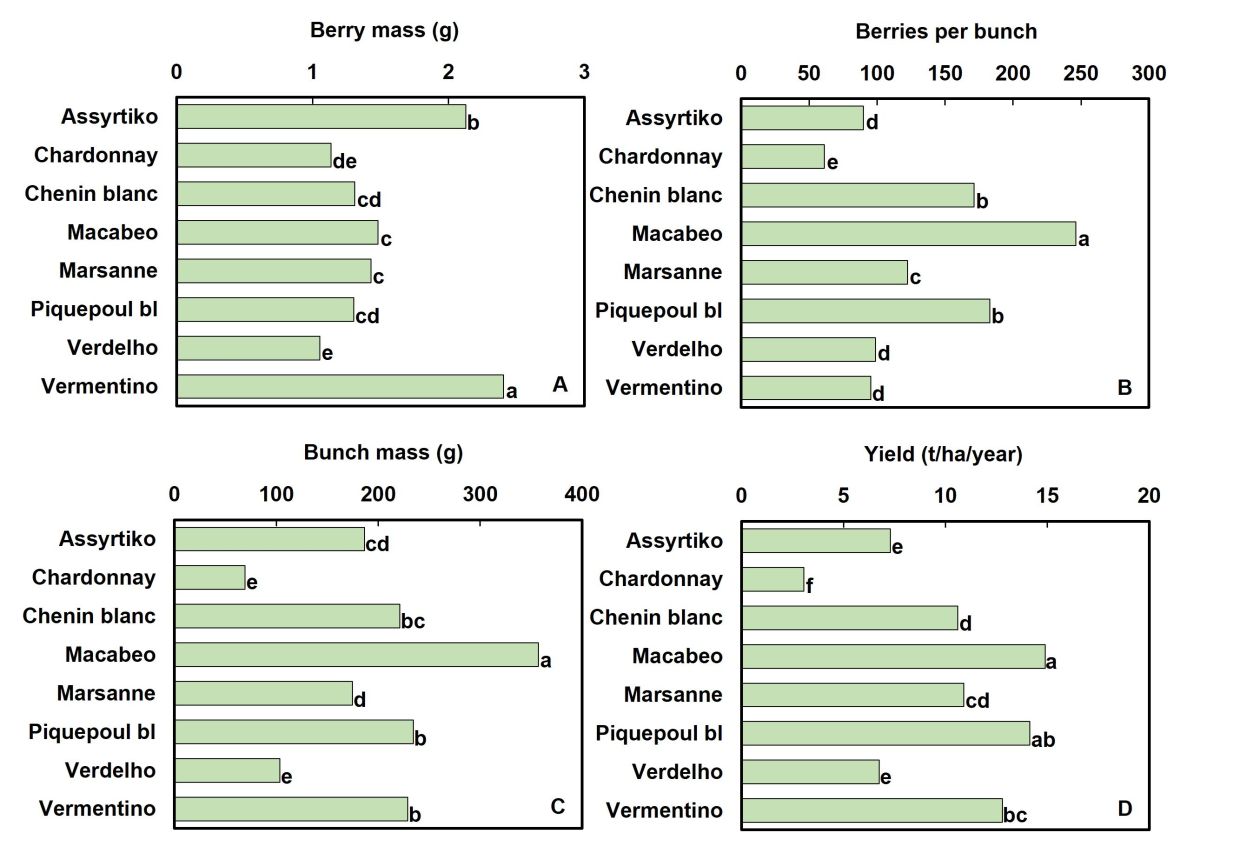
FIGURE 7. The average (A) berry mass, (B) berries per bunch, (C) bunch mass, and (D) yield for the 2020/21, 2021/22, 2022/23 and 2023/24 seasons. Data are the means for the white scion cultivars.
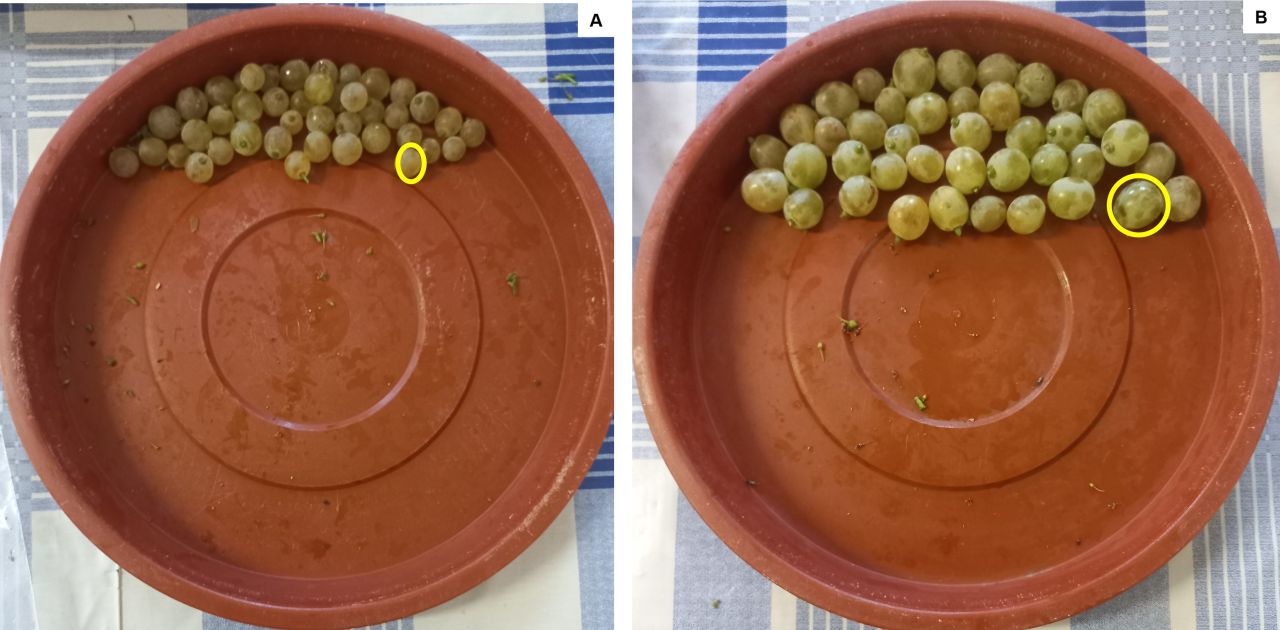
FIGURE 8. Examples of (A) Chardonnay and (B) Assyrtiko berries measured at harvest in the 2023/24 season. Note that the yellow circle encircles a single berry.
Bunch mass: On average, for the red wine grape scion cultivars, the bunch mass was highest for Grenache noir (Figure 5C). This was due to more berries per bunch (Figure 5B). Bunch mass was lowest for Malbec (Figures 5C and 9), which also had the least berries per bunch (Figure 5B). Bunch mass of 126 g/bunch for the Shiraz (Figure 5C) was lower than that of 146 g/bunch reported for Shiraz grapevines in the Breede River Valley which were irrigated at 90% PAW depletion.7 For the white scion cultivars, the average bunch mass at harvest was highest for Macabeo and lowest for Chardonnay (Figure 7C). These two cultivars also had the highest and lowest number of berries per bunch, respectively (Figure 7B). Photographs of the smaller Chardonnay and bigger Macabeo bunches are given in Figure 10.
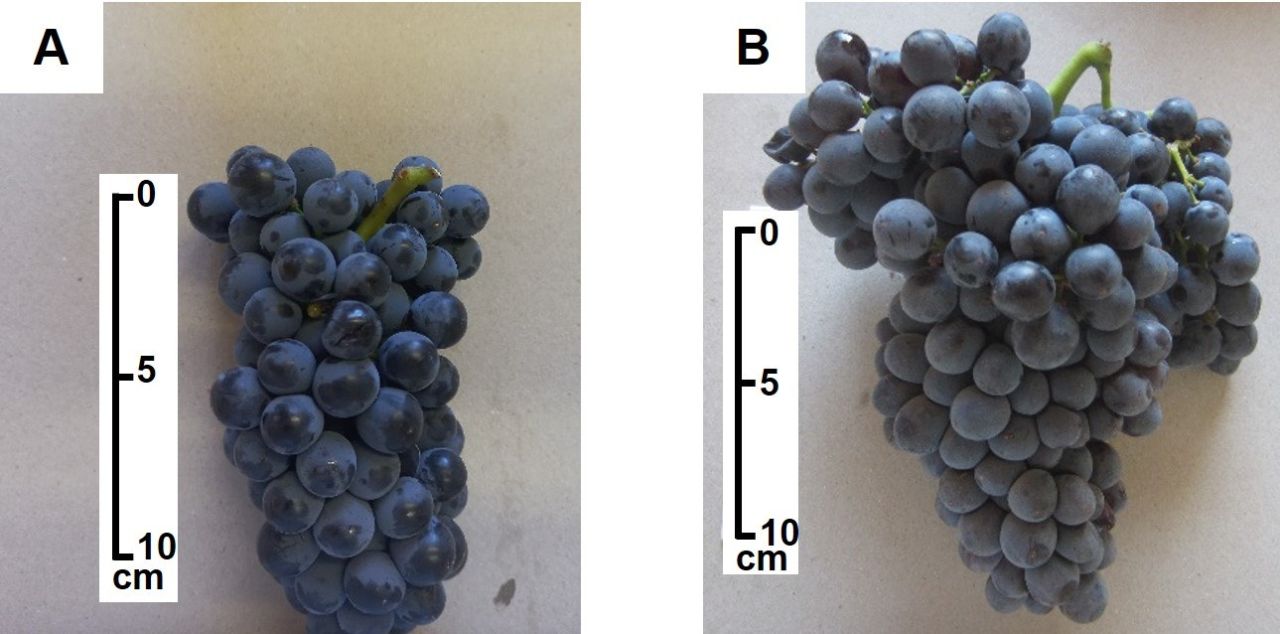
FIGURE 9. Examples of (A) Malbec and (B) Grenache noir bunches in the 2021/22 season.
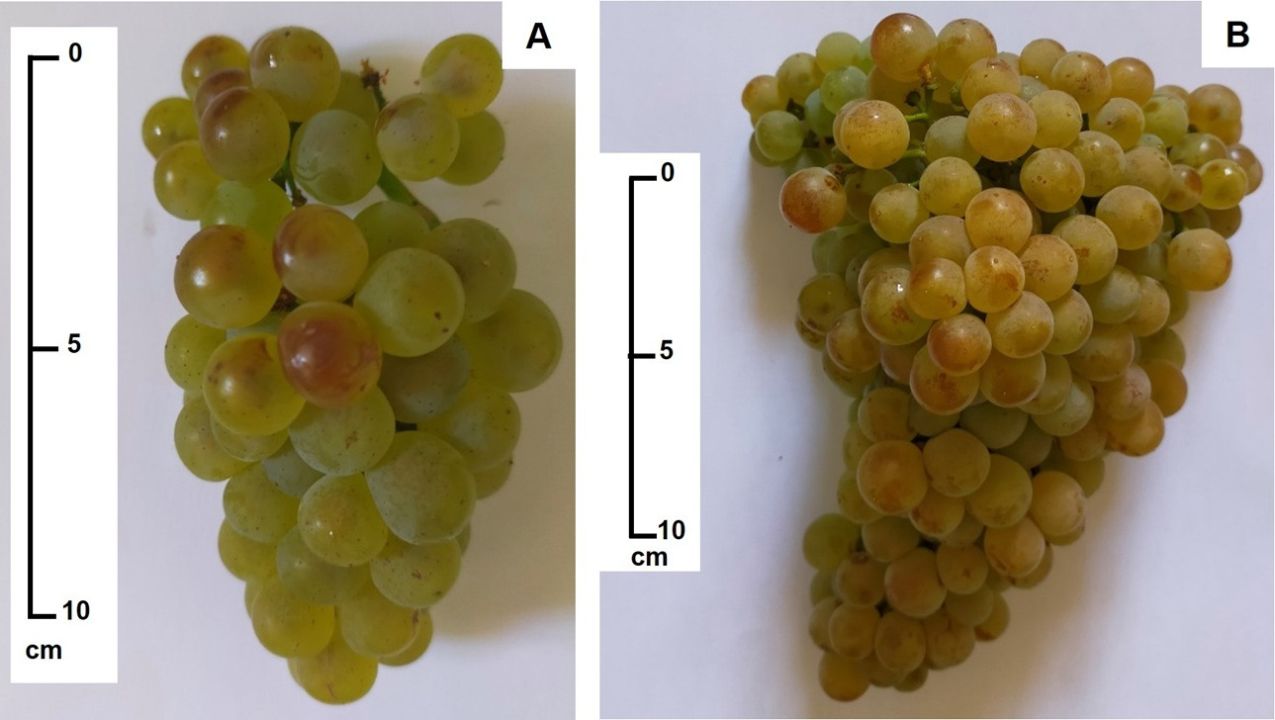
FIGURE 10. Examples of (A) Chardonnay and (B) Macabeo bunches in the 2023/24 season.
Yield: The average yield for the red scion cultivars was the highest for Grenache noir and lowest for Malbec (Figure 5D), with the average yield of Grenache noir being within the expected production of 15 - 20 t/ha for this specific cultivar.2 In contrast, the average yield for Malbec (Figure 5D) was lower than the expected production of 10 - 14 t/ha for this specific cultivar. The average (Figure 5D) and cumulative yield (data not shown) of the red scion cultivars correlated well with the pre-véraison stem water potential (data not shown). The average yield of 10.6 t/ha for Shiraz (Figure 5D) was substantially lower than the 21.3 t/ha previously reported for Shiraz grapevines growing in the Breede River Valley and irrigated at 90% PAW depletion.7 However, it was similar to yields reported for Shiraz grapevines growing in the Olifants River region and in Stellenbosch.10,11 In other studies, yields of 5.4 t/ha, 17.5 t/ha, and 10.6 t/ha were reported for Shiraz growing in the Coastal region, Breedekloof Valley, and Olifants River region, respectively.12 Pinotage yield (Figure 5D) was slightly higher than 14.0 t/ha, which was reported for Pinotage grapevines irrigated at 75% PAW for the growing season.8
In the case of the white scion cultivars, the yield was the highest for Macabeo and Piquepoul blanc, and lowest for Chardonnay under the prevailing conditions (Figure 7D). Chenin blanc yield (Figure 7D) was substantially lower than the 15.6 t/ha which was previously reported for grapevines growing in the Stellenbosch region and which were only irrigated at pea size berries.9 The average yield obtained for Chardonnay and Verdelho was lower than the expected production of 5 - 9 t/ha and 10 - 12 t/ha for these specific cultivars,2 respectively.
For cumulative yield for the 2020/21, 2021/22, 2022/23 and 2023/24 seasons, Grenache performed much better and Malbec poorer compared to the other red cultivars under the dryland conditions (data not shown). Likewise, Macabeo and Piquepoul blanc performed better, but Assyrtiko, Chardonnay and Verdelho poorer amongst the white scion cultivars (data not shown).
Conclusions
The study was the first in South Africa to assess vegetative growth and yield responses of selected red and white scion cultivars in an almost worst-case scenario, i.e. under dryland conditions in a sandy loam soil in the Swartland region. Results showed that there were substantial differences between the different scion cultivars in terms of their cane mass production where Shiraz and Assyrtiko had the strongest growth, and the poorest growth was for Piquepoul blanc. For the red wine grape scion cultivars, the higher and lower number of berries per bunch for Grenache noir and Malbec, respectively, reflected in their bunch mass. Consequently, the average yield was the highest for Grenache noir and lowest for Malbec. For the white scion cultivars, Macabeo and Chardonnay had the highest and lowest number of berries per bunch, respectively. This reflected in their average bunch mass at harvest and average yield was the highest for Macabeo and lowest for Chardonnay. Piquepoul blanc also produced higher yields compared to the other white scion cultivars. It should be noted that Macabeo and Piquepoul blanc struggled to ripen their grapes under the prevailing conditions.
Juice characteristics and wine quality will be presented in the next article.
Acknowledgements
- South Africa Wine and the Agricultural Research Council (ARC) for funding Project P04000207 entitled “Assessing the drought tolerance of selected grapevine scion cultivars under dryland conditions in the Swartland region”.
- ARC for infrastructure and resources.
- Staff of the Soil and Water Science division at ARC Infruitec-Nietvoorbij for technical support, in particular J. Adams, F. Baron and T. Harris for their dedicated, enthusiastic work and support.
- Rossouw of Fairview Farm, Malmesbury, for allowing us to have the project on his farm and for his interest in the study and viticultural inputs. His staff for their inputs in the experimental vineyard.
- van Breda, C. Paulsen and other colleagues in the PHAT division at ARC Infruitec-Nietvoorbij for the analyses of the juice samples and the making of the experimental wines for the project.
- van der Rijst of ARC for statistical analyses of the data.
- South Africa Wine for funding for C.L. Howell to attend the 19th AWITC in Adelaide, Australia in July 2025.
References
- SAWIS, 2025. South Africa wine industry statistics, wosa.co.za.
- Goussard, P., 2008. Grape cultivars for wine production in South Africa. Cheviot Publishing, Cape Town, South Africa.
- Howell, C., Freitag, K. & Mulidzi, R., 2026. Drought tolerance of different scion cultivars (Part 1): Introduction. Wineland July, 63-67.
- Howell, C., Freitag, K. & Mulidzi, R., 2026. Drought tolerance of different scion cultivars (Part 2): Soil water status. Wineland August, 60-66.
- Howell, C., Freitag, K. & Mulidzi, R., 2026. Drought tolerance of different scion cultivars (Part 3): Plant water status. Wineland September, 56-59.
- Howell, C., Freitag, K. & Mulidzi, R., 2026. Investigating the response of selected reference and alternative wine cultivars to dryland conditions in the Swartland Region of South Africa. Accepted for publication by Australian Journal of Grape and Wine Science.
- Lategan, E.L., 2011. Determining of optimum irrigation schedules for drip irrigated Shiraz vineyards in the Breede River Valley. Thesis, Stellenbosch University, Private Bag X1, 7602 Matieland (Stellenbosch), South Africa.
- Howell, C.L. & Myburgh, P.A., 2024. Response of Vitis viniferacv. Pinotage to irrigation strategy and trellis system in the Breede River Valley Region: Vegetative growth, yield and juice characteristics. S. Afr. J. Enol. Vitic. 45, 92-106.
- Myburgh, P.A., 2005. Water status, vegetative growth and yield of Vitis viniferacvs. Sauvignon blanc and Chenin blanc in response to timing of irrigation during berry ripening in the Coastal region of South Africa. S. Afr. J. Enol. Vitic. 26, 59-67.
- Myburgh, P.A., 2018. Handbook for irrigation of wine grapes in South Africa. Agricultural Research Council, Pretoria, South Africa.
- Moffat, E.G., 2017. Mulching and tillage with compost to improve poor performing grapevines. Thesis, Stellenbosch University, Private Bag X1, 7602 Matieland (Stellenbosch), South Africa.
- Visser, J-M., 2023. The effect of plant water potential based deficit irrigation on physiological reproductive responses of grapevines (cv. Shiraz) in three different climatic regions. Thesis, Stellenbosch University, Private Bag X1, 7602 Matieland (Stellenbosch), South Africa.
For more information, contact Carolyn Howell at [email protected].
Click here to get your copy of WineLand Magazine.

More from
Innovation and insights
Hairy roots - a biotechnological tool for grapevine improvement
Hairy roots arise when the phytopathogenic bacterium, Rhizobium rhizogenes inserts DNA into a wounded plant’s genome, triggering the formation of rapidly growing root masses. The rapid growth and relatively fast establishment of hairy roots led to their use in laboratories, where they are used to…
To swirl or not to swirl? - that is the question... (Part 2)
This study investigated the sensory suppression effects of H2S on tropical fruit characters and evaluated whether the perceived improvement following swirling is a result of chemical oxidation or physical volatilisation.

Q&A with Jose Luis Aleixandre-Tudo
Jose Luis Aleixandre-Tudo is an Associate Professor in the Department of Food Technology at the Universitat Politècnica de València, Spain, and an Extraordinary Senior Lecturer in the Department of Viticulture and Oenology at Stellenbosch University, South Africa.