
Positivity, passion, and progress says Tim Atkin MW of South African wine
· 4 min read

Tim Atkin MW shares his thoughts on South African wines and delves into the emerging trends, challenges, and prospects that currently define the industry. Following his recent 2023 South Africa Special Report, Tim discusses the growth of small boutique winemakers using custom crush initiatives and offers valuable insights into this phenomenon and its potential impact on the industry.
The rise of custom crush initiatives and their challenges
One of the most intriguing new developments in South Africa’s wine industry according to Tim is the emergence of small, boutique winemakers who utilise custom crush initiatives. These are often one-person operations that source grapes from various growers, allowing them to create unique wines that capture the essence of different terroirs. Tim acknowledges the significance of these initiatives and highlights their contribution to industry diversity, “I find these initiatives to be great, it’s only about whether they can always secure the grapes [a diminishing commodity] to produce their wines. By way of contracts with growers, the unfortunate reality in South Africa is that many growers are forced to uproot low-yielding older vines due to being unable to get a sufficient price for them”.
While custom crush initiatives are promising for the industry, there are some challenges to consider. As Tim points out, the availability of grapes is a crucial factor. With South Africa’s vineyard area under vine decreasing rapidly, securing contracts with grape growers becomes essential. The long-term concern is whether these small, and usually new and young, producers can afford the grapes as competition increases, potentially driving up prices.
The success of custom crush operations depends on growers who provide the grapes. Tim emphasises the pivotal role of growers in the industry, highlighting their importance in sustaining South African winemaking. Growers need incentives to continue growing vineyards, and fair prices for their grapes are essential.
Regenerative viticultural practices
South Africa is gradually moving toward incorporating regenerative farming methods on a greater scale aligning with international trends in sustainable agriculture. When asked to benchmark their progress, Tim suggests looking at countries like Argentina and the United States, particularly California, where these practices are well-established. Tim muses, “regenerative agriculture is good in terms of carbon capture, and I think that’s an important thing. It’s just healthy soils. I think it’s good farming in a sense. The problem, I sense, is that the yields might be lower and therefore that means that investing again, you know, in quality has got to come with some sort of reward really in the marketplace. That means that people must buy the wines at a slightly higher price”.
Foreign investment and expertise
When quizzed on his thoughts around the growing foreign investment in South Africa through farms being snapped up and upgraded, Tim says he views this as a vote of confidence in the future of the industry. “You know it’s an enormous vote of confidence. They’re [foreign investors] basically saying that this is a place where we want to put our money. That is worth investing in, which I think is a fantastic thing”, Tim continues.
Foreign investors are not only injecting capital but also bringing valuable expertise and distribution channels to the South African wine market. This investment supports the industry’s sustainability and further exposes South African wines to a global audience.
The importance of terroir and emerging sub-regions
Having visited the Karibib Vineyards custom crush facility, Tim notes that he found the Polkadraai sub-region to be an up-and-coming region – especially with notable stalwarts and consistent achievers Jordan, DeMorgenzon and newly crowned 100-point award-winning farm Boschkloof. Tim further identifies various sub-regions with exciting potential for South African winemaking and praises the cool climate and altitude of the Cape South Coast and areas around Stanford. According to him, these regions offer unique terroirs that can result in distinctive wines. Terroir is increasingly defining the South African wine landscape, and these emerging sub-regions are at the forefront of this movement.
“I like the sign-up of that whole [Cape South Coast] area down near the bay on granite. Despite the drought in 2022, it is very exciting that there’s got a lot of future ahead of it, partly because of its altitude and cooler climate but also due to the new movement, in which Jessica Saurwein is involved,” Tim says.
In conclusion, Tim Atkin MW’s South Africa Report for 2023 centres on positivity, passion, and progress and provides a comprehensive overview of the evolving South African wine industry. Custom crush initiatives, foreign investment, regenerative practices, and the influence of terroir are key elements shaping the industry’s future. As the industry faces various challenges and opportunities, South Africa’s wine producers and growers must work together to ensure its continued growth and success.

More from
Innovation and insights
Safeguarding agricultural biosecurity through insect diagnostics
Insect diagnostics are managed through the Plant Disease Clinic (PDC), based at Stellenbosch University, and have emerged as a critical advisory service for South African agriculture. This article outlines the scope of samples analysed by the PDC, the services it provides and the role it will play…

Packaging under pressure: What wine businesses should be watching
From lighter bottles to automated packing lines, packaging decisions are becoming increasingly important to the cost and competitiveness of South African wine.
How vine water stress shapes grape and wine quality
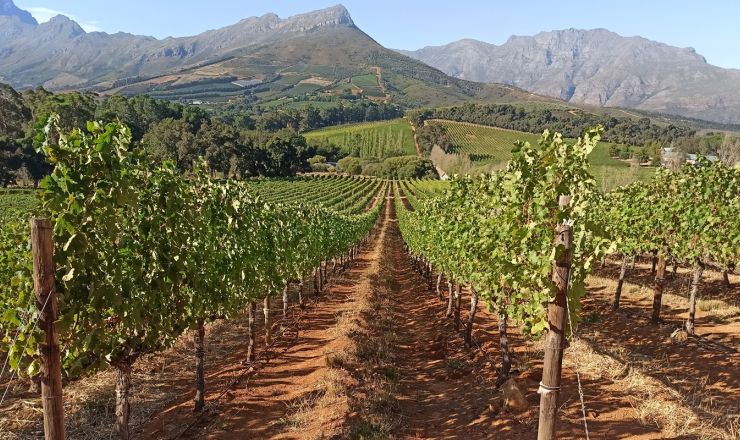
This study formed part of the South Africa Wine programme “Grapevine production with limited water resources”, and aimed to evaluate how spatial and temporal water stress affects vine physiology, fruit composition and wine quality.