
Seaweed-based biostimulants in Vitis vinifera
Little is known about the impact of seaweed extracts in grape production and their influence on grapevine physiology, and stress adaptation mechanisms.
Liam Samuels, Evodia Setati and Erna Blancquaert
· 10 min read
The production of grapes faces growing pressure associated with challenges such as climate change, diminishing resources, as well as the overuse of chemical fertilisers and synthetic pesticides, which have an impact on the three pillars of sustainability (planet, profit and people). Biostimulants and biofertilisers are considered environmentally friendly and cost-effective alternatives to synthetic fertilisers and plant growth regulators. Seaweed is of particular interest because of its availability globally.
It was reported that brown seaweed (Ascophyllum nodosum spp.) improves plant growth and agricultural productivity, hormonal signalling, and improved secondary plant metabolism. It also provides an alternative to soil supplementation, avoiding some of the negative effects of fertilisers through the leaching of nutrients into groundwater sources. Little is known about the impact of seaweed extracts in grape production and their influence on grapevine physiology, and stress adaptation mechanisms.
A biostimulant is a substance, organism or by-product of organic origin that is applied to a plant/crop, to enhance performance in quality, yield, stress adaptation, and plant protective qualities. Biofertilisers are products containing living microorganisms or natural substances that are able to improve soil chemical and biological properties, stimulating plant growth, and restoring soil fertility.
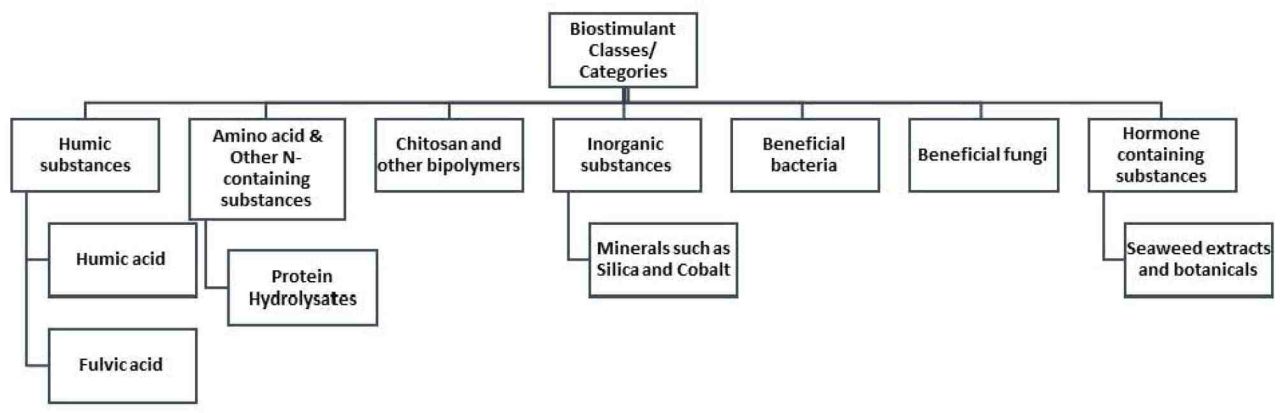
Biostimulants are broadly classified into seven groups which are widely recognised (Figure 1):
- Humic substances (HS),
- Amino-acid and other nitrogen-containing substances (AACP),
- Chitosan and other biopolymers,
- Inorganic substances,
- Beneficial fungi,
- Beneficial bacteria, and
- Seaweed extracts and botanicals (HCP) (Figure 1).
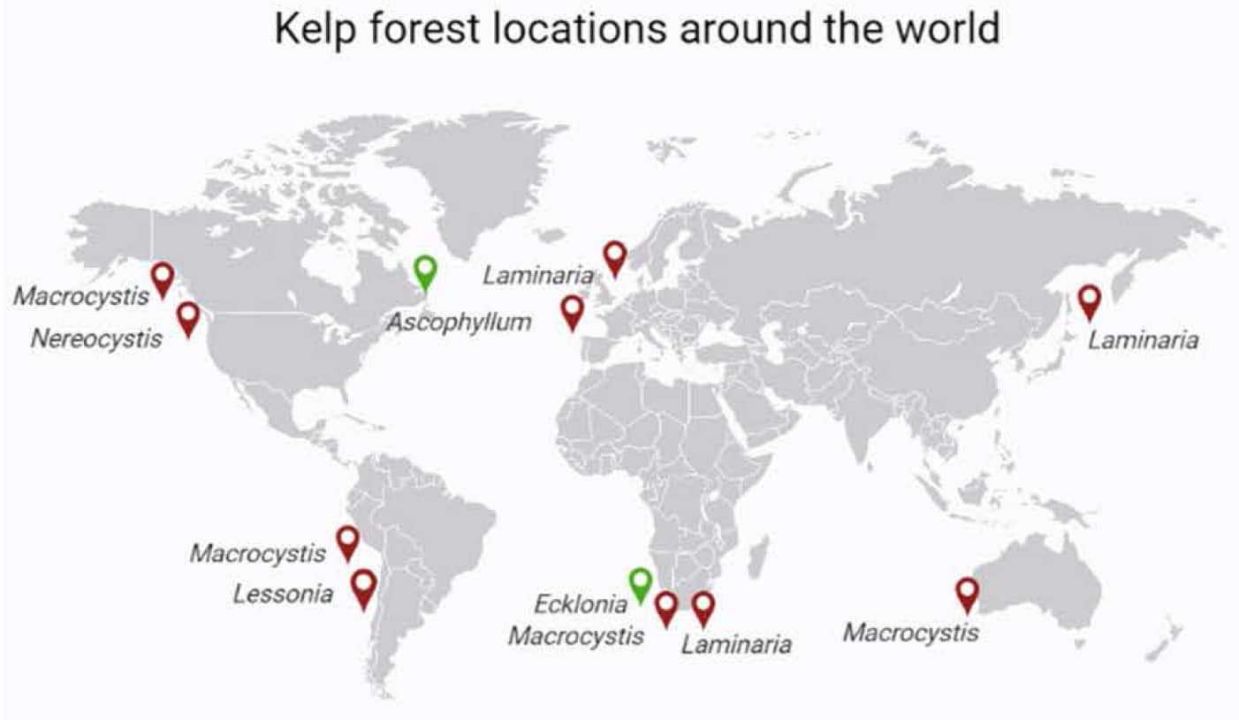
Seaweed extracts are described as one of the main groups of biostimulants with huge agricultural potential. While there are three groups of seaweed (Phaeophyceae – brown; Rhodophyta – red and Chlorophyta – green), the brown species – Ascophyllum nodosum (AN) and Ecklonia maxima (EM) spp. are mostly used for commercial production of seaweed extract (Figure 2).
Effect of seaweed extract on grapevine phytohormone levels
Growth responses were recorded after phytohormone applications pointing out that more than one group of hormones may be present in these seaweed extracts. Some of the phytohormones isolated from brown seaweed extracts are: cytokinin, auxin, gibberellin, abscisic acid, Indole-3-acetic acid, ethylene, brassinosteroids, jasmonates, salicylic acid, strigolactones, zeatin, kinetin and BAP (cytokinin-6-Benzylaminopurine). Despite all these phytohormones being extracted from the seaweed there are several critical questions which need to be answered to elucidate the research to real-world applications of seaweed extracts (i.e., rate of application; mode of application; time intervals of application; extraction method of the product; environmental conditions during application; and mode of action) to fully understand the contribution of seaweed extract in grapevine functioning.
Most application types are either foliar, root application or a combination of both. Seaweed extracts can also be added through fertigation, dipping and drenching. The frequency and time intervals of seaweed application (phenological stage) were done at véraison and throughout maturation in most studies.
Taskos and other authors (2019) applied seaweed extract from fruit set and saw a 26% increase in yield. From this, it can be deducted that an impact on yield will only be seen if the product is applied at fruit set when cell division and enlargement take place. If the product is applied at véraison and thereafter, the secondary metabolism is targeted which will result in increased phenolics.
Arioli and other authors (2021) studied seaweed extract applications to the soil in five locations, across three Australian states and four cultivars over a period of five years. The reoccurring application of seaweed extracts (EL stage 4 until EL stage 34) proved that seaweed extract applications are an economical option for sustainable viticulture. Foliar applications prove to have a better result as compared to the other forms of application due to the immediate contact of the product by the leaves.
This warrants an almost immediate uptake of the product by the plant, while a root application will first be absorbed by the soil particles which will result in a reduction of mobility. These products are then applied with a sprayer (handheld/gasoline backpack sprayer). The optimal application times for these extracts were determined to be around every 10 - 14 days for provoking the best plant responses.
It has been shown that biostimulants function optimally if a stress scenario already exists in the plant. It is also advised by seaweed producers that the application of the product occurs at a low physiological activity (early morning 05:00 - 07:00).
Methods of extraction – possible sources of variation in seaweed biostimulants
Seaweed extract content has been under great scrutiny over recent years, due to the inconsistent nutritional value of products and batches. The manufacturing or extraction process of seaweed extracts proves to be the most challenging step in ensuring consistency and efficiency for its products. It is believed that discrepancies in compositions can arise from the following sources: extraction process, origin (ecosystem) and anatomical variation.
In addition, product refinement/enrichment through the addition of nitrogen (N), phosphorus (P), potassium (K) and/or preservatives can contribute to nutritional variation. The extraction of seaweeds can be done through physical and/or chemical methods, which include the use of variables such as heat and pressure, as well as solvents. These methods include water-based extractions, acid hydrolysis, alkaline hydrolysis, microwave-assisted extraction, ultrasound-assisted extraction, enzyme-assisted extraction, supercritical fluid extraction and pressurised liquid extraction.
The most frequently used extraction process for commercial seaweed extract production entails an alkaline and acid hydrolysis at high pressure. This method has been proven to be the most successful and consistent, because of the high level of extractability and the moderate degradation of polysaccharides into oligomers which are one of the most biologically active components of seaweed extracts.
Seaweed extracts effect on grapevine physiology
Seaweed extracts have been known to improve plant physiology at the establishment in the nursery and when planted in a commercial vineyard to ensure a well-established root architecture. Many studies have proved that seaweed extracts possess characteristic growth-stimulating properties as they alter the physical, biochemical and biological properties of the soil and may also affect the architecture of plant roots facilitating the successful uptake of water and minerals (Figure 3).
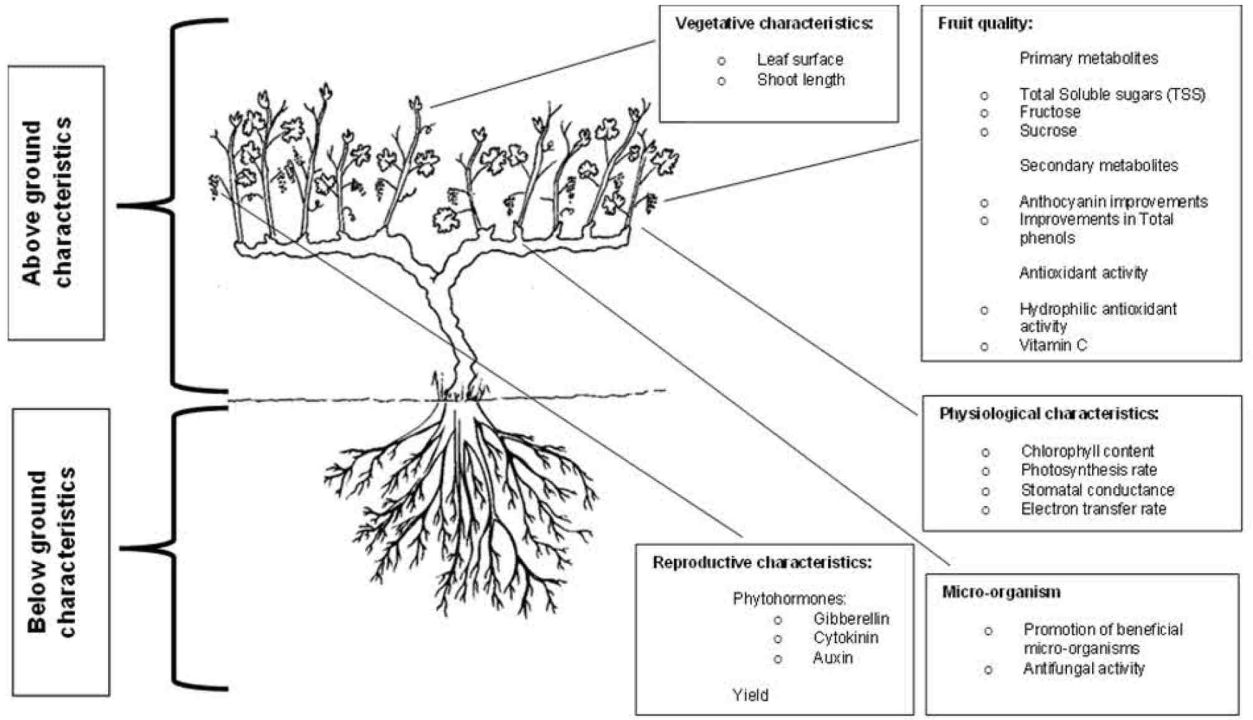
Frioni and other authors (2018) reported that AN applications had minor effects on vine physiological performances as related to carbon assimilation and vegetative growth. Furthermore, AN extract treatment had no effects on leaf gas exchanges and supports the findings of other authors suggesting that seaweed-based extracts work more effectively if stress is induced. Salvi and other authors (2019) reported that foliar treatments with AN increased photosynthesis and stomatal conductance in treated compared to control plants.
Moreover, grapevines treated with seaweed were able to maintain the potential efficiency of Photosystem II close to the optimal value during the hottest periods. Stem water potential was not impacted using AN extract. Tombesi and other authors (2021) studied the impact of AN extract impact on grapevine gas exchange under well-watered (field capacity throughout the experiment ~ 6 L per vine per day and water stress conditions and to examine its mode of action under stress (light and temperature).
The application of AN caused a slight increase in stomatal conductance that resulted in an increase of water plant conductivity to the atmosphere.
Seaweed extract effect on fruit quality
Primary metabolites include sugars, organic acids, proteins, nucleic acids, etcetera, while examples of secondary metabolites include grape phenolics which are broadly divided into two main groups, namely flavonoids and non-flavonoids. Seaweed extracts contain an array of secondary metabolites, which are potentially the key behind their growth response characteristics. Frioni and other authors (2018) reported a slightly positive TSS evolution in Pinot noir during the first part of the ripening process treated with Acadian Marine Plant Extract Powder extracted by alkaline hydrolysis.
Irani and other authors (2021) found that drought-stressed berries had significantly higher TSS and TA content. Under drought conditions, an application of seaweed extract significantly enhanced the weight of the berries, improved yield and TSS, and decreased TA.
Grape yield, cluster and berry size were not impacted by AN extract applications, but accelerated véraison improved anthocyanins accumulation in all cultivars and increased phenolic content, particularly in Sangiovese. Salvi and other authors (2019) reported that AN-treated Sangiovese grapevines allowed increasing the number of berries and anthocyanin extractability in two consecutive seasons. Taskos and other authors’ (2019) study also showed an increase in yield by 25 - 36% in treated Merlot vines when using fresh algae which were washed, shredded, and added to water.
Conclusions
Seaweed extracts in viticulture can be seen as an underutilised eco-resource. Seaweed extracts improve the overall growth and functioning of grapevines, by increasing resistance to drought stress and susceptibility to fungal diseases and ensuring improved crop quality. Improved growth associated with the application of seaweed extracts can also be attributed to the ability of these products to modify the microbiological environment (phyllosphere) of the grapevine.
Despite the positive contributions of seaweed-based biostimulants reported in the literature, ample questions remain: Which seaweed product should be used, what is the application method (aerial or soil), time of application (early/mid-morning/evening) (need for re-application); mode of action on the primary and secondary metabolites pathways; climatic conditions during application and at the location. Seaweed cannot be used solely but in combination with current conventional products. Seaweed extracts can be an alternative and sustainable management tool.
To achieve the latter, the application of research to real-world producers will be advantageous to an agricultural sector of such importance.
References
Ali, N., Farrell, A., Ramsubhag, A. & Jayaraman, J., 2016. The effect of Ascophyllum nodosum extract on the growth, yield and fruit quality of tomato grown under tropical conditions. Journal of Applied Phycology 28(2), 1353 - 1362. https://doi.org/10.1007/s10811-015-0608-3.
Boselli, M., Bahouaoui, M.A., Lachhab, N., Sanzani, S.M., Ferrara, G. & Ippolito, A., 2019. Protein hydrolysates effects on grapevine (Vitis vinifera L., cv. Corvina) performance and water stress tolerance. Scientia Horticulturae 258, 108784.
Du Jardin, P., 2015. Plant biostimulants: Definition, concept, main categories and regulation. Scientia Horticulturae 196(30), 3 - 14. https://doi.org/10.1016/j.scienta.2015.09.021.
Frioni, T., Sabbatini, P., Tombesi, S., Norrie, J., Poni, S., Gatti, M. & Palliotti, A., 2018. Effects of a biostimulant derived from the brown seaweed Ascophyllum nodosum on ripening dynamics and fruit quality of grapevines. Scientia Horticulturae 232, 97 - 106.
Frioni, T., Van der Weide, J., Palliotti, A., Tombesi, S., Poni, S. & Sabbatini, P., 2021. Foliar vs. soil application of Ascophyllum nodosum extracts to improve grapevine non-irrigated tolerance. Scientia Horticulturae. https://doi.org/10.1016/j.scienta.2020.109807.
Gutiérrez-Gamboa, G., Garde-Cerdán, T., Rubio-Bretón, P. & Pérez-Álvarez, E.P., 2020. Study of must and wine amino acids composition after seaweed applications to Tempranillo blanco grapevines. Food Chemistry 308, 125605.
Salvi, L., Brunetti, C., Cataldo, E., Niccolai, A., Centritto, M., Ferrini, F. & Mattii, G.B., 2019. Effects of Ascophyllum nodosum extract on Vitis vinifera: Consequences on plant physiology, grape quality and secondary metabolism. Plant Physiology and Biochemistry 139, 21 - 32.
Samuels, L.J., Setati, M.E. & Blancquaert, E.H., 2022. Towards a better understanding of the potential benefits of seaweed based biostimulants in Vitis vinifera L. cultivars. Plants 11(3), 348 - 362. https://doi.org/10.3390/plants11030348.
Setati, M.E., Jacobson, D., Andong, U.C. & Bauer, F., 2012. The vineyard yeast microbiome, a mixed model microbial map. PLoS ONE 7, e52609.
Taskos, D., Stamatiadis, S., Yvin, J.C. & Jamois, F., 2019. Effects of an Ascophyllum nodosum (L.) Le Jol. extract on grapevine yield and berry composition of a Merlot vineyard. Scientia Horticulturae 250, 27 - 32. https://doi.org/10.1016/j.scienta.2019.02.030.
Tombesi, S., Frioni, T., Sabbatini, P., Poni, S. & Palliotti, A., 2020. Ascophyllum nodosum extract improves leaf thermoregulation by reducing stomatal sensitivity to VPD in Vitis vinifera L.. Journal of Applied Phycology 33(2), 1293 - 1304. https://doi.org/10.1007/s10811-020-02336-5.
– For more information, contact Erna Blancquaert at [email protected].
Click here to get your copy of WineLand Magazine and here to subscribe to our newsletter.

More from
Innovation and insights

Packaging under pressure: What wine businesses should be watching
From lighter bottles to automated packing lines, packaging decisions are becoming increasingly important to the cost and competitiveness of South African wine.
How vine water stress shapes grape and wine quality
This study formed part of the South Africa Wine programme “Grapevine production with limited water resources”, and aimed to evaluate how spatial and temporal water stress affects vine physiology, fruit composition and wine quality.
Drought tolerance of different scion cultivars (Part 4): Vegetative growth and yield
The study aimed to assess grapevine vegetative and yield responses in an almost worst-case scenario, i.e. grapevines growing under dryland conditions in sandy loam soil in the Swartland region.