
Seeds and red wine phenolics (Part 2): Influence of seed number on phenolic levels in red wines
This study set out to explore how different seed levels influence the phenolic composition of Merlot and Shiraz wines.
Wessel du Toit, Asiphe Makalisa and José Luis Aleixandre-Tudo
· 7 min read
Introduction
Phenolic compounds are key players in how red wine looks and tastes. Anthocyanins, which are extracted mainly from the grape skins, give red wine its vibrant colour. Tannins, coming from both the skins and the seeds (pips), shape the wine’s structure, influencing bitterness, astringency and overall mouthfeel.
While we know that seeds are an important source of tannins, surprisingly little attention has been given to how the actual number of seeds present during fermentation affects the final wine. This study set out to explore exactly that: how different seed levels influence the phenolic composition of Merlot and Shiraz wines.
Materials and methods
To explore how seed levels influence wine structure, fresh Shiraz and Merlot grapes were sourced from two vineyards in Stellenbosch. About 18 kg per cultivar was harvested, transported, and immediately frozen at −20°C to preserve their original composition.
From each batch, 2 500 frozen berries were randomly selected and thoroughly mixed to ensure uniformity. Of these, 2 000 berries per cultivar were carefully deseeded by hand. Each frozen berry was sliced open and the seeds removed using a surgical blade – a meticulous but necessary step to control the exact seed contribution in the experiment. The remaining 500 berries were reserved for separate phenolic analysis.
Once separated, skins and seeds were individually blended to maintain consistency. The skins and juice were then portioned evenly into small 350 mL coffee plungers – an innovative solution for conducting controlled micro-fermentations. Each plunger contained 240 mL of juice and 90 g of skins, reflecting the natural juice-to-skin ratio observed in the original crushed grapes.
Seeds were then added back according to three defined treatments:
- Seedless (no seeds added),
- 1× seeds (normal seed-to-skin ratio), and
- 2× seeds (double the natural seed proportion).
Each treatment was carried out in triplicate. This design was based on previous findings that seed weight relative to berry weight plays a major role in determining tannin levels and perceived astringency in red wines.
The filled plungers were transferred to a 25°C fermentation room. Sulphur dioxide was added at 30 mg/L, and alcoholic fermentation was initiated using Lalvin ICV D21 yeast, rehydrated and inoculated according to the supplier’s guidelines.
Both cultivars were fermented under identical conditions, with the main difference being maceration time. Shiraz remained on skins for seven days, while Merlot underwent extended maceration for 14 days.
Given the small scale of the fermentations, cap management was performed manually. The cap was punched down three times daily during the first week using a spoon. Samples were collected each day after the final punch-down and stored in microtubes at –20°C for later analysis. On the final day of skin contact, the pomace was pressed using the plunger, skins were removed and sampling concluded. Spectrophotometric and phloroglucinolysis analysis were used to analyse phenolics and tannin composition, respectively, in the wines.
Results
The phenolic profiles of the wines are summarised in Table 1. After seven days of fermentation, anthocyanin concentrations were similar in both cultivars, with no clear differences between treatments. By day 14, however, Merlot wines fermented with seeds showed the highest anthocyanin levels. Previous studies have suggested that maximum anthocyanin levels are often achieved around five to six days into fermentation. In the present work, colour density did not differ significantly between treatments at either day 7 or day 14 in Merlot.
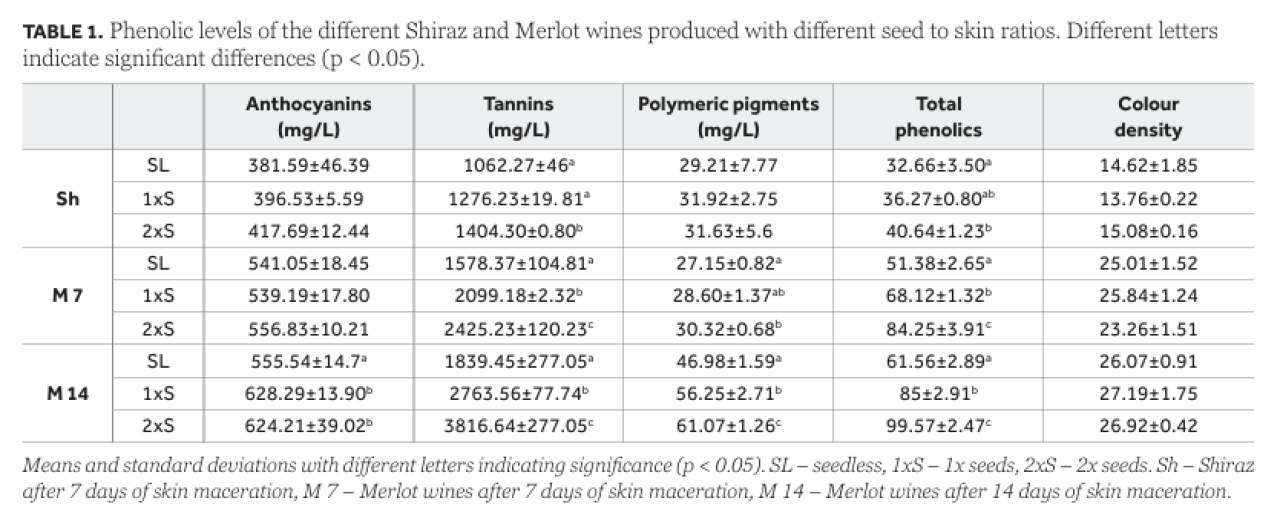
Seeds are well known to be rich in condensed tannins, and this was clearly reflected in the results. On day 7, wines made with double-seed additions (2× seeds) showed the highest tannin concentrations in both varieties. For Shiraz, however, there was no meaningful difference between the seedless and single-seed (1× seeds) treatments at this stage. The largest contrasts in tannin levels between seedless and seeded wines became evident after three to four days of fermentation, highlighting a period of intense phenolic extraction (Figure 1). Earlier research has similarly reported rapid extraction of seed-derived phenolics after approximately three days, with levels continuing to increase and reaching a maximum after extended maceration of two to three weeks.
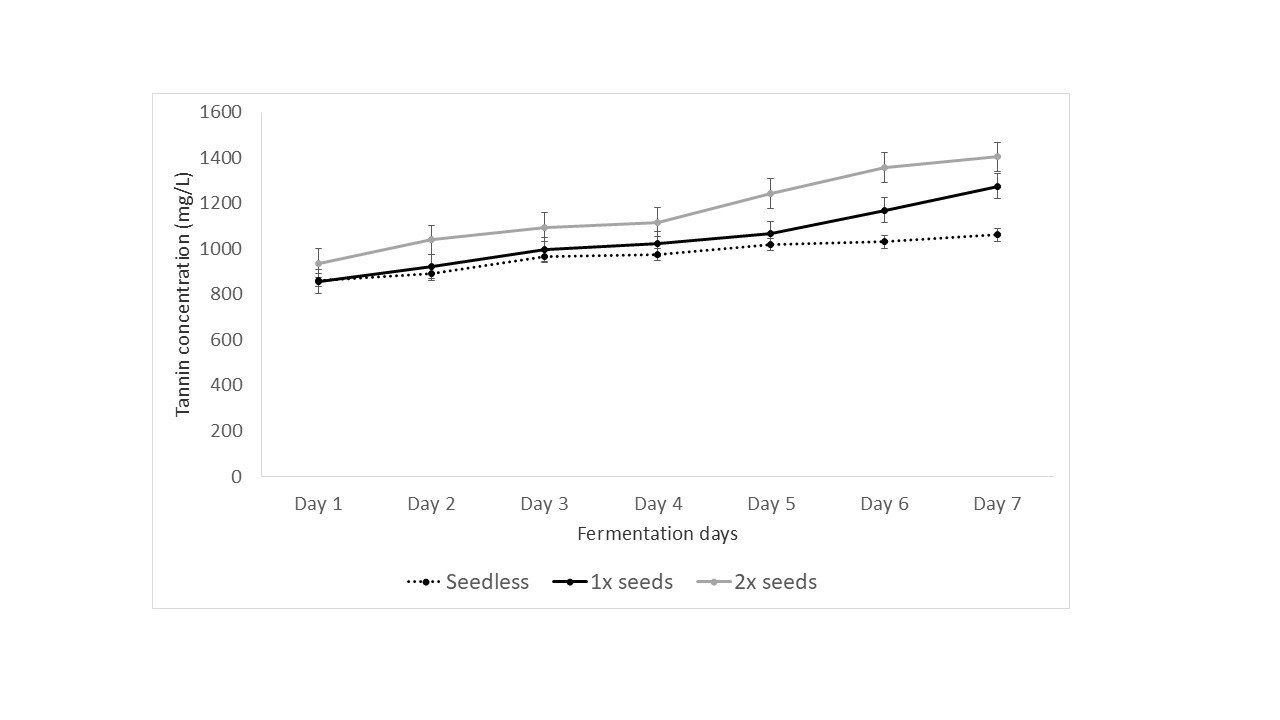
FIGURE 1. Tannin extraction in Shiraz fermentations with varying seed levels.
Prolonged maceration clearly favoured the extraction of seed tannins, as seen in the marked rise in total phenolic index and tannin concentration in Merlot between day 7 and day 14. This effect is likely linked to increasing ethanol levels during fermentation, which help break down the protective lipid layer of the seeds. At the same time, longer maceration promotes seed hydration and structural changes, further enhancing extraction. While this can build structure and complexity, excessive seed tannin extraction may also intensify astringency. Careful monitoring of tannin development during maceration is therefore essential to avoid overly harsh wines.
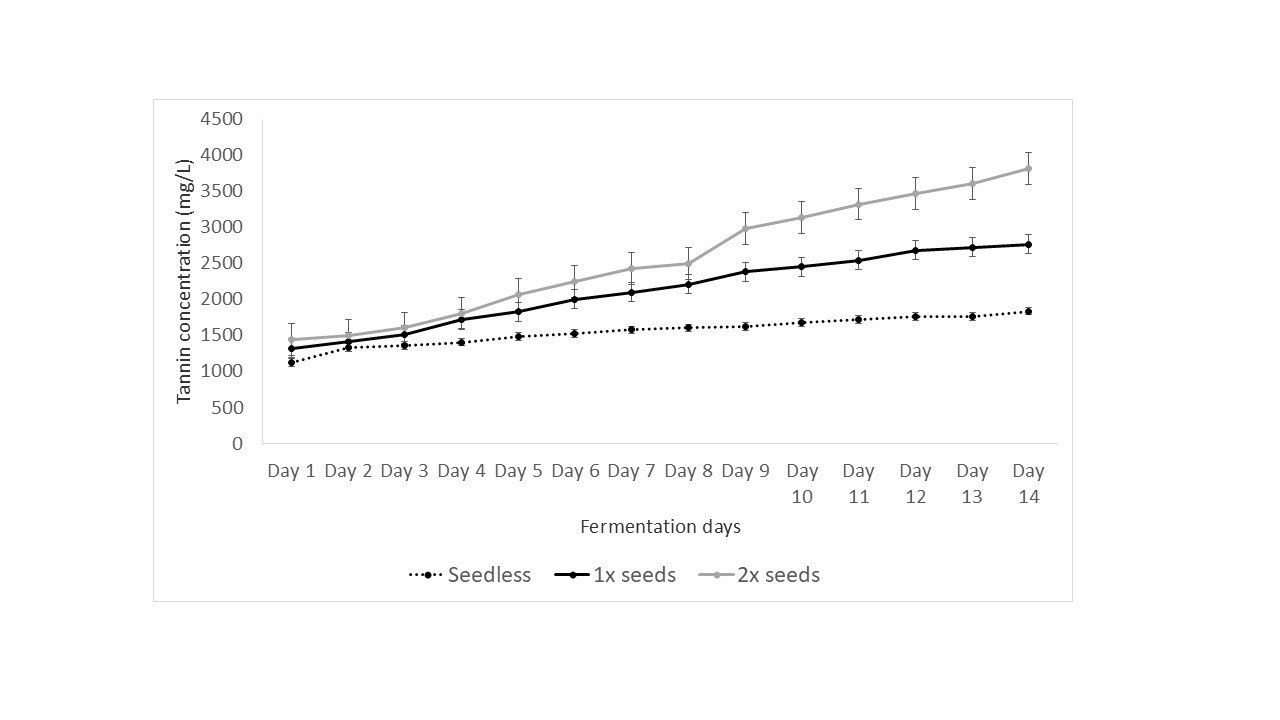
FIGURE 2. Tannin extraction in Shiraz fermentations with varying seed levels.
Overall, Merlot displayed higher tannin concentrations than Shiraz at day 7. Even under comparable winemaking conditions, cultivars can differ in the relative contribution of skin and seed proanthocyanidins. In both Shiraz and Merlot, treatments with added seeds consistently produced higher tannin levels, mirroring trends observed in grape extract analyses. These findings align with earlier studies showing that seed addition increases proanthocyanidin content in wine.
Seed-derived tannins also play an important role in colour stability. During fermentation, anthocyanins react with tannins to form polymeric pigments that are more stable at wine pH and more resistant to sulphur dioxide bleaching than free anthocyanins. In this study, Shiraz wines did not show significant differences in polymeric pigment levels between treatments. In contrast, Merlot wines with double seed additions produced noticeably more stable pigments than seedless wines at both sampling points.
The total phenolic index followed a similar pattern: wines from the 2× seeds treatment consistently showed higher values, particularly in Merlot at both day 7 and day 14.
The average molecular mass (AvMM) of tannins varied across treatments. In Shiraz, the highest AvMM values were generally observed in seedless wines at day 7 and in some grape extract treatments. In several cases, increasing seed levels reduced AvMM. A similar overall trend was observed in Merlot, where seedless treatments often showed higher AvMM values, while the presence of seeds was associated with lower average molecular size in many extracts and wines.
This pattern can be explained by structural differences between skin and seed proanthocyanidins. Seed tannins typically consist of shorter chains (approximately 5 - 20 subunits), whereas skin tannins tend to be larger polymers (around 20 - 40 subunits). Increasing the proportion of seed tannins would therefore be expected to reduce the overall average molecular mass in many cases.
Take-home message
Skin and seed tannins differ markedly in composition. Seed tannins are generally smaller in molecular size and tend to contribute more bitterness, whereas skin tannins are typically larger and often perceived as softer. During alcoholic fermentation, phenolic extraction follows a fairly predictable sequence. Anthocyanins are extracted first from the skins, because they are more soluble in the aqueous phase of the must. Skin tannin extraction also begins early in fermentation. In contrast, seed tannins are usually extracted later, as rising alcohol levels make them more soluble.
Longer maceration times and a higher proportion of seeds increase the amount of seed-derived tannins in the wine. While this can enhance structure, excessive extraction of seed tannins may intensify bitterness and astringency. At the same time, seed tannins play an important role in colour stability, as they participate in reactions that form more stable pigmented compounds in red wines.
Achieving the right balance between skin and seed tannins is therefore essential for both colour development and mouthfeel. Careful management of maceration time and seed contribution allows the winemaker to shape the wine’s final style and quality.
(This article has been written with the assistance of Copilot.)
For more information, contact Wessel du Toit at [email protected].
Click here to get your copy of WineLand Magazine.

More from
Innovation and insights

Packaging under pressure: What wine businesses should be watching
From lighter bottles to automated packing lines, packaging decisions are becoming increasingly important to the cost and competitiveness of South African wine.
How vine water stress shapes grape and wine quality
This study formed part of the South Africa Wine programme “Grapevine production with limited water resources”, and aimed to evaluate how spatial and temporal water stress affects vine physiology, fruit composition and wine quality.
Drought tolerance of different scion cultivars (Part 4): Vegetative growth and yield
The study aimed to assess grapevine vegetative and yield responses in an almost worst-case scenario, i.e. grapevines growing under dryland conditions in sandy loam soil in the Swartland region.