
The future of DTC
· 5 min read
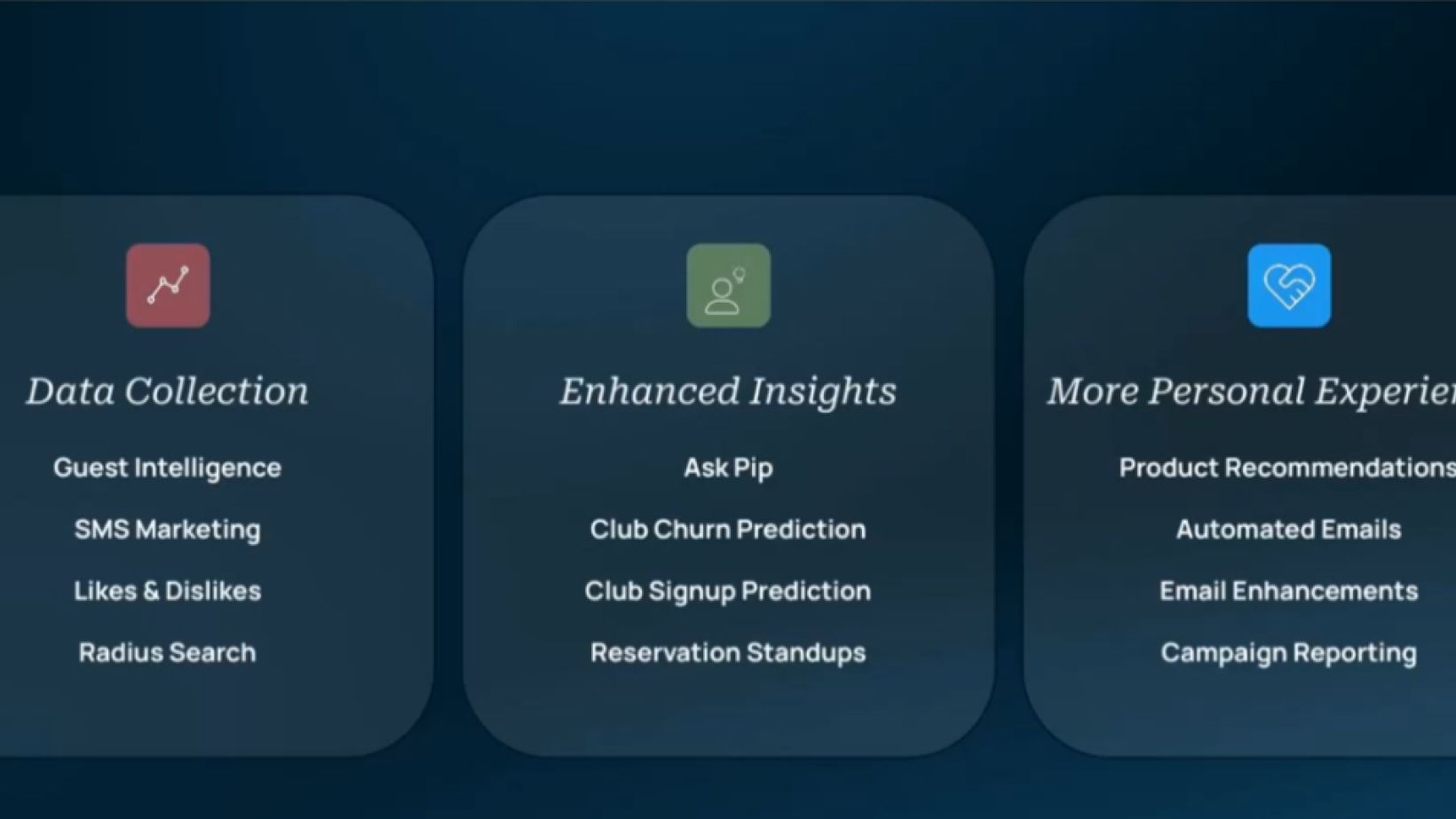
In June this year, the specialised DTC platform Commerce7 introduced a slew of new features that promise to give wineries unprecedented insight into customer behaviour. Their new capabilities offer a glimpse into the future of DTC, converting customer experiences into revenue streams.
According to the founder and president of Commerce7, Andrew Kamphuis, the new features – which span customer intelligence, predictive analytics, personalisation, and automated marketing – were designed around a single premise: know your customer, sell more wine. “The future of DTC is intelligence,” he says. “It’s the ability to understand your customers and act on that information at every touchpoint.”
Centralised data
The ability to quickly assess a brand-new customer can give wineries an important head start in meeting their needs. Collective data-sharing gives wineries access to data captured elsewhere, such as reservations, wine club memberships, spending habits, and other visits, and allows them to respond proactively rather than reactively.
Guest Intelligence is an opt-in data-sharing network built on Commerce7’s ecosystem of more than 3000 wineries. When wineries opt in to share anonymised, aggregated data from their own customers, tied to their e-mail address, they gain access to the same information from other participating wine businesses.
“Guest Intelligence means knowing more about your guests from the very first interaction,” says Andrea Dyck, Commerce7 head of product development. “That context really changes the conversation. It means stronger hospitality, more relevant recommendations, and more opportunities to turn that first visit into something more.”
The data is captured from customers when shopping or making reservations through the Commerce7 system, without revealing names or individually identifiable information. From personal preferences and location data, wineries can segment customers by postal code to create relevant promotional offers, for instance. “More data provides more context, which allows greater precision,” Andrea says.
AI augmentation
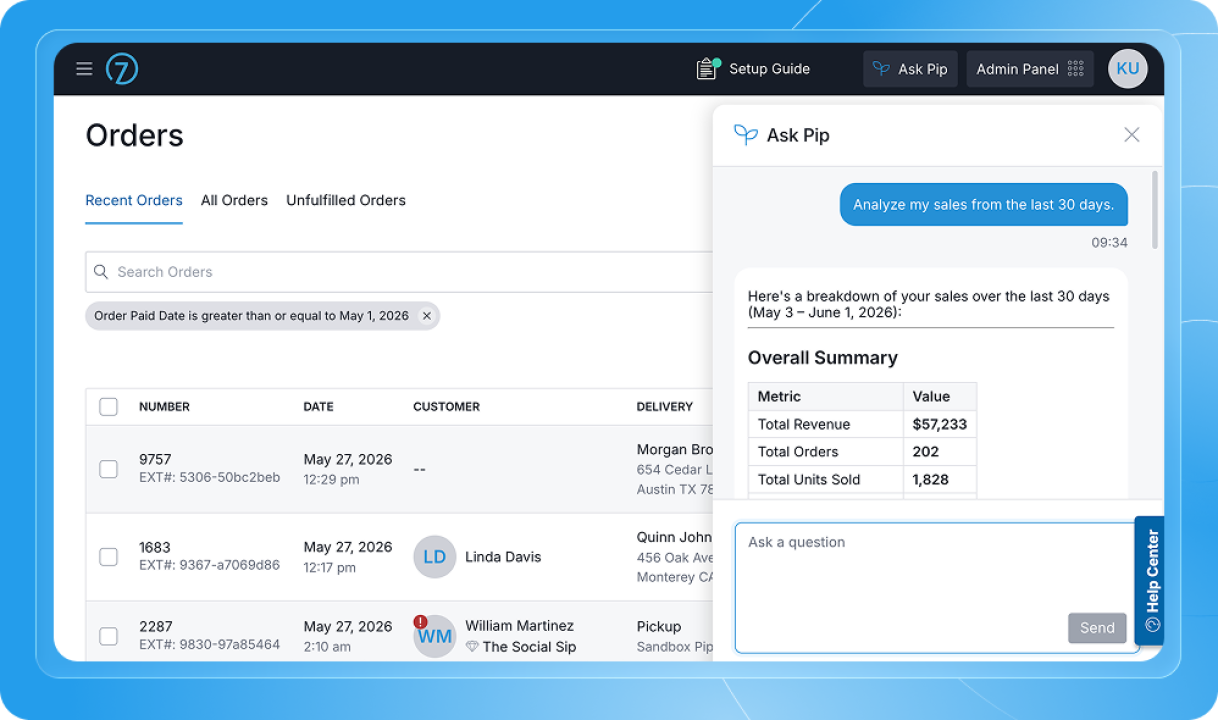
The power of this data is only unlocked if wineries can easily access and interpret it. To this end, Commerce7 has introduced its own AI chatbot, Ask Pip, that enables wineries to query their data in plain language.
Ask Pip was developed from the ground up in Commerce7’s environment and runs Anthropic’s Claude AI on Amazon Bedrock. “We wanted every winery to be able to ask questions in plain language and get real answers instantly from live data,” Andrew says. “Pip knows when it doesn’t have the answer, and won’t fabricate a result.”
Wine club insights
Wine clubs are a great way to build and maintain brand loyalty and enable brands to communicate directly with new and returning customers. A good CRM can take the guesswork out of managing a wine club and help wineries get the most out of their lists.
Commerce7 tracks 43 customer touchpoints to assess customer engagement and predict behaviour. “We use engagement data, including email opens, clicks, reservation visits, and order frequency to predict the likelihood that a member will cancel within 30 days with up to 74% accuracy,” Andrew says. “This allows wineries to know who needs attention before they cancel.”
“Targeted outreach through personalised email campaigns to at-risk individuals means retention efforts can be focused where they actually matter, rather than blasted to the entire list.”
The same framework can help identify customers most likely to join the wine club, providing tasting room staff and marketing teams with timely, actionable information. “When a customer has visited a winery multiple times, placed multiple orders, and engaged with their website and emails, they’re a strong candidate for the wine club.”
Personalisation
Commerce7’s new personalisation engine draws on recorded customer relationships to generate more accurate product recommendations. “We’re looking at the full picture,” says Karen Urquhart, Commerce7 product marketing manager. “We look at what customers tend to buy together, what drives repeat purchases, and identify broader buying patterns to deliver more relevant recommendations to every customer in the system.”
This adds a layer of personalisation to product pages, providing contextual suggestions based on individual preferences, while a dynamic shopping cart displays relevant products at checkout without manual curation. “Instead of manually selecting the products to feature in the cart, the engine automatically surfaces the most relevant recommendation for each customer, based on who they are, what’s already in their cart, and their purchase history,” Karen says. “This gets the right product in front of the right customer.”
Automation
But getting the right message out at the right moment is equally important, Karen adds. E-mail automation allows wineries to act on the data they’re collecting. “A follow-up email that never gets sent is a missed opportunity,” Karen says. “Automations make sure the right message goes out at the right moment without anyone having to remember to hit send.”
Events that trigger an automated email could include abandoned carts, placed orders, and birthdays. Commerce7 will soon add wine club anniversaries, order pickup reminders, and reservation reminders to its list. “This allows wineries to stay in front of customers at every key moment,” Karen says.
“Wine is personal – it’s tied to anniversaries, special moments, families, and stories,” Andrew says. “When you really know your customer, you create experiences people remember. Everything we built is designed to help wineries create those moments.”

More from
Innovation and insights

Packaging under pressure: What wine businesses should be watching
From lighter bottles to automated packing lines, packaging decisions are becoming increasingly important to the cost and competitiveness of South African wine.
How vine water stress shapes grape and wine quality
This study formed part of the South Africa Wine programme “Grapevine production with limited water resources”, and aimed to evaluate how spatial and temporal water stress affects vine physiology, fruit composition and wine quality.
Drought tolerance of different scion cultivars (Part 4): Vegetative growth and yield
The study aimed to assess grapevine vegetative and yield responses in an almost worst-case scenario, i.e. grapevines growing under dryland conditions in sandy loam soil in the Swartland region.