
Selling sunshine
The UK’s thirst for bubbles is legendary, but while Prosecco dominates the volume and Champagne sits at the prestige peak, a “healthy middle” has emerged – and South Africa’s Cap Classique is perfectly positioned to claim it.
· 6 min read

In a recent discussion, a panel of sparkling wine buyers and IWSC judges explored why this category is the fastest-growing in South Africa’s portfolio and what it must do to become a household name in the lexicon of British wine lovers.
Beyond the bubble
The statistics are, by any measure, remarkable. The UK is currently the largest export market for Cap Classique, accounting for over a third of all shipments. Journalist and broadcaster David Kermode highlighted the sheer scale of its ascent: “It was 90963 cases in 2025 – up from 35412 in 2019. That’s growth of 157%, which is pretty remarkable,” he said.
Crucially, value is outstripping volume, signalling a trend toward premiumisation. “Anything showing growth in the UK market – where down feels like the new up – is doing something pretty special.”
David believes the category’s success is built on an impressive quality-to-price ratio. This sentiment was supported by the 2024 IWSC global judging, where Cap Classique scooped five gold medals, including a 97-point score for Graham Beck’s Cuvée Clive – a wine described simply by Master of Wine Robert Matthias as “yum”.
A tale of two tiers
Despite the growth, the retail landscape remains quite challenging. Beth Kelly MW, Product Development Manager at Tesco, explained that the experience varies significantly between specialist and grocery retail. While Cap Classique was deemed mainstream during her time at Majestic Wine – sitting in the top three sparkling categories alongside English sparkling wine and Crémant – it remains quite niche in the retail sector.
“We only have one brand at Tesco,” she noted, pointing out that this brand often functions as a category of its own rather than a representative of the wider South African offering.
Alexandra Mawson, Champagne and sparkling wine buyer for Waitrose and The Wine Society, shared the sentiment: “Cap Classique has grown 218% at Waitrose over the last ten years and 30% over the last five, but it represents just 2% of our range in terms of value and volume – two out of 114 fizz lines, including Champagne. It’s small, but successful in what it does.”
Unfortunately, steady and loyal demand doesn’t necessarily mean there’s untapped potential. In a sector with limited shelf space and heavy competition, every bottle must earn its place. “Cap Classique generally needs more visibility to compete with other brands,” Beth said.
The brand gap
The brand identity of Cap Classique was a recurring theme. Unlike Prosecco, which consumers view as a generic category, Cap Classique is still driven by producer names, and the connection between the producer, the style, and South Africa is not yet transparent enough. “The question is how to build Cap Classique into a brand,” Alexandra said. “Prosecco is a brand, Cava is a brand, Crémant is a brand; Cap Classique is not yet a brand.”
The panel agreed that Cap Classique brands can learn from the Marlborough–Sauvignon Blanc–New Zealand messaging: a single, clear message that links the name to the origin and the method. “A good brand helps build brand stories, and that helps drive premiumisation in a way that Brand Prosecco can’t,” she said. “Brands are incredibly useful at helping drive a category in the right direction.”
The Crémant comparison
Cap Classique is often compared to Crémant, which has seen explosive growth in the UK since 2015. Victoria Mason MW of The Wine Society noted that Crémant’s success was driven by being “the affordable Champagne” – made like Champagne but half the price.
However, Cap Classique has a distinct advantage in its production standards and quality. “Let’s look at minimum lees ageing,” she suggested. “Cap Classique is a minimum of 12 months versus 9 months for Crémant. That delivers the toasty richness that consumers at the £10–£15 price point are seeking.”
Advice for producers
To reach the next level, the panel offered direct advice for producers:
- Engage more. “There generally isn’t enough engagement with UK retail buyers,” Beth said. “We get very few offers on Cap Classique.” Sparkling wine buyers don’t come to South Africa on buying trips, which puts the onus on local producers to make that connection.
- Do targeted research. Victoria warned producers to stop sending generic proposals to The Wine Society. “Please do your research,” she urged. “Have a look at our range. Come to us with a proposal that’s actually targeted at me as a retailer. Give me the confidence that you know exactly who you are selling to.”
- Update your label. “Some labels are uninspiring, and some brand names are very hard to pronounce,” Alexandra says. “And a lot of the commercials that I’ve seen are all very, very similar, and all situated around a very similar price point, so in a way, everybody’s directly competing with one another. What makes that new brand stand out? What’s that story? We need to be able to explain it instantly from the label. We’re not like Wine Society or independent shops; we can’t hand-sell in the same way. The label has an awful lot of heavy lifting to do, and I just don’t think that we see the inspiration that we would like to be able to instantly think, wow, that’s going to work.”
- Mind the sweet spot. While prestige cuvées are gaining traction, the sweet spot for volume and first-time engagement remains the £12–£15 bracket. Some extra effort and promotion could push this into the £15–20 slot.
- Don’t neglect the on-trade. There’s a missed opportunity in restaurants, where Cap Classique has the potential to shine. The “sunshine in a glass” appeal is perfect for the on-trade, especially by the glass,” Victoria noted.
- Medals are signposts: In a crowded aisle, stickers matter. “Stickers on bottles, please,” Alexandra requested, specifically citing the IWSC, Decanter, and IWC as awards that carry weight. (But not too many on a single bottle).
The verdict
The message for Cap Classique is clear: the quality is there, and the UK consumer is open-minded and receptive. However, patience is required to land any kind of new name in that British consumer lexicon, David concluded. By focusing on educational labelling, targeted retail proposals, and gaining a foothold in the on-trade, Cap Classique can move from a loyal niche to a mainstream powerhouse.
As David said, it is a category that continues to over-deliver, and for those who know, “they just know”. The task now is to ensure everyone else knows too.

More from
Markets, business and trade

Paris is calling. Again.
Wine Paris has become one of the important dates on the global wine calendar. For South Africa, being there matters. But being there with a plan matters more.
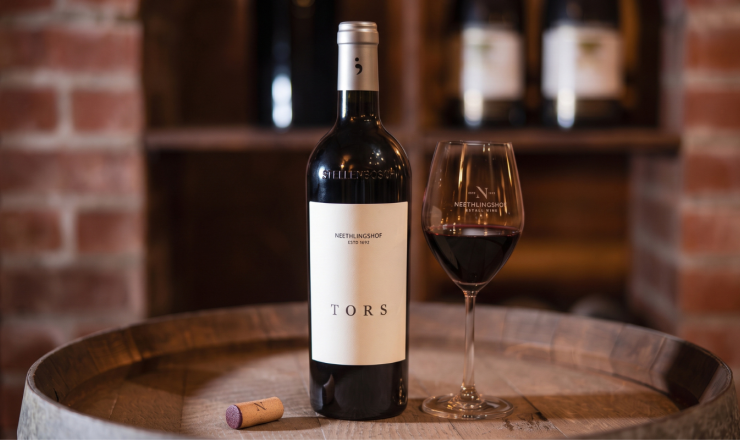
Neethlingshof debuts flagship red 'TORS' with Absa Cape Blend Top 6 Win
Neethlingshof Estate has introduced its flagship red, TORS, marking its debut with a win at the Absa Cape Blend Top 6 Awards for its maiden 2024 vintage. Crafted as the estate’s pinnacle expression, TORS was developed for fine wine collectors seeking a micro-vinified Stellenbosch blend shaped by site specificity and low-intervention winemaking.

The shelf has moved: how AI is changing the way consumers find wine
The way consumers find wine is changing. A decision that once happened in front of a shelf or with advice from a wine retailer can now start with a question typed into an AI platform.