
Highlights of the 2019 Gen-Z cover crop demos
· 10 min read
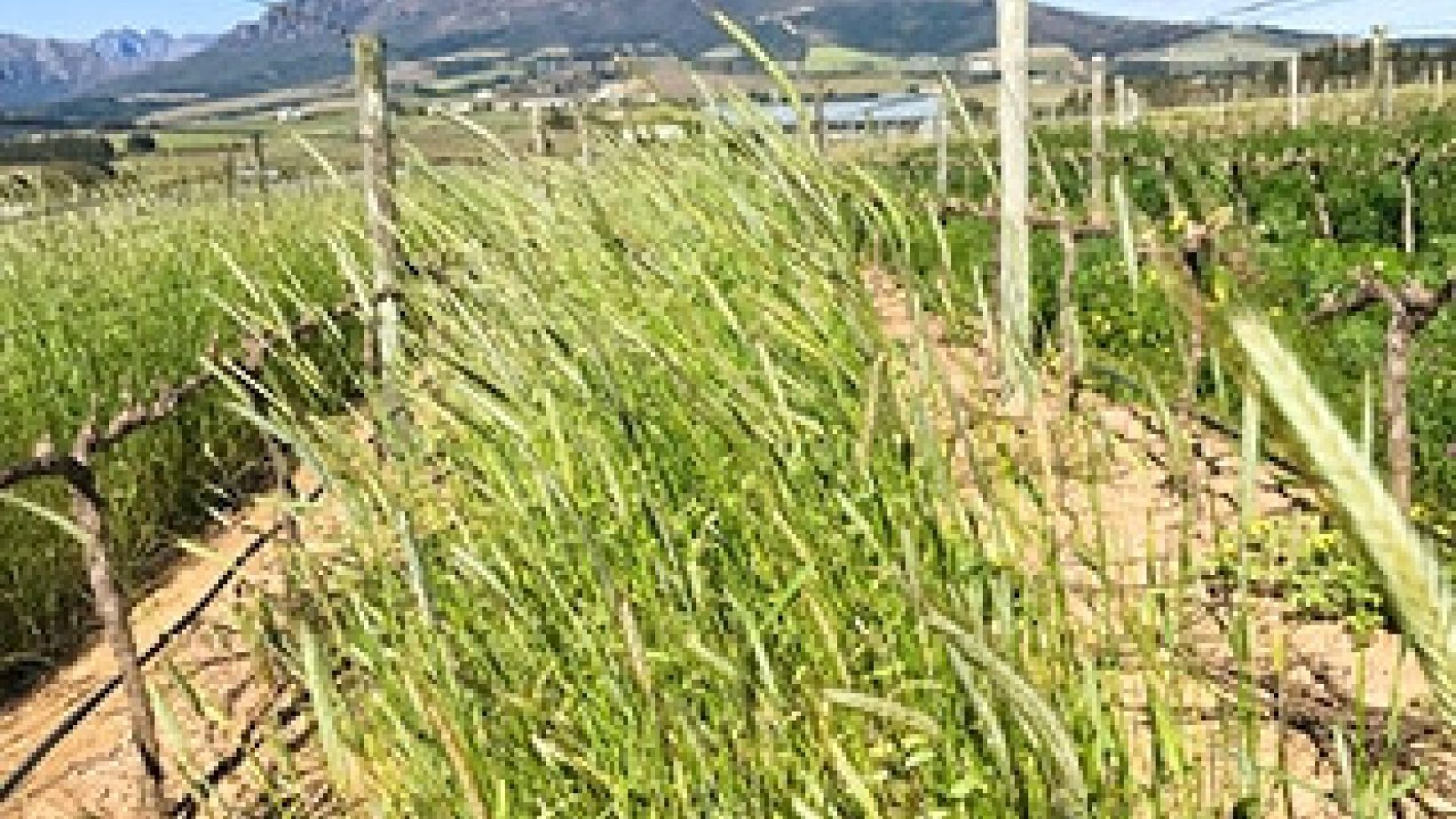

The benefits of establishing a cover crop in the vineyard work row have been well documented and include increased soil organic matter, improved soil structure, enhanced microbial activity, reduced surface crusting, better water infiltration and weed suppression in some cases.
While drawbacks, such as the cost of seed, increased susceptibility to frost and risk of fires, the likelihood of competition with grapevines and the attraction of pests are valid concerns, these seem to be outweighed by the numerous advantages despite many being unquantifiable in terms of rand value. Ultimately choosing to sow cover crops is a form of playing the long game in the goal towards achieving a more sustainable, diverse and resilient farming system.
The establishment of cover crops, their interaction with soil microorganisms, grapevine roots and insects, as well as their response to climatic conditions remains a complex subject, requiring a great deal more scientific research, as well as experimentation by producers. Ascertaining what covers or mixtures are suitable to one’s farming system, soil type and climate necessitates a bit of trial and error. The need for localised information that is beneficial to a broad range of producers is one of the major reasons for the initiation of the cover crop demos under the Gen-Z Vineyard Project. The cover crop demos are not scientific experiments, but are rather field trials set up to demonstrate to producers what works and what doesn’t under a particular set of conditions. Furthermore, the demos serve to inform producers about new species and mixtures on the market.
In 2019, the third year of the Gen-Z cover crop project, 12 different treatments (single species or mixtures) were sown at 13 demo sites near Robertson, Worcester, Rawsonville, Paarl, Franschhoek, Stellenbosch, Constantia and Swartland. A unique set of recommendations were developed for each site and soil type. Six demo sessions were held in September and October at a selection of the demo sites. Producers and viticulturists were invited to view, assess and discuss the performance of the different treatments and share their experiences and knowledge. The information below is a summary of the collective observations made by the Gen-Z team, Vinpro consultants, producers and technicians from Agricol and Barenbrug.
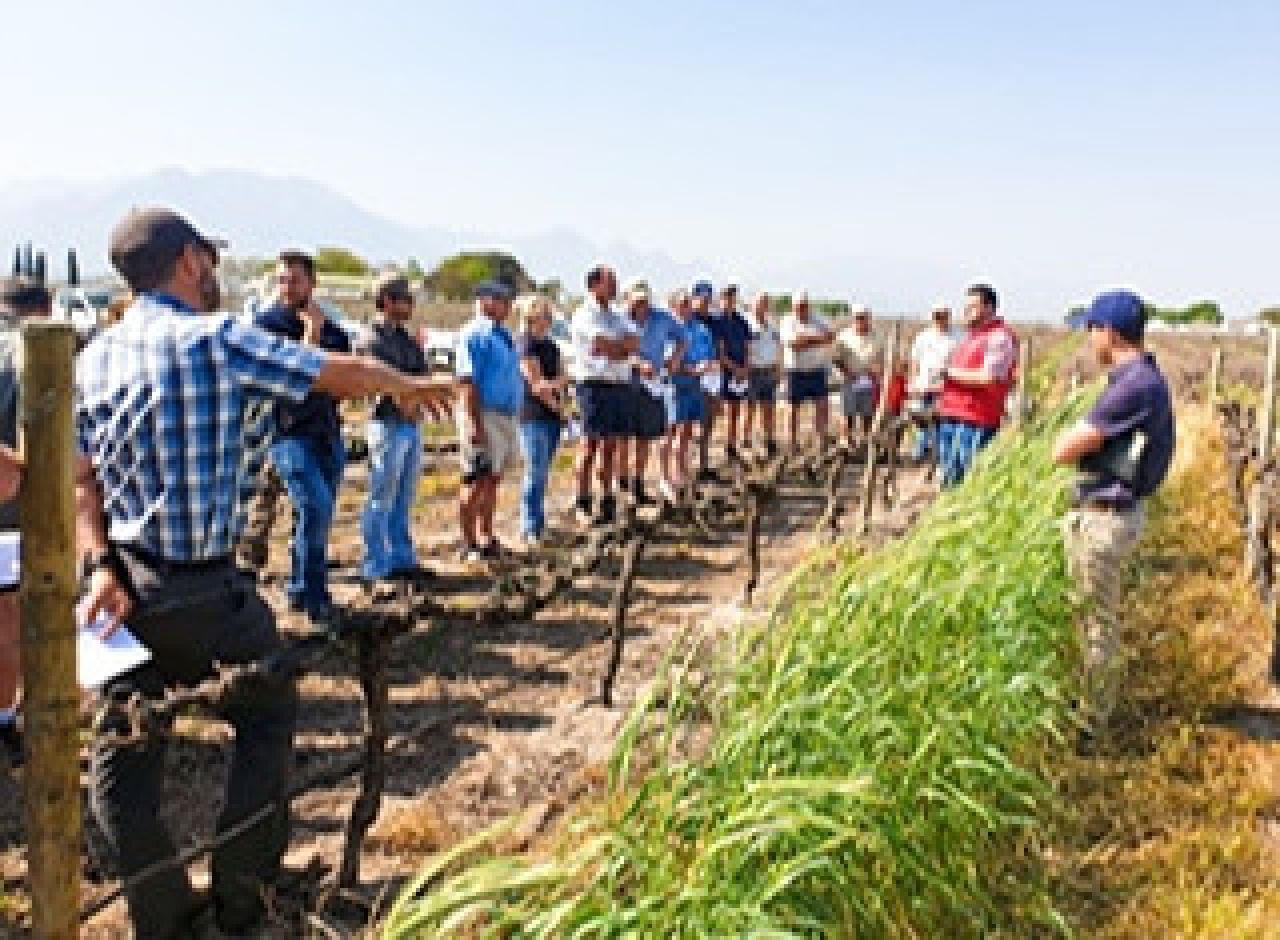
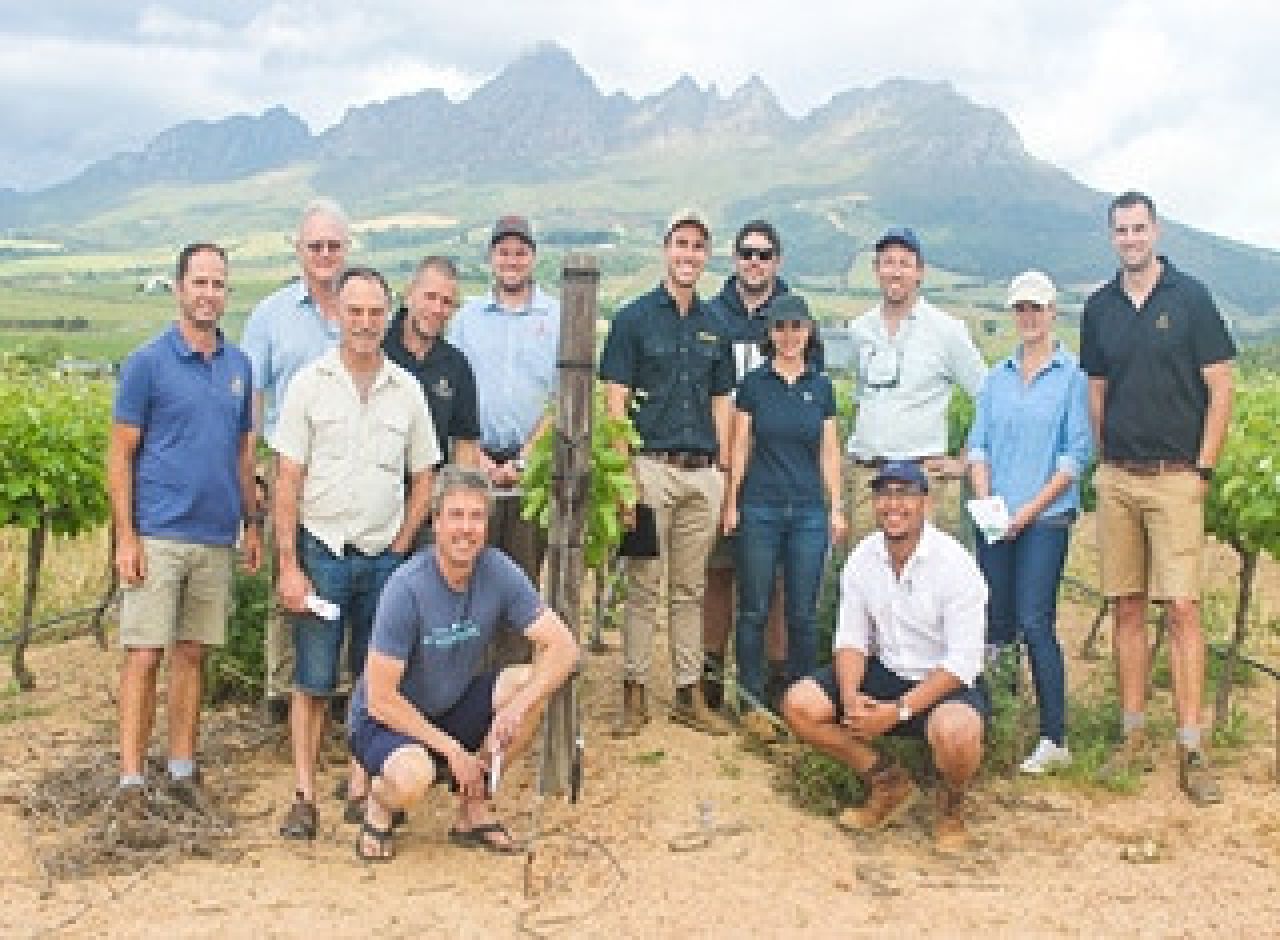
Producers at Klipdrift and Nuwerus demos (top) and Cavalli (bottom) demo sessions.
Major outcomes/highlights per area
Breedekloof
Site: Klipdrift
Soil description: Sandy
Sowing date: Mid-April 2019
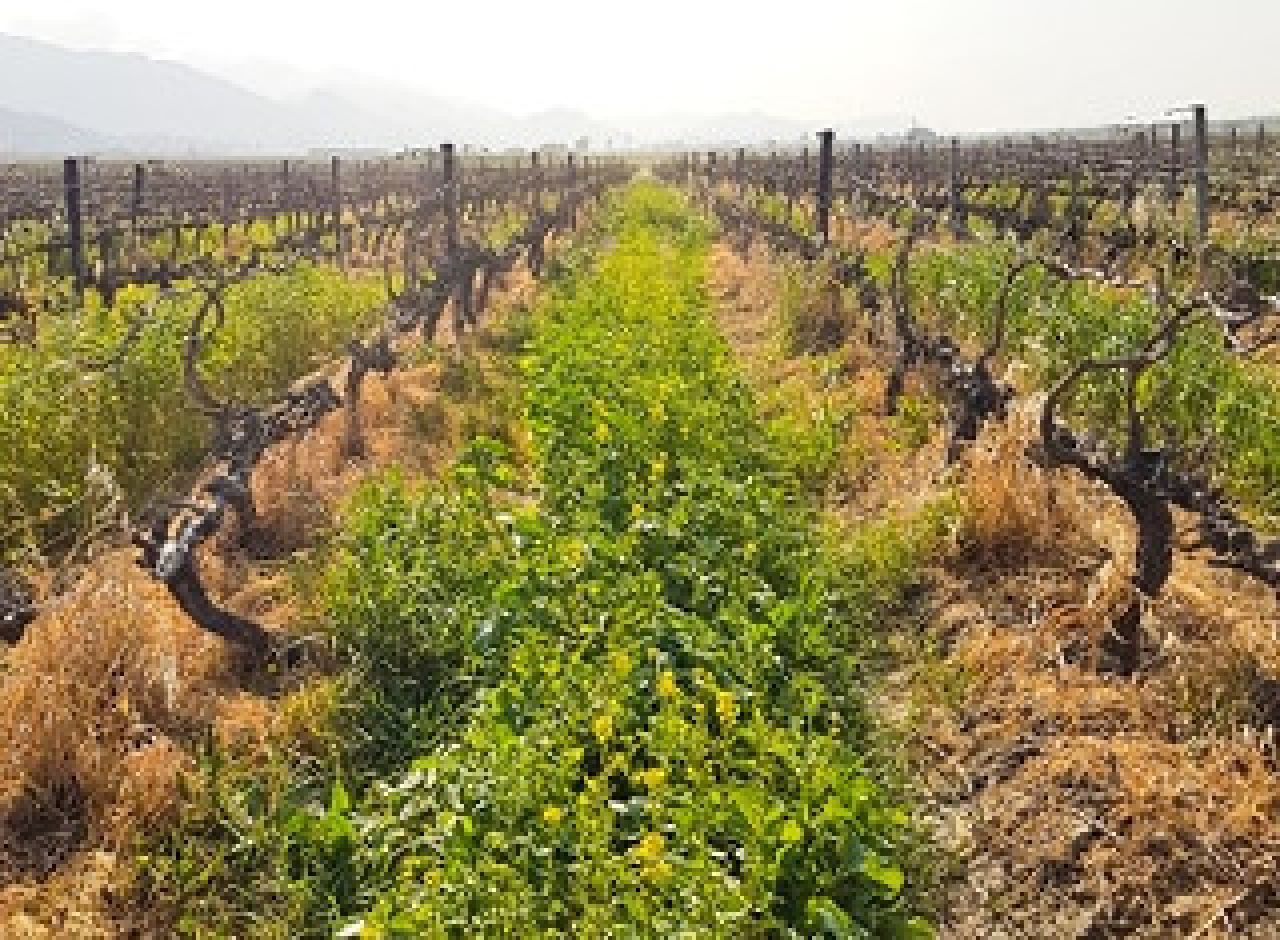
At this demo site, forage rye produced considerable biomass and provided good weed suppression. The standard rye was less impressive in terms of biomass and had begun to dry out in late September, which is perhaps an advantage if water resources are limited and a chemical spray is to be avoided. The black (Saia) oats produced excellent biomass, but suppressed the bitter lupines to a degree. An increase in the sowing rate of the bitter lupines sowing rate would overcome this. The forage radish also developed well on this soil and produced good above- and below-ground growth.
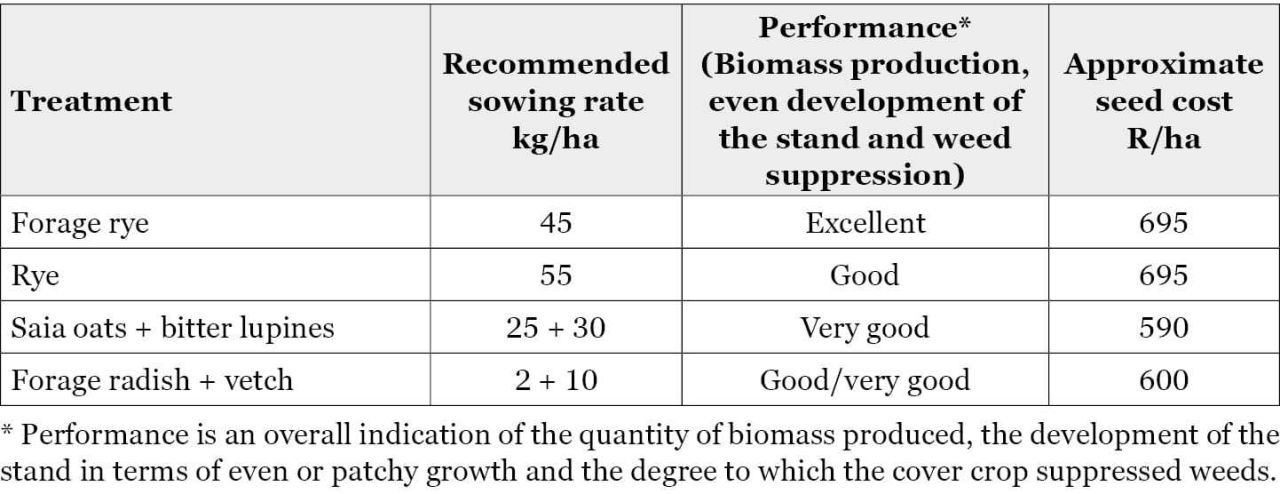
* Performance is an overall indication of the quantity of biomass produced, the development of the stand in terms of even or patchy growth and the degree to which the cover crop suppressed weeds.
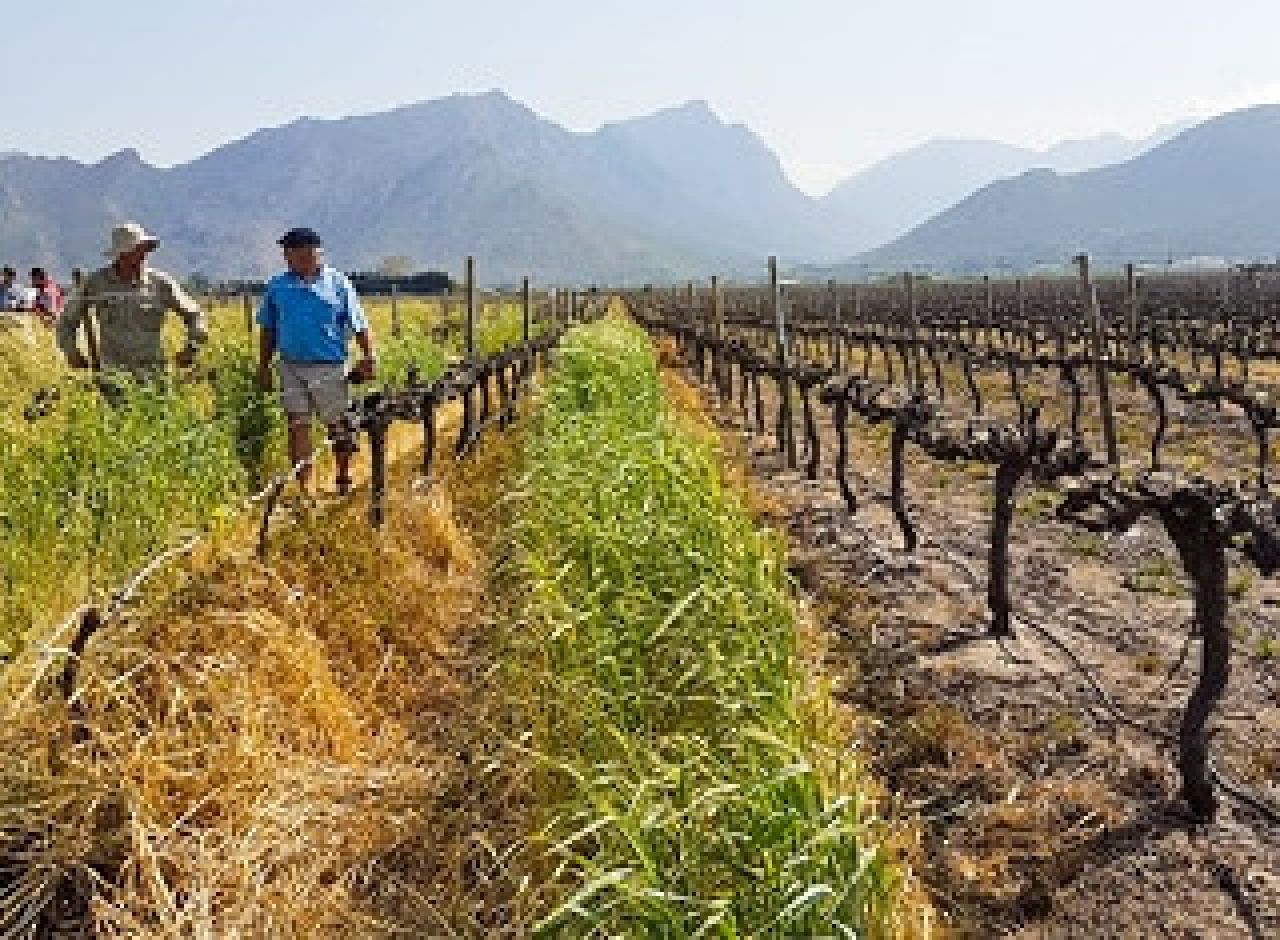
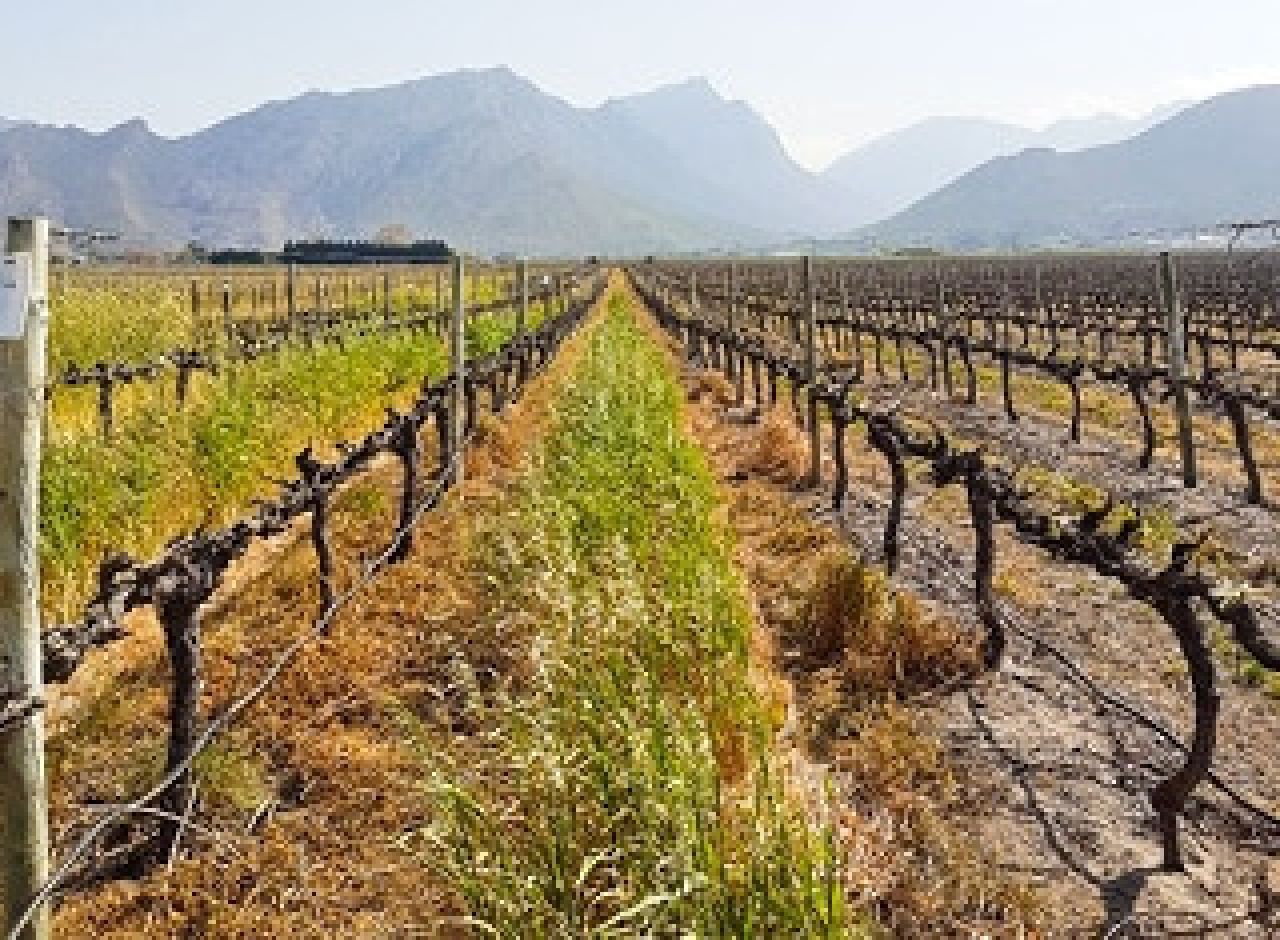
Forage rye (top) and Saia oats with bitter lupines (bottom) at Klipdrift, Rawsonville.
Site: Nuwerus
Soil description: Clay, wet in winter
Sowing date: Mid-June 2019
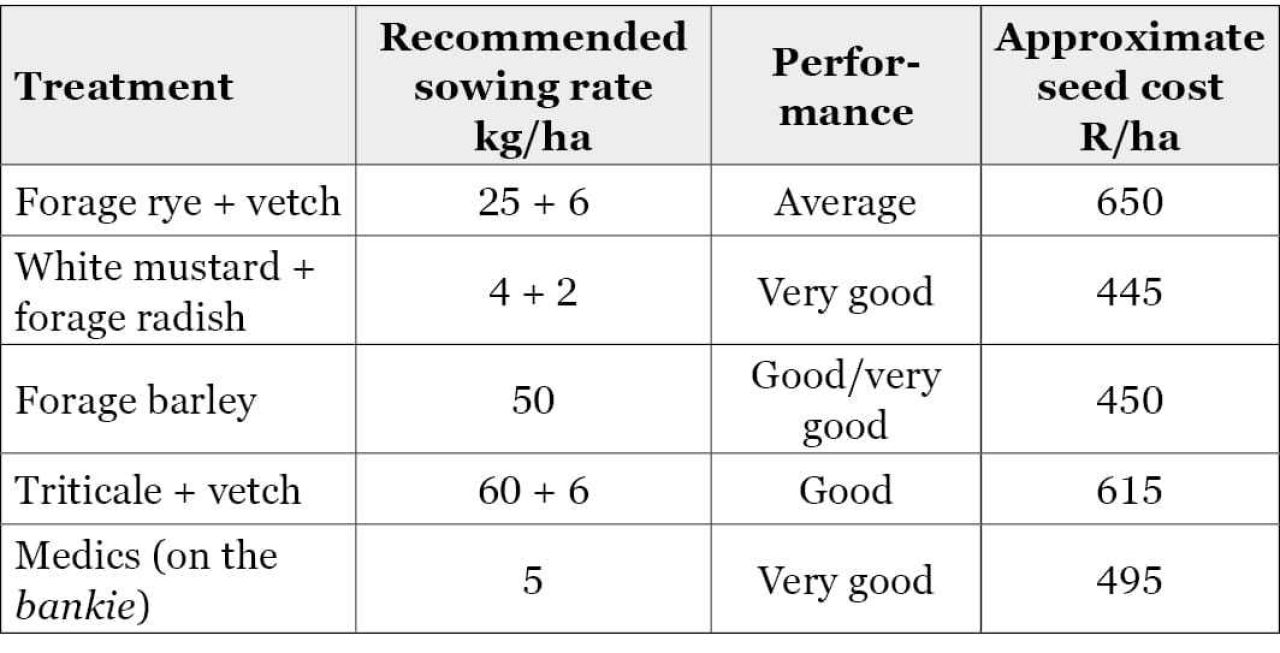
The mixture of forage rye and vetch produced average biomass on this soil. The white mustard and forage radish mixture produced a higher biomass compared to the other mixtures.
The forage barley performed better than the forage rye and produced a medium to high biomass. During the winter months, this soil has the tendency to become waterlogged, therefore a cover crop with a better tolerance for wet soil conditions, such as faba bean, would be expected to do well and will be considered for the following trial. The mixture of medics and clover, which was intended for application on the grapevine row (bankie), performed well despite the somewhat inadequate seeding rate due to its establishment in the work row. The ability of medics, an annual regenerating sward, to re-establish on its own is dependent on various conditions, such as water availability, soil chemical and physical conditions, and the timing of chemical termination (if required). It is recommended that it be allowed to set seed before termination (if required) and that it be sown for two to three consecutive years on the grapevine row before allowing it to re-establish itself.
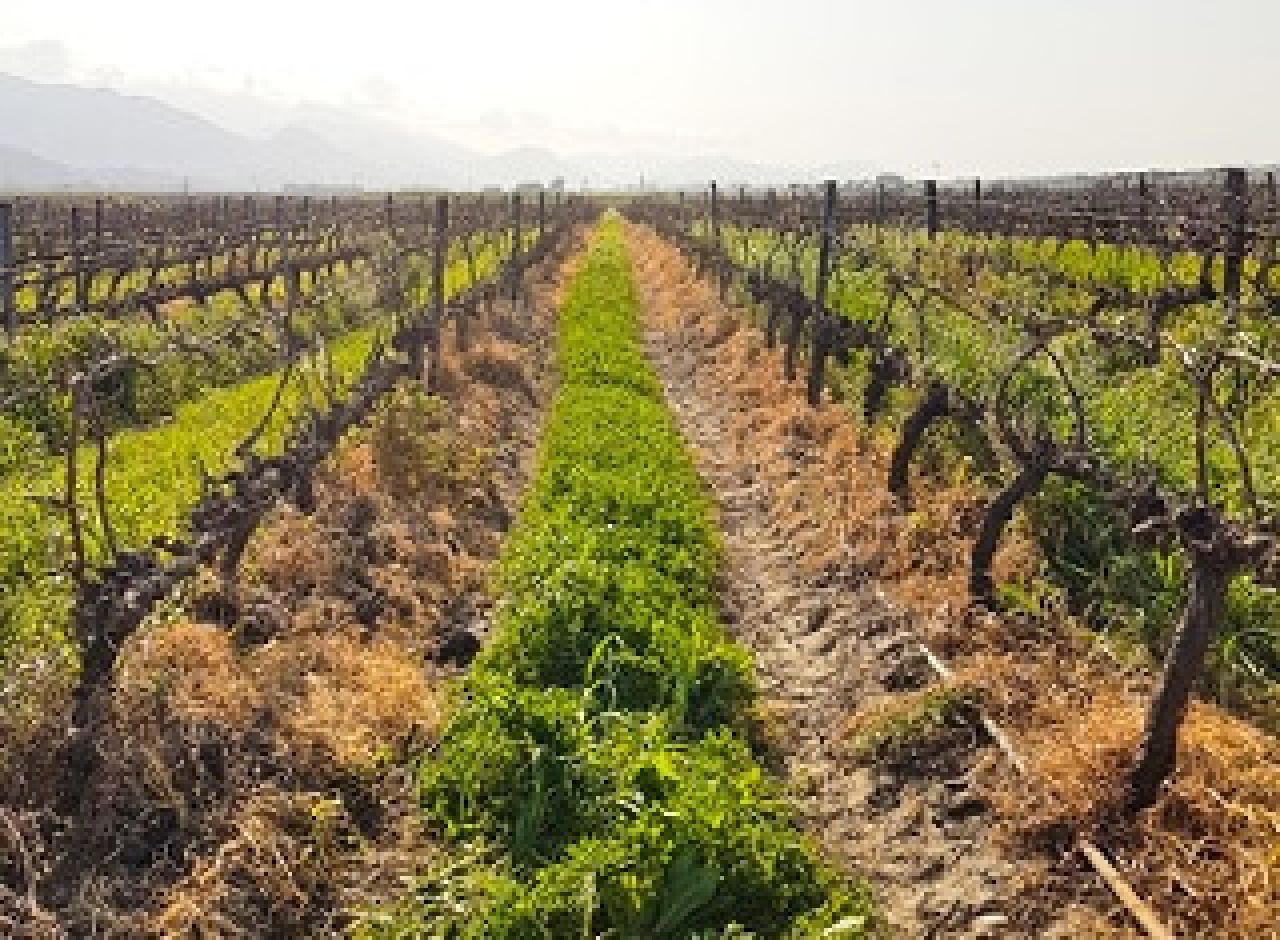
Medics (top) and white mustard with radish (bottom) in the work row at Nuwerus, Rawsonville.
Swartland
Site: Vlakkenheuwel, Hermon
Soil description: Well-weathered shale
Sowing date: Mid-May 2019
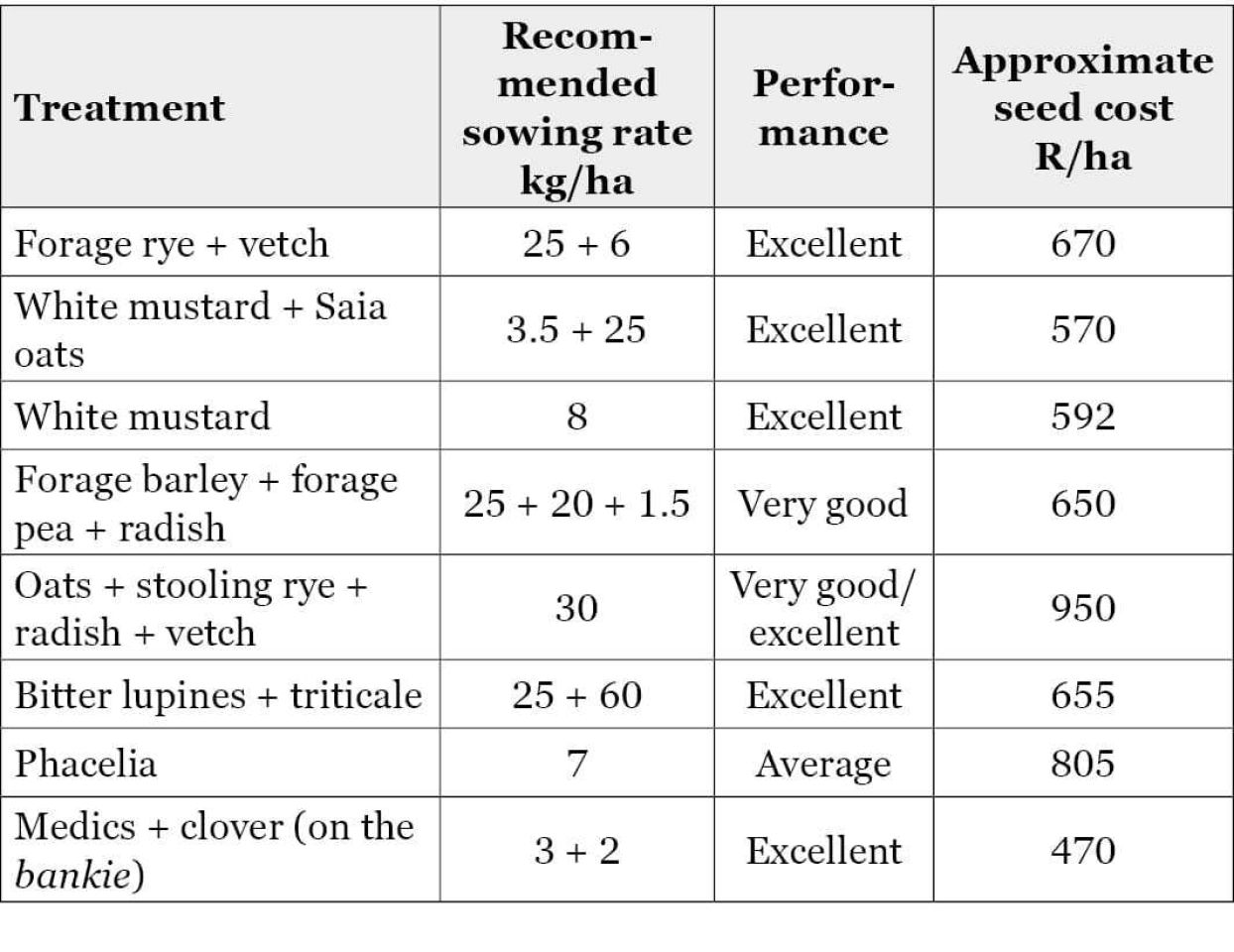
All the mixtures performed well at this site. The forage rye in the forage rye and vetch mixture flourished and outperformed all the other cereals and species at this site. The white mustard produced very good stands with and without oats. The mixture of forage barley, forage peas and radish, which offers a good balance of biomass production, nitrogen fixation and bio tillage, produced good biomass and suppressed weeds. The mixture of oats, radish, stooling rye and vetch provided a dense stand with substantial biomass. The mixture of triticale and lupines also performed excellently. The phacelia produced moderate amount of biomass which was comparable to the phacelia growth at other sites in 2019. Although the medics and clover cover was recommended for application on the grapevine row, it grew extremely well in the work row at this site. It is recommended that medics be sown on the grapevine row to provide a good ground cover that is not expected to grow into the grapevine canopy.
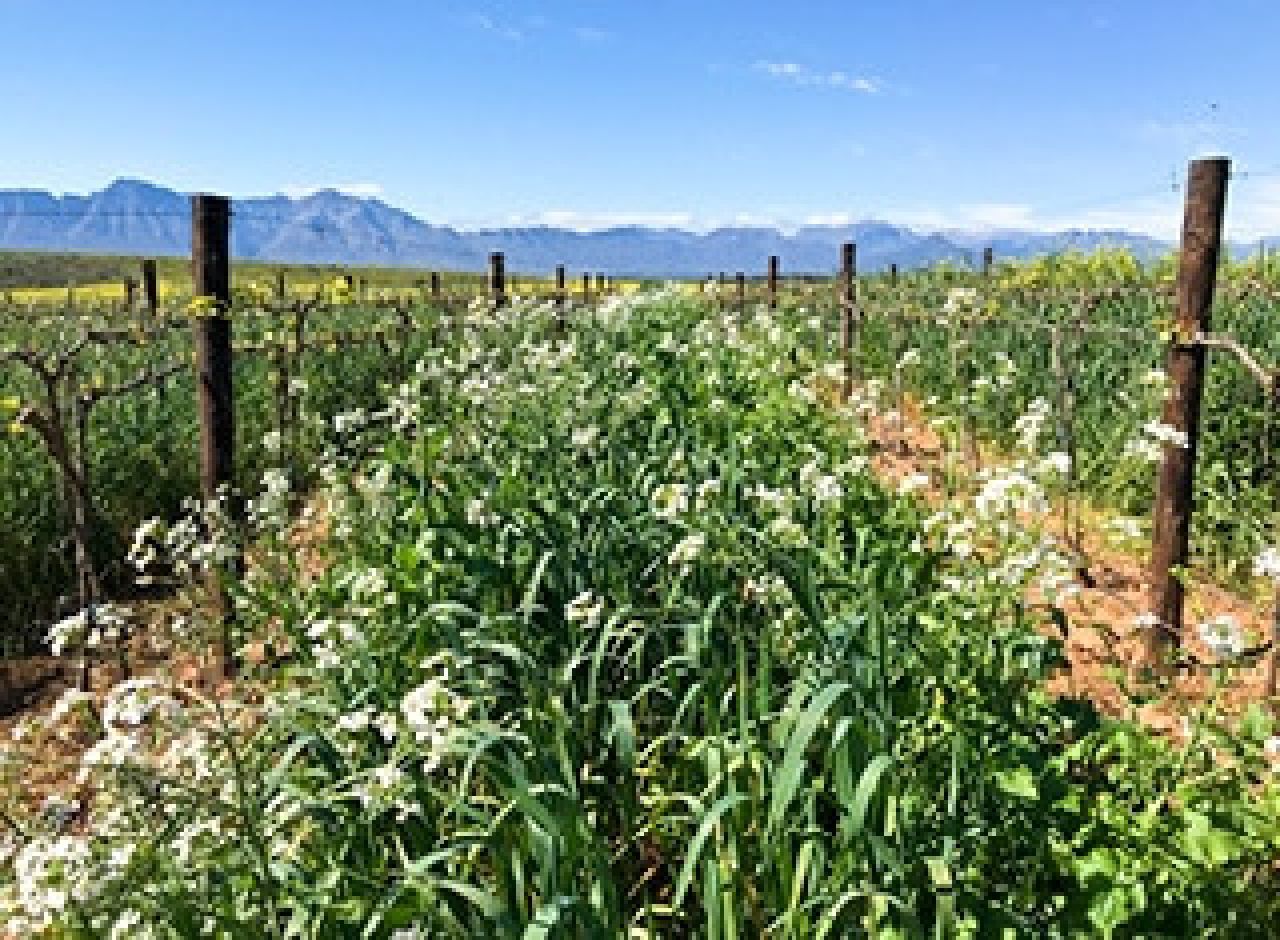
Mixture of oats, stooling rye, radish, tiller radish and vetch at Vlakkenheuwel, Hermon.
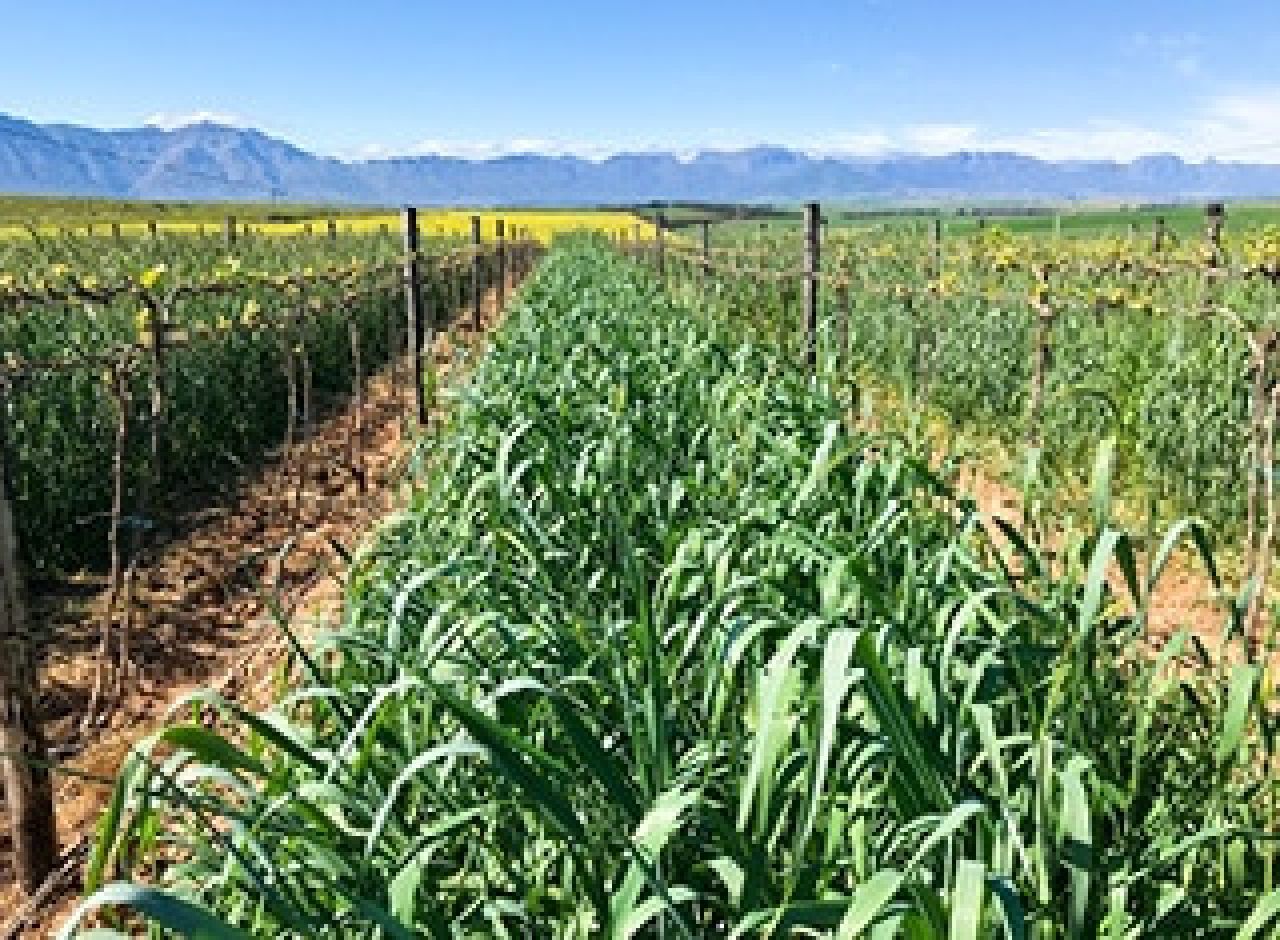
Forage rye and vetch at Vlakkenheuwel, Hermon.
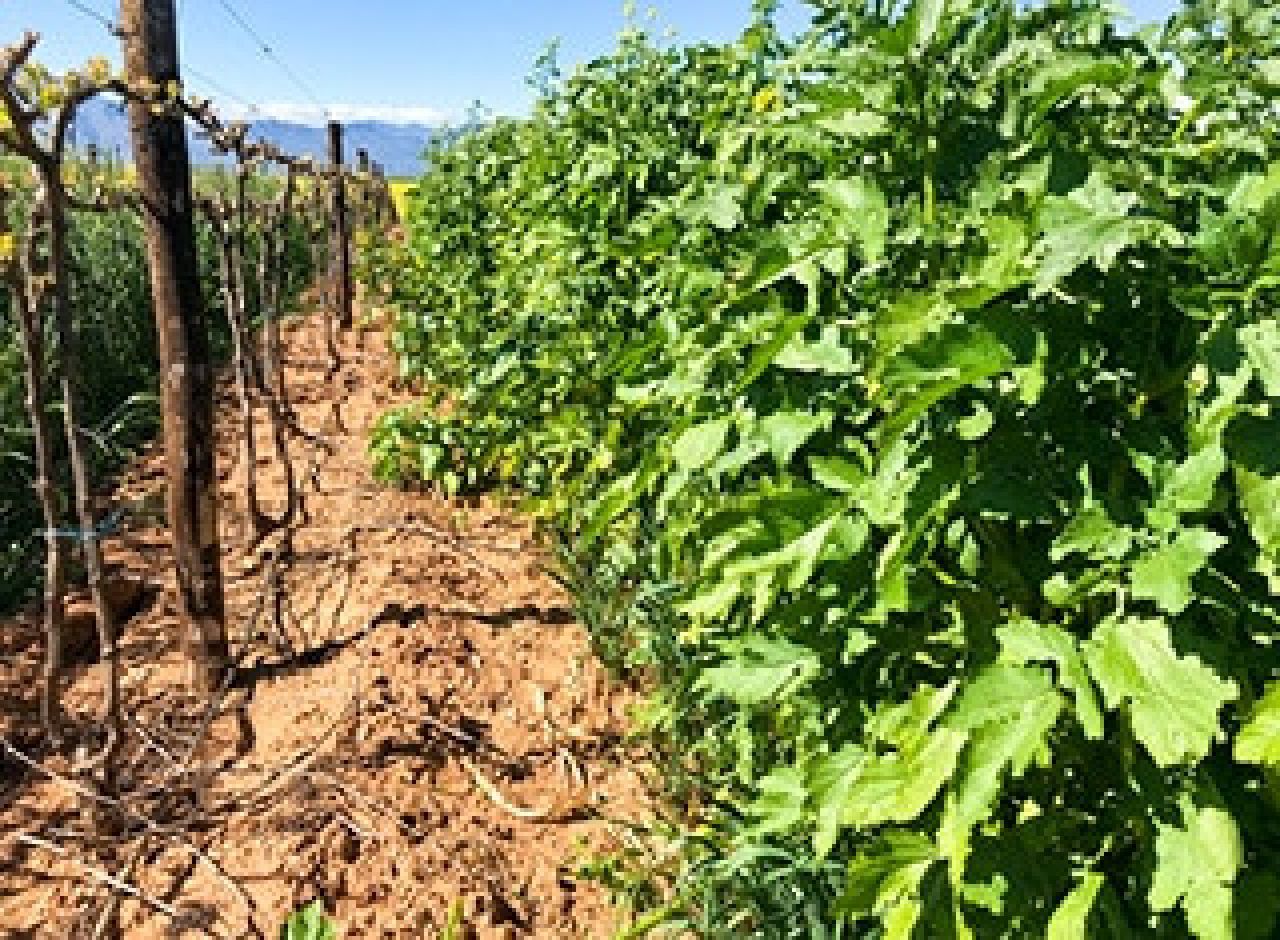
White mustard and Saia oats at Vlakkenheuwel, Hermon.
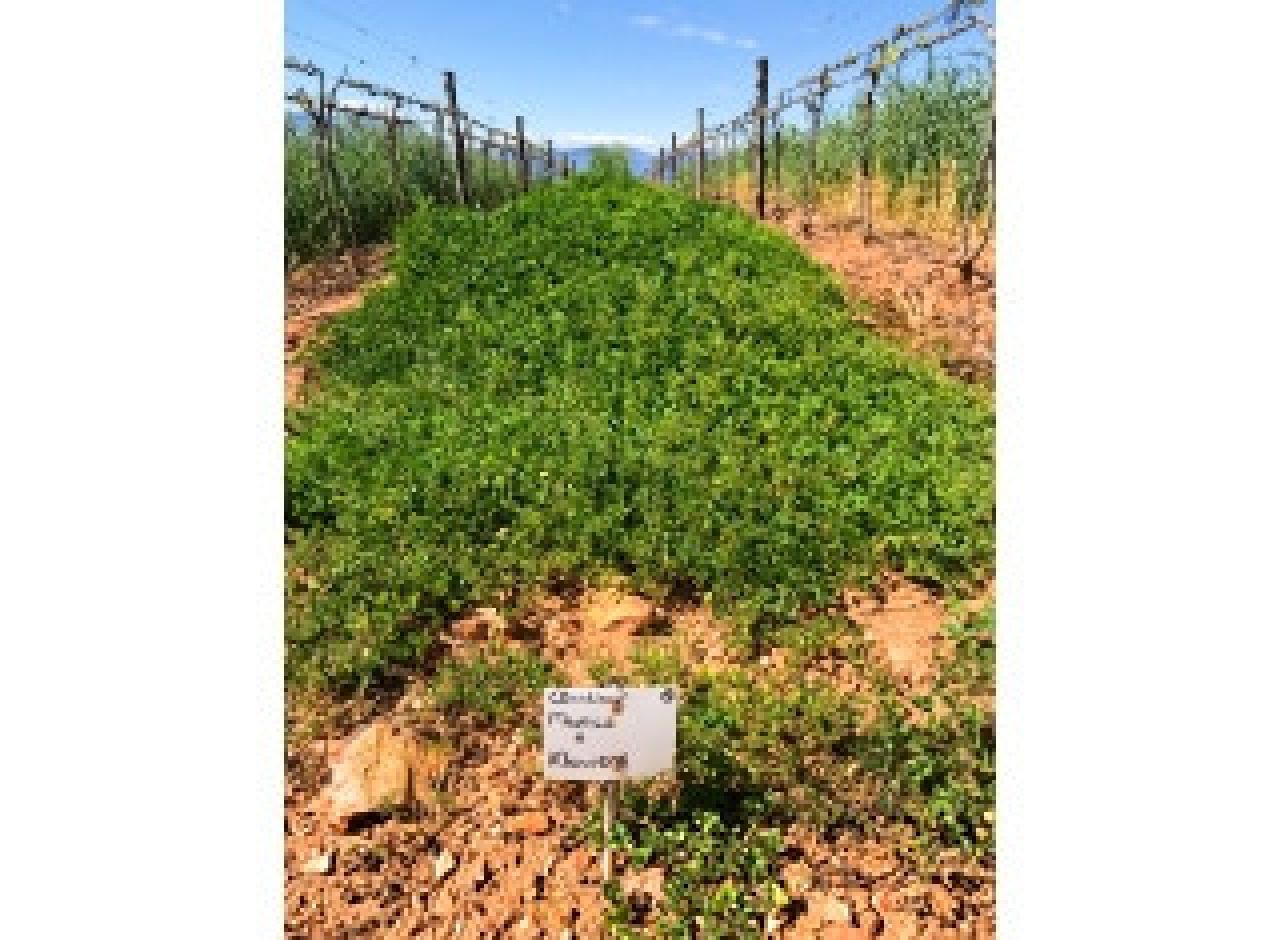
Medics in the work row at Vlakkenheuwel, Hermon.
Wellington
Site: Oliphantskop
Soil description: Weathered granite
Sowing date: Mid-late April 2019
The mixtures of forage rye with peas and forage rye with bitter lupines were the best performers on this challenging soil type, providing good biomass and weed suppression. The rye, bitter lupines and vetch produced average biomass. The phacelia’s biomass was poor and the mixture, comprised of three different oats species with stooling rye, performed reasonably well. The importance of top-dressing was illustrated by the clear difference in the density and height of the stands between the ‘top-dressed’ and non-‘top-dressed’ treatments.
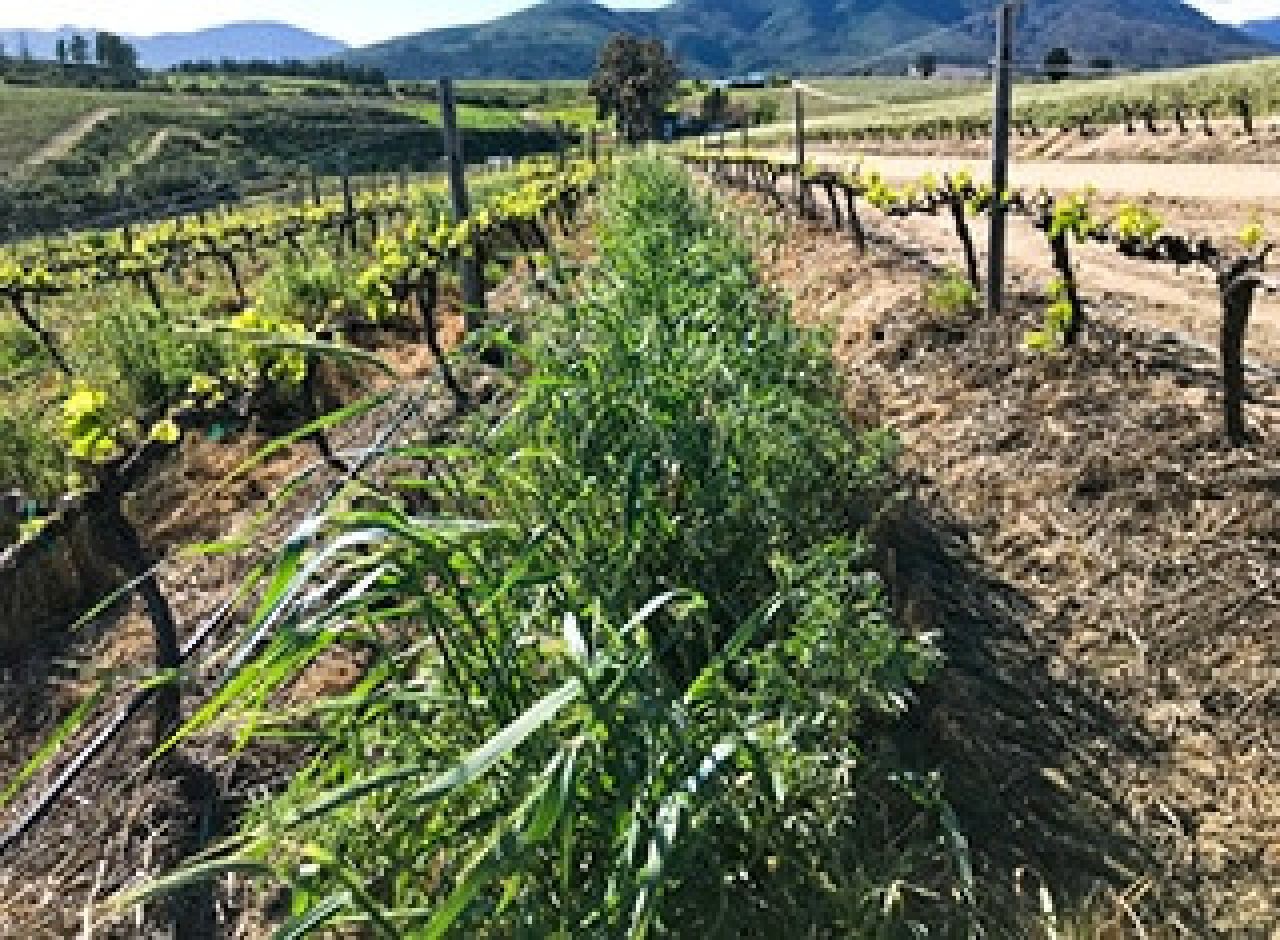
Forage rye and bitter lupines at Oliphantskop, Wellington.
Stellenbosch
Site: Kanonkop, Simonsberg
Soil description: High potential Oakleaf
Sowing date: Early May 2019
The mixture of white mustard and forage rye produced excellent biomass on this soil type and performed somewhat better than the mixture of forage oats, triticale and forage peas. The rye produced good biomass, while the triticale was average in terms of biomass production. The mixture of oats and stooling rye worked well with the stooling rye producing notable biomass. The phacelia and radish were patchy where these species had been sown by hand, as was the faba bean cover (one of the challenges of small scale field trials). Where these cover crops had been sown in another section of the block using the planter, results were far better with even, dense growth.
Where the phacelia was sewn using the planter, it produced an excellent stand with purple flowers which attracted many bees. The medics which had been sewn by hand on the grapevine row underneath the drippers, was a huge success at this site. Although medics is not aggressive in its growth habit, it did reach just below the cordon wire at various points in the block. This required a team to walk through the block and trample the medics flat on one occasion early in the season. At the time of evaluation, the medics was nearing the end of its life cycle and would be expected to set seed and die off by the end of spring.
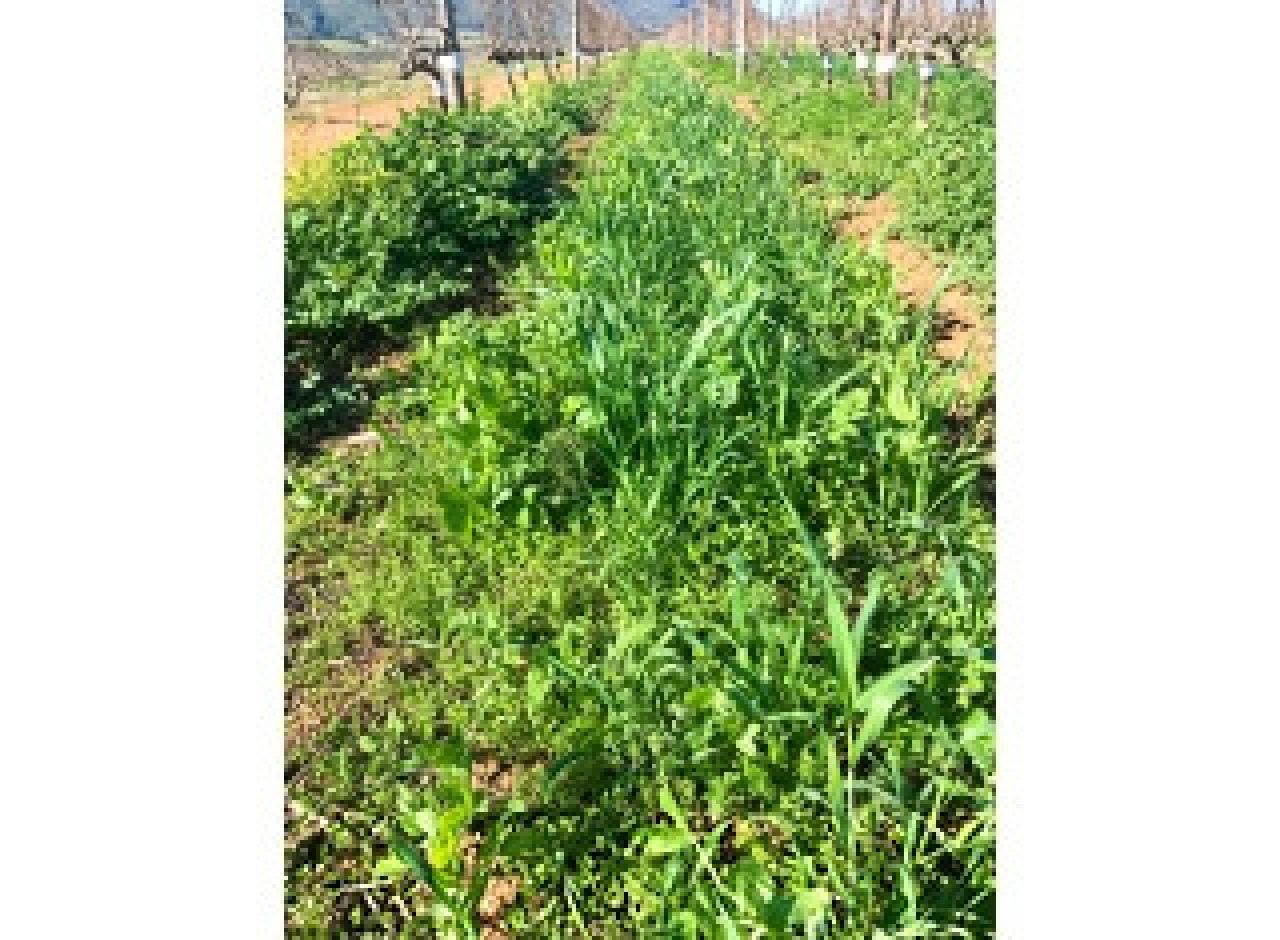
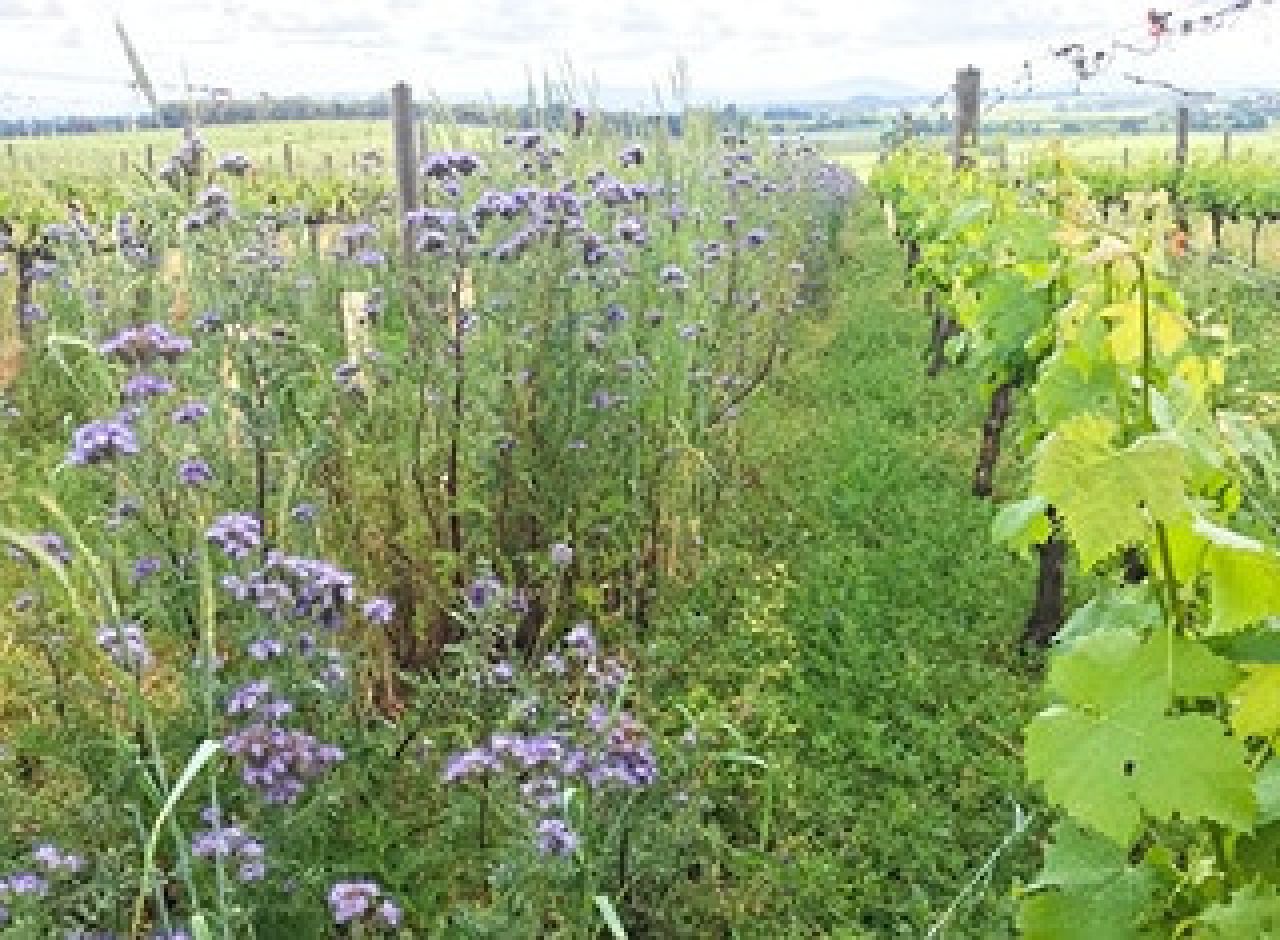
Forage oats, triticale, forage pea mixture in the work row (top) and phacelia in the work row with medics on the bankie (bottom) at Kanonkop, Stellenbosch.
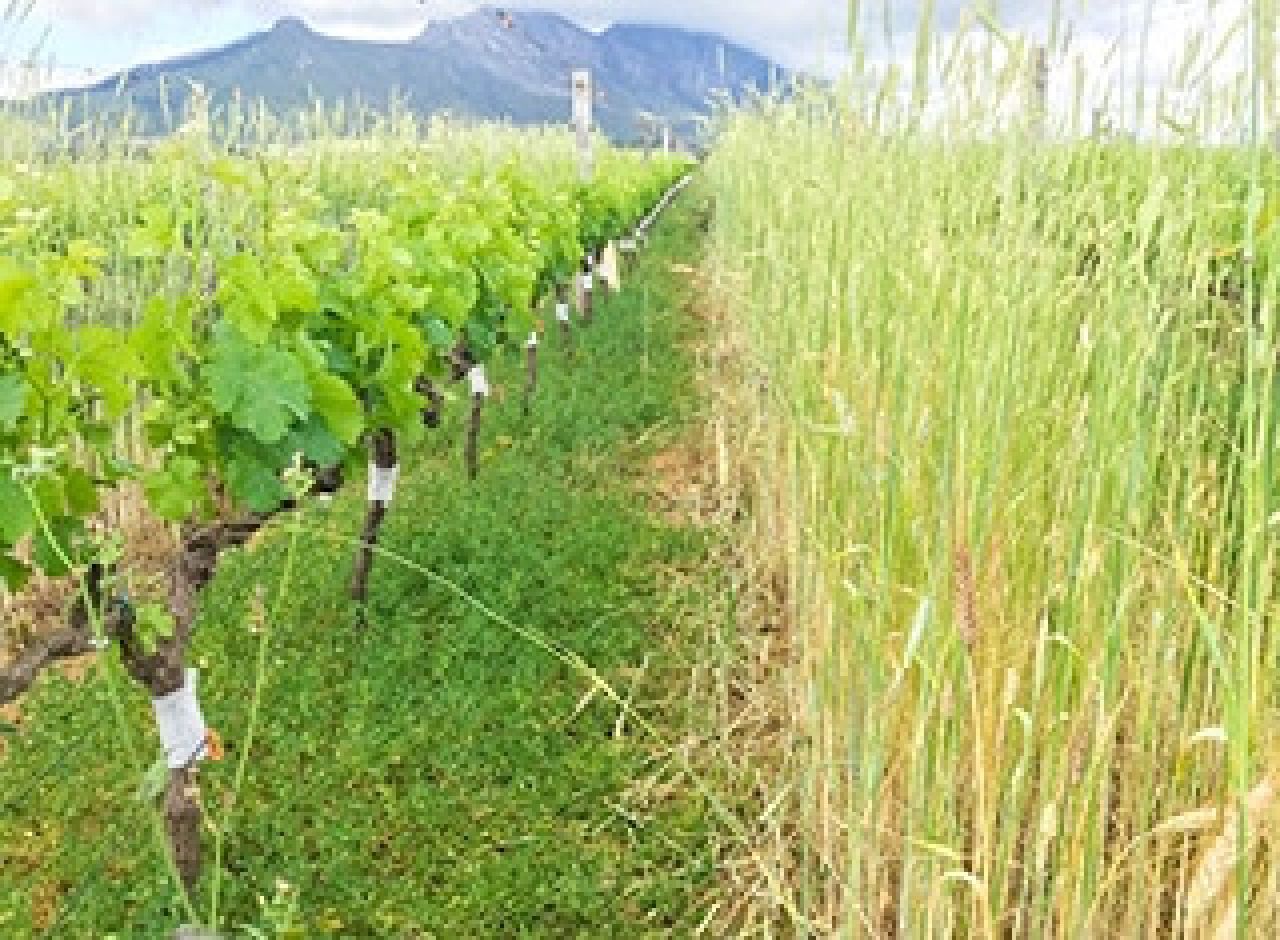
Medics on the bankie at Kanonkop, Stellenbosch.
Site: Cavalli, Helderberg
Soil description: Granite-based duplex
Sowing date: Late April 2019
Cover crops at the Helderberg site produced good biomass in general. The forage barley and pea mixture produced reasonably high biomass. The forage rye produced a higher biomass than the forage barley. Forage rye has a longer growing season than forage barley, which should be taken into consideration when selecting a cover crop species to suit planned sewing and termination dates. The forage radish, triticale and vetch mixture yielded good biomass, although the radish produced a small bulb. The bitter lupine and vetch mixture produced high biomass, and provided good weed suppression. The oats, radish and vetch mixture produced a low, but dense stand with good biomass and good weed suppression. The triticale stand was average as was its weed suppression. The rye produced a taller stand with better weed suppression. The phacelia, a later-growing species, produced a good stand with medium to high biomass, excellent weed suppression and purple flowers in first two weeks of October.
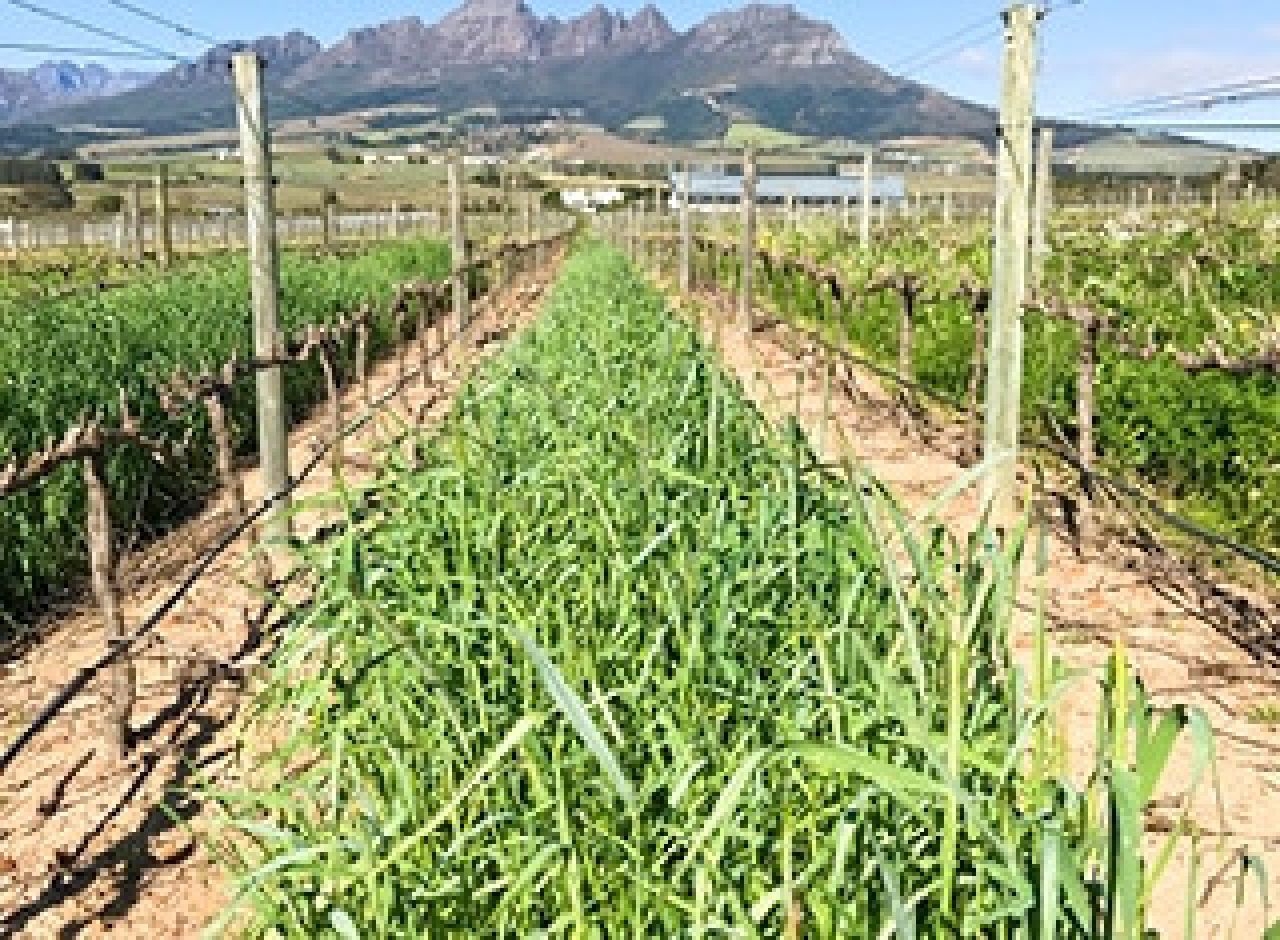
Forage rye (top) and rye (bottom) at Cavalli, Stellenbosch.
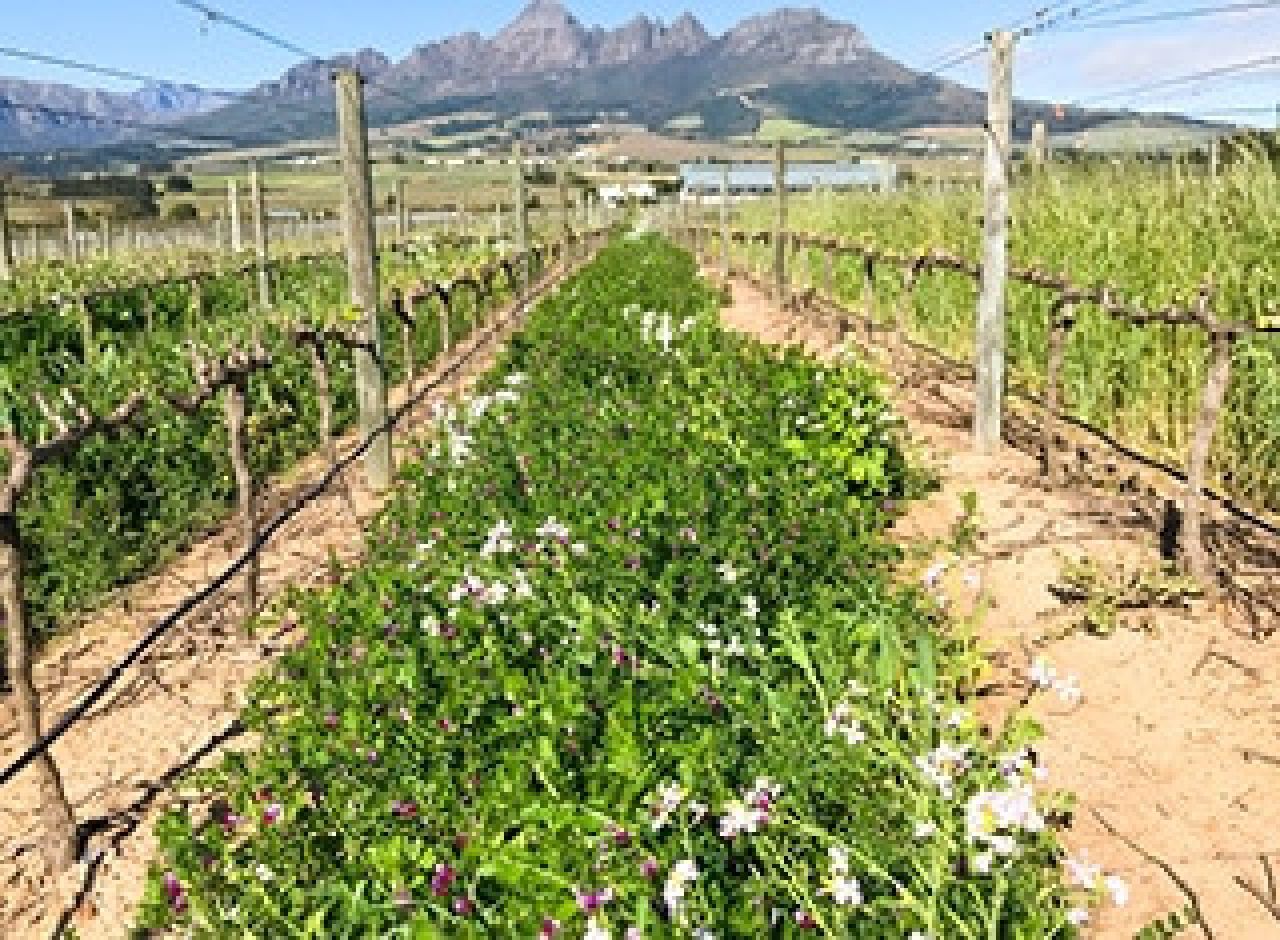
Mixture of oats, stooling rye, radish, tiller radish and vetch at Cavalli, Stellenbosch.
Conclusion
The outcomes of the 2019 demos again emphasised the site-specificity of cover crop species and mixes, as well as their response to climatic conditions and soil type.
The lack of rain in the Robertson and Worcester region in 2019 created challenging growing conditions, and cover crop growth was largely unsuccessful in these regions. One of the highlights of the demo sessions was the success of the medics grown on the grapevine row. A bit of effort is required to sow it by hand under the drippers or prior to rainfall as early as possible. Once established, however, medics can produce a dense groundcover over the grapevine row which remains intact after it has died, acting as a form of a mulch to protect the soil in the hot summer months and suppress weeds. Although results may vary, it may take two to three seasons for the cover to be established after which it should re-establish itself each year or only require seed at a very low density. If water constraints or the likelihood of frost damage necessitate termination using a chemical treatment or mowing, it should be done after the medics has set seed. Given the increasing pressure to minimise the use of herbicides in vineyard management programmes, the case for cultivating medics on the grapevine row is compelling enough to warrant further investigation and small on-farm trials.
One of the take-home messages from the demo sessions was the importance of correct execution of cover crop establishment. Factors such as the timing, seedbed preparation, equipment used, seed quality and sowing rate, as well as fertilisation deserve attention for successful integration of cover crops in one’s vineyard management programme.
Thank you to:
Agricol and Barenbrug for their donations of seed for the demos and to Christof Muller (Agricol) and Ivan Jansen van Rensburg (Barenbrug) who provided the recommendations for each site and offered technical insight at the demo sessions.


The following farm owners, producers, vineyard managers and viticulturists who took part in the establishment of the demo collection in 2019:
De Wetshof: De Wet Family.
Wandsbeck: Philbert Lourens and PK Uys.
Brugplaas: Kobus de Wet.
Eureka: Arno Hugo.
Klipdrift: Ruan Brink.
Nuwerus: JW Pieterse and Herman Schoeman.
La Motte: Hanneli Rupert-Koegelenberg and Jaco Visser.
Oliphantskop: Anthonij Rupert Wines and Chris Loubser.
Vlakkenheuwel: Boet and Frederik le Roux.
Heldersig: Paul Myburgh and Tharien Hansen.
Kanonkop: Krige Family and Ryno Maree.
Cavalli: Smith Family and Craig Barnard.
Klein Constantia: Z Bakala, C Harman and Carlo Prins.
– For more information, contact Emma Carkeek at [email protected].

More from
Vineyard, cellar and production

Cellar hygiene
Maintaining a spotless wine cellar requires a comprehensive management plan, which includes structural design, equipment sanitation, environmental controls and routine microbial monitoring.
Making wine in Cape Town's Philadelphia ward
Havana Hills overlooks Table Mountain and the Atlantic Seaboard from its perch atop one of the region’s smallest wards, Philadelphia. Piet Kleinhans recently took over the reins as winemaker.
What's so special about wine globes?
Diemersdal places a strong focus on innovation, and there’s always something new up their sleeve. Wineglobes represent a new way of telling a story that’s centuries old.