
Flood damage - what next?
In light of the unprecedented floods during the second week of May 2026, this article offers a few guidelines on how flood risks can be approached and assessed.
· 7 min read
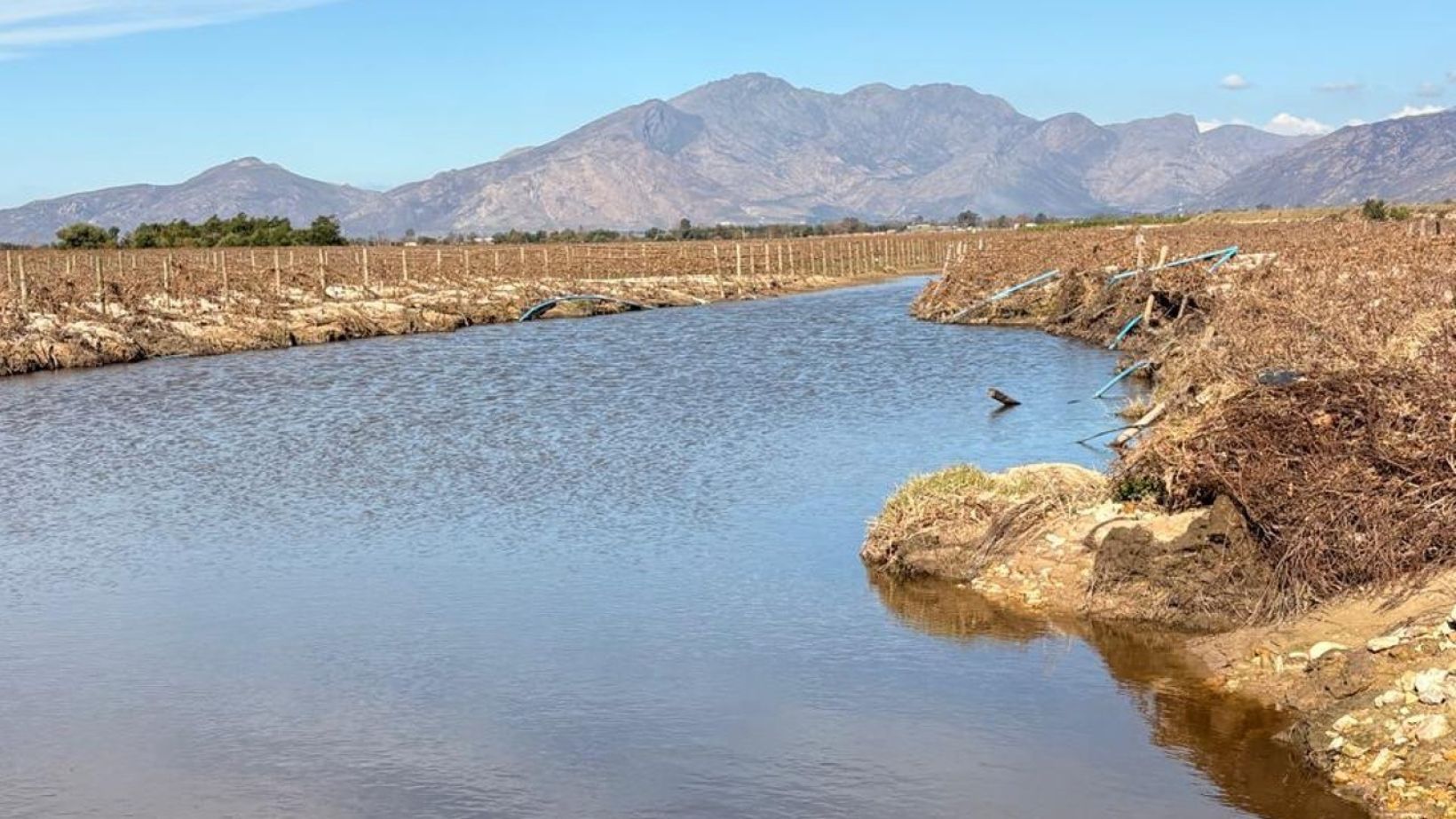
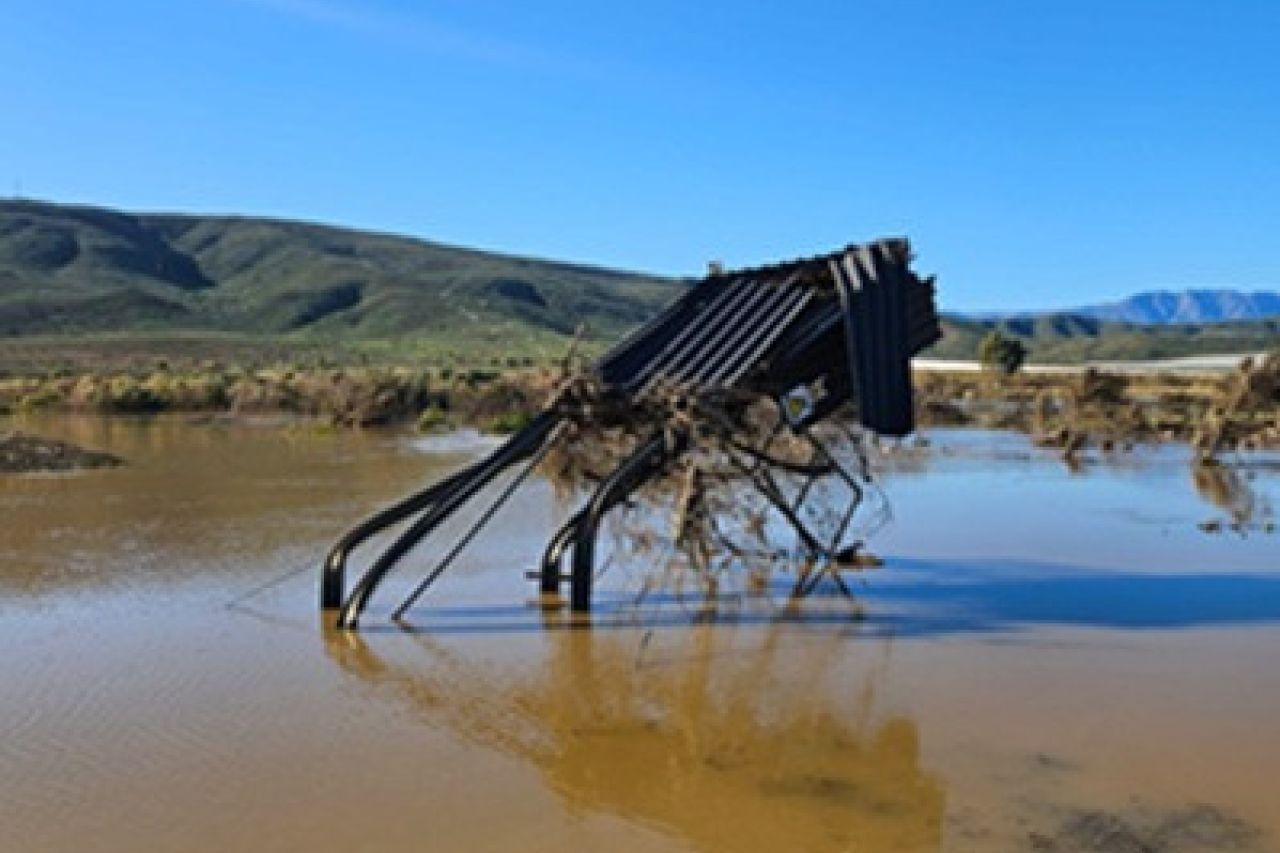
Floods are not only traumatic events to experience, but they also have a far-reaching effect on the financial position of producers and on the broader environment where they occur.
Unfortunately, a flood is a natural phenomenon that cannot always be foreseen during the planning and establishment of a farm and vineyard blocks. There is always a risk that a specific block can be submerged under water at least partially once or twice during its lifetime. In the Breede River area, however, the occurrence of three floods in the past five years, have prompted producers to reconsider whether it would be wise to re-establish vineyards on certain parts of their farm.
In light of the unprecedented floods during the second week of May 2026, this article offers a few guidelines on how flood risks can be approached and assessed. Risk assessment is discussed as a part of initial planning, as well as the development and application of effective reaction plans during flood events, plus long-term planning to better manage future flood risks and mitigate their impact.
Good planning
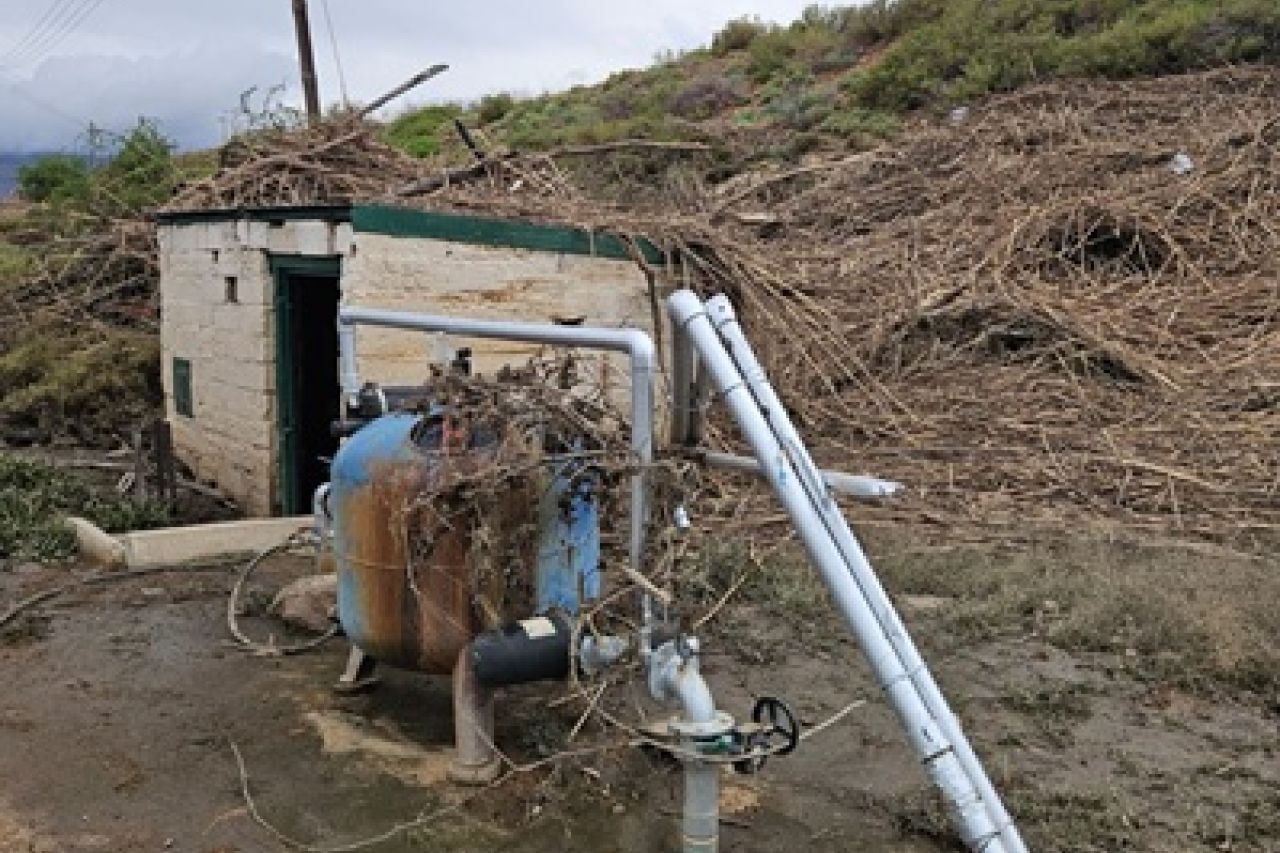
As low-lying soils with a high flood risk often have the highest yield potential, it is understandable that vineyards are established on these soils. Where possible, however, new vineyards should be planted on higher-lying areas with a lower flood risk to limit the likelihood of flood damage. If the farm is located next to a river, walls can be built to act as a barrier between the farm and temporary flood water. It is important to also plan the placement of infrastructure, like pumps, filters and electricity connections, on higher-lying parts of the farm – high enough above the expected flood plain.
Reaction plans when floods occur
The first step after a flood is to systematically determine the scope of the flood damage. A thorough damage determination forms the foundation for further decision-making and enables producers to compile and prioritise the necessary recovery and management action plans. The factors that must be considered, include the scope of the affected areas, the actual scale of damage in each block, the age and profitability of the specific blocks, as well as the time frame within which the recovery actions must be performed. Only after this exercise has been completed, a budget can be created for the required actions and a decision taken on whether it is economically and practically viable to rehabilitate the specific block. If it is more sensible to not rehabilitate the block, it should be uprooted completely and thereafter re-establishment can be considered.
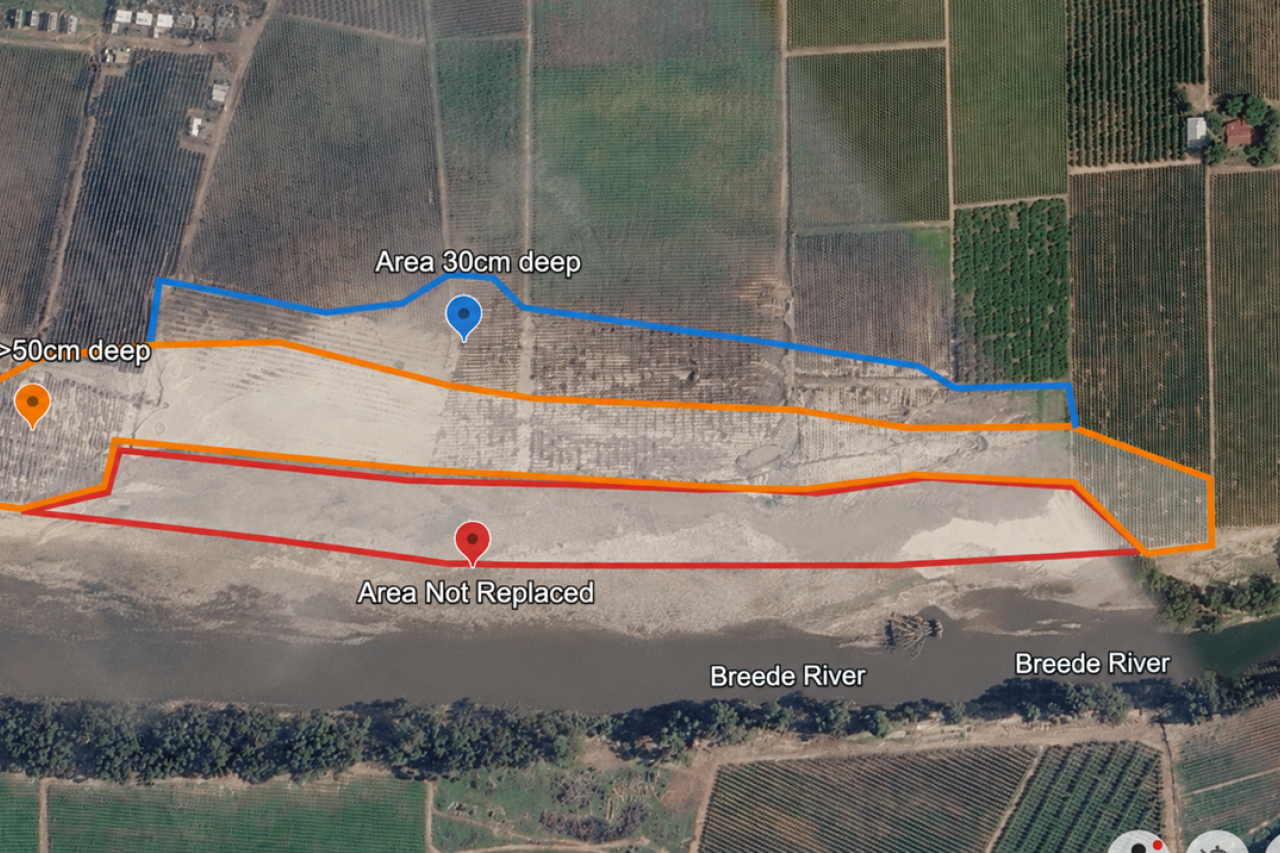
During the scope determination, affected areas must be divided into categories. The areas can be divided as follows:
- Areas where the vineyard was completely destroyed and the soil also washed away to such an extent that it will not be economically viable to ever rehabilitate these areas. These sections should probably not be considered for any future replanting, as the risk of future flood damage will remain very high.
- Areas where only parts of a block were damaged and the affected area is localised, can be uprooted and/or filled up and replanted with new vines.
- Areas where the vineyard itself was not damaged, but outside material was washed in by floodwater and must be removed from the vineyard rows. These areas form the main category for most farms, and there are many factors that may influence the producer’s decision. The removal of debris like reeds, sticks and light sediment on the cordon, is a simple clean-up action which can be done by hand. If, however, sand and soil were washed into the vineyard itself and where the debris is higher than the graft union, the cost of the clean-up action(s) should be considered very carefully. During the initial survey and cost calculation, the specific block’s age, profit and rehabilitation cost should be considered. If, for example, a vineyard block has only five years of its expected economic lifetime remaining, generates a block profit of approximately R20 000/ha per year and the rehabilitation cost is about R100 000/ha, the recovery action would not necessarily be the most suitable choice. These clean-up actions are time-consuming processes and, in many areas, where profitability is also low, labour and clean-up actions should focus on more profitable blocks.
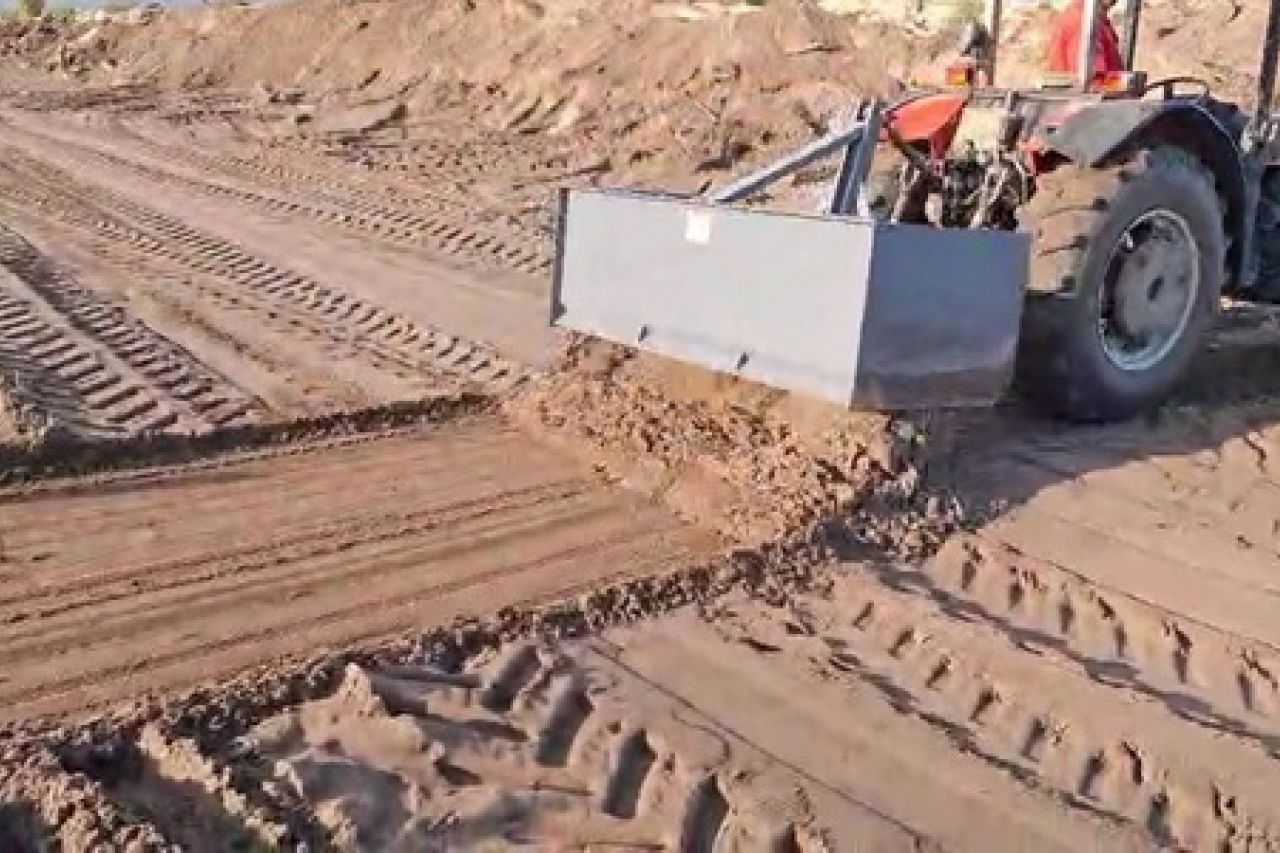
Where material must be removed from the vineyard over a short distance, a box scraper can be mounted onto the back of a tractor, and this implement used to scrape sand out of the rows to the nearest road. In the middle road, a digger loader can then scoop up and further remove the material. The tractor moves in the same row repeatedly until all the desired material is scraped out. Although this is a time-consuming action, it can be performed with the producer’s existing tractors. After all the material has been scraped out, the vines must still be cleaned around the trunk to below the graft union.
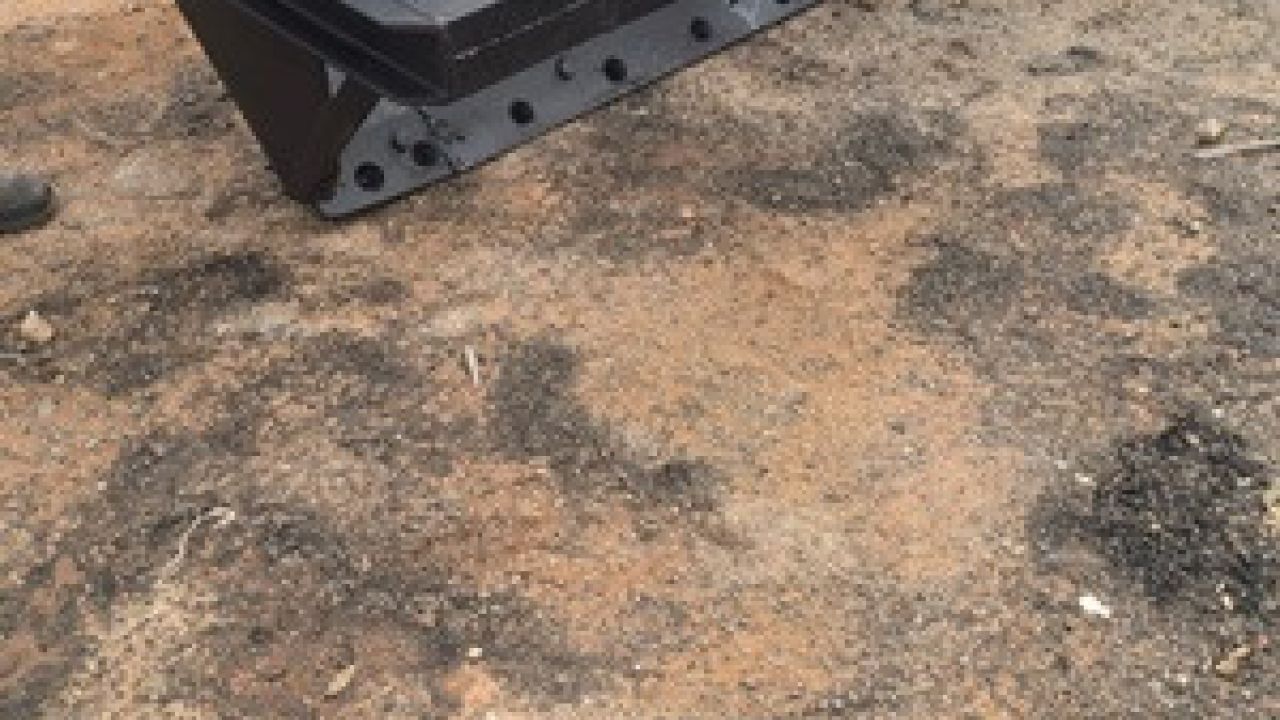
If the areas to be cleaned are very deep and stretch over a long distance, a light excavator (±5 ton) can be used to move between the rows, scoop the material out and load it onto a trailer in the adjacent row that has already been cleaned. After the material has been scooped out, the graft union must still be opened up with a shovel. As an excavator mostly has to be hired, this action is more expensive. Material can, however, be removed faster using this method as opposed to the box scraper.
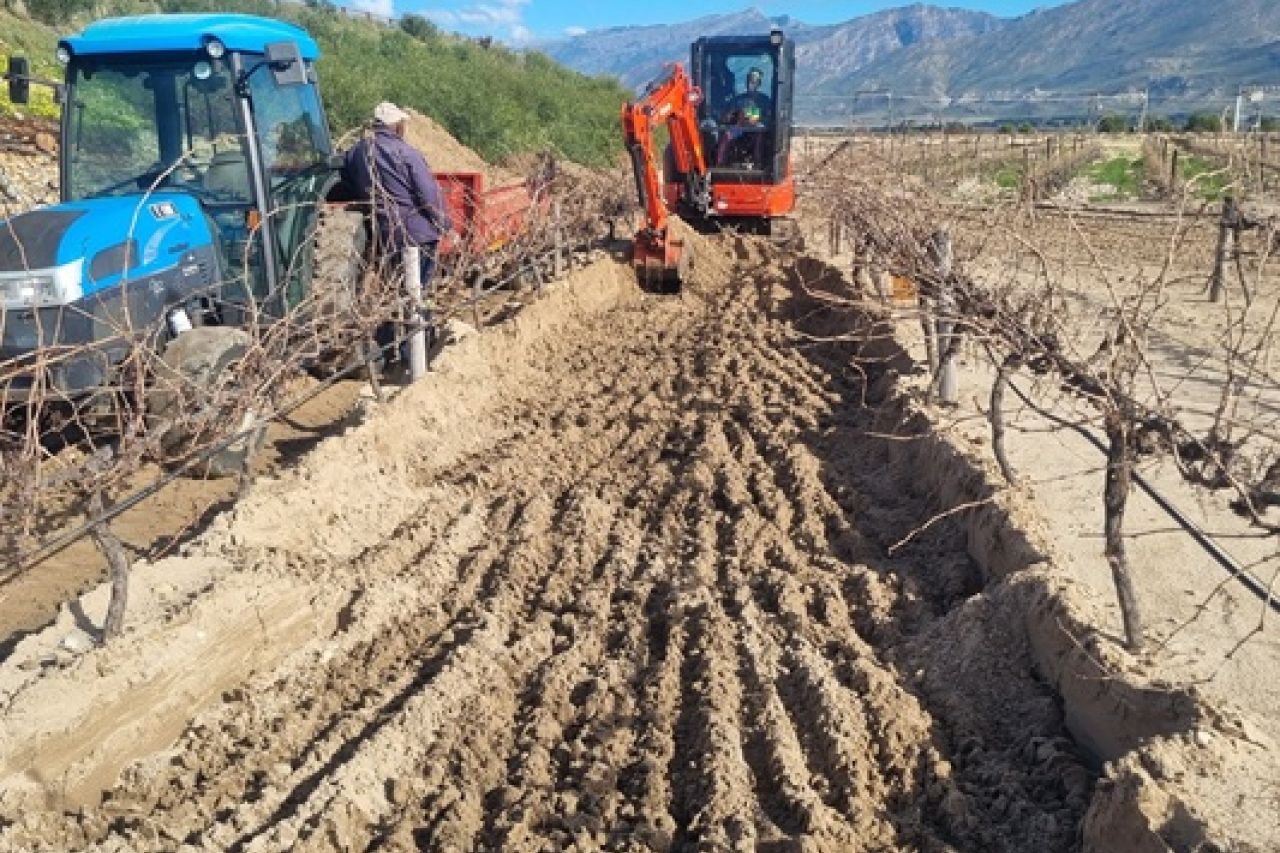
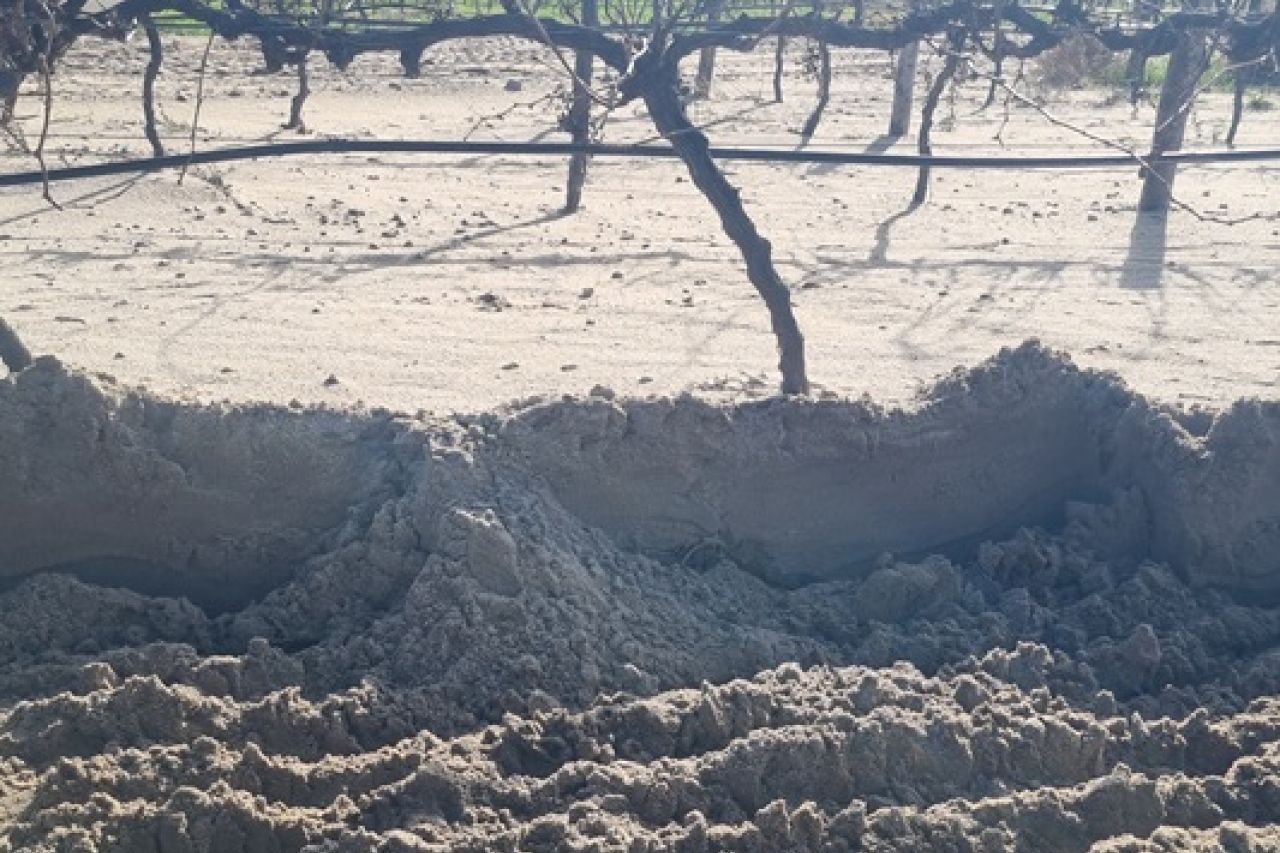
For both the aforementioned methods, the cost of removing material from an area must be carefully calculated. If, for example, the debris lies 50 cm deep in a vine row and 80% of the material can be removed using one of these two methods, it still represents the equivalent of 4 000 m3 of material per hectare that must be scooped or scraped out and driven elsewhere. The removal of such large volumes of material is extremely expensive, and it is important to determine whether the vineyard block concerned will be able to recover the cost over the rest of its lifetime.
Planning for the future
The best prevention for flood damage is to not plant on the high-risk parts of your farm. It is well known that producers in the high-yielding areas of the Breede River are limited by the fact that they must utilise these high-production soils. These areas are, however, mostly located within the flood line. If floods are to occur more frequently in the future, producers will not be able to justify a R350 000/ha investment if a devastating flood occurs more than once during that vineyard’s lifetime.
Pumps, filters and electrical connections must be moved to areas higher than the new flood line. Electrical connections can be mounted onto structures that are higher than the flood line. River pumps, which are normally located next to the river and currently under the flood line, can be replaced with diesel pumps than can permanently function under water.
The recent floods and the accompanying damage forced us to consider farm layout critically, and all producers should re-evaluate their long-term planning to adjust to nature and the adversity that it can inflict from time to time. We must also be adaptable in the moment and learn to react quickly when natural disasters do occur.
For more information, contact Callie Coetzee at [email protected].

More from
Vineyard, cellar and production

One vineyard. Eight components. Five years of patience.
When KWV’s Laborie Blanc de Blancs 2020 claimed the Duimpie Bayly Vertex Trophy at the 2026 Veritas Awards, it was more than another win for the Paarl-based producer. It was only the third time a Cap Classique had taken the competition’s highest honour, selected from 1 293 entries.
How to understand regenerative farming
Regenerative farming is becoming part of the language of modern viticulture, but what does it actually look like in a vineyard?
JC Smith praat oor wynmaak in die Oos-Vrystaat
JC Smith is ’n derdegeslag-wynmaker. Sy oupa Dassie en pa Flip was albei wynmakers, en hy het tussen wingerde en wynkelders grootgeword. Hy is tans die wynmaker by Blydschap in die Oos-Vrystaat.