
Bioprotection, from harvest to fermentation
In modern winemaking, bioprotection has emerged as an innovative and sustainable strategy to improve microbial control while reducing dependence on sulphur dioxide.
· 5 min read

Among the natural alternatives for microbial control, non-Saccharomyces yeasts have gained particular attention for their ability to naturally protect must during the critical period between harvesting and alcoholic fermentation. EnartisFerm Q MCK, a selected strain of Metschnikowia pulcherrima, was specifically developed to provide effective biocontrol and preserve must quality from the earliest stages of vinification.
Historically, microorganisms other than Saccharomyces cerevisiae were often considered contaminants and associated with fermentation problems or sensory defects. Today, however, non-Saccharomyces yeasts are recognised as biofunctional microorganisms capable of performing specific and beneficial oenological functions. Rather than simply contributing to microbial diversity, these yeasts offer unique technological advantages that can be used strategically to influence wine quality. In M. pulcherrima, the primary role is microbiological protection through natural competitive mechanisms.
The effectiveness of M. pulcherrima is based on its ability to rapidly colonise the must environment from the earliest stages of vinification, starting immediately after harvest and continuing throughout grape transport, processing and pre-fermentative operations. By establishing itself before undesirable microorganisms can proliferate, it creates a protective microbial barrier that limits the growth of spoilage yeasts and bacteria naturally present on grapes. This competitive colonisation is particularly important during pre-fermentative stages, when must is highly vulnerable to contamination and fermentation has not yet started.
A key aspect of its biocontrol activity is the production of pulcherriminic acid, a compound that binds iron, rendering it unavailable to competing microorganisms. Since iron is an essential nutrient for microbial growth, its sequestration significantly reduces the ability of undesirable yeasts and bacteria to develop. This mechanism is reinforced by competition for nutrients and by the rapid consumption of oxygen present in the must. Together, these actions create unfavourable conditions for spoilage microorganisms while ensuring a safer and more controlled winemaking environment.
The practical benefits of this biological protection are substantial. By limiting the development of wild yeasts and contaminating microorganisms, EnartisFerm Q MCK helps prevent the formation of volatile acidity, acetaldehyde, ethyl acetate and other compounds associated with sensory defects. As a result, the must retains greater aromatic purity and is less likely to develop off-flavours or unwanted aromas. This protection allows winemakers to preserve grape quality from harvest to inoculation with Saccharomyces cerevisiae, reducing the risk of microbiological deviations that could compromise the final wine.
Another advantage of M. pulcherrima is its cryotolerant metabolism. In addition, this bioprotective strategy contributes to reducing reliance on sulphur dioxide during the pre-fermentative stages. By rapidly establishing a protective microbial population from harvest onward, EnartisFerm Q MCK naturally limits the development of spoilage microorganisms, reducing the need for SO₂ additions intended for microbiological control. The strain remains active and effective even at low temperatures, making it particularly suitable for cold pre-fermentative practices such as cold soak, cold maceration, settling, flotation and stabulation. These techniques are widely used to enhance aroma extraction and preserve varietal characteristics, but can also increase microbial risks because the must remains unfermented for extended periods. Under these conditions, M. pulcherrima provides continuous protection and ensures microbiological stability throughout processing.
Besides its antimicrobial activity, M. pulcherrima also contributes to the preservation of sensory quality. Through oxygen consumption during the early stages of vinification, it can help limit oxidative phenomena and contribute to the preservation of colour stability and aromatic freshness.
This is especially important for white and rosé wines, where oxidation can quickly lead to browning and loss of delicate fruity and floral aromas. By protecting the aromatic integrity of the must, the yeast helps maximise the varietal expression and freshness of the final wine.
The use of EnartisFerm Q MCK is also aligned with current industry trends toward more sustainable and low-intervention winemaking practices. Consumers increasingly seek wines produced with fewer additives, while wineries look for solutions that combine effectiveness, quality and environmental responsibility. In this context, bioprotection represents a natural alternative to early sulphur dioxide additions, allowing producers to achieve microbial stability through biological rather than chemical means. Although sulphur dioxide remains an important winemaking tool, biocontrol strategies can significantly optimise its use and reduce overall dependence on it.
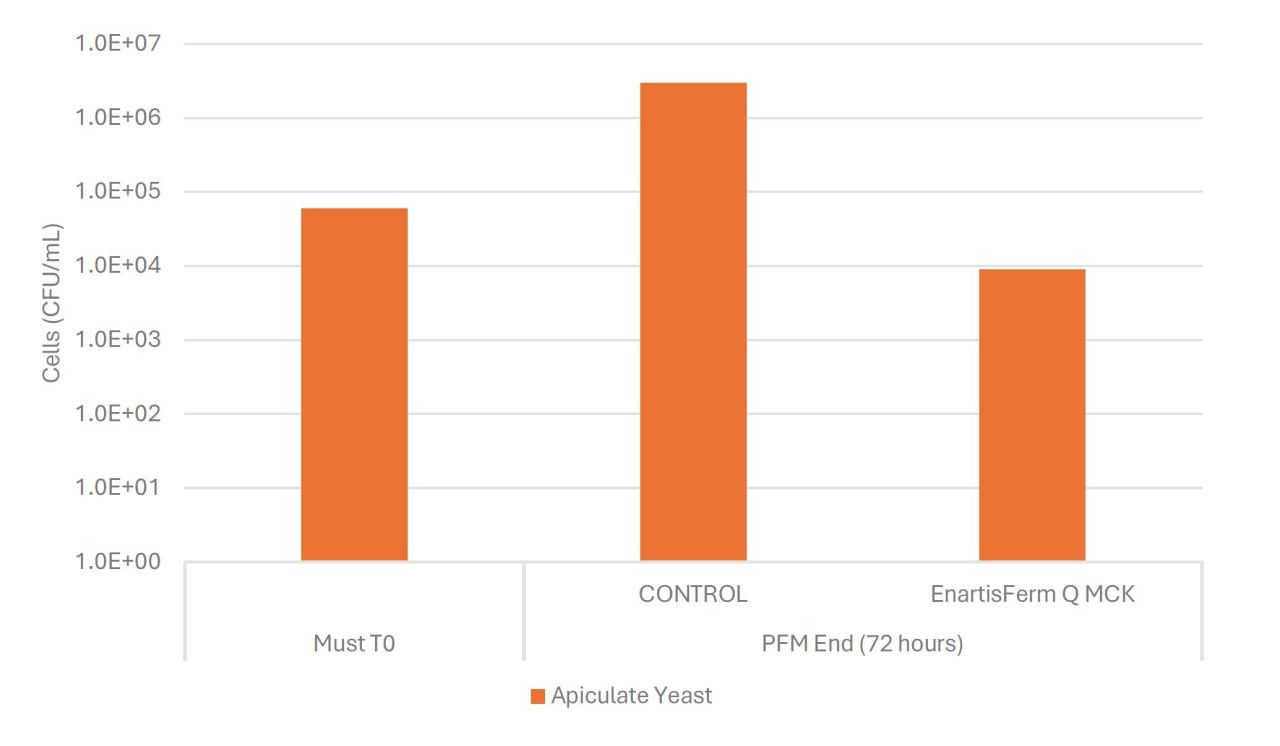
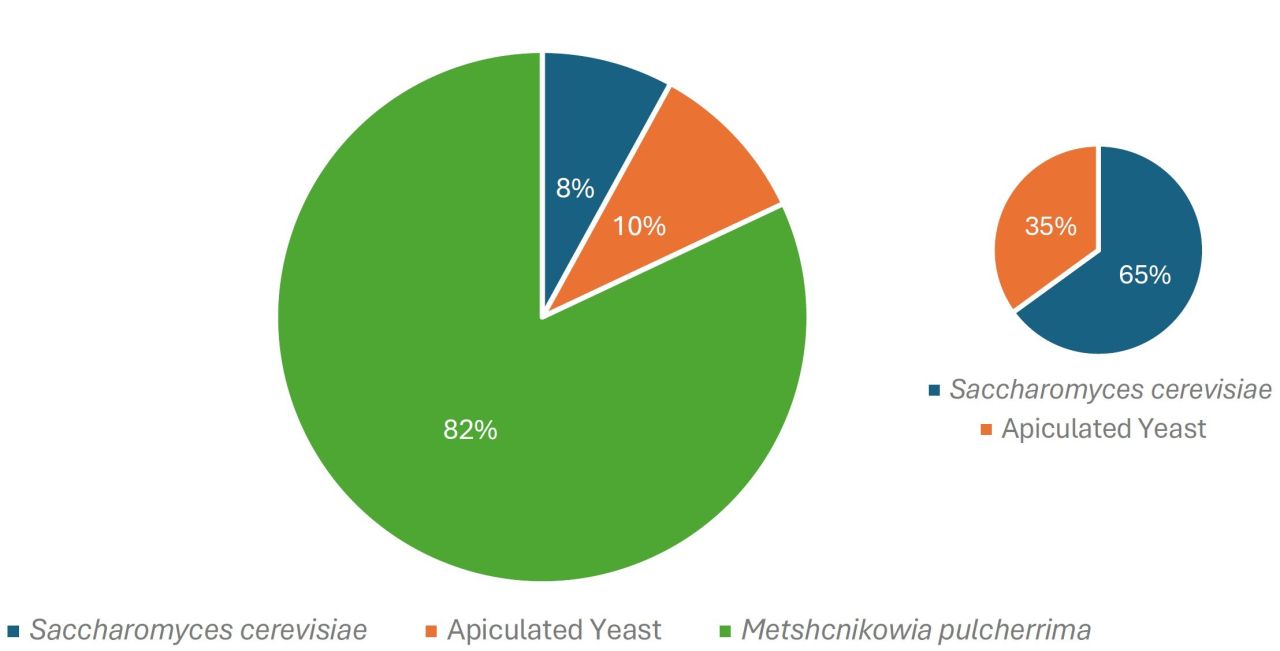
Tests conducted during pre-fermentation maceration (72 hours -7 °C) on Airén must (Spain, pH 3.6). These graphs show the distribution of the microbial population and the evolution of apiculate yeasts in the control sample compared with the sample treated with EnartisFerm Q MCK at the end of maceration.
EnartisFerm Q MCK represents a modern approach to fermentation management, in which microbial populations are strategically guided to protect quality and express the full potential of grapes. Through rapid colonisation, nutrient competition, oxygen consumption and iron sequestration via pulcherriminic acid production, it provides effective protection against spoilage microorganisms during the most sensitive stages of vinification. Combined with its effectiveness at low temperatures and its ability to preserve aroma and colour, EnartisFerm Q MCK offers a comprehensive bioprotection solution that supports cleaner fermentations, improved wine stability, and the production of more expressive red, white, and rosé wines.
ENARTIS SA | Lida Malandra, general manager | 021 870 1181 / 082 656 3685 | [email protected]

More from
Vineyard, cellar and production
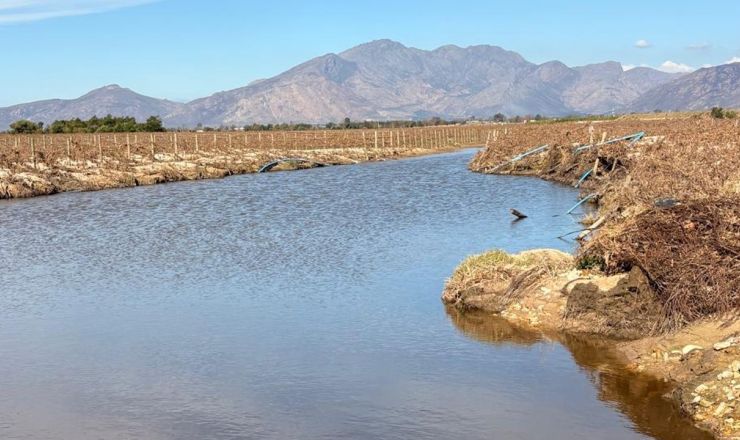
Flood damage - what next?
In light of the unprecedented floods during the second week of May 2026, this article offers a few guidelines on how flood risks can be approached and assessed.

One vineyard. Eight components. Five years of patience.
When KWV’s Laborie Blanc de Blancs 2020 claimed the Duimpie Bayly Vertex Trophy at the 2026 Veritas Awards, it was more than another win for the Paarl-based producer. It was only the third time a Cap Classique had taken the competition’s highest honour, selected from 1 293 entries.
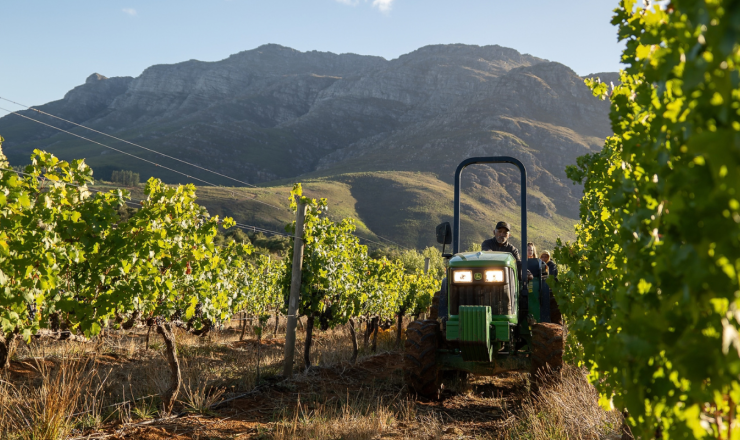
How to understand regenerative farming
Regenerative farming is becoming part of the language of modern viticulture, but what does it actually look like in a vineyard?