
Sémillon Gris takes the stage
A grape that helped shape the early Cape wine industry has been formally recognised after more than a decade of work by Mullineux and its partners.
· 5 min read

South Africa’s viticultural heritage has gained a new chapter with the official international recognition of Sémillon Gris as a distinct grape variety.
The historic Cape grape, a pink-skinned mutation of Sémillon Blanc, has been entered on the International List of Vine Varieties of the International Organisation of Vine and Wine (OIV).
The recognition follows more than a decade of selection, propagation and certification led by Andrea and Chris Mullineux, together with their partner Analjit Singh.
At the Mullineux Roundstone estate in the Swartland, the project has also produced the first officially certified Sémillon Gris propagation block in South Africa – almost a hectare that will provide certified material for future growers and researchers through Vititec.
“This journey has been about preserving a living piece of world wine history,” says Andrea Mullineux, viticulturalist, winemaker and co-owner of Mullineux & Leeu Family Wines. “Sémillon Gris is part of the Cape’s viticultural DNA. By officially recognising and certifying it, we are ensuring that future generations can continue to grow, study and understand a grape that has quietly been part of our story for centuries.”
Sémillon Gris isn’t a newly bred grape, but a naturally occurring mutation of Sémillon Blanc that developed in the Cape’s vineyards. For much of its history, however, it was not treated as a separate variety.

From hero to zero
Sémillon has deep roots in South African wine history. Its presence in the Cape is believed to date to the 17th century, and during the expansion of the wine industry in the 19th century, plantings of what was known locally as Groendruif, or Green Grape, became dominant. An estimate from the 1820s put Sémillon at well over 90% of Cape vineyard plantings, according to the historical account behind the project. At some point, a naturally occurring pink-skinned mutation appeared. Known as Rooi Groendruif, or ‘Red Green Grape’, Sémillon Gris eventually became at least as important in terms of plantings as the white-skinned form.
The two forms were grown, harvested and vinified together, however, and Sémillon Gris was not recognised as a separate variety. That distinction became even less relevant as vineyards were replanted after phylloxera. The pink-skinned vines were progressively excluded and eventually survived mainly as isolated vines or small groups in some old vineyards.
The variety therefore did not disappear completely, but became more difficult to find.
Finding the vines
The modern effort to recover Sémillon Gris began in a dry-farmed Swartland vineyard planted in 1960, where both Sémillon Blanc and significant populations of Sémillon Gris were still present. Working with Rosa Kruger, whose work was instrumental in establishing the Old Vine Project, the Mullineux team identified individual Sémillon Gris vines and began taking cuttings in 2012.
The material underwent in-vitro thermotherapy to eliminate pathogens before entering a lengthy process of propagation and evaluation. Vititec, SAWIS and the South African Department of Agriculture were involved as the material progressed through propagation and the required vineyard and wine certifications. A mother block was eventually established at Roundstone in 2022.
Finding an old vine is one thing; establishing healthy, correctly identified and officially certified plant material that can be propagated is another. The Roundstone block now provides that foundation.

Beyond “The Gris”
For more than a decade, Andrea Mullineux produced a Sémillon for the Cape Winemakers Guild annual auction from vines in the old Swartland vineyard planted to both Sémillon Blanc and Gris. Because the vines were not officially recognised as a separate variety, the wine was named “The Gris”.
The new certification changes the status for future wines. Grapes from the certified Roundstone vineyard can officially be labelled Sémillon Gris, making them among the first wines able to use the variety’s formal name.
The immediate practical benefit for other producers is access to certified planting material. The Roundstone mother block means Sémillon Gris can now be propagated from material that has gone through a formal selection, sanitation and certification process. Vititec will make the material available to growers and researchers.
That creates opportunities to learn more about how the variety performs outside the old vineyards in which it survived.
The varietal’s characteristics - dark pink berries, naturally balanced yields, concentration and healthy acidity - make it potentially interesting from a viticultural and winemaking perspective, but tit remains to be seen how it will perform across different sites and regions, and how its wine will compare with Sémillon Blanc under controlled conditions.
In other words, the recognition of a historic variety does not, by itself, make it commercially viable. Growers will still need to establish where it performs best, what yields and quality it can deliver, how it responds to South Africa’s different climatic conditions, and whether there is sufficient consumer or market interest to justify planting it.

Planting for the future
For Tim James, who has helped document the history of the Sémillon mutation, the importance of the project extends beyond nostalgia. He describes the recognition as “a huge achievement in reclaiming and consolidating the past as a vital element of the present” and as an opportunity to offer that heritage “to the world”.
Andrea Mullineux also frames the project as an exercise in preserving Cape viticultural history. “Sémillon Gris is part of the Cape’s viticultural DNA,” she says. “By officially recognising and certifying it, we are ensuring that future generations can continue to grow, study and understand a grape that has quietly been part of our story for centuries.”
Sémillon Gris has moved from the margins of old vineyards into an officially recognised propagation programme. Whether it remains primarily a valuable piece of Cape wine heritage or develops into a commercially meaningful variety will now depend on future growers, winemakers and researchers.
For an industry increasingly interested in old vines, historic varieties and the genetic resources already present in South African vineyards, that makes Sémillon Gris worth watching.

More from
Vineyard, cellar and production

One vineyard. Eight components. Five years of patience.
When KWV’s Laborie Blanc de Blancs 2020 claimed the Duimpie Bayly Vertex Trophy at the 2026 Veritas Awards, it was more than another win for the Paarl-based producer. It was only the third time a Cap Classique had taken the competition’s highest honour, selected from 1 293 entries.
How to understand regenerative farming
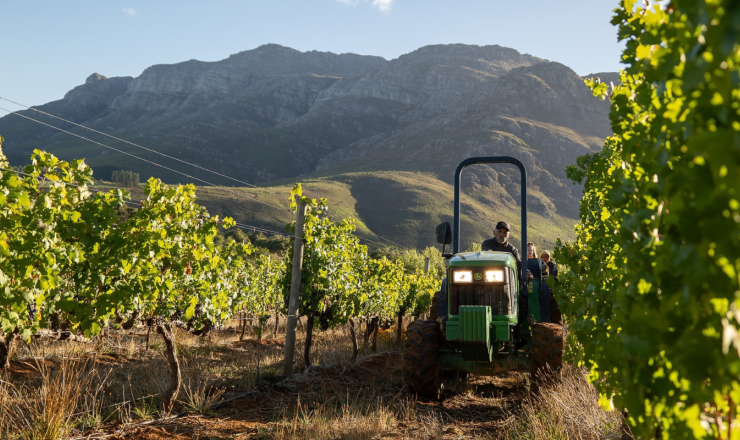
Regenerative farming is becoming part of the language of modern viticulture, but what does it actually look like in a vineyard?
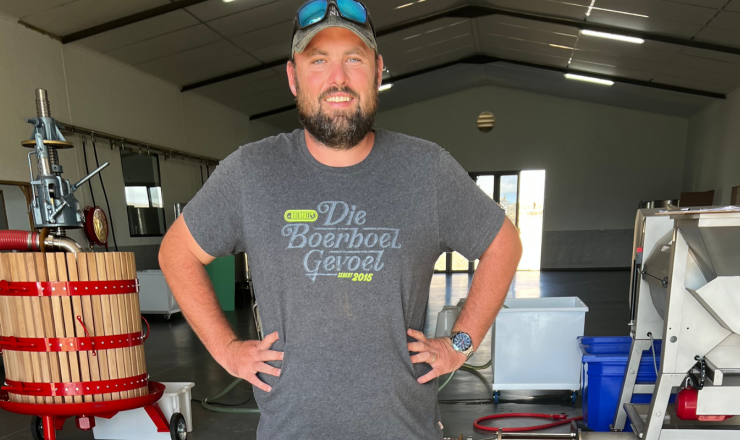
JC Smith praat oor wynmaak in die Oos-Vrystaat
JC Smith is ’n derdegeslag-wynmaker. Sy oupa Dassie en pa Flip was albei wynmakers, en hy het tussen wingerde en wynkelders grootgeword. Hy is tans die wynmaker by Blydschap in die Oos-Vrystaat.