
The cold facts about managing vineyard frost
Harrison Davies explores the increasing threat posed by frost conditions in vineyards and how producers can mitigate the impact on their vines.
· 8 min read
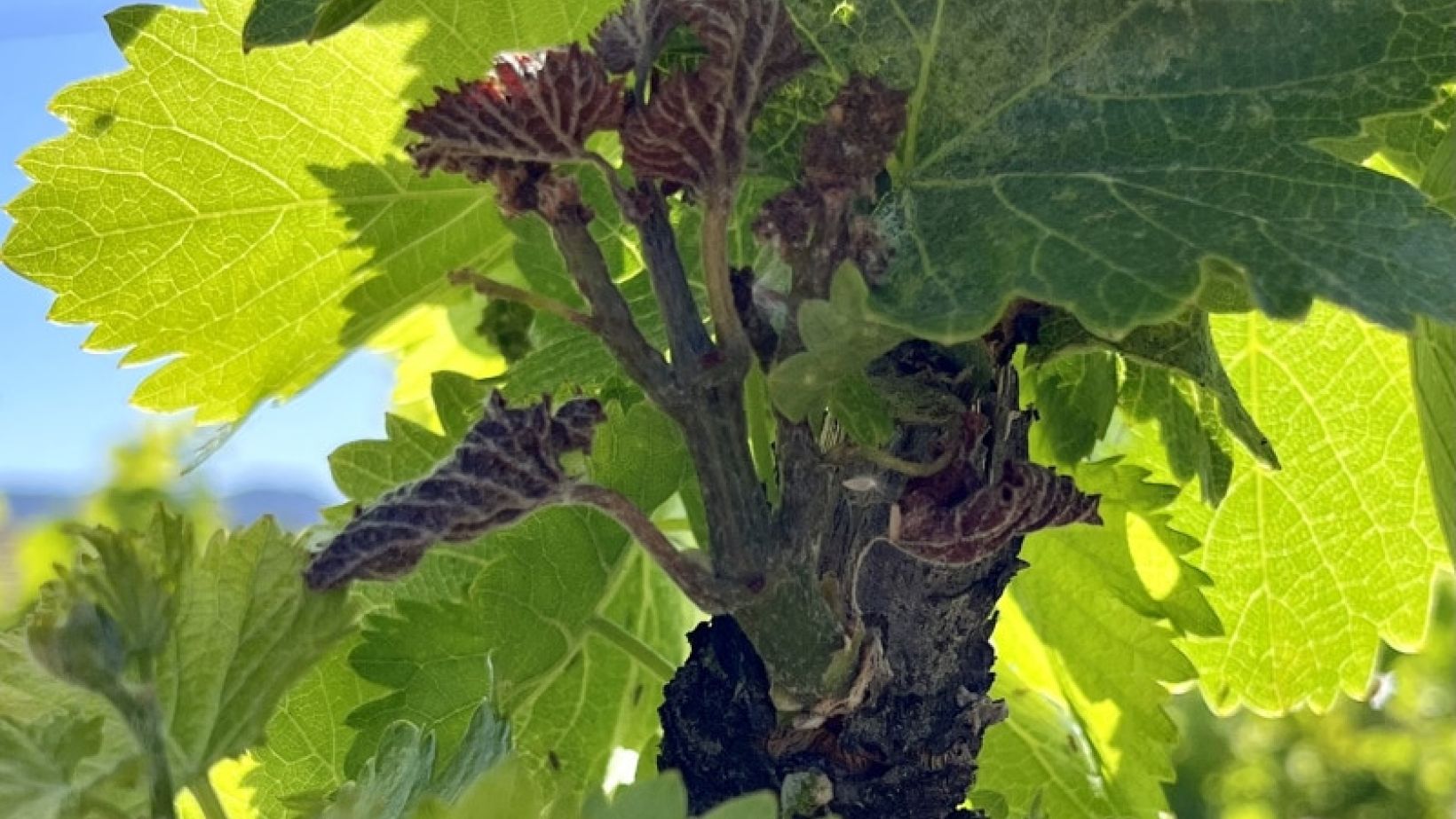
Republished with permission from Grapegrower and Winemaker, Issue 702, July 2022.
Preparing vines for cooler morning conditions
The onset of climate change means different conditions than what have historically been recorded. Harrison Davies explores the increasing threat posed by frost conditions in vineyards and how producers can mitigate the impact on their vines.
Everyone remembers mornings as a kid when their lawn would be coated in a thin, white layer of frost. It always seemed a magical moment when one was rugged up in a blanket with a mug of cocoa on hand, but the harsh realities of frost become clear with age.
Frost can be a significant threat to vineyards if not prepared for properly and wine regions the world over have been experiencing greater periods of frost in recent years. Producers in Bordeaux, Burgundy and Champagne all tore their hair out due to frost conditions persisting longer into the year than what was normal, and many lost part of their yield due to it occurring during budburst.
Frost in Australia is commonplace in cool-climate regions (refer to map) and is defined by the Bureau of Meteorology (BOM) as: “a deposit of soft white ice crystals or frozen dew drops on objects near the ground; formed when the surface temperature falls below freezing point”.
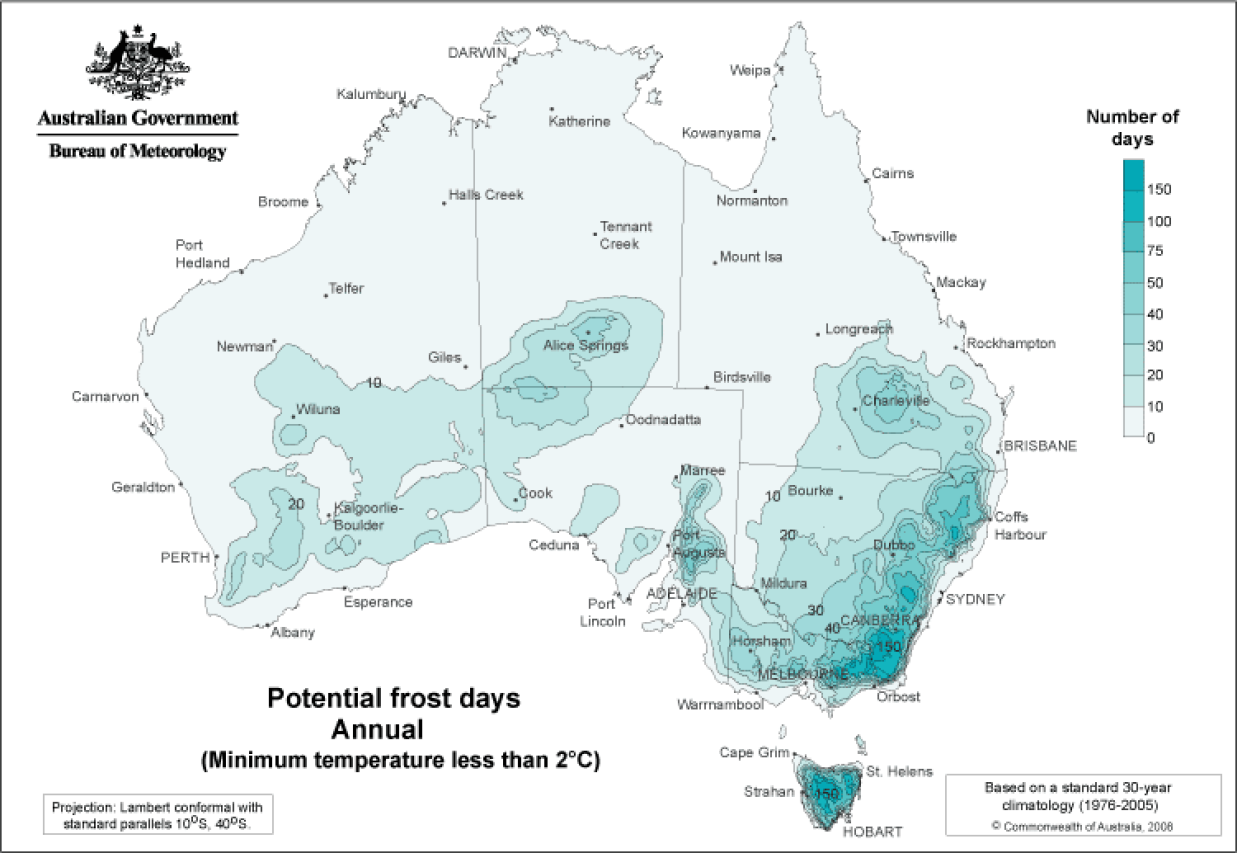
Frost can form in two circumstances when the temperature is low enough:
- The first and most common form is known as radiation frost; the type of frost that occurs when the air and ground temperatures cool due to the loss of heat in the atmosphere. It begins at ground level and then rises as the temperature persists. Most of the time this type of frost will occur under clear skies.
- The second way frost can form is called ‘advection frost’ and occurs when a mass of very cold air moves over an area, replacing the warmer air, however, this rarely happens in Australia.
A spokesperson for BOM said conditions for frost had to be still, dry and with clear skies. “In Australia, frost is more likely to form under a clear sky, with low humidity and light surface winds,” they said.
“Clear skies favour the escape of radiation (heat) from the earth’s surface to space. Clouds reflect the outgoing radiation, slowing the cooling at the surface.
When the air is more humid, internal processes relating to the change of state of water between vapour-liquid-solid causes the release of heat (latent heat). This slows down the cooling, decreasing the likelihood of frost.
At night, wind can act to mix the cooler air near the surface with warmer air just above it. This slows the radiative cooling at the surface, making frost formation less likely.”
Frost in vineyards
Frost poses a significant threat to grapevines, especially when it occurs around the same time as budburst. Vines affected by frost can experience lowered yield and even eliminate the crop itself in extreme cases.
Injury from frost occurs due to the freezing of plant cells as ice forms outside or inside the cell itself. According to the Australian Wine Research Institute’s (AWRI) fact sheet on frost; young or immature plant tissue is the most prone to damage and air temperatures of -3.4°C or less will damage 50% of vine buds at the woolly bud stage.
While frost hasn’t been a major concern for Australian winemakers in some of the warmer regions, it is a yearly concern for those in America. Jordan Lonborg is the viticulturist at Tablas Creek Vineyard in central California and said that frost had been a greater concern in recent years.
“So we’re located near Tablas Creek in the Adelaida AVA of Paso Robles. So we’re about 20 minutes west of the town of Paso Robles.
As a crow flies it’s probably 10 to 15 miles and then we’re 10 miles to the ocean. We get these insane diurnal swings which is why it’s such a great growing climate and we’ll consistently reach highs of 32 - 35 degrees, but quite often see temperatures from 40 plus.
Then everyday it will drop to a minimum of 0 degrees.” Lonborg said they had used their frost protection technology for the last several years and that they had used it around 10 times in the last growing season.
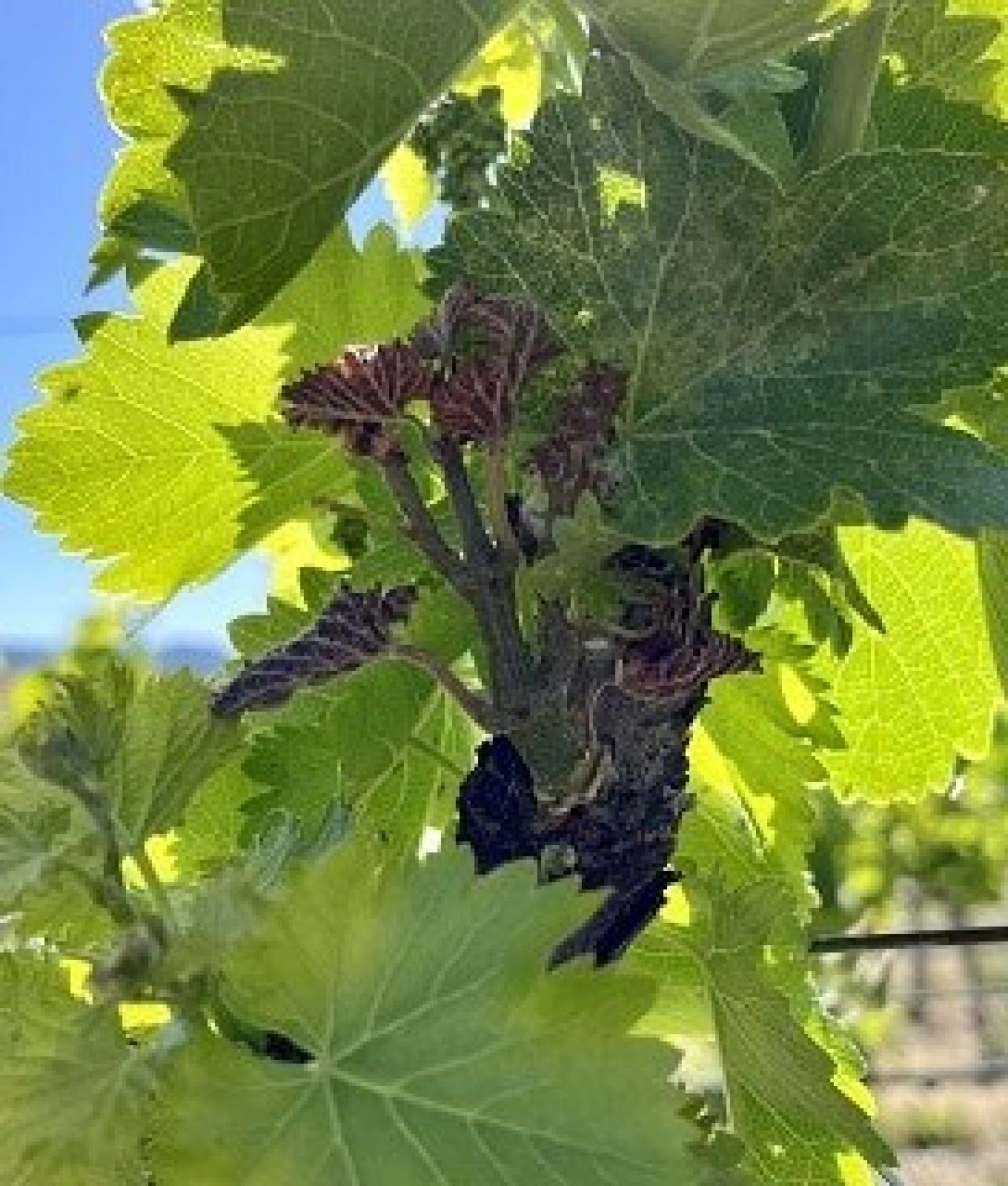
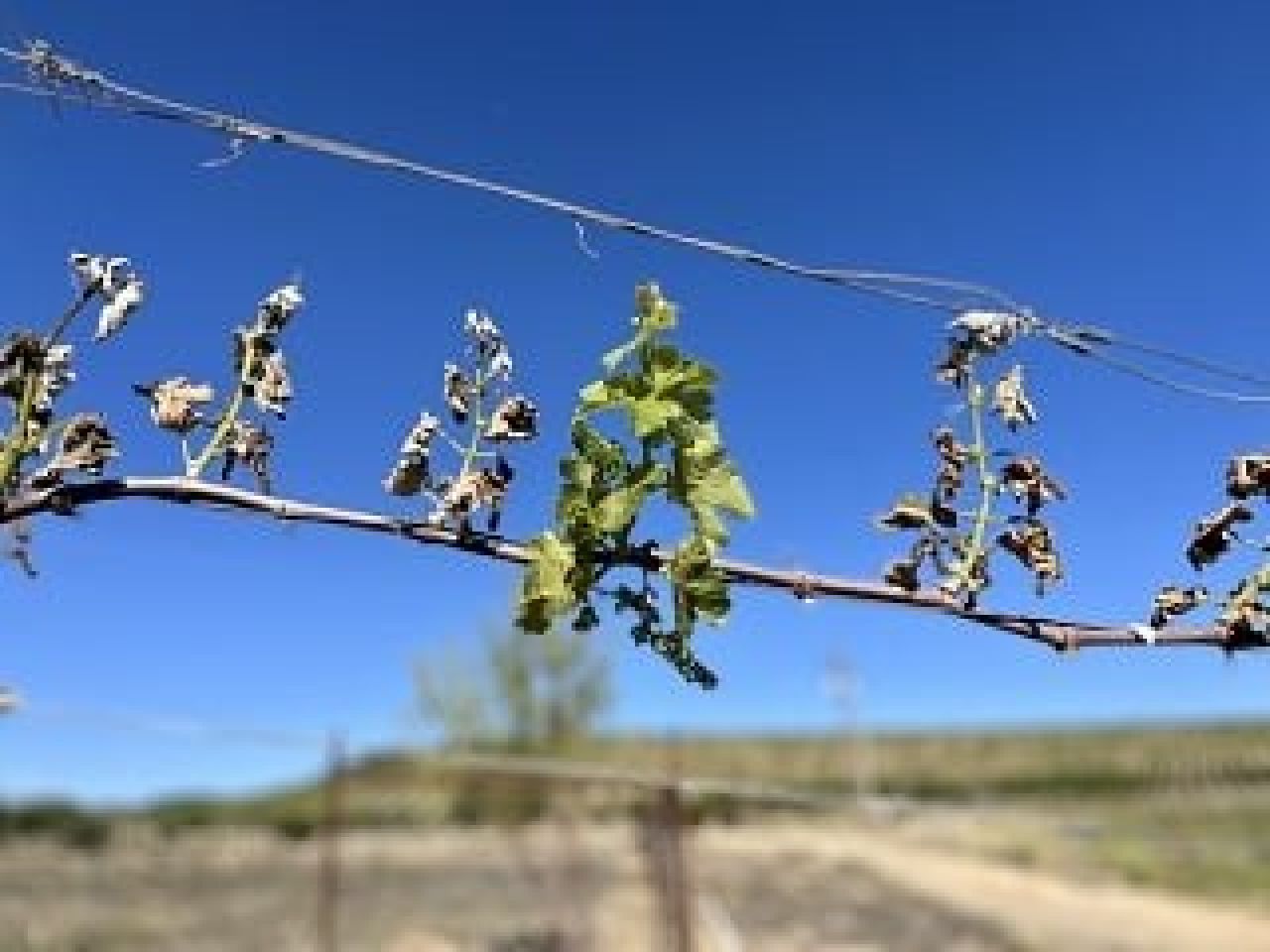
Vines singed by frost at the Tablas Creek Vineyard. (Images: Tablas Creek.)
Looking Down Under, producers in Tasmania frequently have to navigate seasons with high frost probability due to the region’s cool climate – with some vulnerable areas having a potential 30% loss in a year with bad frost. Bream Creek, located in Tasmania’s east, frequently considers the threat of frost in relation to the health of their vineyards.
Bream Creek viticulturist Fred Peacock has worked in vineyards with frost issues throughout his career and said it was part of life when making wine in Tasmania. “In some areas frost is a definite threat. Site selection should always take note of the “local” frost risk,” he said.
Management strategies
There are a number of ways that producers can mitigate the threat of frost in the vineyard, but there is also no silver bullet solution. The AWRI and Lonborg also suggested that varietal placement would assist in preventing damage from frost, although Lonborg admitted that sometimes it’s hard to think that far in advance.
“Varietal selection and where you plant it in the vineyard are important; putting a white varietal that breaks bud early in a cold spot is very risky,” Lonborg explained.
“With Tasmania having significant changes in topography over short distances it is important to assess frost risk very carefully,” Peacock said. “Making sure air drainage lines are clear to help stop the depth of cold air increasing to a damaging height.
Ensuring that the vegetation in the vineyard is mown short in late winter to increase incoming and outgoing radiation from the soil surface. Pruning frost prone areas as late as possible to reduce the risks of an early budbreak can be important in vineyards with some risk, and is a good strategy even in very low frost risk areas.”
There are also several tools producers can use to prevent the onset of frost. The most common and the most preferred amongst those spoken to for this story is frost sprinklers.
Sprinklers work well in an Australian context, because much of the frost sets in due to radiation frost, which comes from the ground and sets in dry air. The sprinklers add humidity in the vicinity of the vines and help to level out extreme temperature spikes.
Peacock said sprinklers were a good tool that producers could use, but that they still had their limitations. “Frost protection via sprinklers will protect more reliably against the more severe frosts, and water protection is not impacted as much as fans by very cold breezes that are below 0 degrees.
Most vertical frost fans have wind speed limitations. Additionally, existing pump capacity might need to be increased to enable a sufficient water application rate over a large area to meet the frost protection requirements.”
Because of the high diurnal variation in the climate in Tablas Creek, Lonborg also endorsed the use of sprinklers. “Well, in terms of protection without question, the best type of frost protection you can have in your vineyard is using sprinklers,” Lonborg said.
“When you’re seeing temperatures under 0 degrees for three or four or five hours, the best form of protection is water.”
This mirrored the AWRI’s advice for mitigating frost, where the factsheet suggested that using sprinklers would prevent the onset of frost due to the presence of moisture. Vineyard fans are another common tool that producers reach for to protect from frost, and they work by circulating higher, warmer air with cooler air that may have been caught in pockets of the vineyard.
Peacock said these too came with advantages and disadvantages. Frost fans aren’t used as commonly as they work more efficiently against advection frost, which is less common in Australia.
“Fans are easier to retrofit in large areas as compared with increasing water storage and running larger water mains in existing vineyards, and are independent of the water supply,” he said. “Dry seasons tend to be more frost prone seasons, so water supply could be a problem in many locations.
There are enclosed horizontal frost fan (SIS) systems that are not impacted by very cold drifting air, so these would be preferred in many blocks both for their ability to withstand breezes and also emit less noise, so would be preferred in more settled areas/near close neighbours.”
Click here to get your copy of WineLand Magazine and here to subscribe to our newsletter.

More from
Vineyard, cellar and production
How to understand regenerative farming
Regenerative farming is becoming part of the language of modern viticulture, but what does it actually look like in a vineyard?
JC Smith praat oor wynmaak in die Oos-Vrystaat
JC Smith is ’n derdegeslag-wynmaker. Sy oupa Dassie en pa Flip was albei wynmakers, en hy het tussen wingerde en wynkelders grootgeword. Hy is tans die wynmaker by Blydschap in die Oos-Vrystaat.

Cellar hygiene
Maintaining a spotless wine cellar requires a comprehensive management plan, which includes structural design, equipment sanitation, environmental controls and routine microbial monitoring.