
Vergelegen estate appoints new winemaker
Vergelegen wine estate, one of South Africa’s premier wine producers, has announced the appointment of its new winemaker. Luke O’Cuinneagain will take up his appointment around September this year, following in the footsteps of legendary André van Rensburg (1998-2022) and Martin Meinert (1989-1998).
· 4 min read
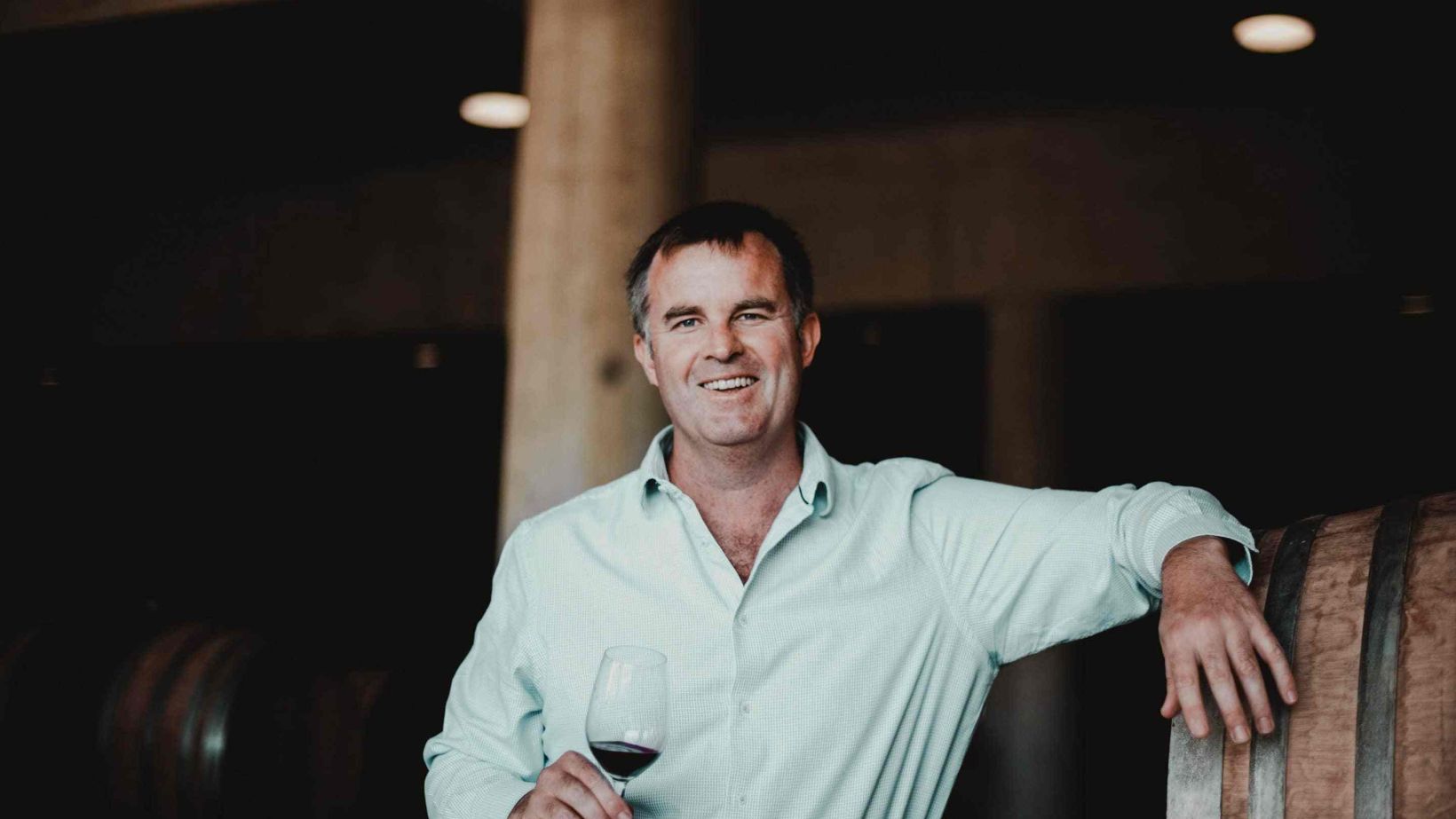
O’Cuinneagain has been winemaker at Glenelly Estate in Ida’s Valley, Stellenbosch, since 2008, and previously worked for Rustenburg Estate for five years. He also gained international experience at Château de Fieuzal and Château Angelus in Bordeaux, Caves Robert Dietrich in Alsace, and Screaming Eagle in California.
O’Cuinneagain holds a B.Sc. Agric (Viticulture and Oenology) Honours from Stellenbosch University and completed a course in finance from UCT Graduate School of Business.
“We are delighted to welcome Luke,” said Vergelegen MD Wayne Coetzer. “His appointment follows an extremely rigorous recruitment process undertaken by an independent panel of wine experts over several months. The initial total of 29 applicants, which included top names in the industry, was whittled down to six contenders. The entire process gave us considerable insight into the extensive pool of winemaking talent in South Africa. The industry is in good hands.
“A winemaker of the calibre of André van Rensburg leaves a vast legacy. André has entrenched the highest standards of excellence in all aspects of wine production at Vergelegen, from viticulture and cellar operations to scientific research. Fortunately, we can continue to enjoy Andre’s winemaking prowess with every vintage we uncork.”
To read more about André van Rensburg’s winemaking legacy: https://vergelegen.co.za/winemaker/
WATCH: Extraordinary awaits
ALSO READ:Vergelegen winemaker André van Rensburg calls it a day
After 25 glorious years as Vergelegen‘s winemaker, the legendary (and often unreserved) André van Rensburg has announced his retirement.
The Western Cape’s magnificent wine estates are frequently associated with winemakers who stamp their larger-than-life personalities on the vintages they nurture into maturity. Vergelegen, the venerable 322-year-old wine farm in Somerset West, is no exception.
It is not only renowned for its landmarks such as the “big five” camphor trees and elegant homestead, but also its winemaker André van Rensburg. This summer, André will bring in his 25th – and final –Vergelegen harvest, and expectations are that it will once again produce outstanding wines that reflect the climate and soils of the region.
André, who is retiring this year from winemaking at Vergelegen, grew up in Durbanville, in a home where wine was part of the family’s everyday life. His maternal grandfather was employed in wine- and brandy-making at KWV.
André himself worked at the old Bottelary Co-op in Stellenbosch for a year and studied oenology at Stellenbosch University, graduating B.Sc. Hons Agric (Oenology), cum laude, in 1987. He built up experience at Saxenburg, Warwick and Stellenzicht, but his talent truly flowered at Vergelegen.
The year 1998 marked the start of an ideal partnership for the 35-year-old winemaker and the renowned estate that was evolving into a showcase of the best of South African history, culture, biodiversity and wine. Here there was ongoing investment in both the vineyards and a magnificent new gravity-fed cellar.
Recognition came fast from both local and international institutions, including two Pichon trophies at the International Wine and Spirit Competition for the best red blend in the world. André also won the Jan Smuts Trophy for the wine of the vintage in 1999, with the Vergelegen Sauvignon Reserve, the first time in more than 50 years that a white wine took this accolade.
There were four consecutive Old Mutual Trophy Wine Show awards for best overall performance, two Best of Nation awards at the San Francisco International Wine Awards, and numerous Platter five star awards.
More recently, Winemag.co.za announced the Top 20 Wines South Africa 2021 and Vergelegen took top honours. The wines also received two Best of Category placements: Vergelegen Sauvignon Blanc 2021 (95 points) in the unwooded Sauvignon Blanc, and Vergelegen Reserve Semillon 2019 (93 points) in the Niche White category.
André says one of his greatest achievements has been the eradication of leaf roll virus from the estate. Leaf roll virus diminishes the quality and volume of the harvest, and eventually the vines become uneconomical and must be uprooted.

More from
Vineyard, cellar and production
One vineyard. Eight components. Five years of patience.
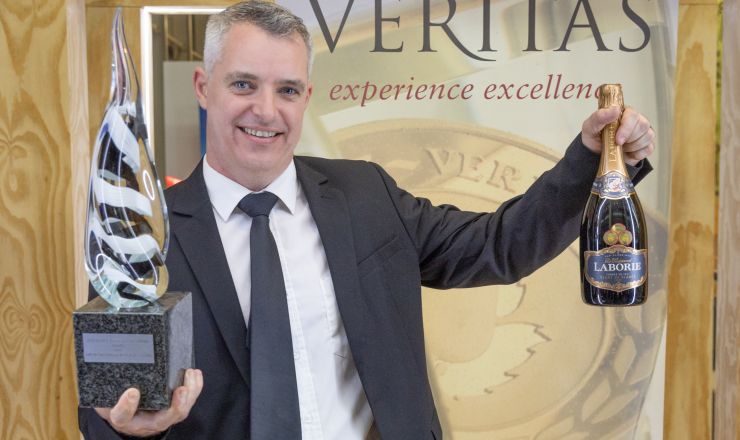
When KWV’s Laborie Blanc de Blancs 2020 claimed the Duimpie Bayly Vertex Trophy at the 2026 Veritas Awards, it was more than another win for the Paarl-based producer. It was only the third time a Cap Classique had taken the competition’s highest honour, selected from 1 293 entries.
How to understand regenerative farming
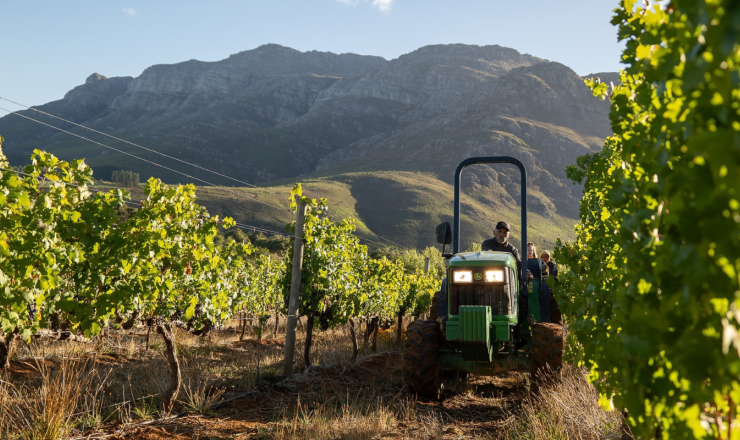
Regenerative farming is becoming part of the language of modern viticulture, but what does it actually look like in a vineyard?
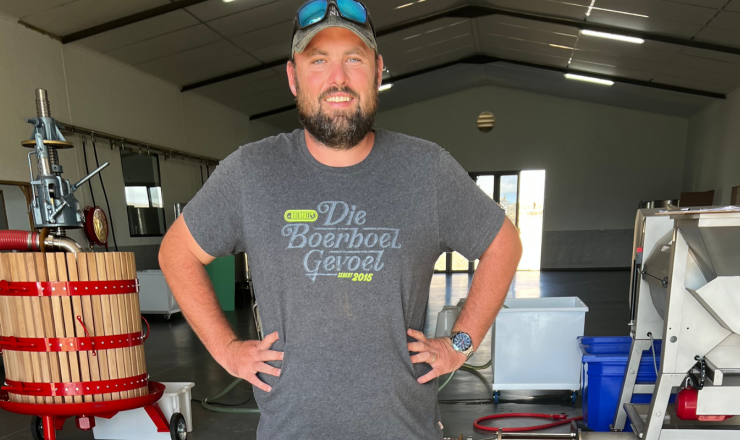
JC Smith praat oor wynmaak in die Oos-Vrystaat
JC Smith is ’n derdegeslag-wynmaker. Sy oupa Dassie en pa Flip was albei wynmakers, en hy het tussen wingerde en wynkelders grootgeword. Hy is tans die wynmaker by Blydschap in die Oos-Vrystaat.